
So you’re diving into the annals of Indian medical history, are you? Dr. B.D. Chaurasia, not to be confused with a flautist or a random security guard from Chhattisgarh (despite what some X posts might imply), was indeed a luminary in the field of anatomy. Here’s the lowdown on his early life, with a dash of humor, because everything’s funnier with anatomy, right?

Born on October 1, 1937, Dr. Bhagwan Din Chaurasia wasn’t just another face in the crowd but a future beacon for medical students worldwide. Picture this: a time before the internet, where learning anatomy meant poring over books thicker than your average doorstep. Dr. Chaurasia, probably as a young lad, decided, “Hey, why not make this less about memorizing and more about understanding?”
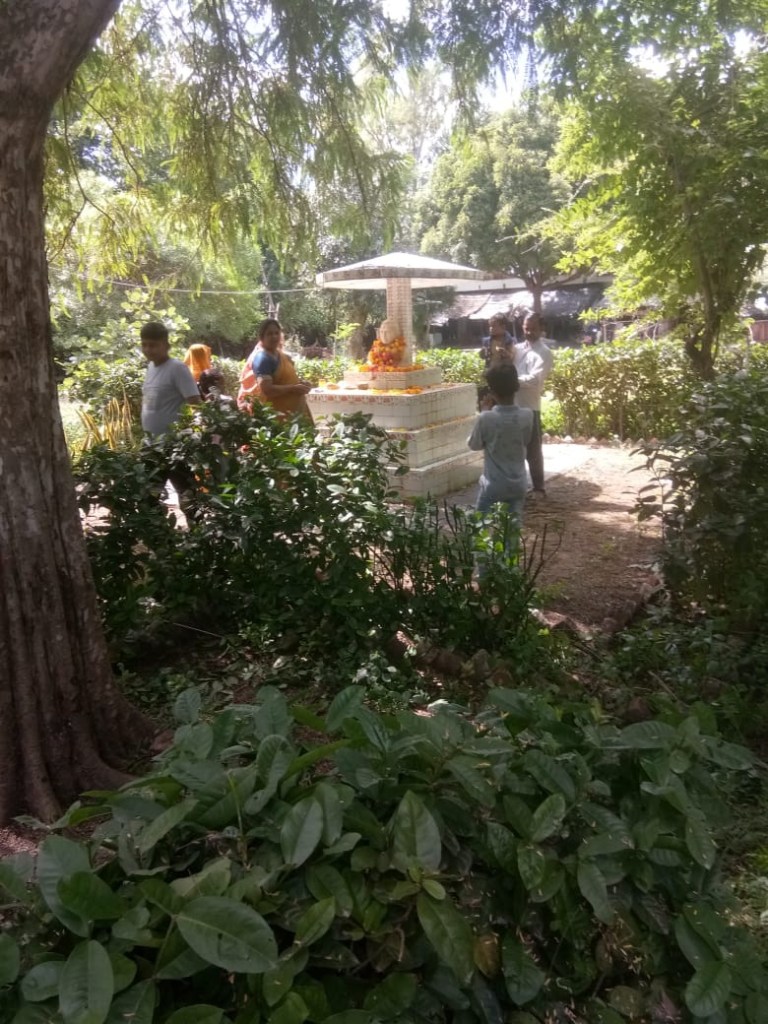
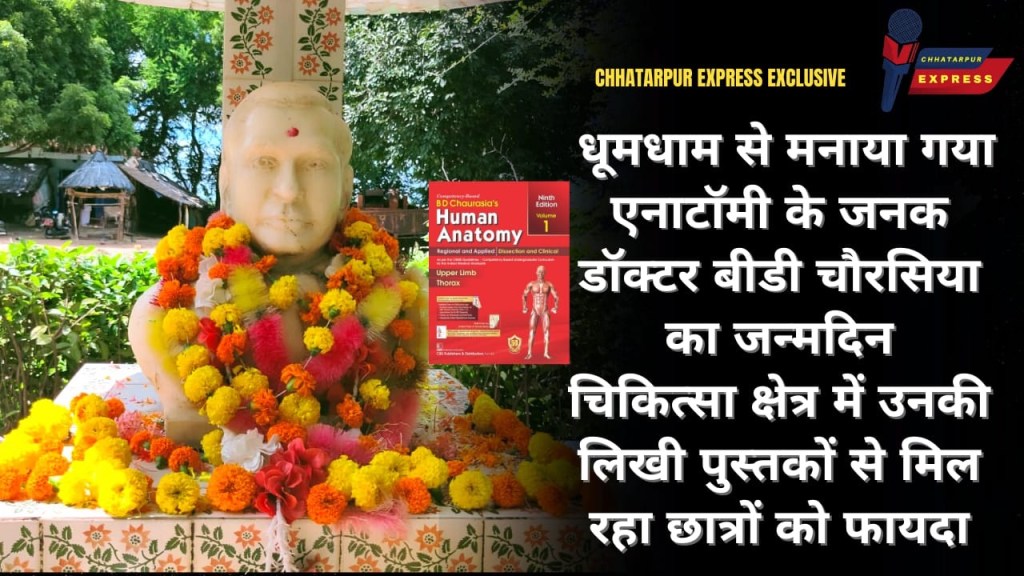
Mela at samadhi of dr b d chaurasia

He completed his M.B.B.S. in 1960, which, let’s be honest, probably felt like climbing Everest in a snowstorm with a teaspoon. Then, not content with just one mountain, he scaled another by doing his M.S. in Anatomy from M.G.M. Medical College, Indore, in 1965, followed by a Ph.D. in 1975 from Jiwaji University, Gwalior. Imagine him, not just dissecting bodies but also the very fabric of knowledge, one layer at a time.
Now, here’s where it gets interesting. While most of us would’ve called it a day after such academic marathons, Dr. Chaurasia decided to teach. He started as a Lecturer in Anatomy at Gandhi Medical College, Bhopal. Teaching anatomy? That’s like being a tour guide in the human body’s most complex amusement park. “Here’s the heart, folks, don’t get too close; it might not be beating, but it’s had a lot of love in its lifetime.”
Ah, Dr. B.D. Chaurasia, the man whose name strikes both fear and reverence into the hearts of medical students worldwide! While there aren’t many widely-known anecdotes about his personal life floating around like confetti at a parade, let’s dive into the humorous and slightly bizarre world of medical education and anatomy, inspired by the legend himself:
- The Dissection Dilemma: Imagine Dr. Chaurasia, not with a scalpel but perhaps with a dry wit, overseeing a group of first-year medical students. “Remember, folks,” he might quip, “the human body is like a puzzle, but instead of pieces, you’ve got organs. And unlike puzzles, if you lose a piece here, it’s not just your completion rate that suffers!”
- The Name Game: There’s a peculiar yet humorous anecdote where someone, somewhere, confused Dr. B.D. Chaurasia with Hariprasad Chaurasia, the flautist. One can only imagine the chaos if Dr. Chaurasia tried to dissect human anatomy with a flute or if Hariprasad attempted to play the human anatomy like a flute. The results would be… let’s say, musically disastrous or anatomically incorrect.
- The Textbook Trials: Students often recount the sheer terror of opening Chaurasia’s anatomy book for the first time, only to find it’s not just a book but a new dimension where time slows down, and every page feels like an Everest to climb. Anecdotally, some claim it’s the only thing that can make you forget your hunger, sleep, and social life all at once.
- The Unexpected Teachings: Imagine if during one of his lectures, Dr. Chaurasia, perhaps with a twinkle in his eye, remarked on how the human body’s design seems almost like it was thought up by a committee of artists who then handed it over to engineers who said, “Let’s make it complicated for fun!” His approach to anatomy might not just teach about bodies but also about the humor in human design flaws.
- The Legacy of Laughter: While there might not be direct anecdotes of Dr. Chaurasia cracking jokes, his work has inadvertently led to many. Picture medical students trying to remember the 12 cranial nerves with mnemonics so absurd, they’d make Dr. Chaurasia himself chuckle if he heard them. “On Old Olympus’ Towering Top, A Finn And German Viewed Some Hops” might not be his creation, but it’s the spirit of his work’s impact.
- The Misadventure of Mistaken Identity: There’s a whisper in the halls of medical schools about a student who, in panic before an exam, referred to Chaurasia’s book as “the holy scripture” and got disciplined for not using the textbook’s actual name. The story might be apocryphal, but it captures the reverence and sometimes the comical desperation associated with his books.
- Dr Bhagwan Din Chaurasia: A Guiding Light and a Pillar of Anatomy Education in India
Raju Vaishyahttps://orcid.org/0000-0002-9577-95331
Introduction:Dr Bhagwan Din Chaurasia is a legend in Indian Anatomy education. Being his student in 1977–78, I saw him closely and was inspired immensely to write his biography to pay my homage and tribute to this great ‘guru’.
Methods:Apart from my first-hand information and experience with Dr Chaurasia, I did extensive research on PubMed, Scopus and Google Scholar databases to extract his research publications. I also extracted his personal information from his old students at Gajra Raja Medical College, Gwalior (India), some of the main ones have been acknowledged in this paper.
Results:Despite a shortened life, Dr Chaurasia’s influence on the field remains immense. His book, Human Anatomy has been an essential guide for countless medical students around the world. He was not only a gifted teacher but also, a dedicated researcher, actively publishing in prestigious journals.
Conclusion:Dr Chaurasia’s legacy is a testament to the power of clear explanations, innovative teaching methods, and unwavering passion for Anatomy. The name Dr B. D. Chaurasia is synonymous with excellence in Anatomy education. His work will continue to inspire generations of medical professionals to come.
Keywords
Humans, anatomy, congenital, genetics, BD Chaurasia
1 Department of Orthopaedics and Joint Replacement Surgery, Indraprastha Apollo Hospitals, Sarita Vihar, New Delhi, India
*The author of this article is an editor of this journal. To avoid any potential conflict of interest, the peer-review process and decision-making for this article were handled by other editors and anonymous reviewers.
Corresponding author(s):
Raju Vaishya, Department of Orthopaedics and Joint Replacement Surgery, Indraprastha Apollo Hospitals, Sarita Vihar, New Delhi 110076, India. E‑mail: raju.vaishya@gmail.com
Heroes get remembered, but Legends never die.
–––Babe Ruth
Introduction
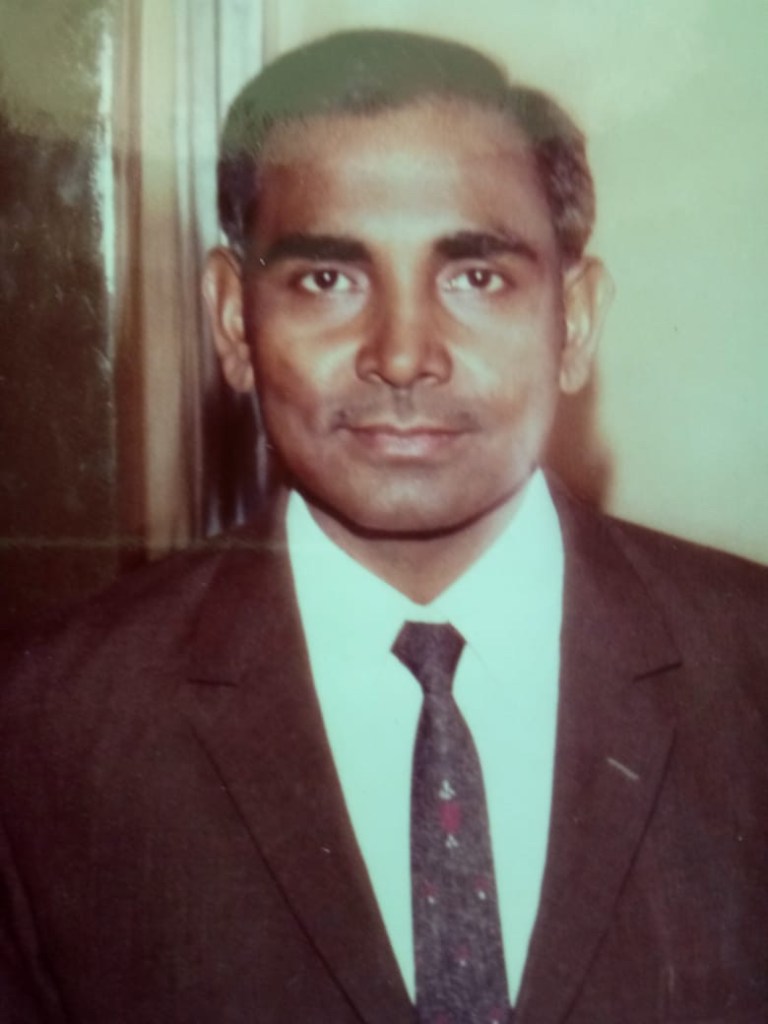
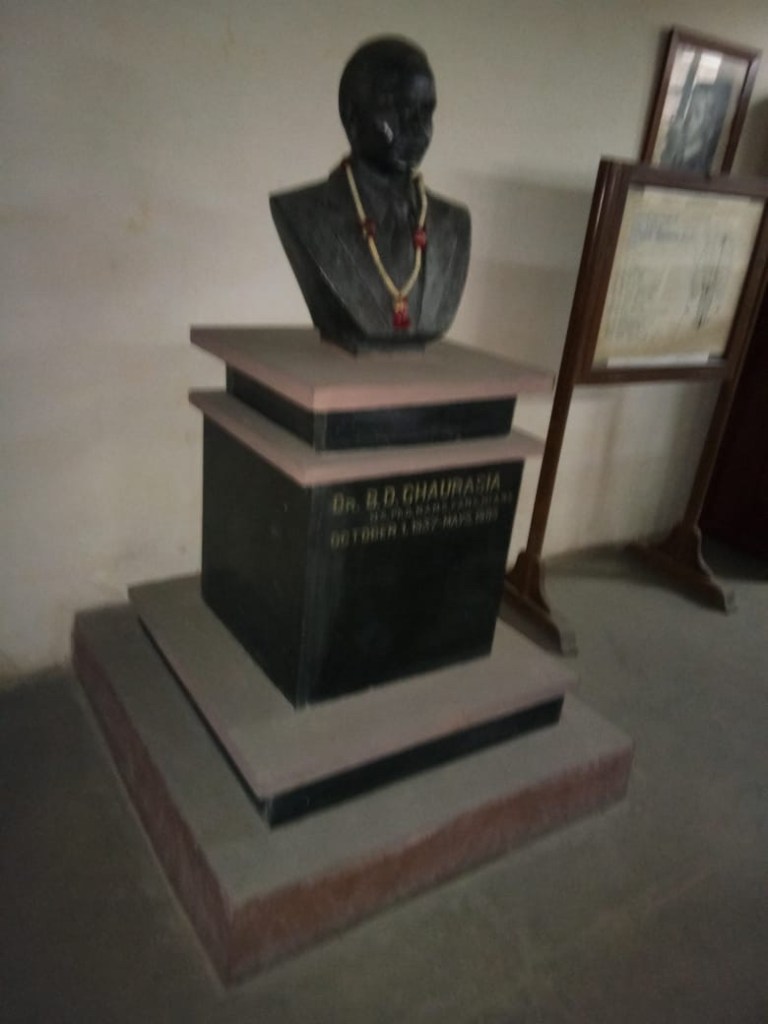
The history of medical education in India is intricately woven with the contributions of remarkable individuals. Among them, Dr Bhagwan Din Chaurasia (Figures 1 and 2), affectionately known as BDC, stands out as a towering figure in Indian anatomy education. His textbooks, particularly ‘Human Anatomy,’ have been a cornerstone for countless medical students worldwide since their introduction in 1979, illuminating the path for countless medical students through his exceptional work in Anatomy education.
Figure 1. Dr Bhagwan Din Chaurasia
Figure 2. Statue of Dr Bhagwan Din Chaurasia at Gajra Raja Medical College, Gwalior
The Great Man and His Life
Born on October 1, 1937, in Barigarh, a small town in central India (District Chhatarpur, Madhya Pradesh), Dr BDC’s life path was forever entwined with the world of Anatomy. His farmer parents, Ramadhin and Radharani Chaurasia, laid the foundation for his remarkable career that would leave an indelible mark on medical education in India.
Dr BDC’s academic journey began at Ewing Christian College, Allahabad, where he completed his schooling in 1954. This formative period instilled in him a strong foundation in core subjects, preparing him for the rigours of medical school. He then set his sights on Mahatma Gandhi Memorial (MGM) Medical College, Indore. There, his passion for medicine blossomed, culminating in an MBBS degree in 1960. His insatiable curiosity for the human body propelled him further, and he went on to specialise in Anatomy, obtaining a Master of Surgery (M.S.) degree in the same field from MGM Medical College in 1965. Dr BDC’s dedication to knowledge extended beyond his initial qualifications. He embarked on a lifelong pursuit of academic excellence, eventually earning a Ph.D. in 1975 from Jiwaji University, Gwalior.[1]
The early years of Dr BDC’s professional career were marked by a commitment to sharing his knowledge with future generations of doctors. He began his teaching career as a demonstrator in the Anatomy department at MGM Medical College, Indore, where he spent three years imparting his expertise to students. He then moved on to Gandhi Medical College (GMC) Bhopal, where he served as a lecturer in anatomy for two years. In 1968, he joined Gajara Raja Medical College (GRMC), Gwalior, as a Reader of Anatomy. It was here that he would not only continue to inspire students but also lay the groundwork for his future contributions to the field.[1,2]
Dr BDC’s early life and academic pursuits were a testament to his unwavering dedication to the field of anatomy. The strong foundation he built in these formative years would pave the way for him to become a leading figure in medical education, impacting countless medical professionals through his innovative teaching methods and ground-breaking textbooks.
Despite his short stature, he commanded respect in the classroom and faculty room alike. Known for his unwavering discipline, he brooked no nonsense, yet his dedication to his students and colleagues was undeniable. A lifelong bachelor, he shared his home with his loyal canine companion, Rani, and his trusted aide, Munne Miyan.
His ‘Amazing’ Anatomy Textbook
Dr BDC’s dedication to enlivening Anatomy studies is legendary. For decades, well before the digital age, his textbooks served as a lifeline for students navigating the complexities of the human body.3 His immensely popular class notes were the inspiration for his first publication – a meticulously handwritten collection on the Brain, complete with diagrams. In 1978, with typewriters and photocopies being expensive rarities, Dr. BDC cyclostyled these notes himself, making them available to students for a mere ₹10 per booklet. This act of generosity reflects his commitment to fostering knowledge. His talent eventually caught the eye of a major publisher, CBS Publishers in New Delhi, who approached him to write a comprehensive Human Anatomy textbook.
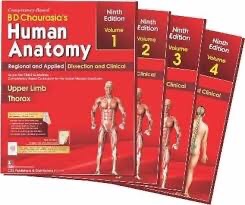
While the exact details are not documented, it is known that he drew inspiration from esteemed figures such as Professor Inderbir Singh from Rohtak and Shri SC Gupta from Jiwaji University, Gwalior. In the book’s acknowledgements, he expressed his gratitude to his teacher, Shri Uma Shankar Nagayach, highlighting the importance of mentorship in his journey. Dr BDC’s most celebrated textbook, ‘Human Anatomy’, was first published in 1979 and quickly established itself amongst students. The book’s success is evident in its longevity—the first edition was reprinted for nine consecutive years until 1988, and subsequent editions have followed suit. As of 2024, the latest edition (the ninth) remains in circulation (Figure 3), 45 years after its first launch, and is being edited currently by Prof. Krishna Garg.[3]
Figure 3. Dr B. D. Chaurasia’s landmark Anatomy Textbook
The impact of Dr BDC’s textbook transcends national borders. Its clear explanations, comprehensive nature, and innovative features have fuelled its immense popularity in India and abroad. The book has been translated into various international languages, making it accessible to a wider audience of medical students. Furthermore, its relevance extends beyond the field of medicine. Students in dental sciences, physiotherapy, and occupational therapy also rely on this invaluable resource, as anatomy forms a crucial foundation in these disciplines as well. The enduring demand for Dr BDC’s textbook is a true testament to its enduring value and its lasting impact on medical education. It continues to be a popular and valuable resource for students of Anatomy, both at undergraduate and postgraduate levels, and also for Clinicians and Surgeons, as well.
The enduring popularity of ‘Human Anatomy’ can be attributed to several factors. Dr BDC’s writing style is clear and concise, making complex anatomical concepts accessible to students. The book offers comprehensive coverage of the subject matter, ensuring students receive a well-rounded foundation in Human Anatomy. Its clear explanations, comprehensive coverage, and innovative features continue to guide aspiring medical professionals on their journey to becoming skilled and knowledgeable physicians. Furthermore, it incorporates a range of engaging features that enhance the learning experience (Figure 4).
Figure 4. Key Features of the Human Anatomy book of Dr B. D. Chaurasia
The key features of his book include:
•
Visually appealing and easily reproducible coloured diagrams
•
Innovative style of line diagrams to explain the complex anatomical relationships and descriptions
•
Clear labelling of anatomical structures
•
Flowcharts to aid understanding of complex processes
•
Well-illustrated explanations of clinical anatomy for practical application
Since the seventh edition, the textbook has even included a CD with videos on osteology (the study of bones) and soft parts to further assist students in visualising anatomical structures. Additionally, multiple-choice questions with answers are provided to help students prepare for exams. The book even delves into related fields such as histology, embryology, and radiology when relevant, offering a holistic view of the human body.
Before his work, the absence of readily available learning materials posed a significant hurdle. Dr BDC’s clear, concise, and student-friendly language bridged this gap, demystifying complex anatomical concepts and was not limited to theoretical anatomy. He understood the importance of clinical applications and ensured his works included relevant clinical correlations. This approach bridged the gap between theoretical knowledge and practical application, providing students with a deeper understanding of how anatomical structures function in the human body.
However, Dr BDC’s brilliance extended beyond the written word. He recognised the power of visual learning and meticulously crafted his books with well-illustrated and easily reproducible line diagrams. These visuals became a lifeline for students who thrived on a visual understanding of anatomical structures. Furthermore, Dr BDC understood the potential for monotony in anatomy studies. He countered this by incorporating innovative and engaging features. Mnemonics transformed arduous memorisation into a more manageable process. Poems and riddles sprinkled throughout the text breathed life into dry facts, making the learning experience more stimulating. This creativity fostered a deeper understanding and retention of crucial anatomical knowledge.
Research Achievements
Dr BDC’s influence extended far beyond his textbooks. He was a prolific researcher, actively contributing to the advancement of the field through publications in national and international journals. He actively participated in academic societies and served on the advisory boards of esteemed publications like the International Journal of Acta Anatomica and Bionature. He published more than 60 research articles in his relatively short academic career span,[1,2] with 36 published documents listed in PubMed,[4] and 44 in Scopus databases,[5] from 1964 to 1984. It was indeed a great achievement considering the meagre research facilities and landscape in those times. His research has also received a good number of citations over the years and a list of the top 10 most cited publications are presented in Table 1.[6]
Dr BDC was a curious researcher with a strong foundation in human Anatomy, as is obvious from the list of his top publications in Table 1. He had diverse research interests within anatomy and related fields such as Neurosciences, Genetics, Congenital anomalies, and even in Botany. Dr Chaurasia’s research suggests a fascination with human variation and anomalies, particularly those related to lateralisation and birth defects.
Accolades
Dr BDC’s contributions were recognised by his election as a Fellow of the National Academy of Medical Sciences (FAMS), India, in 1982. He was also an invited member of several prestigious editorial boards and scientific societies. BDCs dedication to medical education and his exceptional textbook continue to inspire generations of medical professionals. Due to his untimely death at the age of 47 years, due to an acute Myocardial Infarction, his research career was cut short. He was posthumously awarded the prestigious Dr Kailash Nath Katju Award of Science by the Madhya Pradesh Government. In addition, the Central Medical Teachers Association of Madhya Pradesh, India celebrates its birth anniversary on 1st October as Medical Teacher’s Day.[2]
His Influence
In 1977, during the first year of our MBBS program, we had the privilege of learning from Dr BDC. We witnessed his brilliance firsthand during his peak years, from 1977 to 1985. His presence was truly inspiring. He cared deeply for his students but demanded discipline. His teaching style was unmatched. Through clear explanations and colourful, self-drawn and original line diagrams on the blackboard, he could transform even the most intricate anatomical concepts into readily understood lessons. His drawings were so stunning that erasing them from the blackboard after class felt like an act of vandalism! Dr BDC was a true ‘guru’ in every sense of the word. He wasn’t just a master of his subject; he was a phenomenal educator. He went beyond academics, acting as a great human being, and counsellor who instilled values, shared knowledge, and served as a constant source of motivation.
What particularly impressed me was his prolific research career. At the time, Dr BDC had already published a staggering 60 papers – a number that surpassed the combined output of the entire medical college faculty! His influence extended far beyond the classroom. It not only shaped us into competent medical professionals but also ignited a passion for research within me. With over 800 publications to my name,[17] a number that continues to grow, I can’t help but wonder how Dr BDC would have felt. Having the privilege of writing the biography of such an inspiring mentor who ignited a lifelong passion for learning within me is an honour beyond words. His unwavering dedication pushed us all to excel, illuminating the path to knowledge. Dr BDC’s life embodied the wisdom of two powerful quotes: ‘Education is not the filling of a pail, but the lighting of a fire,’ by William Butler Yeats, and ‘Live as if you were to die tomorrow. Learn as if you were to live forever,’ by Mahatma Gandhi. He did not just fill our heads with facts; he ignited a passion for lifelong learning that continues to this day.
My professional career has been greatly influenced by two additional legends and visionaries, namely Dr. Prathap C Reddy[18] and Prof. Bimalendu Das.[19]
Conclusion
Dr B. D. Chaurasia’s life, though cut short, left an indelible mark on medical education. His meticulously crafted anatomy textbooks have become a global cornerstone, a testament to his clear communication, innovative teaching methods, and unwavering dedication to the field. Dr Chaurasia’s influence extends far beyond his textbooks. A prolific researcher, he published extensively in prestigious journals and actively participated in esteemed academic societies, further solidifying his reputation for excellence in Anatomy education. His name remains synonymous with the field, and his legacy will continue to inspire generations of medical professionals. He embodied the rare combination of an exceptional teacher and a distinguished researcher.
Acknowledgments
With gratitude to Dr Ram Lakhan Singh Sengar (Professor- Neurosurgery, Gwalior), Dr Rajendra Prasad Gupta (Consultant Radiologist, Kanpur), Dr Ishwar Dayal Chaurasia (Professo-Neurosurgery, Bhopal) and all the other friends (who were also his students, like myself), for their invaluable contribution of information and images related to Dr BDC.
Declaration of Conflicting Interests
The author is the Editor of Apollo Medicine, but has no role in the peer review and decision making of this manuscript.
Funding
The author received no financial support for the research, authorship and/or publication of this article.
Institutional Ethical Committee Approval
The paper is a review article so no ethical approval is required.
Informed Consent
Not applicable.
Data Availability
The data for this paper is available in the public domain.
Notes
CRediT Author Statement The author has full role in conceptualization, literature search, data collection, Manuscript writing, editing and final approval.
Use of Artificial Intelligence The author has taken the assistance of Grammarly and Google Bard for better readability and language improvement, but have rechecked the contents for their authenticity and take the full responsiblity.
While these anecdotes might weave fiction with fact, they reflect the broader sentiment around Dr. Chaurasia’s work – a blend of awe, humor, and a touch of academic terror. His contributions to medical education, particularly in anatomy, have indeed become the stuff of legends, where every student might not have a personal story but carries a shared experience of encountering his meticulously detailed work, often with a mix of dread and reverence.
His magnum opus? The textbook on human anatomy, first published in 1979. Imagine writing a book so clear, so engaging, that it becomes the bible for med students worldwide. This was no mean feat in an era where visuals meant either drawings or, if you were lucky, a black and white photo of a cadaver looking less than thrilled about its post-mortem career.
Dr. Chaurasia wasn’t just an anatomist; he was a wordsmith, crafting sentences that made the human body sound like an adventure. His books? They’re not just textbooks; they’re sagas, epics, where every chapter is a new land to explore in the kingdom of Homo Sapiens.
So, there you have it, a brief yet humorous glimpse into the early life of Dr. B.D. Chaurasia. From a student to a teacher to a legend, all wrapped up in the quest to demystify the human body. If anatomy had a hall of fame, his name would be in lights, probably right next to a diagram of the brachial plexus, because why not?
Ah, Dr. B.D. Chaurasia, the unsung hero for medical students across continents, especially in South Asia! This chap isn’t just any author; he’s the architect of anatomical enlightenment for many in training. Here’s why his name might make you feel a mix of dread and gratitude:
- The Textbook Trilogy: When you say “Dr. B.D. Chaurasia,” most folks in the medical field think of his magnum opus, the “Human Anatomy” series. This isn’t just a textbook; it’s a rite of passage. Divided into three volumes (Upper Limb and Thorax, Abdomen and Lower Limb, Head, Neck, and Brain), these books are like the holy trinity for anyone trying to navigate the human body’s labyrinth.
- The Clarity: What sets Chaurasia apart is the clarity of his explanations. He doesn’t just tell you where the tibial nerve is; he makes you see it, understand it, and maybe even feel a bit sorry for it when you’re dissecting it in the lab. His illustrations? Think of them as the roadmap to the human body, drawn by someone who really, really knows their way around.
- The Legacy: Chaurasia’s works are not just textbooks; they’re legacy builders. Generations of doctors have turned these pages, often with a mix of awe and sheer terror during exam times. His books have been translated into multiple languages, making anatomical knowledge accessible where it’s needed most.
- The Cult Following: There’s almost a cult following around Chaurasia’s books. Medical students might complain about the weight of the knowledge (and the books themselves), but they’ll defend their choice to study from them with a fervor usually reserved for sci-fi fandoms.
If you’re studying medicine, Chaurasia’s books might just be your companions through sleepless nights, coffee-fueled study sessions, and the occasional existential crisis about why you chose this path. But remember, behind the detailed diagrams and dense text, there’s a mind that simplified the complex, making the journey through human anatomy a tad bit less daunting.
So, if you’re looking to master the human body’s intricacies or just need a good prop for your “medical student struggling” Instagram aesthetic, Dr. B.D. Chaurasia’s got you covered. Just don’t drop his book on your foot; that’s one anatomy lesson you won’t forget in a hurry!
Ah, Dr. B.D. Chaurasia, the man who could make anatomy more intriguing than a soap opera, if that’s even possible. Now, diving into his “late life” — which, let’s clarify, sounds like we’re talking about his latter years or perhaps his twilight moments, but alas, he left us in 1985 at the quite young age of 47 or 48, depending on how you count. So, “late life” here might be stretching it.

From what I can gather, Dr. Chaurasia didn’t have a long “late life” chapter to speak of, but his legacy? Oh, that’s immortal and still very much alive in the hearts of medical students everywhere. Here’s what you might find amusing or at least, intriguing:
- The Unsung Hero: Referred to as the unsung hero of Indian anatomy, Dr. Chaurasia’s life was not just about living but about leaving behind a treasure trove of knowledge. His books became the unsung heroes for students, making them think, “If only learning anatomy could be as straightforward as following a recipe for galactic gargle blaster!”
- A Life Cut Short but Impactful: He died of myocardial infarction on 5 may 1985. Imagine being so good at your job that even after you’re gone, your work continues to make people’s lives easier (or at least, less confusing). That’s Chaurasia for you. His death was indeed early, but his contributions? They’re still dissecting through the layers of educational barriers.
- Posthumous Praise: If there was an award for being posthumously appreciated, he’d be up there with the likes of historical figures who got their due after they were gone. Medical Teacher’s Day on October 1st in Madhya Pradesh, India, celebrates his birth anniversary. It’s like saying, “Hey, let’s all remember the guy who made anatomy seem less like a chore and more like an adventure.”
- The Legacy Continues: While Dr. Chaurasia might not have had a “late life” full of retirement and fishing trips, his work ensures he’s not just remembered but revered. His books are to medical students what the Hitchhiker’s Guide is to galactic travelers — indispensable.
So, while we might not have tales of him in his golden years, Dr. B.D. Chaurasia’s late life, or rather, his lasting impact, is all about how he transformed the daunting task of learning human anatomy into something almost approachable, even if it still involves memorizing more names than a phone book from a galaxy far, far away. Here’s to Dr. Chaurasia, the anatomist with an afterlife more vibrant than most people’s actual lives!

Ah, the less humorous but still significant chapter in the saga of Dr. B.D. Chaurasia. Let’s tread lightly here, with the respect due to a legend, but maybe with a dash of that wit he might’ve appreciated.
:
Dr. Bhagwan Din (B.D.) Chaurasia (1937–1985) was a prominent Indian anatomist, best known for his textbook BD Chaurasia’s Human Anatomy. Biographical details from sources like Wikipedia and tributes indicate that Dr. B.D. Chaurasia never married and had no children. He was born to Ramadin and Radharani Chaurasia in Barigarh, Madhya Pradesh, and lived a modest life focused on his career, with no mention of siblings or extended family beyond his parents in most accounts. His personal life was notably solitary, accompanied only by a dog named Rani and a helper, Munne Miyan, suggesting no immediate family lineage like a spouse or offspring.
Dr. D.D. Chaurasia, identified as a pediatrician in Damoh, Madhya Pradesh, has claimed a familial link to Dr. B.D. Chaurasia. In a comment on the CME India website (dated November 2, 2024), he stated, “I am Dr DDChaurasia nephew of late BD Chaurasia I used to live with him during my medical education.” This self-reported statement suggests that Dr. D.D. Chaurasia is a nephew, not a son, of Dr. B.D. Chaurasia. If true, this would imply that Dr. B.D. Chaurasia had at least one sibling (a parent of Dr. D.D. Chaurasia), though no specific names or details about siblings are documented in standard biographies of Dr. B.D. Chaurasia. Additionally, a blog comment on pharmaceuticalpackagingtechnology.blogspot.com also lists Dr. D.D. Chaurasia as a nephew, reinforcing this claim, though it lacks independent verification.
Given Dr. B.D. Chaurasia’s unmarried status and lack of children, Dr. D.D. Chaurasia cannot be his son, contrary to your question’s phrasing. Instead, the nephew relationship is the most consistent claim. As for other relatives of Dr. D.D. Chaurasia, no public information specifies his parents, siblings, or other family members beyond this connection to Dr. B.D. Chaurasia. Without access to private family records or further statements from Dr. D.D. Chaurasia, the trail of relatives remains limited to:
- Dr. B.D. Chaurasia’s parents: Ramadin and Radharani Chaurasia.
- Dr. D.D. Chaurasia was a nephew of Dr. B.D. Chaurasia, implying an unnamed sibling of Dr B.D. Chaurasia. Below is a document attested by Dr BD chaurasia in favour of dr DD Chaurasia to be placed in front of principal medical college for some grant in favour of relative of staff member proving Dr DD Chaurasia as his nephew.
Dr. Bhagwan Din Chaurasia, the man who made anatomy less of a labyrinthine nightmare for countless medical students, passed away on September 3, 1985. Here’s where it gets a bit tricky — Dr. Chaurasia was only 47 or 48 at the time of his death, which, by any standard, is tragically young, especially for someone whose contributions were just beginning to take root.
Now, the cause of death isn’t something we delve into with a chuckle or a quip. It’s said that he suffered from a heart condition, which, ironically, might have been a chapter he knew all too well from his anatomy books but couldn’t quite edit in real life.
- The Irony: Imagine being an expert on the human body, knowing it inside out (pun intended), and yet, the body has its mysteries and, sometimes, its cruel twists of fate. Here was a man who taught others about life, yet life itself can be unpredictable.
- Legacy Over Longevity: Dr. Chaurasia’s untimely departure left a void, but it also sparked something. His death highlighted not just his loss but the monumental legacy he left behind. His work didn’t end with his heartbeat; instead, it continued to pulse through the veins of medical education.
- The Unfinished Symphony: Think of it like a piece of music cut short. Beethoven’s 9th Symphony didn’t end with his deafness but continued through performances worldwide. Chaurasia’s work on anatomy is performed in medical colleges daily, teaching new generations the symphony of the human body.
- A Tribute in Textbooks: His books became his lasting echo. Each edition, each new student who cracks open his anatomy text, is a little reminder of his impact. It’s like he’s still lecturing, albeit from beyond, ensuring no one forgets the brachial plexus or the intricacies of the human frame.
So, while Dr. B.D. Chaurasia’s physical presence left this world far too soon, his intellectual presence, his passion for teaching, and his dedication to simplifying anatomy for students worldwide continue to thrive. Here’s to him, not just as a teacher or an author, but as a timeless guide in the vast, complex universe of human anatomy. His story reminds us, with a touch of melancholy and a lot of admiration, that sometimes, the mark we leave is far greater than the time we’re given.
Letter to the Editor
Dr. Bhagwan Din Chaurasia: A Guiding Light and Pillar of Anatomy Education in India
Dear eDitor,
I found the article about Dr. Bhagwan Din Chaurasia (BDC) to be quite engaging,[1] especially since I am his nephew and former student of G. R. Medical Gwalior. The author did a commendable job in presenting accurate and informative details about the various aspects of Dr. BDC’s life in a scientific manner. Commemorating the work of such a remarkable individual is always a noble endeavour.
As someone who was closely connected to Dr. BDC, I would like to contribute additional insight to this article by sharing details about the great man’s life which were not included in the biography.
- His first book ‘The Brain’ was originally prepared as notes for undergraduate teaching, complete with text and diagrams. Living with my uncle Dr. BDC, I had the opportunity to learn from these notes. He had notes on other parts of the human anatomy. Eventually, these notes along with some extension, evolved into his renowned book. Although he began writing on human Embryology, his untimely death prevented him from completing it.
- Recurrent bouts of bronchial asthma plagued him throughout his student life.
- His devotion to learning was evident in his actions. During the summer, he would visit his village for a few days. Accompanied by his kind-hearted, illiterate friends, he would quietly venture to the mortuary in the deserted afternoon hours and exhuming the bodies of young children buried some time ago. His friends assisted him in the process of uncovering the deceased infants. He would then cleanse the bodies with soap and water from a nearby tank and dissect them to study their bones. The ritual was repeated approximately 10–15 times.
- Clad in white attire, he drew inspiration from the literature of Swami Vivekanand. Leading a simple, unmarried life, his excellent handwriting and drawing skills aided him in his writing and teaching endeavours. He refrained from rough work.
- He held CBS Publishers, Delhi (who published his book on Human Anatomy), in high regard, showing great faith and mutual respect towards them. His final words, penned on 4 May 1985 were, ‘Mr. Satish Kumar Jain is one the
best persons seen in my life’, just before succumbing to a
heart attack on 5 may 1985. - Following the demise, a square was constructed at his
funeral site on a farm of his family in his native village Barigarh [Figure 1]. A garden was cultivated around the square, where villagers paid their respect by worshipping. This location became a revered site, known as the ‘SAMADHI’ of Dr. Bhagwandin. Over time, visitors from far and wide began to flock to the area. A tank was situated in front of the site where individuals would bathe and collect water to offer in the square along with flowers and other worship materials. The Gathering grew into a festival known as ‘Monday Mela’. The fulfilment of appeasement was the main attraction for people. Every year, local people willingly participated in organising free eye camps and other health-related or religious activities. - At Gwalior, he assisted individuals who travelled from his hometown for medical treatment.
Figure 1: Square at the ‘SAMADHI’ of Dr Bhagwan Din Chaurasia
Apollo Medicine Volume XX Issue XX Month XX
1Declaration of conflicting interestsThe author declared no potential conflicts of interest with respect to the research, authorship, and/or publication of this article.
funDing
The author received no financial support for the research, authorship and/or publication of this. - Credits to DR D D CHAURASIA nephew of Dr BD Chaurasia. Proof attached
reference


- Vaishya R. Dr. Bhagwan Din Chaurasia: a guiding light and a pillar of anatomy in India. Apollo Medicine. 2024;0(0) doi: 10.1177/ 09760016241258531
D. D. Chaurasia1
1Chhatarpur, Madhya Pradesh, India
Address for correspondence: D. D. Chaurasia, Ward no 2, Vishwanath Colony, Chhatarpur, Madhya Pradesh 471001, India. E-mail: devideenchaurasia@gmail.com
Creative Commons Non Commercial CC BY-NC: This article is distributed
under the terms of the Creative Commons Attribution-NonCommercial 4.0 License (http://www.creativecommons.org/licenses/by-nc/4.0/) which permits non- Commercial use, reproduction and distribution of the work without further permission provided the original work is attributed as specified on the Sage and Open Access pages (https://us.sagepub.com/en-us/nam/open-access-at-sage).
Letter to the Editor
Apollo Medicine
1–2, 2024
© 2024 The Author(s)
Article reuse guidelines: in.sagepub.com/journals-permissions-india DOI: 10.1177/09760016241281112 journals.sagepub.com/home/aom
2
Apollo Medicine Volume XX Issue XX Month XX
Submitted: 20-Aug-2024 Accepted: 20-Aug-2024
How to cite this article: Chaurasia DD. Dr. Bhagwan Din Chaurasia: A guiding light and pillar of anatomy education in india. Apollo Med 2024;XX:XX-XX.
References
Jindal A, Bansal M. Bhagwan Din Chaurasia (1937-1985): the unsung hero of Indian anatomy. J Med Biogr. 2022;30(3):145–147. 10.1177/0967772020961011. Crossref. PubMed. Web of Science.
Dr Chaurasia BD. History Today in Medicine – Dr B. D. Chaurasia – CME India. Accessed on May12024.
B. D. Chaurasia’s Human Anatomy. 9th ed;4 Volume Set (PB – 2023). Publishers CBS Publishers and Distributors, New Delhi (India). B.D. CHAURASIA’S HUMAN ANATOMY:4 Volume Set. cbspd.co.in. Accessed May12024.
Chaurasia BD, PubMed. Chaurasia bid – Search Results – PubMed. nih.gov. Accessed May12024.
Chaurasia BD. Scopus. Chaurasia, B. D. – Author details-. Scopus Preview. Accessed on May12024.
Chaurasia BD. Google Scholar. Chaurasia B.d. Google Scholar. Accessed on May12024.
Chaurasia BD, Goswami HK. Functional asymmetry in the face. Acta Anat (Basel). 1975;91(1):154–160. 10.1159/000144379. Crossref.
Chaurasia BD, Agarwal BM. Helical structure of the human umbilical cord. Acta Anat (Basel). 1979;103(2):226–230. 10.1159/000145013. Crossref. PubMed.
Chaurasia BD, Mathur BB. Eyedness. Acta Anat (Basel). 1976;96(2):301–305. 10.1159/000144681. Crossref. PubMed.
Dharker SR, Dharker RS, Vaishya ND, Sharma ML, Chaurasia BD. Cerebral hydatid cysts in central India. Surg Neurol. 1977;8(1):31–34. Web of Science.
Labana KS, Chaurasia BD, Singh B. Genetic variability and inter-character associations in the mutants of Indian mustard. Indian J Agric Sci. 1980;50:803–806. https://api.semanticscholar.org/CorpusID:82012850 Web of Science.
Tiwair SM, Singh RG, Dharker SR, Chaurasia BD. Unusual craniocerebral injury by a key. Surg Neurol. 1978;9(4):267. Web of Science.
Labana KS, Badwal SS, Chaurasia BD. Heterosis and combining ability analysis. In Brassica juncea (L.) Czern and Coss. Crop Improv. 1975;2:46–51.
Chaurasia BD. Single umbilical artery with caudal defects in human fetuses. Teratology. 1974;9(3):287–297. 10.1002/tera.1420090308. Crossref. Web of Science.
Chaurasia BD. Calvarial defect in human anencephaly. Teratology. 1984;29(2):165–172. 10.1002/tera.1420290203. Crossref. Web of Science.
Mlecko JD. The guru in Hindu tradition. Numen. 1982; 29(1):33–61. Crossref. Web of Science.
Vaishya R. ResearchGate. Accessed May52024.
Vaishya R. The visionary who transformed private health care in India. Indian J Med Sci. 2021;73(2):281–285. Crossref.
Vaishya R, Middha VP. Legend of Indian Orthopedics: Prof. (Dr.) Bimalendu Das. Indian J Orthop. 2019;53(3):486–487. 10.4103/ortho.IJOrtho_480_17. Crossref. Web of






 deemagclinic
 deemag and chest clinic