
Another iconic physician that I remember in my early days was DR Bhim Sen Pandhi. He was an erudite speaker, an iconic personality, a good clinician, and a celebrated philanthropist. He helped Cheshire home along with Dr Arun Kumar and Dr Kalhan.
Dr Bhim S Pandhi, Dehradun’s celebrated consultant physician, passed away a few years back. He had been ailing for more than a couple of years and was wheelchair-bound for the past few months. His devoted wife of 53 years, Florence, was by his bedside. He was 86. He died in COVID-19 times and was cremated at the Nala Pani Cremation grounds in the presence of a large number of friends, well-wishers, and admirers. His Mumbai-based son Arun lit the pyre.
Dr Pandhi has completed 52 years of practice as a consultant physician. Only in January 2019, he had celebrated 50 years of his uninterrupted golden practice. Suave and amiable in his disposition, he was equally popular with his patients and peers, alike.
Born on 17 September 1935 to a politician-cum-real estate agent of Mussoorie, Bhim was the youngest of five siblings, two sisters and three brothers. The oldest was the well-known journalist SP Pandhi, founder-editor of The Himachal Times.
After having completed his schooling at Rama Devi School in Mussoorie and intermediate from Dehradun’s DAV College, Bhim joined the King George’s Medical College, Lucknow, from where he graduated in Medicine in 1958. He did his internship in Boston, USA. Thereafter, he spent nine years in England during which he obtained a Diploma in Child Health (DCH) in 1961 from Glasgow and then passed his membership of the Royal College of Physicians (MRCP) in 1968. It was there that he met his future wife Florence. He could have stayed on in England to practice Medicine but his longing to serve his motherland brought him back to India in 1968. His marriage with Florence was solemnized with much fanfare in November 1968 in Mussoorie.
He was the first postgraduate to start a private practice in Dehradun. Dr Pandhi enjoyed the rare distinction of being the first full-time postgraduate to have started private practice in Dehradun and was also the first Fellow in 1985 of the Royal College of Physicians in the whole of Northwest India. Further, he was actively involved with various social and professional organizations and Service clubs including the Rotary Club. He was also the recipient of the Fellowship of Indian Medical Association (IMA) Academy of Medical Specialists in 1985 and honorary fellowship of IMA, CGP in 1999.
Additionally, Dr Pandhi held various important positions in the Indian Medical Association and its allied organizations. He was the President of the Indian Medical Association, UP in 1998-99. He was also a member of the central working committee of the Indian Medical Association since 1988. He was the founder-president of the Indian Academy of Pediatrics & Association of Physicians of India.
Dr Pandhi, together with some of his colleagues at the Indian Medical Association, was instrumental in setting up a world-class Blood Bank in Uttarakhand; the Blood Bank Society was formally registered on 23 April 2003 with Dr. Pandhi as its first president. It was due to his efforts that the late Subir Raha, the then C&MD of ONGC, gifted to IMA 1800 square meters of prime land for the construction of the Blood Bank. The IMA Blood Bank of Uttarakhand was formally inaugurated on 30 May 2006. It is today one of the best Blood Banks in the country. Dr Pandhi was also President of the Uttaranchal Blood Bank Society – a state-of-the-art international standard project based in Dehradun. Keeping in view his vast experience, the state government had nominated him as President of the Uttaranchal Medical Council. He was also a member of the governing body of Uttaranchal State Medical Faculty.
Dr Pandhi, together with his wife Florence was a keen environmentalist. In fact, Florence, in her own right, is keenly involved in environmental issues. Dr Pandhi had been the Chairman of the IMA Standing Committee for Control of Pollution. He was also the patron of several trusts and societies. Dr Pandhi also wrote for various regional and national newspapers, magazines, and medical journals and was also on the editorial boards of some of these journals.
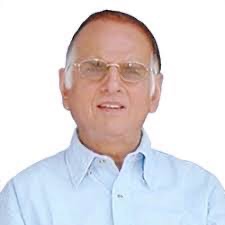
Dr. Pandhi: The Heart of Tradition in a Foreign Land
Dr. Bhim S Pandhi stood at the window of his cozy London flat, the aroma of kadhi simmering on the stove wafting through the air. The year was 1998, and though he’d lived in the UK for over two decades, the cardiologist’s heart still beat to the rhythm of his native Gujarat. Navratri was around the corner, and for Dr. Pandhi, the nine nights of devotion to Goddess Durga were non-negotiable, no matter how far he was from home.
Born in a small village near Ahmedabad in 1945, Anil was raised in a household where traditions weren’t just followed—they were lived. His mother, a devout woman, would fast during Navratri, cooking sattvic meals of sabudana khichdi and kuttu puris, filling the house with the clatter of devotion. “Beta, these nine days are for purity,” she’d say, stirring a pot of yogurt-based curry. “The Goddess watches us, and we honor her with our discipline.” Those words stuck with Anil, even as he traded the dusty lanes of Gujarat for the foggy streets of London to pursue medicine in the 1970s.
In London, Dr. Pandhi became a respected cardiologist, known for his sharp mind and warm bedside manner. But to his neighbors and colleagues, he was also the man who never let go of his roots. He’d host garba nights in his backyard, teaching bemused British friends how to twirl to the beat of “Pankhida.” His home was a shrine to Indian culture—brass idols of Ganesh and Durga adorned his living room, and every festival was marked with the same fervor as back home.
Navratri, though, was sacred. Dr. Pandhi would fast, pray, and avoid anything non-vegetarian, a practice he expected those around him to respect. One October evening, during Navratri, his teenage daughter, Meera, invited her friend Sarah over for dinner. The girls, giggling over a plate of aloo tikki, didn’t notice Dr. Pandhi’s raised eyebrow as Sarah reached for a leftover chicken sandwich from her bag.
“Sarah, beta,” Dr. Pandhi’s voice cut through their chatter, gentle but firm, like a teacher catching a student cheating. “You’re eating that? During Navratri?”
Sarah froze, mid-bite, her eyes wide. “Oh, um, is that… bad?”
Meera stifled a laugh, knowing her father’s lecture was coming. Dr. Pandhi leaned forward, his glasses slipping slightly down his nose. “Bad? It’s like inviting the Goddess to dinner and serving her a plate of disrespect! These nine days, we purify—mind, body, soul. No meat, no garlic, no onions. Just devotion and discipline.”
Sarah, flustered, mumbled an apology and stuffed the sandwich back in her bag. Meera whispered, “Don’t worry, he’s just super traditional. Wait till he makes you dance garba later.”
Dr. Pandhi chuckled, softening. “I’m not angry, Sarah. But traditions keep us grounded. They remind us who we are, no matter where we are.” He gestured to the small puja corner, where a diya flickered before a picture of Durga. “Back in Gujarat, my mother would’ve fainted if she saw meat in the house during Navratri. I’m just keeping her spirit alive.”
His devotion wasn’t just talk. Every year, Dr. Pandhi organized a community Navratri event at the local temple, where he’d lead prayers and distribute prasad—always homemade, always vegetarian. Colleagues at the hospital knew better than to offer him a burger during those nine days. Once, a junior doctor, unaware of the custom, brought him a meat pie as a thank-you. Dr. Pandhi’s face was a masterclass in polite horror. “My dear boy,” he said, handing the pie back with a smile, “give this to someone who doesn’t have a goddess watching over him this week.”
Yet, Dr. Pandhi wasn’t rigid. He’d laugh at himself, admitting his “Navratri police” tendencies could be intense. “Meera says I’m dramatic,” he’d confess to friends, “but how can I not be? It’s who I am.” His love for his culture was infectious, drawing even his British neighbors into the fold. By the late ’90s, his garba nights were the talk of the neighborhood, with everyone from Mrs. Thompson next door to Dr. Khan from the hospital attempting the dandiya sticks, though he never liked the Jagran, with its nighttime cacophony.
Dr. Pandhi passed away in 2015, but his legacy lingers. Meera still hosts Navratri gatherings, and the temple he helped build thrives. Every year, as the festival approaches, she smiles, remembering her father’s voice: “No meat, Meera. The Goddess is watching.” And in that moment, she feels him there, twirling in the garba of memory, forever tied to the culture he carried across oceans. In his relaxing moments he used to speak on Indians live of fair skin and white people.
Dr. Bhim Singh Pandhi, FRCP, was a towering figure in Indian medicine, a dermatologist whose intellect was as sharp as his wit, and whose charm could disarm even the most pompous VIPs. Born in pre-independence India, likely in the early 20th century, Pandhi rose from humble beginnings to become a celebrated physician, earning the prestigious Fellowship of the Royal College of Physicians (FRCP) in London—a rare accolade for an Indian doctor in his time. His career spanned decades, with significant contributions to dermatology, medical education, and the Indian Medical Association (IMA) in Dehradun, where he was a revered figure.
Pandhi’s fascination with fair skin was no secret, a quirk that reflected both personal taste and the cultural obsession with “gori chamri” (fair skin) prevalent in India. “Arre, ye gori chamri ka craze toh hamare desh mein epidemic hai!” he’d chuckle, his eyes twinkling with mischief, as he recounted stories of patients seeking fairness creams at his clinic. This fascination took a personal turn when he met Florence, a nurse from the United States, whose alabaster complexion and kind heart captivated him. “When I saw Florence, I thought, ‘Bas, yahi hai meri prescription for life!’” he’d quip to friends. Their marriage was a blend of East and West—Bhim, the erudite Indian doctor, and Florence, the pragmatic American nurse, building a life together in a world still grappling with cultural divides.
A man of principle, Pandhi embraced vegetarianism during Navratri, the Hindu festival of fasting and devotion. He’d frown at colleagues who sneaked non-vegetarian meals during conferences held in those sacred nine days. “Ye log yaha conference mein apna non-veg quota poora karne aate hain!” he’d mutter, shaking his head, as he savored his simple dal and roti. His disapproval wasn’t sanctimonious—it came with a playful nudge, like a parent scolding a child for sneaking sweets.
But it was at IMA events in Dehradun where Pandhi truly shone. Known for his oratorical flair, he had a knack for handling VIPs—politicians, bureaucrats, or local bigwigs—who arrived at medical conferences armed with platitudes about doctors’ societal duties. These guests often lectured physicians on avoiding “money-mindedness,” oblivious to the systemic challenges doctors faced. Pandhi, however, was no ordinary host. Before the VIP could launch into their sermon, he’d take the stage, his voice crisp, his tone measured but razor-sharp.
“Ladies and gentlemen, our esteemed guest today will surely enlighten us,” he’d begin, pausing for effect, “but first, let me highlight a few… administrative oversights.” With surgical precision, he’d list issues—underfunded hospitals, delayed reimbursements, or inadequate rural healthcare infrastructure. “If our honorable guest could address why doctors wait months for basic equipment, perhaps we wouldn’t need reminders about our ‘duty,’” he’d say, his smile polite but his words piercing. The VIP, caught off-guard, would fumble, their prepared lecture dissolving into defensiveness. “Brilliant, Pandhi sahab!” a colleague once whispered backstage. “You’ve turned the hunter into the hunted!” Few could wield such verbal dexterity, leaving the audience both amused and in awe.
Pandhi’s life wasn’t just about sharp retorts or professional triumphs. He was deeply human—a man who loved his wife’s apple pie as much as her nursing tales from America, who debated skin pigmentation with the same passion as he discussed spirituality during Navratri. His clinic was a sanctuary where patients felt heard, whether they sought treatment for eczema or just a chat with the doctor whose stories spanned continents.
Dr. Bhim S. Pandhi passed away leaving a legacy of brilliance, humor, and a touch of rebellion. To his students, he was a mentor; to his patients, a healer; and to self-righteous VIPs, a polite but formidable adversary. “Life is like a good diagnosis,” he’d say, sipping chai with Florence by his side. “You need to look closely, question boldly, and never settle for the obvious.”
Dr Pandhi was the recipient of several awards such as Pride of Uttaranchal by Doon Citizens’ Council, HN Shivpuri Award at Lucknow in 1997, Technocrats Society of India 1998, Lifetime Achievement Award for services to IMA in 2000 at Kolkata, Dr AP Shukla Memorial Award at Trivandrum and the prestigious National Award for Lifelong Services to Medical Profession at Bhubaneswar in 2004. The Indian Medical Association, Dehradun had declared him as its Bhisham Pitamah and also conferred on the Pandhi couple the Award of the Millennium. He leaves behind sons Ajay and Arun. Ajay lives in Canada and Arun in Mumbai.


 deemagclinic
 deemag and chest clinic