
Biographical Account of Dr. Asha Lata Sharma
Dr. Asha Lata Sharma, born on September 10, 1941, in a small village in Bulandshahr district, Uttar Pradesh, emerged as a trailblazer in the field of medicine and education, leaving an indelible mark on her community and the prestigious Sarojini Naidu Medical College (SNMC) in Agra. Her life story is one of resilience, determination, and quiet empowerment, set against the backdrop of a rapidly changing India.
Asha was the first child of Engineer Chandra Bhan Sharma and Subhadra Sharma, whose joy at her birth was palpable. Her father, an engineer in the Irrigation Department, served in remote postings where infrastructure was sparse. In these rugged terrains, young Asha’s early education was unconventional—she often traveled on horseback with her father to attend school, a testament to her family’s commitment to her learning despite logistical challenges. Recognizing the hardships of raising a family in such areas, Chandra Bhan made the pivotal decision to relocate his family to Agra, a city renowned as an educational hub during the mid-20th century. This move would shape Asha’s future profoundly.
Her parents, progressive for their time, believed fervently that education was the greatest gift they could offer their daughter. Encouraged to excel academically, Asha thrived in Agra’s scholarly environment. She completed her intermediate education at Murari Lal Inter College and earned a Bachelor of Science degree from Agra College, laying a strong foundation for her ambitions. In 1959, at a time when women in higher education—let alone medical education—were rare, Asha enrolled in SN Medical College. Her decision to pursue medicine was not just a personal milestone but a beacon for her four younger siblings and numerous cousins, inspiring them to value education and perseverance.
In 1962, during her final year of medical school, Asha met Dr. Avadhesh Singh Sharma, a fellow student and the son of Pt. Sheobaran Singh, the esteemed Dean of Law at Agra College. Hailing from a traditional zamindar family, Avadhesh represented a blend of heritage and modernity. Their courtship blossomed on the SNMC campus, culminating in marriage that same year. However, Asha’s father, ever the advocate for her independence, stipulated a condition for the union: Asha must complete her medical studies. This clause reflected the family’s unwavering belief in her potential and set the tone for her lifelong ability to balance personal and professional commitments.
Married into a large joint family, Asha faced the challenge of navigating her academic rigor alongside familial responsibilities. Undeterred, she completed her MBBS and, in 1967, earned her MD in Pharmacology—a field she chose strategically. Initially drawn to Gynecology, Asha completed a house job in Ophthalmology but ultimately opted for Pharmacology, recognizing that a non-clinical specialty would better accommodate her family’s needs. This pragmatic decision underscored her ability to adapt without compromising her aspirations.
On November 12, 1968, Dr. Asha Sharma embarked on her professional journey as a lecturer in the Pharmacology Department at SNMC. Over the next 31 years, she rose through the ranks, retiring as Head of the Department on September 30, 1999. Her tenure was marked by academic excellence, mentorship, and an unwavering commitment to her students. Known for her warm yet resolute demeanor, Dr. Sharma was both a compassionate educator and a formidable influence. Her lectures were not just lessons in pharmacology but also in resilience and integrity, leaving a lasting impression on generations of medical students.
Dr. Sharma’s contributions extended beyond the classroom. In the 1970s through the 1990s, she collaborated with a remarkable cohort of female doctors at SNMC, including Dr. Mrs. Lahiri, Dr. Mrs. Vimla Elhence, Dr. Kalpana Singh, Dr. Priyamvada Sharma, Dr. Sandhya Agarwal, and Dr. Shobha Kulshestra. Together, they played a pivotal role in shaping the institution’s academic policies and standards. At a time when women in medicine faced societal and professional barriers, this group quietly but powerfully advocated for excellence and inclusion. Dr. Sharma, in particular, became a role model for young women, demonstrating that ambition and family life could coexist harmoniously. Her influence empowered hundreds of female doctors who passed through SNMC’s halls, many of whom carried forward her legacy of service and scholarship.
Beyond her professional achievements, Dr. Sharma’s personal life was equally fulfilling. She raised four children, instilling in them the values of education and perseverance that had guided her own path. Her seven grandchildren, too, became part of her legacy, inheriting her warmth and strength. Supported by her family, particularly her husband, Dr. Avadhesh, Asha navigated the complexities of her dual roles with grace, proving that determination and support could overcome even the most daunting challenges.


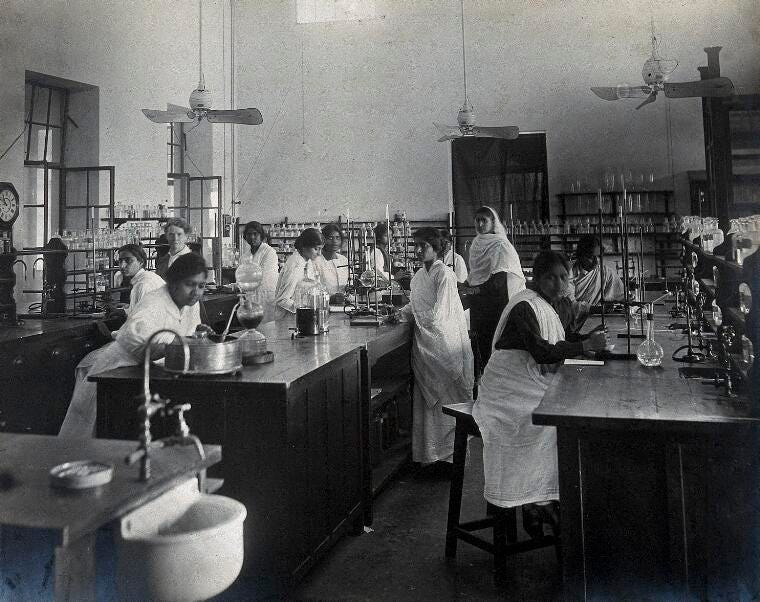
Dr. Asha Lata Sharma’s academic contributions to pharmacology and her role in elevating SNMC’s reputation remain etched in the institution’s history. Yet, her true legacy lies in the lives she touched—students who became doctors, women who found inspiration, and a family that continues to honor her memory. Her story is a reminder that quiet determination, coupled with a commitment to education, can ripple across generations, transforming communities and institutions alike.
Dr. Asha Lata Sharma passed away leaving behind a legacy survived by her four children and seven grandchildren, who continue to cherish and uphold her values. Her life remains a testament to the power of education, resilience, and the enduring impact of a gentle but unyielding spirit.

Dr. Asha Lata Sharma is recognized as the Head of the Department (HoD) of Pharmacy at S.N. Medical College, Agra. The Pharmacy Department at Sarojini Naidu (S.N.) Medical College, established in 1973, initially offered a two-year Diploma in Pharmacy course with an intake of 60 students. Over the years, it has grown in infrastructure and adheres to the norms of the Pharmacy Council of India. The department has a history of producing numerous pharmacy diploma graduates who have gone on to serve as pharmacists in government hospitals across Uttar Pradesh. Faculty members, including Dr. Asha Lata Sharma, are actively involved in both teaching and research activities.

She expired on 7/04 as a result of accidental burns. She was our teacher in Pharma. My heart felt condolences to her family. A hard working teacher. I still remember her few classes rendered by her on atropine and gentamicin. At that time it was even difficult to remember the drugs names.

God will give her peace and a high place in heaven.
S.N. Medical College, located in Agra, Uttar Pradesh, is one of India’s oldest medical institutions, named after the renowned poet and freedom fighter Sarojini Naidu. It is affiliated with Dr. B.R. Ambedkar University, Agra, and is known for its contributions to medical education and healthcare services. For more specific details about Dr. Asha Lata Sharma’s tenure, qualifications, or current activities, additional information would typically be available through the college’s official website (www.snmcagra.ac.in) or direct contact with the institution. As of now, no further public details about her specific role or achievements are widely documented beyond her position as HoD.


 deemagclinic
 deemag and chest clinic