
The air was thick with tension and the sharp, metallic scent of rain-soaked earth as the helicopter’s blades sliced through the misty Himalayan sky. It was June 2013, and the Kedarnath valley was a scene of chaos and devastation. The Chorabari glacier had burst under the weight of relentless rainfall, unleashing a torrent of water and debris that swept away lives, homes, and hope. Thousands were dead or missing, and the once-bustling pilgrimage town was a graveyard of twisted metal and shattered dreams. Yet, amid the exodus of panicked survivors fleeing the deluge, a team of five doctors from Dehradun—Dr. Rakesh Kalra, Dr. Harish Kohli, Dr. Mayank. Jain, Dr. Sudheer Shally, and Dr. Gulshan Malhotra—flew toward the heart of the disaster. They were airlifted to Guptkashi, just miles from the epicenter, on June 19, driven by a quiet resolve to save lives when everyone else was rushing out.

The makeshift medical camp at Guptkashi was a flurry of motion—tents sagging under the weight of rain, the ground slick with mud, and the air pierced by the cries of the injured and grieving. The doctors, part of the first medical team to reach the area, had barely set up when the first wave of survivors staggered in from Kedarnath, Gaurikund, and Phata. “It was like nothing I’d ever seen,” Dr. Kohli later recalled, his voice still heavy with the memory. “People were soaked, shivering, starving. Some had bones sticking out of their skin. Others… they just collapsed in front of us, too weak to stand.”

Among the chaos, an ambulance screeched to a halt outside the camp, its tires spitting mud. Paramedics rushed out, carrying a woman on a stretcher. She was motionless, her clothes torn and caked with dirt, her skin pale as the glacier that had nearly claimed her. The team froze for a moment, staring at her lifeless form. “She’s gone,” Dr. Shally whispered, his voice barely audible over the rain hammering the tent. The woman, a pilgrim from Gujarat, had been pulled from the debris near Kedarnath, her body battered by the flood’s fury. To the exhausted doctors, she looked beyond saving.
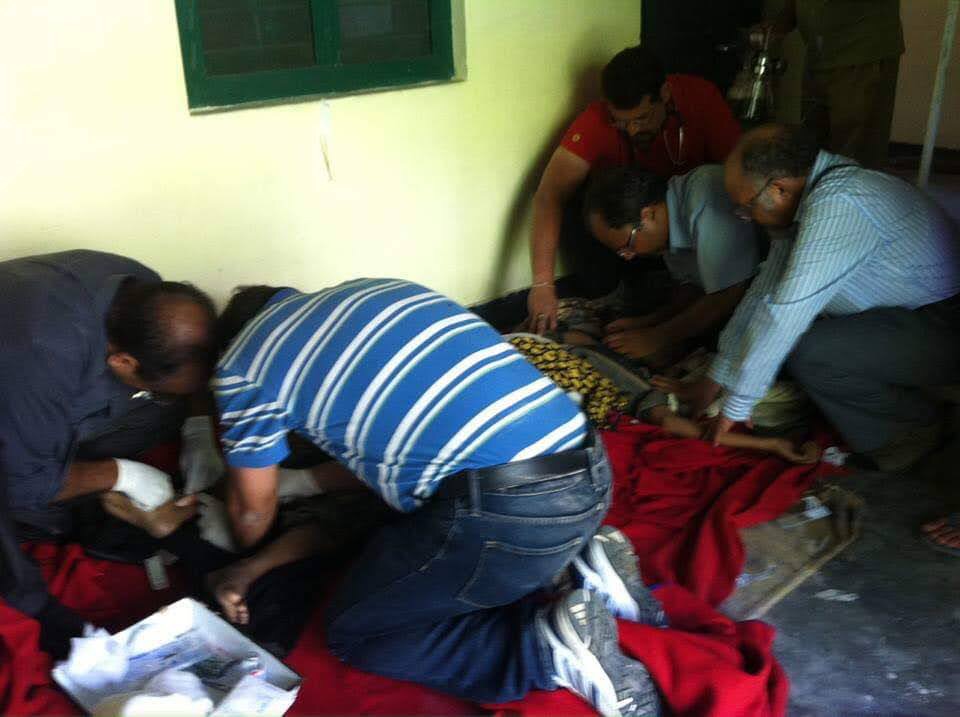
But then, Dr. Mayank Jain, the orthopaedic surgeon, leaned closer, his eyes narrowing. “Wait—did anyone else see that?” He said, his voice sharp with urgency. “I swear I saw her finger twitch.” The team snapped to attention. Dr. Kalra, the plastic surgeon , knelt beside the woman, pressing his fingers to her neck. “No pulse,” he confirmed, his jaw tightening. “But if there’s even a chance…” He didn’t need to finish. The team knew what to do.
“Get the drip ready!” Dr. Gulshan Malhotra, the general physician , barked, already pulling out a scalpel for a rapid cut-down. There was no time to search for a vein through her swollen, bruised skin. With steady hands, he made a precise incision on her arm, exposing a vein for the IV line. “Got it!” he called, as saline began to flow. Meanwhile, Dr. Kohli and Dr. Shally dropped to their knees, starting CPR on the muddy tent floor. “One, two, three—” Kohli counted, his hands pressing rhythmically on her chest, sweat beading on his forehead despite the cold. Sudhir Shally tilted her head back, ensuring her airway was clear, his eyes flicking between her face and the team. “Come on, come on,” he muttered under his breath. “You’re not done yet.”
Dr. Jain hovered nearby, preparing a catheter to stabilize her. As he worked, he gasped, “Rakesh, look at this!” He pointed to the woman’s thigh, where a jagged, twenty-inch gash gaped like a silent scream, oozing blood and mud. “How is she even alive with this?” Jain said, his voice a mix of awe and horror. Without missing a beat, he began cleaning the wound, knowing infection was a ticking time bomb in these conditions. “We’ll suture it once she’s stable,” he said, her hands moving with the precision of years spent piecing lives back together.
Minutes stretched into eternity, each second heavy with the weight of life and death. Then, a faint cough broke the silence. The woman’s chest heaved, and her eyelids fluttered. “She’s back!” Dr. Shally shouted, a grin breaking across his face. The team exhaled as one, their shoulders sagging with relief but their hands still moving, checking vitals, securing the catheter, and suturing the massive gash. “You’re a fighter,” Dr. Kalra murmured to the woman, though she was still too weak to respond. Her pulse was faint but steady now, a fragile thread tethering her to life.
As they worked, the doctors pieced together her story from the paramedics. She was a pilgrim from Gujarat, caught in the flash flood while visiting the Kedarnath temple. Swept away by the Mandakini River’s rage, she’d been trapped under debris for hours before rescuers found her. “It’s a miracle she’s here,” Dr. Gulshan said, shaking his head as he packed gauze around the sutures. “Most didn’t make it out of that valley.”
The team treated hundreds that day—nearly 600, by Dr. Kohli’s count, most suffering from dehydration, stress, or shattered bones. But this woman’s revival stayed with them. “It’s moments like these that make you believe,” Dr. Jain said later, her voice soft but firm. “You see someone come back from the edge, and you know there’s something bigger out there. God is great.” Dr. Kalra nodded, adding, “We’re just the hands. Something else was guiding us that day.”
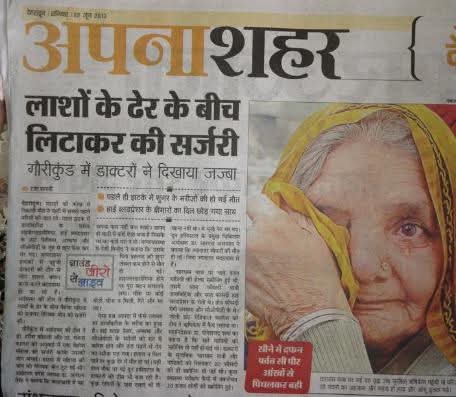
Two days later, the doctors were airlifted back to Dehradun, their bodies exhausted but their spirits buoyed by the lives they’d saved. They never learned the woman’s name or if she made it home to Gujarat. The camp at Guptkashi was overwhelmed, and records were spotty in the chaos. But as Dr. Kohli put it, “We gave her a chance. That’s what we came for.”
After a long day in the operating theater, Drs. Harish Kohli, Tyagi, Gulshan, Rakesh, Shally, and Mayank would slip into a quiet corner of the make shift hospital canteen for a quick bite. The clatter of trays and the hum of tired voices filled the air, but their little group always carved out a moment to unwind. Dr. Harish, the orthopedic surgeon with a larger-than-life presence, never missed a chance to hold court. His eyes would light up as he leaned back, a half-eaten paratha in hand, and launched into one of his stories.
“You know, I trained at King George Medical College,” he’d say, his voice carrying that familiar mix of pride and swagger most surgeons seemed to wear like a second skin. “The best, isn’t it?”
The others, chewing through their dal or sipping chai, would nod with a chorus of, “Absolutely, Harish.” They’d heard it before, but there was something comforting in the routine.
He’d grin, undeterred, and dive into his favorite tale. “Back when I was chief resident at KGMC, you won’t believe this—Chief Minister Narayan Datt Tiwari himself visited our Orthopaedic Department. Everyone was on their feet, nervous, starched coats and all. And Tiwari, he walks right up to me, folds his arms, and says, ‘Dr. Kohli, you’re the best.’ Then he looks around, all serious, and goes, ‘Mante ho ki nahi?’”
The table would erupt in soft laughter, mimicking in unison, “Mante hai!” Even Dr. Shally, usually the quiet one, would crack a smile, shaking her head at Harish’s theatrics.
But beneath the banter, a heaviness lingered. Their minds were still on the news trickling in from Kedarnath—the devastating floods, the lives lost, the chaos. The TV in the canteen corner droned on about rescue efforts, and every now and then, someone would glance at it, their fork pausing mid-air. Harish’s stories, as grand as they were, felt like a brief escape from the weight of the disaster that loomed over them all, a reminder of the fragility they faced beyond the hospital walls.
The disaster relief was organised by the Indian Medical Association (IMA) Dehradun and the Uttrakhand government with government providing logistics for IMA doctors. President IMA Dehradun, Dr Alok Ahuja team did a wonderful job.
Dr D D Chaudhury, Dr Puneet Purohit, Dr Praveen Mittal, Dr Vikrant Pathak, Dr DD Chaudhari, Dr sudhir, Dr Puneet Purohit, Dr Praveen Mittal(synergy) and Dr Alok Semwal had also rendered their services during this disaster.
Dr. Ashish Jain & Dr. S. Gandhe from ONGC Hospital also joined them in Gaurikund.
All five of (Dr. D.D. Chaudhary, Dr. Puneet Purohit , Dr. Gandhe ,Dr. Ashish Jain , Dr Saurabh Mehra)had to walk through that treacherous route of 6-7km from Gaurikund to Sonprayag to reach a relatively safe area. Rambada was totally wiped off by the deluge as if the settlement never existed.
And the relief the felt on meeting Dr. Alok Semwal & Dr. Vikrant Pathak who were there to receive them in such dire circumstances was beyond words.
The Kedarnath disaster of 2013 claimed over 6,000 lives, leaving scars on the land and its people. For the doctors from Dehradun, those days were a blur of courage, instinct, and faith—not just in medicine, but in the resilience of the human spirit and the possibility of miracles in the face of unimaginable loss.
The 2013 Kedarnath Floods: A Heart-Wrenching Tale of Loss and Resilience
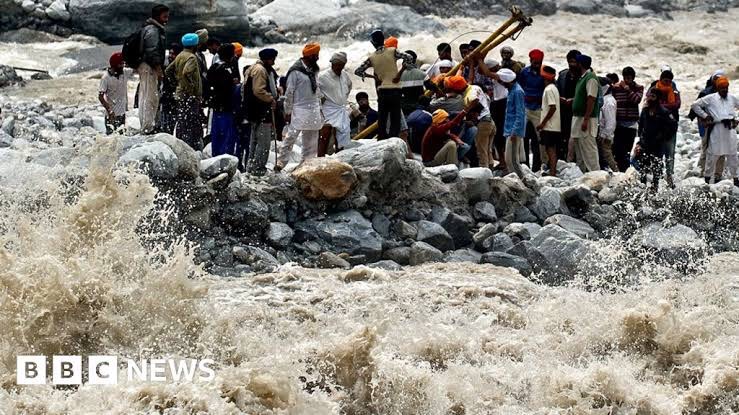
Imagine standing in the sacred Kedarnath Valley on June 16, 2013, surrounded by the towering Himalayas, the air thick with the scent of incense and the hum of prayers. For thousands of pilgrims and locals, it was a moment of devotion—until the sky unleashed a fury that changed everything. The Kedarnath floods, one of India’s worst disasters since the 2004 tsunami, tore through Uttarakhand, leaving behind a trail of heartbreak and stories of survival that still echo today.
A Night of Terror
Ram Singh, a 45-year-old shopkeeper from Ujjain, had saved for years to bring his family of 17 on the Char Dham Yatra. As they stood near the Kedarnath Temple, the ground trembled. “It was 7:18 PM,” he recalled, his voice cracking. “A sound like thunder, but louder, like the mountains were screaming.” A cloudburst had struck, and the Chorabari Glacier’s lake burst, sending a tsunami of water, mud, and boulders down the Mandakini River. “In minutes, the town was gone,” Ram said, clutching a faded photo of his wife and two daughters, who didn’t make it. He was one of five survivors in his group, rescued days later, haunted by the memory of those 15 minutes that stole his world.
Sankar Gosai, a porter from Rambara village, saw the flood coming. “It had been raining since June 14,” he said, sitting on a Dehradun rooftop years later, his eyes distant. “We knew the river was angry, but no one expected this.” His village, a bustling stop for pilgrims, vanished under the deluge. Sankar climbed a hill, clinging to a tree as he watched homes and friends disappear. “I kept praying to Lord Shiva,” he whispered. “The temple stood, like a miracle, but everything else was gone.”
The Kedarnath Temple, an 8th-century shrine to Lord Shiva, survived, shielded by a massive boulder—now called Bheem Shila—that diverted the floodwaters. For locals like Priya, a 15-year-old student who later cheered at a charity match in Dehradun, it was divine. “Shiva protected his home,” she told her friend Arjun, her voice full of awe. But the town of Kedarpuri was buried under two meters of debris, with bodies trapped in the mud, a grim reminder of the tragedy’s toll.
Why Did This Happen?
The disaster wasn’t just nature’s wrath—it was a collision of forces, some beyond control, others painfully human-made. The monsoon rains that June were relentless, dumping 375% more water than usual. A cloudburst on June 16–17 turned the Mandakini River into a monster, fed by the melting Chorabari Glacier. Landslides blocked rivers, creating deadly surges. “The Himalayas are fragile,” said Hemant Dhyani, an environmentalist who lost friends in the floods. “We pushed them too far.”
Human choices made it worse. Hotels, lodges, and roads had sprouted unchecked around Kedarnath, built on floodplains with little regard for the land. Over 70 hydroelectric dams destabilized the mountains, their tunnels and blasting loosening slopes. “We built as if the Himalayas would forgive us,” Hemant sighed. When the floods came, debris from these projects clogged rivers, amplifying the destruction. Pilgrims, over 100,000 strong, were stranded with no evacuation plan, caught in a system that failed to heed warnings of heavy rain.
The Human Cost
The numbers are staggering—over 6,000 people presumed dead, including 934 locals, with thousands missing. The World Bank pegged losses at USD 3.8 billion, crippling Uttarakhand’s economy. Tourism, the region’s lifeblood, collapsed, costing USD 195 million. Over 1,500 roads and 154 bridges were washed away, isolating villages for weeks.
But numbers don’t capture the pain. Rakesh Singh, a 36-year-old pilgrim, clung to the temple’s roof as the waters rose. “I saw my family swept away,” he said, his voice hollow. “My sister, my parents—12 of them, gone.” He survived, but the memory of their screams lingers. Others, like Ram Karan Beniwal, endured days in trees, starving and cold, watching fellow pilgrims succumb. “I lost my wife,” he said, his eyes red. “But I’d take my kids back to Kedarnath. It’s still holy.”
For locals, the loss was personal and collective. Sankar’s neighbor, Meena, ran a small tea stall in Rambara. “She’d give free chai to tired pilgrims,” he said, smiling faintly. “Her stall, her home, her life—all gone.” Contaminated water brought fever and diarrhea, adding to the survivors’ struggles.
Heroes in the Chaos
Amid the despair, stories of courage emerged. The Indian military’s Operation Surya Hope and Operation Rahat became lifelines. Soldiers, pilots, and divers risked their lives, evacuating 110,000 people. Air Force helicopters flew 2,137 sorties, dropping 336,930 kg of food and supplies. Roshan, a palanquin bearer, remembered the chaos: “The fog was thick, but those helicopters kept coming. I carried an old woman to safety—she called me her son.” Tragically, a rescue chopper crashed near Gauri Kund on June 25, killing 20 heroes on board.
In Dehradun, months later, the community rallied. On October 3, 2013, West Indian cricket legend Brian Lara stepped onto the Abhimanyu Cricket Academy ground for a charity match to raise funds for flood victims. Dr. Alok Ahuja, the charismatic IMA president, had pulled off a miracle. “I told Brian, ‘These families need hope,’” he grinned, recalling their call. “He said, ‘Alok, I’m in—let’s do this for Uttarakhand.’”
At the match, 15-year-old Priya clutched her sign, “Lara, you’re our hero!” “When he hit that cover drive, it felt like he was batting for all of us,” she told Arjun, her best friend. Arjun nodded, a bit wistful. “Wish Dhoni was here—his wife’s from Uttarakhand. He’d have smashed it for us.” The funds raised built a small hospital in Guptakashi, a lifeline for survivors like Ram Singh, who needed care for injuries and grief.
Rebuilding, But at What Cost?
Reconstruction began slowly. By 2015, the 18-km trek to Kedarnath was restored, and retaining walls lined the Mandakini River. But experts like Ravi Chopra, who led a Supreme Court panel, warned of repeating mistakes. “We’re building more dams, inviting more pilgrims,” he said in 2024, after another landslide. “The Himalayas can’t take this.” Hemant Dhyani agreed: “We need sustainable tourism, not greed.”
For survivors, Kedarnath remains sacred. Ram Karan, now a father of two, plans to return. “My wife loved this place,” he said. “I’ll show my kids her faith.” Priya, now older, still talks about the charity match. “Lara gave us a day to smile,” she said. “But we can’t forget what we lost.”
A Lasting Echo
The Kedarnath floods were a tragedy of nature and human error, claiming thousands of lives and shattering communities. Yet, in the temple’s survival, the military’s bravery, and moments like Lara’s charity match, Uttarakhand found glimmers of hope. The scars remain—grief for the lost, warnings unheeded—but so does the resilience of people like Ram, Sankar, and Priya, who carry the spirit of the mountains forward.


 deemagclinic
 deemag and chest clinic