
Biography of Dr. Man Mohan Singh: The Lion of the Lecture Theatre
Dr. Man Mohan Singh, affectionately dubbed “MurMur Singh” by his students, was a towering figure in the world of medical education at S.N. Medical College in Agra, India. A burly Sikh with distinctive upturned mustachios and an indomitable spirit, Dr. Singh was a force of nature in the lecture theatre. His nickname, derived from his penchant for teaching and quizzing students on cardiac murmurs, captured both his academic obsession and his larger-than-life presence. With a restless energy that saw him pace the dais like a caged lion, Dr. Singh left an indelible mark on generations of medical students, blending rigorous scholarship with an infectious passion for medicine.
Early Life and Education
Born in Punjab in the early 1940s, Man Mohan Singh grew up in a family that valued education and discipline. From a young age, he displayed a sharp intellect and a curiosity about the human body, often poring over medical texts borrowed from a local doctor. After excelling in his pre-medical studies, he pursued his MBBS at a prestigious institution, s n medical college agra, batch 1961, where his fascination with cardiology and neurology began to take shape. He later earned an MD in Internal Medicine, specializing in cardiology, which would become his academic hallmark. His Sikh heritage instilled in him a sense of duty and resilience, qualities that defined his career.
A Teaching Legend at S.N. Medical College
Dr. Singh joined the faculty of S.N. Medical College in Agra in the 1970s, rising through the ranks to eventually become the Head of the Department of Medicine. In an era devoid of PowerPoint presentations or digital aids, Dr. Singh relied on his prodigious memory and chalkboard sketches to deliver lectures. His teaching style was a blend of theatricality and precision, with a commanding presence that filled the lecture theatre.
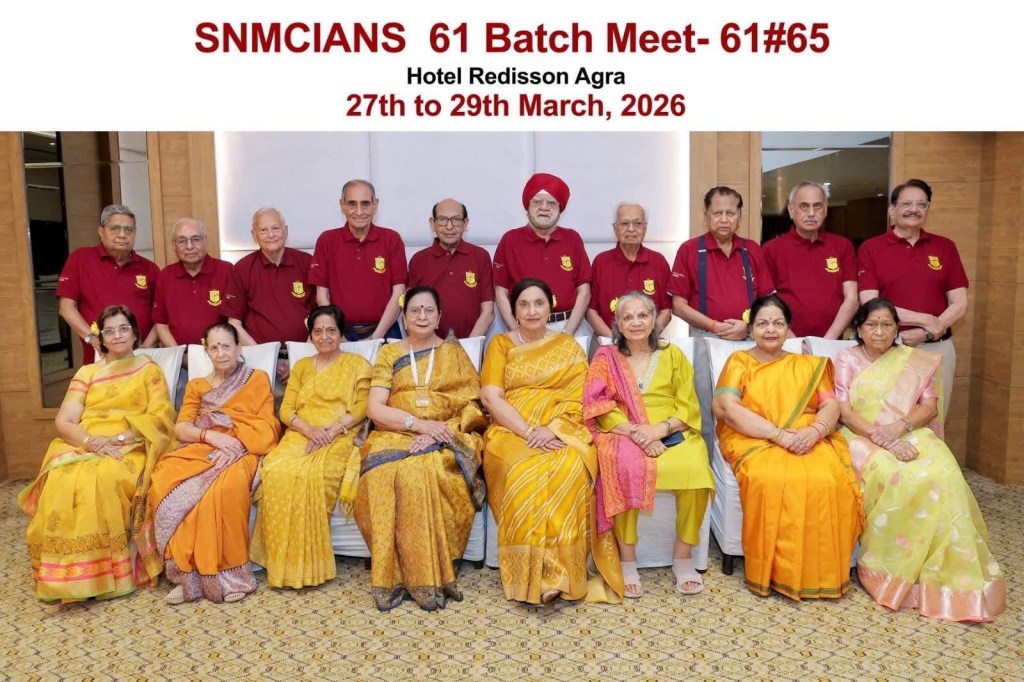
“Alright, students, let’s talk murmurs!” he would bellow, his turban bobbing as he paced the dais. “Tell me, what’s the murmur of mitral stenosis? And don’t you dare say ‘I don’t know’—I’ll have you recite all 17 causes of hepatosplenomegaly instead!” His students, equal parts intimidated and inspired, scrambled to answer, knowing that a correct response could earn a rare nod of approval or even a hearty “Very goof!”—his endearing mispronunciation of “good.”

Dr. Singh’s lectures were marathons of medical knowledge, often diving into exhaustive detail. His sessions on electroencephalography (EEG) were legendary, though some students whispered that the essentials sometimes got lost in the weeds of his enthusiasm. “The brain waves, they speak to us!” he’d exclaim, sketching complex waveforms on the board. “You must listen to them like a poet listens to the wind!” Yet, his ability to recall obscure causes of diseases—such as vertebrobasilar artery insufficiency as a cause of vertigo—set him apart. When a student offered such a rare gem, Dr. Singh’s eyes would light up, and he’d clap his hands, saying, “Brilliant! You’ve earned your place in the hall of medicine today!”
The Lion’s Resilience
Dr. Singh’s physical presence was as formidable as his intellect. His restless pacing during lectures earned him the nickname “the caged lion,” a moniker that became even more fitting when he broke his leg in the 1990s. Undeterred, he continued to teach with his leg in a cast, limping across the dais with a crutch in one hand and chalk in the other. “Pain is temporary, knowledge is eternal!” he declared to a stunned class, launching into a flawless discourse on cardiac pathophysiology. His students marveled at his grit, whispering among themselves, “Only MurMur Singh could lecture through a fracture!”
A Friendship Forged in Medicine
Dr. Singh shared a close camaraderie with Dr. R.K. Jain, a fellow professor at S.N. Medical College. The two could often be seen huddled in Dr. Jain’s office, debating medical cases or sharing a laugh over a cup of chai. “R.K., my friend, you think diabetes is tricky? Try deciphering a pansystolic murmur in a noisy ward!” Dr. Singh would tease, his booming laugh echoing down the corridor. Their friendship was a source of warmth in the high-pressure world of medical academia, and students admired the mutual respect between the two giants.
Retirement and Legacy
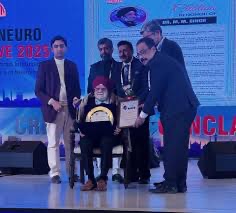
Dr. Singh retired as Head of the Department of Medicine in the early 2000s, leaving behind a legacy of excellence and a generation of doctors who carried his teachings into their practices. His son, Dr. Amanpreet Singh, followed in his footsteps, becoming a respected neurologist in Agra. “My father taught me that medicine is not just science—it’s a calling,” Amanpreet once said in an interview, crediting his father’s passion for inspiring his own career.
Even in retirement, Dr. Singh remained a beloved figure, occasionally visiting the college to deliver guest lectures. Students from later batches, who knew him only by reputation, would gather to hear stories of the caged lion who roared about murmurs and demanded perfection. “He made us better doctors,” one alumnus recalled. “He taught us to think beyond the textbook, to chase the rare diagnosis, and to never stop learning.”
A Human Touch
Beyond his academic rigor, Dr. Singh had a softer side that endeared him to those who knew him well. He was known to slip a piece of gur (jaggery) to a nervous student before an exam, saying, “Sweeten your mind, and the answers will come!” His love for Punjabi music was no secret, and on rare occasions, he’d hum a folk tune while grading papers, a faint smile beneath his mustachios.
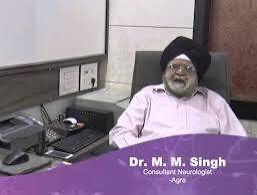
Dr. Man Mohan Singh’s life was a testament to the power of passion and perseverance. In the lecture theatre, he was a lion; in the hearts of his students, he was a legend. His story reminds us that great teachers do more than impart knowledge—they ignite a lifelong quest for understanding.
Dr. MM Singh: A Dedicated Physician with a Passion for Cleanliness
Dr. MM Singh was a distinguished physician whose commitment to medicine was matched only by his meticulous attention to cleanliness and precision in all aspects of his life. Known for his quiet demeanor, Dr. Singh carried an air of calm professionalism, but his fastidious nature left a lasting impression on colleagues and staff alike.

In the hospital, Dr. Singh stood out as the only attending physician who made it a ritual to wash his hands thoroughly after every ward visit. The staff nurses, well aware of his habits, would prepare a basin filled with water and Savlon, along with a clean towel, ready for his use. With unwavering focus, Dr. Singh would vigorously scrub his hands, ensuring they were immaculate before drying them off. This practice was not just a routine but a testament to his deep respect for hygiene and patient safety.
This meticulousness extended beyond the hospital. Colleagues recall watching Dr. Singh prepare an apple with the same care he applied to his medical practice. Before eating, he would scrub the apple vigorously under running water, then carefully peel it with a knife, ensuring every slice was pristine. This small act reflected his disciplined and methodical approach to life, blending precision with a quiet determination to do things right.
Dr. Singh’s blend of quiet compassion, clinical excellence, and an almost obsessive commitment to cleanliness made him a unique figure in the medical community. His legacy lives on in the countless patients he cared for and the colleagues who admired his unwavering dedication.
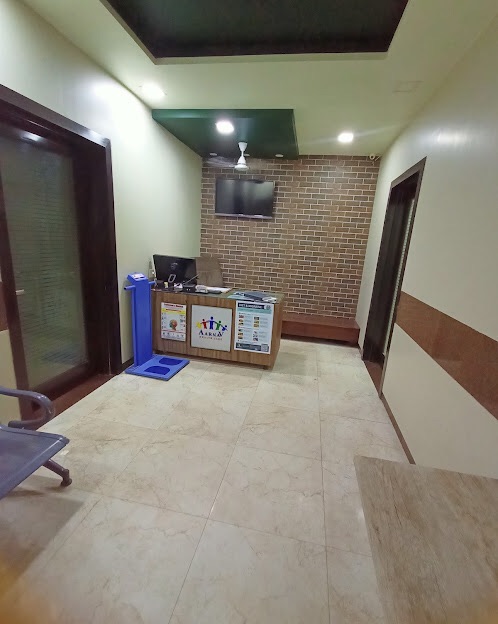
Dr. M.M. Singh is an Internal Medicine specialist and Neurologist based in Jaipur House Colony, Agra, with over 56 years of experience in the medical field. He practices at Aarnav Health Care and Dr. M.M. Singh Clinic in Jaipur House Colony, Agra. Dr. Singh completed his MBBS in 1966 and MD in Medicine in 1969, both from Sarojini Naidu Medical College, Agra. He specializes in Internal Medicine and provides services such as Video EEG.
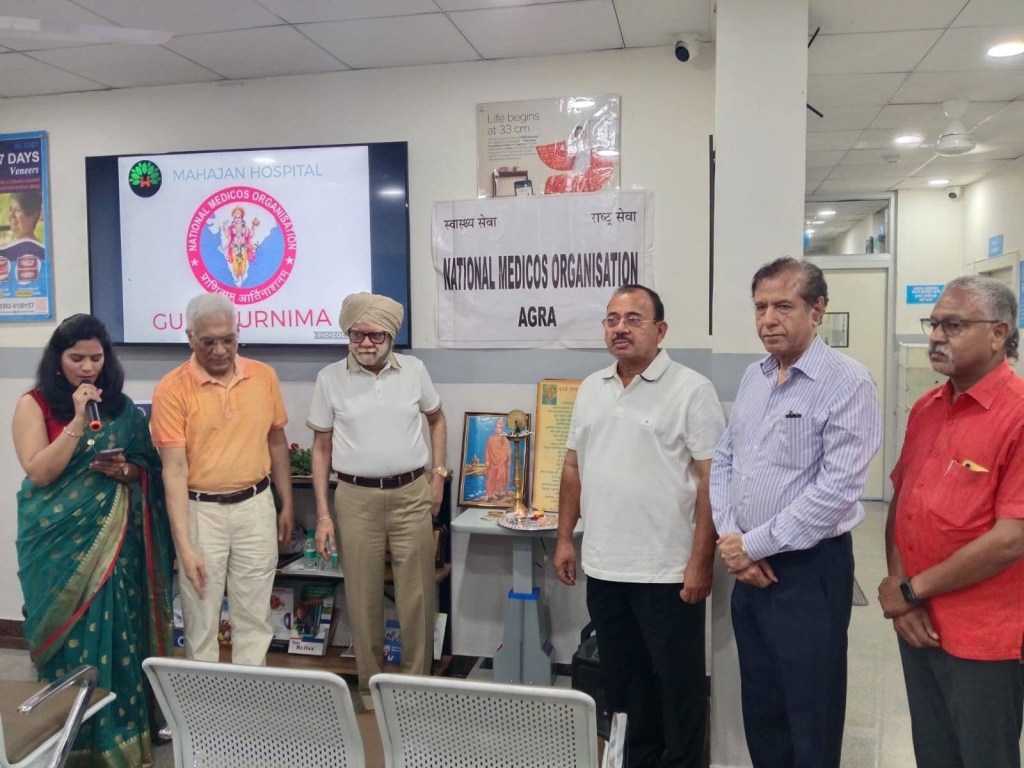
Dr. Singh has held significant leadership roles, including Past President of the Indian Association of Clinical Medicine, Past Chairman of the Association of Physicians of India (U.P. Chapter), Past Vice Dean of the Indian College of Physicians, Past Vice President of the Geriatric Society of India, and Past Member of the Governing Body of the Association of Physicians of India. He served as Director, Professor, and Head of the Department of Medicine at S.N. Medical College from 2001 to 2003. His contributions to medicine have been recognized with awards such as the B.C. Bansal and Mrs. Uma Bansal Oration Award by the Indian Academy of Physicians Medicine, the Prof. M.P. Malhotra Oration Award, and the Prof. M.L. Mittal Oration Award by the Association of Physicians of India, U.P. Chapter.
His clinic is located at Unit No. 156, Jaipur House Colony, Agra, Uttar Pradesh, with a consultation fee of approximately ₹550. Dr. Singh is highly regarded, with a 4.7/5 rating based on 27 customer reviews on Justdial, and patients have praised his ability to treat conditions like lower back pain due to spasms effectively.
Expanded Biography of Dr. Man Mohan Singh: A Master of Teaching Methods
Dr. Man Mohan Singh, fondly known as “MurMur Singh” to his students at S.N. Medical College in Agra, India, was not just a professor of medicine but a pedagogical titan whose teaching methods left an enduring impact on generations of medical students. A burly Sikh with upturned mustachios and a restless energy that saw him pace the lecture theatre dais like a caged lion, Dr. Singh combined theatrical flair, intellectual rigor, and innovative techniques to make complex medical concepts accessible and unforgettable. In an era without PowerPoint or digital aids, his teaching methods relied on memory, storytelling, and a relentless drive to push students beyond rote learning. Below is an expanded exploration of his teaching methods, woven into a humanized biography that highlights his unique approach. In my examination he asked for graham stele murmur and was greatly disappointed that I did not know I was reading old edition of Davidson the new one had it in colour.
The Lecture Theatre as a Stage
Dr. Singh viewed the lecture theatre as his stage, and every lecture was a performance. Standing at the dais, his turban a beacon of authority, he would stride back and forth, chalk in hand, his deep voice commanding attention. His restless energy was infectious, keeping students alert even during the drowsiest afternoon sessions. “Medicine is not a textbook, it’s a living, breathing puzzle!” he’d declare, slamming a fist on the table for emphasis. His pacing wasn’t just a quirk—it was a deliberate tactic to maintain engagement, ensuring no student could drift off unnoticed.
In the absence of modern technology, Dr. Singh’s blackboard was his canvas. He sketched intricate diagrams of the heart, brain, and vascular systems with startling precision, often pausing to ask, “Who can tell me what this valve does? Speak up, or I’ll make you draw it yourself!” These interactive moments forced students to think on their feet, fostering a dynamic classroom environment. His diagrams were so detailed that students often copied them verbatim, knowing they’d be quizzed on every nuance.

The Socratic Method: Questioning to Inspire
Dr. Singh was a master of the Socratic method, using relentless questioning to probe students’ understanding and spark critical thinking. His favorite topic, cardiac murmurs, was a staple of his interrogations. “Tell me the murmur of aortic regurgitation,” he’d demand, pointing at a student in the back row. If the answer was vague, he’d raise an eyebrow and say, “You think that’s enough? Give me the pitch, the timing, and where you’d hear it best!” His questions weren’t meant to intimidate but to push students to connect clinical signs with pathophysiology.
His quizzes extended beyond cardiology. He was notorious for demanding students recite all 17 causes of hepatosplenomegaly, a list that became a rite of passage for his classes. “Don’t just memorize—understand why each cause matters!” he’d insist. When a student ventured a rare diagnosis, like vertebrobasilar artery insufficiency for vertigo, his face would light up. “Very goof!” he’d exclaim, his mispronunciation a cherished hallmark. “You’ve thought beyond the obvious—now tell me how you’d confirm it!” This encouragement of rare diagnoses cultivated a mindset of curiosity, urging students to explore the fringes of medical knowledge.
Storytelling and Mnemonics
Dr. Singh believed that stories were the glue that made medical facts stick. He wove vivid clinical anecdotes into his lectures, transforming dry topics into gripping narratives. Teaching about EEGs, he’d recount cases from his ward rounds, like the patient whose seizure pattern he deciphered through a meticulous EEG reading. “The brain is a symphony, and the EEG is its sheet music,” he’d say, sketching waveforms with a flourish. “Learn to read it, and you’ll hear the patient’s story.” He was so detailed that he talked about subharmonics in EEG when we were at task understanding waveform.
To aid memory in an era reliant on rote learning, Dr. Singh crafted mnemonics that were as colorful as they were effective. For the causes of hepatosplenomegaly, he devised a rhyme: “Infections, blood, and tumors galore, don’t forget the heart that makes the liver soar!” Students recited these mnemonics years later, chuckling at their quirky charm. His storytelling and mnemonic techniques ensured that even the most arcane details—like the differential diagnosis of a systolic murmur—remained etched in his students’ minds.
Hands-On Learning and Ward Rounds
Dr. Singh’s teaching wasn’t confined to the lecture theatre. His ward rounds were masterclasses in clinical application. He’d gather students around a patient’s bed, pointing out subtle signs like a jugular venous pulse or a palpable spleen. “Feel this, listen to that,” he’d instruct, guiding a student’s stethoscope to catch a faint diastolic murmur. “The patient is your textbook—read it carefully!” His hands-on approach bridged theory and practice, teaching


 deemagclinic
 deemag and chest clinic