
The anatomy hall of our medical college in Agra was a place of cold steel, formaldehyde fumes, and relentless memorization. Cadavers lay side by side, much like the friendships we forged in those grueling years. My batchmate, Dr. Rajvir Pratap Sharma, was always on the next cadaver over, his scalpel moving with a precision that matched his ambition. His father, a DYSP in the Agra police, was a figure of authority, and their home—a sprawling, orderly place—became our occasional hangout. I can still picture Rajvir there, pacing the courtyard, muttering differential diagnoses under his breath like a mantra. “PK, you think I’ll ever forget the causes of splenomegaly?” he’d grin, tapping his temple. “It’s all up here, Gupta, locked and loaded.”
Rajvir was intense, no doubt about it. His mind was a machine, churning through endless lists of disorders and their causes. But he could be brash, too. I’ll never forget the day he squared off with Raj Kumar Agarwal from Saharanpur. It was over something trivial—probably a borrowed textbook or a snarky comment in the hostel mess—but it escalated fast. “You think you’re smarter than me, Agarwal?” Rajvir barked, his voice echoing in the corridor. Fists flew, and before we knew it, they were rolling on the floor, a tangle of egos and youthful bravado. We pulled them apart, laughing it off later, but Rajvir’s fire was undeniable. Agarwal went on to become an ophthalmologist, but Rajvir? He was destined for bigger things.
He aced the MS Orthopaedics entrance, but medicine wasn’t his calling. “PK, I’m not here to fix bones forever,” he told me one evening over chai at a roadside stall. “I want to make a dent in the system. IPS, that’s where I’m headed.” And he did. Rajvir joined the Indian Police Service, rising through the ranks with the same relentless drive he’d shown in the anatomy hall. His reputation grew, and so did the stories. Dr. Ram Saran Singh Chauhan, another batchmate, once told me about a trip to Bangalore where Rajvir arranged a red-beacon car for him to tour the city. “PK, you should’ve seen it,” Saran chuckled over a phone call. “A red beacon! Felt like I was some VIP, all thanks to Rajvir. That guy knows how to make things happen.”
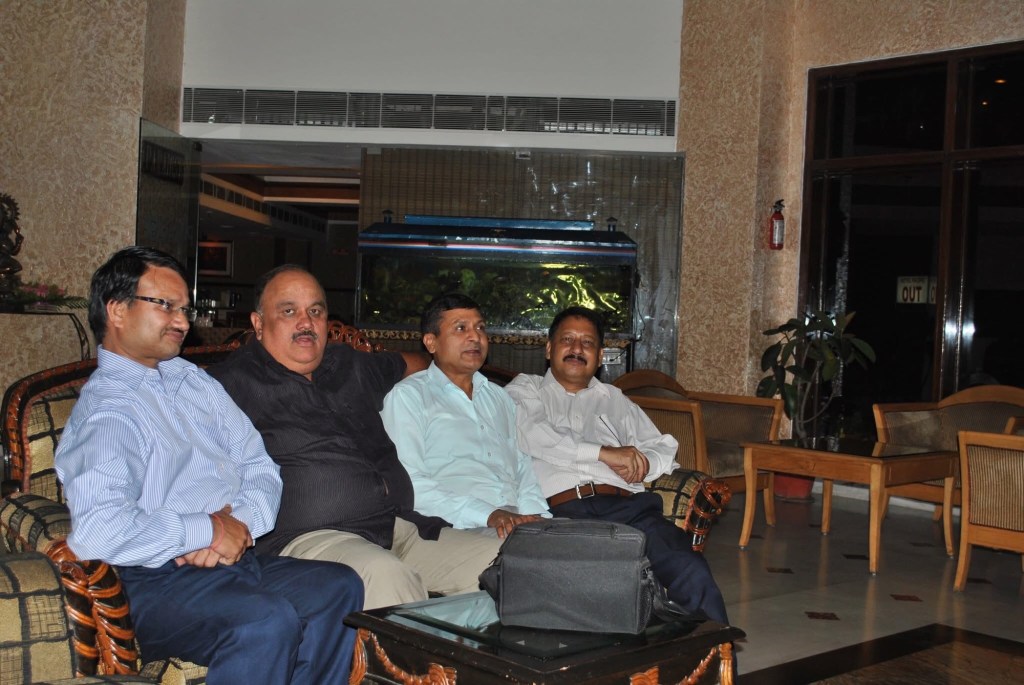
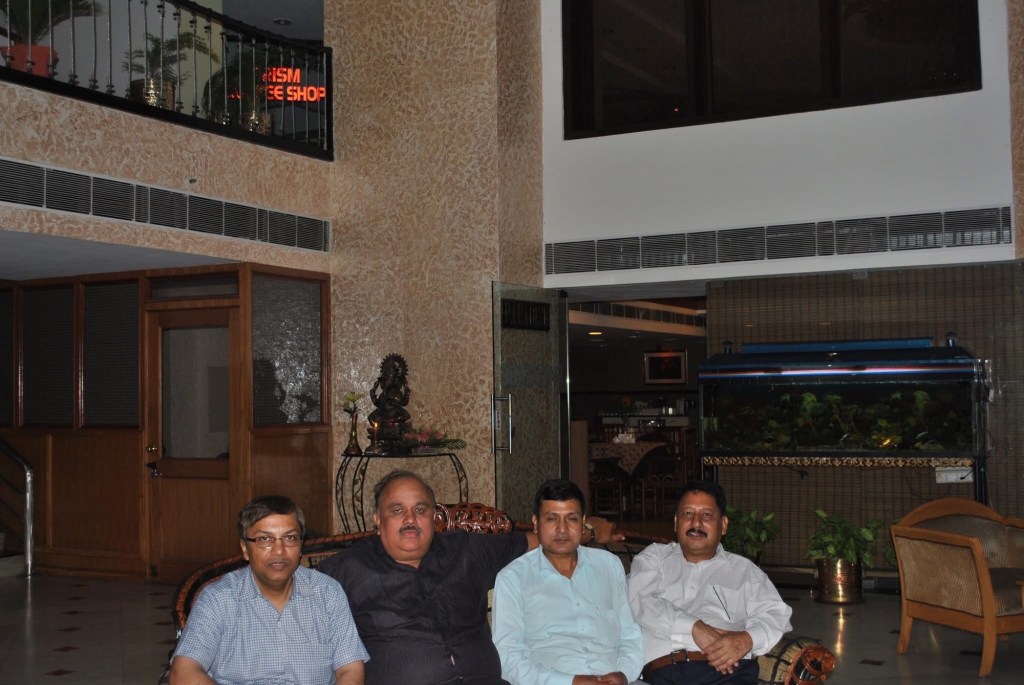
Years later, we reunited in Dehradun during an IPS conference in Mussoorie. Rajvir rolled into town, all charisma and command, but still the same guy who’d mumble diagnoses in Agra. We threw a party at the Pacific Hotel, the kind of night where old friends trade stories and laughter over whisky and nostalgia. “PK Gupta, you old dog!” Rajvir roared, clapping me on the back. “Still saving lives, or just breaking hearts now?” We laughed, clinked glasses, and reminisced about the days when our biggest worry was passing the next viva.
He’d married an IAS officer by then, a power couple in every sense. “She keeps me in check, PK,” he winked. “Someone’s gotta.” But beneath the bravado, I saw a flicker of something softer—a man proud of his life but always chasing the next summit.
Then came the cancer. Liver cancer, ruthless and unforgiving. It shook him, and it shook us. Rajvir, the unstoppable force, was suddenly mortal. I called him when I heard, my voice catching. “Rajvir, you’re tougher than this. You’ll fight it, right?” He laughed, but it was hollow. “PK, I’ve fought a lot of things. This one’s… different.” He was disturbed, not just by the disease but by what it meant for the life he’d built.

The news of his accident with his service revolver hit like a thunderbolt. It was all over the papers, shrouded in speculation and whispers. An accident, they said, but we all wondered. Rajvir was too sharp, too careful. The truth was murky, and it hurt to think about. He didn’t talk about it when I reached out, just said, “Gupta, life’s a bloody mess sometimes, isn’t it?”
He succumbed to the cancer not long after. The news reached me on a quiet evening in Dehradun, and it felt like a piece of my past had been carved away. Rajvir Pratap Sharma—brash, brilliant, unstoppable—gone. I sat in my study, staring at an old photo of our batch, his grin frozen in time. “You were one of a kind, Rajvir,” I whispered to no one. And in that moment, I could almost hear him muttering diagnoses, ready to take on the world.

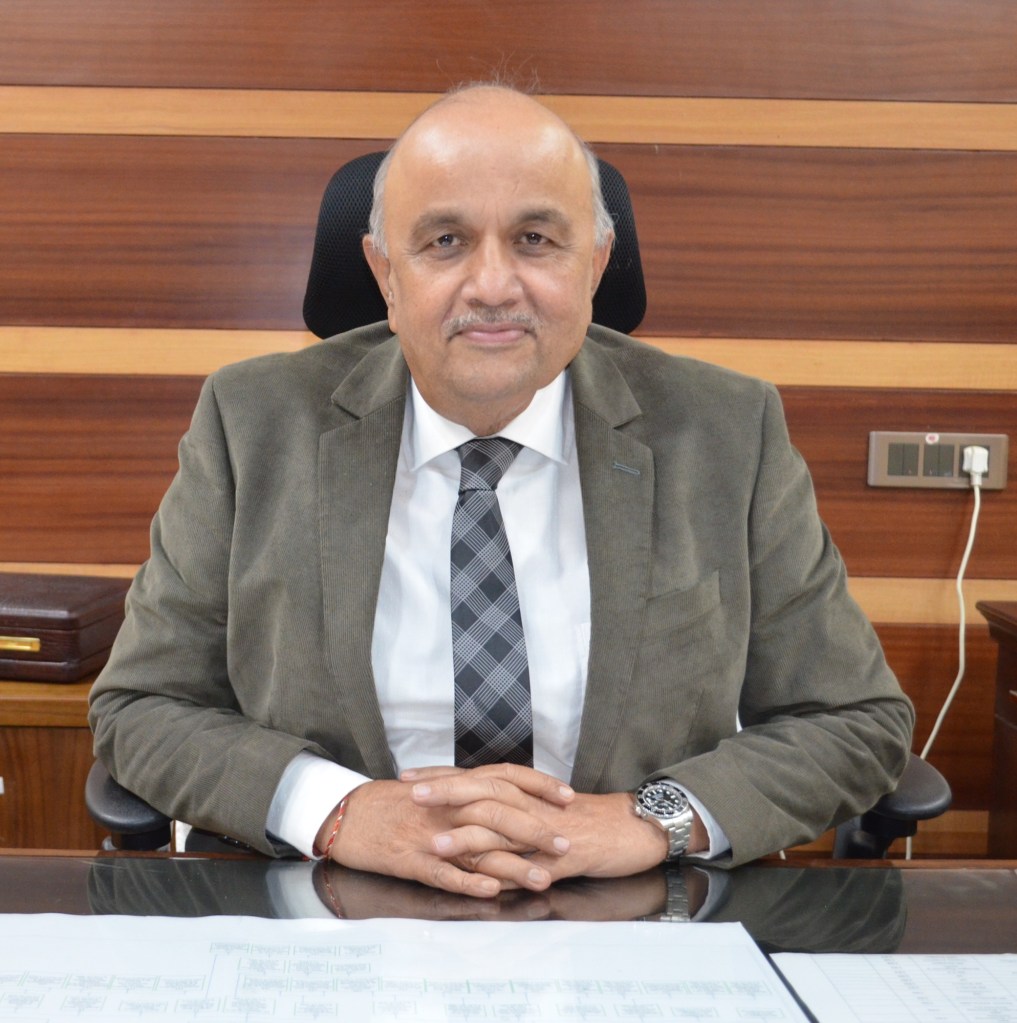
Dr. Rajvir Pratap Sharma was a distinguished Indian Police Service (IPS) officer of the 1987 batch, Karnataka cadre, who served in various significant roles within the Karnataka Police and other organizations. Below is a comprehensive biography based on available information:
Early Life and Education
- Birth: Dr. Rajvir Pratap Sharma was born around 1960.
- Education: He held an MBBS degree, indicating a background in medicine before transitioning to a career in civil services. He further pursued education at Annamalai University, as noted in his LinkedIn profile.
- Civil Services: He joined the Indian Police Service (IPS) in 1987, opting for a career in law enforcement, where he rose to prominent positions.
Career in the Indian Police Service
Dr. Sharma had a notable career spanning over three decades in the Karnataka Police, marked by significant contributions and challenges:
- Key Roles:
- Director General of Police (DGP), Karnataka State Police Housing & Infrastructure Development Corporation: At the time of his retirement in December 2020, Sharma was serving as the Managing Director of this corporation, overseeing infrastructure development for the police force.
- Additional Director General of Police (ADGP): He served as ADGP and was the president of the IPS Officers’ (Karnataka) Association in 2018, where he voiced concerns about political interference in policing.
- In-Charge, Bangalore Metropolitan Task Force (2017): Sharma earned accolades for his work in clearing encroachments from stormwater drains and other public lands in Bengaluru.
- Managing Director, Karnataka State Handicrafts Development Corporation Ltd (Cauvery): Post-retirement, he took on a role overseeing general administration and operations of this organization, as per his LinkedIn profile.
- Deputation with Government of India: He served as Director General in the Railway Protection Force (RPF) in New Delhi, indicating his involvement in national-level security operations.
- Significant Contributions:
- Crime Prevention and Investigation: Sharma was involved in the general supervision and control of police operations, prevention and detection of crimes, and handling disciplinary proceedings. He also focused on inspections, supervision of investigations, and coordination with agencies like the Railway Protection Force.
- Forest Brigand Operation: He played a role in efforts to apprehend a notorious forest brigand wanted across three states for heinous crimes, contributing to the protection of forest and natural resources.
- Coastal Security: Sharma worked on establishing a security network in coastal areas, liaising with other security agencies and gathering intelligence to enhance public confidence.
- Training and Administration: As a senior officer, he assessed training needs, restructured curricula, and managed budget preparation, procurement, and maintenance for the Karnataka Police force of approximately 62,000 personnel.
- Advocacy for Police Reforms:
- In 2018, as president of the IPS Officers’ (Karnataka) Association, Sharma wrote a letter to the Chief Secretary of Karnataka, K. Ratna Prabha, highlighting political interference in police operations, frequent transfers of officers, and a decline in law and order. He cited incidents such as the attack on Lokayukta Justice P. Vishwanath Shetty, the assault by a Congress MLA’s son, and other violent incidents as evidence of a deteriorating security fabric. He urged for a meeting to strategize for fair elections and to instill professional values in the police force.
- His outspoken criticism led to controversy, with the then-Chief Minister Siddaramaiah’s office stating that Sharma’s views were personal and not endorsed by the IPS Association’s executive committee. The government considered disciplinary action against him for his public stance.
Personal Life and Challenges
- Health Issues: Sharma faced multiple health ailments, including cancer, which he was battling at the time of his death.
- Accidental Injury: In September 2020, Sharma sustained serious injuries when his service pistol misfired while he was cleaning it at his residence in Kothanur, Bengaluru. Two bullets struck his neck and chest, requiring immediate hospitalization at Columbia Asia Hospital in Hebbal. He was reported to be out of danger at the time but continued to face health challenges.
Retirement and Death
- Retirement: Sharma retired from the IPS on December 31, 2020, as DGP of the Karnataka State Police Housing Corporation.
- Death: Dr. Rajvir Pratap Sharma passed away on February 3, 2021, at 5:45 PM in Bengaluru, succumbing to cancer. He was 60 years old. His cremation took place the following day at Hebbal crematorium.
Legacy
Dr. Rajvir Pratap Sharma was remembered as a bold and principled officer who advocated for police autonomy and professionalism in the face of political challenges. His efforts in crime prevention, infrastructure development, and public safety left a lasting impact on the Karnataka Police. His outspoken letter in 2018, though controversial, highlighted systemic issues in policing and sparked discussions on the need for reforms. His contributions to clearing encroachments in Bengaluru and his work in coastal security and forest protection underscored his commitment to public service.
Notes
- There is no evidence from the provided sources that Dr. Sharma served as the Director General of Police (DGP) for the entire Karnataka Police force. His DGP role was specific to the Karnataka State Police Housing & Infrastructure Development Corporation.
- The sources do not provide detailed personal information, such as his birthplace, family details, or early career assignments, limiting the scope of this biography.
If you require further details or specific aspects of his life (e.g., family, early career, or specific cases he handled), please let me know, and I can attempt to search for additional information or clarify based on available data.
        IN THE HIGH COURT OF KARNATAKA AT
                     BANGALORE

       DATED THIS THE 08TH DAY OF APRIL, 2013

                           BEFORE

     THE HON'BLE MR. JUSTICE ANAND BYRAREDDY

           CRIMINAL PETITION No. 3557 of 2007

BETWEEN:

Sri. Rajvir Pratap Sharma, IPS,
Son of Sri M.P. Sharma,
Aged about 46 years,
At present working as
Inspector General of Police,
Southern Range, Mysore.               ...PETITIONER

(By Shri. H.P. Leeladhar, Advocate)

AND:

1.     Sri. A.P. Singh,
       Superintendent of Police,
       CBI, ACB, No.36,
       Bellary Road,
       Bangalore.

2.     Dr. Dilip Kumar,
       DIG, Training, Itangar,
       Arunachala Pradesh.

3.     Sri. Ashok Kumar,
                                   2


      Inspector of Police,
      C/o. Joint Director, DBI,
      Chennai.                         ...RESPONDENTS

(By Shri. Prasanna Kumar, Advocate for Respondent No.1/CBI
M/s. Pramila Associates for Respondent No.1)

                              *****
      This Criminal Petition is filed under Section 482 code of
Criminal Procedure, 1973, praying to quash the order dated
30.4.2007 passed by the XIII Additional Sessions Judge, Mayo
Hall Unit, Bangalore City in Criminal Revision Petition
No.15017/2005, dismissing the complaint and confirming the
order of the trial court dated 22.3.2005 thereby quash the order
dated 22.3.2005 passed by X Additional Chief Metropolitan
Magistrate, Bangalore City in PCR No.147/2004.

      This petition is coming on for Hearing this day, the court
made the following:

                          ORDER
Heard the learned Counsel for the petitioner and the learned Counsel for the respondents.
2. It is the case of the petitioner that he is a member of the Indian Police Service (IPS) and that his wife is a member of the Indian Administrative Service (IAS). The petitioner had filed a complaint before the X Additional Chief Metropolitan3 Magistrate, Bangalore in PCR No.147/2004, alleging offences punishable under Section 500 of the Indian Penal Code, 1860 (Hereinafter referred to as the ‘IPC‘, for brevity) and stating that the complainant is an IPS Officer and that at the time of lodging the complaint, he was working as Deputy Inspector General – Senior Superintendent of Police, R.K.Puram, New Delhi. The petitioner had issued a legal notice to respondents 2 and 3 herein and one Dilip Kumar, the then Superintendent of Police, Central Bureau of Investigation (CBI), on 13.2.2002 as regards the malicious and defamatory allegations made against him. The first respondent herein had assumed the charge of the post of Superintendent of Police, CBI and had replied to the legal notice. In the reply, it is alleged that he had made per se defamatory statements against the petitioner and therefore, the first respondent, who was in no way connected with the controversies and who was competent to reply to the legal notice, had thus committed offences punishable under section 4 500 of the IPC and accordingly, a private complaint had been lodged against the first respondent.
3. The Magistrate had, after recording the sworn statement, examined the complaint and passed an order holding that on a perusal of the complaint, it is noticed that the allegations of the petitioner were to the effect that in the statement of objections filed, in a criminal petition pending before this court, in Criminal Petition No.2970/2001, the complainant was not a party to the same. However, he took exceptions to the allegations made by the present respondents 2 and 3, who were accused nos.2 and 3 before the court below and had issued a legal notice to them and it transpires that respondent no.1 herein who was officiating as the Superintendent of Police, replied to the notice in his official capacity, though the notice was not addressed to him personally. In the said reply, he had reiterated the defamatory allegations made in the statement of objections in Criminal 5 Petition No.2970/2001. And thereafter, the court below has proceeded to consider whether any such statements contained in the reply could be held to be defamatory in nature and while relying upon the Commentary on Law of Crimes by Rathan Lal and Dhiraj Lal, 24th Edition, Volume No.2, has held that such statements cannot be considered to be defamatory when the making known of defamatory matter after it has been written to some person other than the person of whom it is written, is publication in its legal sense. The defamatory matter must be published that is communicated to some person other than the person concerning whom it is addressed. Communicating defamatory matter to the person defamed only is not publication.
While also considering a decision relied upon by the present petitioner, to the effect that republication of defamatory imputations would also call for a criminal prosecution, as reported in 1887(12) Bombay 167. And after referring to other decisions, which were cited at the bar, has formed an opinion 6 that the notice in question was not published as required in law and further that there was a long delay, which has not been explained in lodging the complaint insofar as the alleged defamatory statements are concerned. It is against the dismissal of the complaint, incidentally, the petitioner had then approached the Sessions Court, by way of a revision petition and the revision petition also having been dismissed, after a considered order, the present petition is filed.
4. The learned Counsel for the petitioner places reliance on several authorities ,including the decision of the Supreme Court in M.N.Damani vs. S.K.SInha and others, 2001(2) Crimes 271 and a decision of the Delhi High Court in S.Mohinder Singh Saluja vs. M/s Vanson Shoes, 1987(1) Crimes 57, to contend that even defamatory statements contained in a personal communication would attract criminal liability. 7
Insofar as the decision in Damani, supra, is concerned, the allegation was in respect of statements made before a court of law and therefore, would be distinct from the allegations in the present case, which refers to the defamatory statement being extracted in a reply legal notice. Hence, the said decision would not be attracted insofar as the present case on hand is concerned.
Insofar as the decision in Mohinder Singh Saluja, supra, is concerned, this was though with reference to a reply notice addressed to a tenant, the same had been broadcasted not only to the employees of the complainant, but also to other workers in the locality, where the complainant carried on his business, therefore, making it a libelous statement being broadcasted to the general public. It was in that vein that the Delhi High Court took the view that in the facts of that case, though a defamatory statement was contained in a communication addressed to a singular person, the same having been brought to the attention 8 of several persons would be defamatory and therefore, the accused was made criminally liable.
5. Given the facts of the present case, the reply, though drafted by the counsel for the accused and brought to the attention of the counsel for the complainant, since the counsel would act as agents of the respective parties, it cannot be said that there is communication to third-parties and any such communication between the counsel would have to remain confidential. Therefore, in that light of the matter, it could not be said that there was defamation per se defamatory statements which were published, which would attract the rigour of the provisions. Insofar as respondents 2 and 3 are concerned, it is not in dispute that the petitioner has already instituted proceedings and the same are pending. Therefore, it cannot be said that the petitioner is seriously prejudiced by the dismissal of the complaint insofar as respondent no.1 is concerned, which was merely replying to a legal notice in his official capacity and 9 cannot be accused of making any defamatory statement. Therefore, the impugned orders cannot be found fault with.
The petition is dismissed.
2.
Central Information Commission
Rajvir P.Sharma Ips vs Ministry Of Home Affairs on 18 January, 2017
                       CENTRAL INFORMATION COMMISSION
                           2nd Floor, August Kranti Bhawan,
                         Bhikaji Cama Place, New Delhi-110066

                                           Decision No. CIC/SB/A/2016/000051
                                                              Dated 17.01.2017


Appellant                    :       Dr.Rajvir P. Sharma,
                                     Addl. Director General of Police,
                                     Communication, Logistics & Modernisation,
                                     Corner House No.1, M.G. Road,
                                     Bangalore-560001.

Respondent                   :       Central Public Information Officer,
                                     Ministry of Home Affairs,
                                     North Block,
                                     New Delhi-110 001.

Date of Hearing              :       17.01.2017

Relevant dates emerging from the appeal:

RTI application filed on         :       17.03.2014
CPIO's reply                     :       25.04.2014
First appeal filed on            :       21.06.2014
FAA's order                      :       23.07.2014                        :
Second Appeal filed on           :       21.12.2015


                                      ORDER
1. Dr. Rajvir P. Sharmafiled an application dated 17.03.2014under the Right to Information Act, 2005 (RTI Act) before the Central Public Information Officer (CPIO),Ministry of Home Affairs (MHA) seeking information on three points including (i) whether the name of Dr. Rajvir P. Sharma, IPS has been considered or not for the President’s Police Medal on the eve of Independence Day, 2013 (ii) CIC/SB/A/2016/000051 Page 1 if so, reasons for the denial and (iii) entire copy of the file pertaining to Dr. Rajvir P. Sharma, IPS.
2. The appellant filed a second appeal dated 26.11.2015 before the Commission on the grounds that information has been withheld by both the CPIO and the First Appellate Authority (FAA).The appellant requested the Commission to direct the CPIO to furnish the information to him.
Hearing:
3. The appellant Dr. Rajvir P. Sharma, attended the hearing through audio conferencing. The respondent Shri Sushil Kumar, SO, MHA was present in person.
4. The appellant submitted that he had sought a copy of his file pertaining to the award of President’s Police Medal on the eve of Independence Day 2013. However, the same was denied on the grounds that no individual file is prepared and only a consolidated agenda is prepared and placed before the Central Police Awards Committee.
5. The respondent submitted thatno individual file is prepared and only a consolidated agenda is prepared and placed before the Central Police Awards Committee (CPAC). The respondent further submitted that since the agenda contains personal information relating to third parties, the information sought by the appellant was denied to him.
Decision:
6. The Commission, after hearing the submissions of the respondent and perusing the records,directs the respondent to provide the relevant extracts, from the agenda as well as the minutes of the CPAC, pertaining to the appellant,after severing the information that is exempt from disclosure under CIC/SB/A/2016/000051 Page 2 the RTI Act, to him within a period four weeks from the date of receipt of a copy of this order.
7. With the above observations, the appeal is disposed of.
8. Copy of the decision be provided free of cost to the parties.
(Sudhir Bhargava) Information Commissioner
3.
Dr. Rajvir P Sharma Ips vs Ministry Of Personnel, Public … on 6 February, 2012
Central Information Commission, New Delhi
File No.CIC/SM/C/2011/000104
Right to Information Act2005Under Section (19)
Date of hearing : 6 February 2012
Date of decision : 6 February 2012
Name of the Complainant : Dr. Rajvir P. Sharma
Inspector General of Police, Planning &
Modernisation, O/o. Director General and
Inspector General of Police, No. 2,
Narupathunga Road, Bangaluru.
Name of the Public Authority : CPIO, Department of Personnel &
Training, Ministry of Personnel Public
Grievances & Pensions, North Block,
New Delhi. The Appellant was not present in spite of notice. On behalf of the Respondent, Shri Rajiv Jain, US was present.
Chief Information Commissioner : Shri Satyananda Mishra
- The Complainant was not present in the Bangalore studio of the NIC in spite of notice. The Respondent was present in our chamber and made his submissions.
- The Complainant had wanted to know about the action taken on his complaint dated 31 August 2005. The CPIO had informed him that the relevant papers were not traceable and efforts were being made to locate the relevant CIC/SM/C/2011/000104 records. It is against this response that the complaint has been filed in the CIC.
- During the hearing, the Respondent submitted that since the complaint was dated sometime in 2005, the relevant papers were not easily available and it took a lot of time and effort finally to trace the papers. Only after the relevant papers could be located, the CBI was consulted in the matter for getting the necessary inputs and, based on the information received from the CBI, the CPIO has recently, that is, on 3 February 2010, informed the complainant that no further action was required to be taken by the DoPT on his complaint of 31 August 2005.
- After carefully considering the facts of the case, we think that it would be proper if the photocopy of the entire file in which this complaint had been processed would be made available to the Complainant. In any case, he had also requested for the copy of the entire file. Therefore, we direct the CPIO to send to the Appellant within 10 working days of receiving this order the photocopy of the entire file including the file noting, containing the details of the disposal of this particular complaint.
- The complaint is disposed off accordingly.
- Copies of this order be given free of cost to the parties.
(Satyananda Mi
4.
Dr. Rajvir P. Sharma, IPS, the Complainant had filed an RTI application dated 26.9.2009 seeking certain information from the CPIO. Aggrieved with the reply of the CPIO, he has filed the present complaint before the Commission on 17.06.2010. Prima facie it appears that the Complainant has not utilized the scope of filing an appeal before the First Appellate Authority, Ministry of Home Affairs, New Delhi. The matter is, therefore, forwarded to the First Appellate Authority with the direction to dispose of the case by considering it as a first appeal within the stipulated period under the RTI Act, 2005. A copy of the complaint is enclosed. The Complainant is at liberty to file a second appeal afresh before the Commission if he is not satisfied with the decision of the First Appellate Authority
5.
Justice V.K. Bali, Chairman: Dr. R.P. Sharma, presently Inspector General of Police with Karnataka State Police, applicant herein, has filed this Original Application under Section 19 of the Administrative Tribunals Act, 1985seeking direction to be issued to the respondents to consider his name for award of Presidents Police Medal for meritorious service for the year 2005. The applicant for the same relief earlier in point of time had also filed OA No.1444/2006, which was disposed of vide order dated 25.07.2008. Concededly, the applicant has been awarded the Presidents Police Medal for meritorious service on the Independents Day in the year 2007. The surviving controversy as noted in order dated 25.07.2008 is only with regard to the effect of such police medal award i.e. from 2007, in which year the applicant had been given the award, or 2005 from when the applicant prays that he should have been given the same. This controversy was left open while disposing of the Application aforesaid.
2. The applicant, as mentioned above, has been awarded the Presidents Police Medal for meritorious service in 2007. We have repeatedly asked Mr. Das, counsel representing the applicant, as to what difference it will make in the service career/graph of the applicant if he may get such award from the year 2005. Based upon ground D taken in present Application, it is urged that award of medal at a belated stage to the applicant has rendered him junior to his batch-mates at least three years for consideration of his case for the award of Presidents Police Medal for distinguished service, which is awarded to an officer six years after the award of Presidents Police Medal for meritorious service. Concededly, in the matter of actual promotion of the applicant whether he has got the police medal in the year 2005 or 2007 would not make any difference whatsoever. The mere fact that the higher award of Presidents Police Medal is given after six years from the award of police medal that the applicant has got already, in our view, would not make any difference. That apart, we may mention that in the impugned order it has been mentioned that if there is a quota for award of police medal for meritorious service and the applicant could not be given such award in the said year as the quota for such award for the year 2005 stood fully utilized.
3. Finding no merit in present Original Application, the same is dismissed in limine. (L.K. Joshi) (V.K. Bali) Vice Chairman (A) Chairman /naresh/
6.
Senior IPS officer and Director General of Police, Dr Rajvir Pratap Sharma, sustained injuries after two bullets accidentally went off from his service pistol. He is said to be out of danger.
An IPS officer of 1987 batch, 59-year-old Sharma is currently posted as Managing Director of the Karnataka State Police Housing & Infrastructure Development Corporation. He is due for superannuation in December.
Police said that Sharma was at his residence in Kothanur when the incident occurred around 5 pm on Wednesday. The officer was reportedly cleaning his serving pistol when two bullets accidentally went off. One hit his neck while the other struck his chest. His family members and a nurse, who is regular at the house as the officer is facing health issues, immediately rushed him to a private hospital in Hebbal, where he is undergoing treatment.
City Police Commissioner Kamal Pant visited the spot immediately after the incident. He told reporters that the police had recorded Sharma’s statement, in which the officer had said that it was an accident. The doctors who are treating him have said that the officer is out of danger. A case is registered in Kothanur police station in this connection. Sharma was in news on several occasions in the past for criticising the government’s ‘interference’ in the functioning of the police department.
Death
Sharma was suffering from cancer. He died at 5.45pm, said Dr Mahesh Mylarappa, head of emergency department, Columbia Asia hospital, Hebbal.
Family members said the cremation will take place Thursday noon at Hebbal crematorium.
A Karnataka-cadre IPS officer of 1987 batch, Sharma retired as DGP, Police Housing Corporation, on December 31 last year. Sharma was undergoing treatment for illness mainly due to a bullet injury he accidentally sustained while cleaning his service revolver in September last year.


 deemagclinic
 deemag and chest clinic