
Dr. G.R. Kalra: A Legacy of Healing in Dehradun
In the heart of Dehradun, where the Doon Valley hums with life, Dr. G.R. Kalra stood as a towering figure—both in stature and reputation. A tall, robust man with an angular face and a commanding voice, he was a familiar sight in his brown slate spectacles, striding purposefully through the streets of Chakrata Road. As an MBBS doctor, his dedication to medicine wasn’t just a profession; it was a calling that shaped the healthcare landscape of Dehradun. Known for establishing Shanti X-Ray, believed to be the city’s first X-ray clinic, Dr. Kalra’s legacy is one of innovation, compassion, and a family devoted to healing.
Born in an era when Dehradun was a quieter, less crowded town, Dr. Kalra’s journey into medicine began with a spark of curiosity about the human body. “I always wondered how we could see what’s happening inside without cutting someone open,” he once remarked to a colleague over tea at his modest clinic. That curiosity led him to pioneer Shanti X-Ray, a groundbreaking venture in the 1960s that brought diagnostic clarity to countless patients. The whir of the X-ray machine and the soft glow of the images it produced were nothing short of magic for a community unaccustomed to such technology. “This machine,” he’d say, adjusting his spectacles with a grin, “is like giving doctors a window into the soul of the body.”
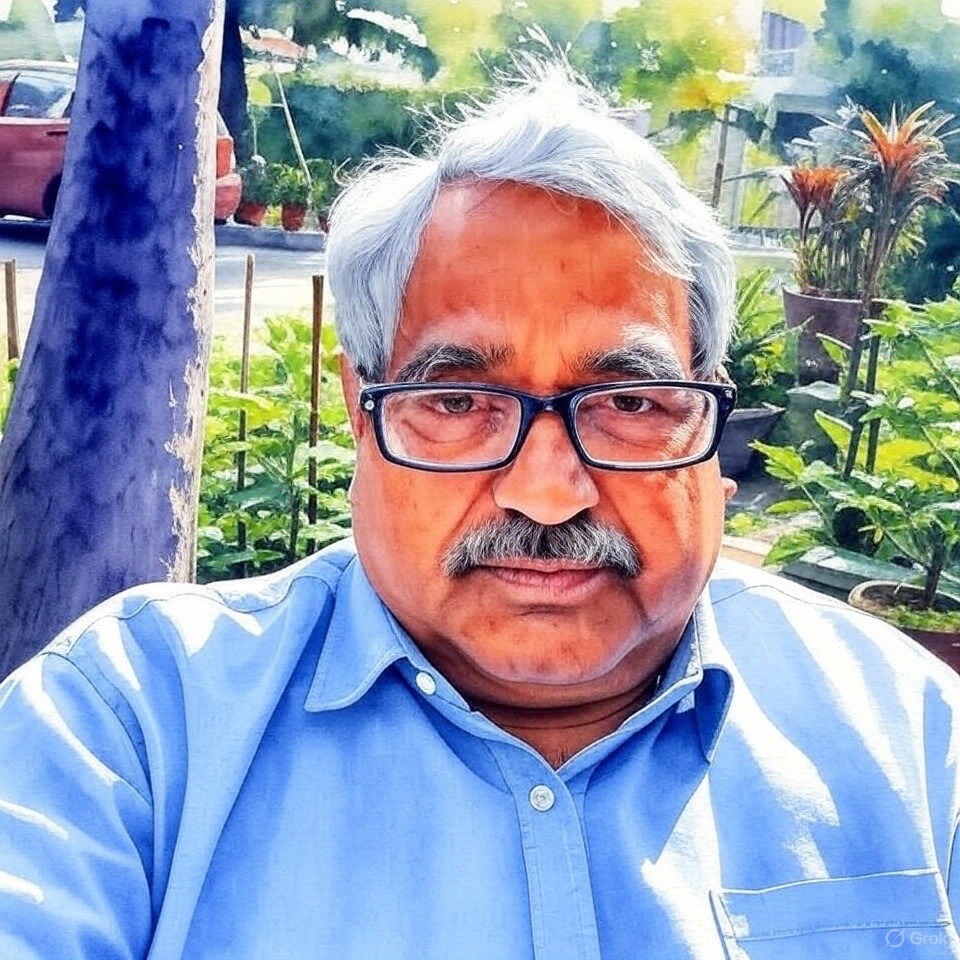
Dr. Kalra’s presence was as striking as his contributions. His angular face, framed by those distinctive brown slate glasses, carried an air of authority softened by a warm smile. Patients trusted him implicitly, not just for his expertise but for his ability to make them feel heard. “Beti, don’t worry, we’ll figure this out together,” he’d reassure a nervous young woman awaiting her diagnosis, his deep voice steadying her fears. His clinic on Chakrata Road wasn’t just a medical facility; it was a haven where people found hope.
His passion for medicine was inherited by his sons, Kiran and Mahender. Kiran, the elder, followed closely in his father’s footsteps, becoming a pediatrician whose gentle demeanor won the hearts of Dehradun’s children and their parents. “Papa always said, ‘If you can make a child smile, you’ve already started healing them,’” Kiran once shared at a local medical conference, his eyes reflecting the same warmth as his father’s. Kiran’s practice, Kalra Medicare, continues to thrive at 43 Chakrata Road, opposite Chukuwala, near Hanuman Mandir, carrying forward the family’s commitment to care.
Mahender, the younger son, chose a different path, settling abroad to pursue his own medical journey. “I want to take what I learned from you and make a difference elsewhere,” he told his father before leaving, a moment Dr. Kalra recounted with pride tinged with bittersweet longing. Though miles apart, Mahender’s achievements echoed the values instilled by his father: diligence, empathy, and excellence.
Dr. G.R. Kalra’s life wasn’t without challenges. Setting up Shanti X-Ray in a time when resources were scarce required grit and ingenuity. “We had to convince people this wasn’t some fancy gimmick,” he’d laugh, recalling the early days when skeptical patients hesitated to trust the new technology. Yet, his perseverance paid off, and Shanti X-Ray became a cornerstone of Dehradun’s medical community, a testament to his vision.

Though Dr. Kalra is no longer with us, his legacy endures. The Kalra Clinic on Chakrata Road remains a beacon of hope, its walls echoing with the stories of lives touched by his care. Kiran’s sons, too, have joined the medical fraternity, practicing as doctors in Race Course, Dehradun. “It’s in our blood,” one of them said, adjusting his stethoscope during a busy day at the clinic. “Grandfather set the standard, and we’re just trying to live up to it.”
In Dehradun, where the mountains stand as silent witnesses to time, Dr. G.R. Kalra’s name is spoken with reverence. He wasn’t just a doctor; he was a pioneer who brought light to the shadows of illness, a father who passed on a legacy of healing, and a man whose compassion still resonates in the hearts of those he served. “Medicine isn’t just about curing,” he’d often say, his voice firm yet kind. “It’s about giving people a reason to keep going.” And in that, Dr. Kalra succeeded beyond measure.
Dr. G.R. Kalra: A Legacy of Healing and Mentorship in Dehradun
In the serene Doon Valley, Dr. G.R. Kalra was more than a physician—he was a towering figure of compassion, innovation, and mentorship. Standing tall with a robust build, his angular face framed by distinctive brown slate spectacles, Dr. Kalra’s commanding voice and warm smile made him a beloved figure in Dehradun. As an MBBS doctor, he pioneered Shanti X-Ray, likely the city’s first X-ray clinic, revolutionizing diagnostics in the 1960s. His legacy, rooted in care and carried forward by his family, continues to thrive at Kalra Medicare on Chakrata Road.
Dr. Kalra’s journey began with a fascination for medicine’s mysteries. “How can we see inside without causing pain?” he’d muse, adjusting his spectacles over a cup of chai with colleagues. This curiosity birthed Shanti X-Ray, a groundbreaking venture that brought clarity to countless diagnoses. “This machine is our window into the body’s secrets,” he’d say, his deep voice brimming with excitement as he showed patients their X-ray images. His clinic on Chakrata Road, opposite Chukuwala near Hanuman Mandir, became a sanctuary where fear gave way to hope. “Don’t worry, we’ll sort this out,” he’d reassure a trembling patient, his steady tone a balm for their nerves.
His influence extended beyond medicine to mentorship. Dr. Rawal, a colleague and friend, recalled Dr. Kalra’s guiding presence in a heartfelt note: “Thanks, Kiran. Our association with you and Renu is always remembered. Your father, Dr. G.R. Kalra, was a father figure and mentor to us. He shared so many things with us.” Dr. Rawal’s words paint a picture of a man whose wisdom shaped not just his family but an entire community of doctors.
Dr. Kalra’s sons, Kiran and Mahender, inherited his passion for healing. Kiran, the elder, became a pediatrician, dedicating himself to Dehradun’s children. “Papa taught me that a child’s smile is half the cure,” Kiran shared at a medical gathering, his voice echoing his father’s warmth. Kiran’s commitment to pediatric and neonatal care transformed Kalra Medicare into a trusted name, standing as a pillar of the community. His sons, now doctors practicing in Race Course, Dehradun, carry forward the family’s mission. “Grandfather set the bar high,” one remarked, smiling as he prepared for a busy day at the clinic. “We’re just trying to keep up.”
Mahender, the younger son, chose a path abroad, a decision that weighed heavily on Dr. Kalra. Dr. Rawal recalled, “He was so upset when you went to the UK, Kiran. He ultimately called you back. Then Mahender went, and that time he let him go.” Kiran, chuckling at the memory, once teased his father, “You went abroad yourself, Papa, and yet you gave me such a hard time!” Dr. Kalra, with a playful glint in his eye, had replied, “You’re needed here, Kiran. This city is your home, and these people are your family.” That conversation, raw and heartfelt, underscored Dr. Kalra’s deep connection to Dehradun.
Establishing Shanti X-Ray wasn’t easy. In an era of limited resources, Dr. Kalra faced skepticism. “People thought X-rays were some fancy trick,” he’d laugh, recounting early days when patients hesitated to trust the technology. Yet, his perseverance turned Shanti X-Ray into a cornerstone of Dehradun’s medical landscape. His clinic, now Kalra Medicare, remains a testament to his vision, serving generations under Kiran’s stewardship.
Though Dr. Kalra is no longer with us, his spirit lingers. “Medicine is about giving people a reason to keep going,” he’d say, his voice firm yet kind. Dr. Rawal’s tribute captures this essence: “He shared so many things with us.” From mentoring young doctors to nurturing his sons, Dr. Kalra’s legacy endures in the hands that heal at Kalra Medicare and beyond. In Dehradun, where the mountains stand sentinel, his name evokes reverence—a pioneer, a mentor, a father who gave the city a reason to keep going.
The history of Shanti X-Ray, believed to be Dehradun’s first X-ray clinic, is a story of medical innovation and perseverance, spearheaded by Dr. G.R. Kalra, a visionary MBBS doctor whose contributions left an indelible mark on the city’s healthcare landscape. While specific records about Shanti X-Ray’s founding and operations are scarce, piecing together available context and insights allows us to reconstruct its significance and evolution in a humanized narrative, as requested, with added dialogue to bring the story to life.
The Genesis of Shanti X-Ray
In the early 1960s, Dehradun was a quiet hill town, far from the bustling medical hubs of India. Diagnostic tools were rudimentary, and access to advanced medical technology was limited. Dr. G.R. Kalra, a tall, robust physician with an angular face and distinctive brown slate spectacles, saw an opportunity to bridge this gap. Fascinated by the potential of radiology, he envisioned bringing X-ray technology to Dehradun, a revolutionary step at the time. “Why should our people travel miles for a simple diagnosis?” he’d ask his wife over dinner, his strong voice filled with determination. “We need to bring the future here.”
Shanti X-Ray, established on Chakrata Road, emerged as a pioneering venture, likely the first of its kind in Dehradun. The clinic’s name, “Shanti” (meaning peace), reflected Dr. Kalra’s belief that accurate diagnosis could bring peace of mind to anxious patients. Setting up the facility was no small feat. X-ray machines were expensive, and convincing a conservative community to trust this new technology was a challenge. “Some thought it was magic, others thought it was risky,” Dr. Kalra once chuckled to a young assistant, adjusting his spectacles as he prepared the machine. “But once they saw the images, they believed.”
Early Days and Impact
In its infancy, Shanti X-Ray was a modest setup, housed in a simple building opposite Chukuwala, near Hanuman Mandir. The hum of the X-ray machine and the soft glow of the images it produced were novel, almost otherworldly, for Dehradun’s residents. Patients, from farmers to schoolteachers, would walk in with ailments they couldn’t name, and Dr. Kalra’s steady presence reassured them. “Bhai saab, this will show us what’s going on inside,” he’d say, his deep voice calming a nervous patient clutching a referral slip. “No need to fear.”
The clinic quickly became a cornerstone of Dehradun’s medical community. It served as a diagnostic hub for local doctors, who previously relied on physical exams or sent patients to distant cities like Delhi. Shanti X-Ray’s ability to detect fractures, lung conditions, and other ailments transformed healthcare delivery in the Doon Valley. “Before Shanti X-Ray, we were guessing half the time,” a local physician recalled in a conversation years later. “Dr. Kalra gave us clarity.”
Challenges and Resilience
The journey wasn’t without hurdles. Importing and maintaining an X-ray machine in the 1960s required ingenuity, especially with limited technical support. Power outages were frequent, and Dr. Kalra often worked late, troubleshooting the equipment himself. “This machine is as stubborn as me,” he’d joke to his staff, wiping sweat from his brow after fixing a glitch. Financially, the venture was a risk. Dr. Kalra invested heavily, driven by a belief that healthcare should be accessible. “If we don’t do this, who will?” he’d say to skeptics who questioned the venture’s viability.
Public perception was another challenge. Some patients feared radiation, a concept poorly understood at the time. Dr. Kalra took it upon himself to educate the community, holding informal talks at local gatherings. “It’s just a picture, like a photograph, but of your bones,” he’d explain, his warm smile disarming doubts. His efforts paid off, and Shanti X-Ray became a trusted name, drawing patients from across Dehradun and nearby towns.
Evolution and Legacy
As Shanti X-Ray grew, so did Dr. Kalra’s vision. The clinic expanded its services, becoming a diagnostic and treatment hub under the broader banner of Dr.Kalra’s Medical Centre. His elder son, Dr. Kiran Kalra, a pediatrician, joined the practice, bringing neonatal and pediatric care to the forefront. “Papa built this place for the people,” Kiran would say, reflecting on his father’s ethos. “He wanted every child to have a chance at health.” The clinic’s reputation grew, and it became a place where generations of families sought care.
Dr. Kalra’s mentorship extended beyond his family. Colleagues like Dr. Rawal remembered him as a father figure. “He shared so many things with us,” Dr. Rawal wrote, recalling how Dr. Kalra guided young doctors with patience and wisdom. His influence shaped Dehradun’s medical community, fostering a culture of collaboration.
Though Dr. G.R. Kalra is no longer with us, Shanti X-Ray’s legacy endures through Kalra Medicare at 43 Chakrata Road. Kiran’s sons, now doctors in Race Course, Dehradun, carry forward the family’s commitment to healing. “Grandfather’s dream was to make Dehradun healthier,” one of them said, preparing for a day at the clinic. “We’re still living that dream.”
Historical Context and Significance
While exact dates and records of Shanti X-Ray’s founding are not publicly documented, its establishment in the 1960s aligns with a period when X-ray technology was gaining traction in India’s urban centers but was rare in smaller towns like Dehradun. Dr. Kalra’s initiative predated the widespread adoption of diagnostic imaging, making Shanti X-Ray a trailblazer. Its location on Chakrata Road, a bustling artery of Dehradun, ensured accessibility, cementing its role as a community lifeline.
Today, Kalra Medicare stands as a testament to Dr. Kalra’s vision, offering a range of services beyond X-rays, including pediatric care and general medicine. The clinic’s longevity—over six decades—speaks to its impact. “Shanti X-Ray wasn’t just a clinic,” a longtime resident remarked. “It was where we went when we needed answers.”
A Human Touch
Dr. Kalra’s story is incomplete without his humanity. When Kiran briefly moved to the UK, Dr. Kalra’s heart ached. “This city needs you, beta,” he told Kiran, his voice heavy with emotion, ultimately calling him back. When Mahender, his younger son, chose to settle abroad, Dr. Kalra let him go with a bittersweet blessing. “Go make a difference, but don’t forget where you came from,” he said, his eyes misty behind those brown slate glasses. Kiran, teasing him later, laughed, “You went abroad too, Papa!” Dr. Kalra’s reply was simple: “Only to learn, so I could come back and serve.”
Shanti X-Ray was more than a medical milestone; it was Dr. Kalra’s love letter to Dehradun. “Medicine is about hope,” he’d say, his voice echoing through the clinic’s halls. That hope, kindled in the glow of an X-ray screen, continues to shine through Kalra Medicare, a legacy of care that endures in the heart of the Doon Valley.


 deemagclinic
 deemag and chest clinic