
The Enigmatic Dr. S.S. Mishra: A Larger-Than-Life Figure
In the dusty, bustling corridors of S.N. Medical College, Agra, one man loomed larger than the institution itself: Professor S.S. Mishra, a corpulent, safari-suited titan whose presence was as imposing as the summer sun over the Yamuna. With his off-white safari suit, black sandals, and a perpetual greyish stubble framing a fleshy, cavernous face, he cut a figure that seemed ripped from the silver screen—a Charlie Chaplin villain, all swagger and menace, but with a peculiar charm that disarmed as much as it intimidated. His hair, slicked straight back to reveal a broad forehead, glistened under the fluorescent lights, while thick, hairy arms adorned with glinting rings gestured with the authority of a man who knew he held the reins. Chest hairs peeked defiantly from the open front of his shirt, as if to proclaim, “I am S.S. Mishra, and I answer to no one.”
SS Mishra, like the quintessential villain in a Charlie Chaplin-inspired world, is a stocky, imposing figure with a thickset frame that seems to fill every corner of the frame when he lumbers onto the screen. His broad shoulders and barrel chest give him an air of immovable menace, as if he could topple a lamppost with a careless shove. His bushy eyebrows, wild and unkempt, arch like storm clouds over small, glinting eyes that dart with greedy cunning. A coarse, bristly mustache twitches beneath a bulbous nose, and his jowls quiver with every sneering word. His attire is a gaudy mismatch of a too-tight pinstripe suit, a garish tie, and a battered bowler hat perched precariously atop his sweaty, balding head. Every step he takes is heavy, deliberate, his polished shoes creaking under his weight, and his meaty hands, adorned with gaudy rings, clench into fists when his schemes are thwarted. Mishra’s presence is a storm of intimidation, but there’s a flicker of insecurity in his eyes—a man who knows his power but fears its fragility.
Despite his brutish exterior, SS Mishra’s villainy is laced with a peculiar charm, a theatrical flair that makes him as captivating as he is despicable. His gravelly voice booms with self-assured menace, but there’s a human edge to it, a hint of a man who’s clawed his way to dominance and relishes every moment. “You think you can outsmart SS Mishra, eh?” he growls, leaning close to the trembling shopkeeper, his bushy brows knitting into a scowl. “This town belongs to me, and don’t you forget it!” Yet, when alone, his bravado falters; he mutters to himself, “They’ll see… they’ll all see I’m no fool.” Beneath the bluster, there’s a man haunted by the fear of being laughed at, a villain whose humanity peeks through in his fleeting, vulnerable glances.
Early Days: The Pharmacologist with a Flair for Drama

Born in the heart of Uttar Pradesh in the early 1930s, Shiv Shankar Mishra was a man of contradictions—brilliant, brash, and theatrical. He rose through the ranks of academia with a sharp mind for pharmacology, earning his professorship at S.N. Medical College in the 1970s. His lectures were legendary, not just for their depth but for the sheer spectacle of his delivery. “Gentlemen,” he’d boom, pacing the lecture hall, one ringed finger jabbing the air, “a drug is not just a molecule—it’s a weapon, a tool, a destiny!” Students scribbled furiously, half in awe, half in fear of his piercing gaze.
But Mishra’s true stage was the principal’s office, a role he assumed in the late 1980s. Here, he became the undisputed czar of S.N. Medical College, a man whose reputation preceded him like a storm cloud. His off-white safari suit, slightly rumpled yet oddly regal, became his trademark, as did the black sandals that clicked ominously on the tiled floors. To students, he was a paradox: a disciplinarian who could quell a riot with a single raised eyebrow, yet a pragmatist who dispensed justice with a wry smile.
Incident One: The Protest and the Missing Classmate
In 1989, the campus was thrown into chaos when Ashok Batra, a popular student, vanished without a trace. His father, distraught and teary-eyed, arrived at the hostel mess, pleading for answers. The students, fueled by grief and suspicion, erupted in protest, marching to the principal’s office with “Prashasan Jago” posters flapping in the breeze. The library lawn became a battleground of slogans and fury.

Mishra, ever the showman, emerged from his office and did something unexpected—he sat down. Not behind a desk, but on a simple wooden chair plunked in the middle of the lawn, his safari suit gleaming in the midday sun. “What is this tamasha?” he bellowed, his voice cutting through the chants like a scalpel. “You think shouting will bring Batra back? Tell me, who saw him last? Speak, or sit down and let me do my job!”
The crowd hesitated. His calm, almost paternal tone disarmed them. He listened to their grievances, promised to investigate, and sent them back to their hostels with a mix of charm and authority. “Go study,” he said, winking at the ringleader. “Or do you want to fail like your friend over there?” The ringleader, a fiery student who later became a cardiac anaesthetist at Medanta, did indeed fail that semester—a subtle reminder of Mishra’s long memory.
Incident Two: The Medal That Never Was
Not all encounters with Mishra were so dramatic, but they were always memorable. In 1990, a student—that’s me—stormed into the principal’s office after winning a debate competition. He’d been promised a medal and a princely sum of ten rupees, but neither had materialized. “Sir, where’s my medal?” Pk demanded, fists clenched.
Mishra leaned back in his creaking chair, his rings glinting as he steepled his fingers. “Medal? What medal?” he said, feigning ignorance, a mischievous glint in his eye. “Boy, do you think I keep a vault of medals in here? The college is broke, and you want shiny trinkets?”
Pk, undeterred, pressed on. “And the ten rupees, sir?”
Mishra chuckled, a deep, rumbling sound that filled the room. “Ten rupees, eh? Fine, you’ll have your fortune.” He reached into a drawer, scribbled a note, and handed it to his clerk. “From the contingency fund, give this lad his ten rupees. But don’t come back asking for gold bars next time!” Pk left with his cash but no medal, half-amused, half-exasperated by Mishra’s theatrics.
Incident Three: The Director in Lucknow
By the early 1990s, Mishra’s star had risen further. He was appointed Director of Medical Education in Lucknow, a role that placed him at the helm of Uttar Pradesh’s medical bureaucracy. But even in the hallowed halls of the directorate, his persona remained unchanged—safari suit, black sandals, and a no-nonsense attitude that bordered on the cinematic.
One day, a young doctor approached him, frustrated by a clerk demanding a bribe to locate a critical file. “Sir,” the doctor pleaded, “this clerk is asking for money just to do his job!”
Mishra fixed him with a stare, his stubble catching the light. “Young man,” he said, leaning forward, “do you think the Director of Medical Education runs around fetching files? This is Lucknow, not a fairy tale. Fend for yourself, or you’ll never survive this system.” It was a harsh lesson, delivered with a mix of cynicism and truth, as if Mishra saw himself as both villain and mentor in this bureaucratic drama.
Incident Four: The Urobag and Kamalapati Tripathi
Perhaps the most surreal moment in Mishra’s career came during the visit of Kamalapati Tripathi, the veteran Congress leader and former Chief Minister of Uttar Pradesh, to Agra for prostate surgery in 1990. Tripathi, a towering political figure, was under Mishra’s care at S.N. Medical College. In a scene straight out of a Chaplin film, Mishra was spotted trailing the ailing leader, dutifully carrying a urine-filled urobag as they moved through the hospital corridors. The sight was both absurd and oddly humanizing—a man of Mishra’s stature, literally holding the bag for a patient, his safari suit slightly askew, his expression one of resigned duty.
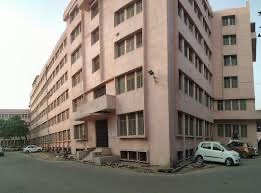
“Careful, careful,” Mishra muttered to a nurse, holding the urobag aloft like a sacred relic. “This is no ordinary patient, mind you.” The nurses stifled giggles, but Mishra’s gravitas ensured no one dared laugh openly.
The Malviya Incident: The Iron Fist
Mishra’s reputation as a tough man was cemented in 1991 when a group of students, led by one Dhaka, assaulted Professor Malviya, a respected faculty member. The incident shocked the college, and Mishra’s response was swift and merciless. He shut down the college for six months, ordered all hostels vacated, and expelled the perpetrators without a second thought. “This is not a jungle,” he thundered at a staff meeting, slamming his fist on the table, rings clattering. “If you behave like animals, I’ll treat you like ones!”
When students protested at his residence, demanding a postponement of exams in the wake of the chaos, Mishra stood on his porch, unfazed. As the crowd grew louder, a bus rolled up, disgorging a contingent of armed police. Mishra raised a hand, silencing the students. “You want to talk?” he said, his voice low and dangerous. “Talk. But if you think you can bully me, think again.” The police stood by, a silent threat, and the students dispersed, their demands unmet.
The flag post incident. The devil laughter
Dr. S.S. Mishra, a figure of both reverence and relatability, left an indelible mark on the medical community at SBH Medical College, not only through his expertise but also through moments that revealed his unfiltered humanity. One such unforgettable incident unfolded on Republic Day, a crisp January morning, during the flag-hoisting ceremony on the sprawling SBH grounds. The occasion was solemn, steeped in patriotic fervor, with MBBS students and postgraduates lined up in disciplined rows, standing at attention under the watchful eyes of their professors. The air was thick with anticipation as dignitaries and faculty, including Dr. Mishra, took their places on the dais, their silhouettes framed against the dawn sky.
Dr. Mishra, known for his sharp intellect and no-nonsense demeanor, sat prominently in the front row, his posture relaxed yet commanding on a cushioned couch reserved for senior faculty. His presence alone was enough to keep the students on edge—his reputation as a brilliant but formidable teacher preceded him. The flagpole, a sturdy fifteen-foot structure mounted on a two-foot platform, stood as the centerpiece of the ceremony. The Junior Doctors’ Association (JDA) president, a lanky figure with an air of nervous determination, stepped forward to unfurl the tricolor. All eyes were on the flag, waiting for it to catch the breeze and soar.
But the rope had other plans. It jammed, refusing to budge despite the president’s increasingly vigorous tugs. Murmurs rippled through the faculty on the dais, and the students, frozen in their attentive stance, exchanged sidelong glances. The JDA president, perhaps fueled by a mix of embarrassment and resolve, gave the rope a mighty heave. What followed was chaos in slow motion: the entire flagpole, with the tricolor still furled at its peak, toppled forward like a felled tree. It crashed to the ground with a dull thud, the base stubbornly clinging to the platform, leaving the flag in an undignified heap on the grass.
A stunned silence enveloped the grounds. The students, bound by the command to remain at attention, could only widen their eyes in disbelief. The dignitaries froze, their faces a mix of shock and mortification. In that moment of collective paralysis, a single sound shattered the quiet—a hearty, unrestrained guffaw. All heads turned to Dr. S.S. Mishra, whose broad, infectious laughter rang out like a bell across the grounds. His mouth was wide open, his eyes crinkled with mirth, and his entire frame shook with unapologetic amusement. For a man known for his stern lectures and piercing gaze, this outburst was as shocking as the flagpole’s fall. It was a rare glimpse of the man behind the title—a person who could find humor in the absurdity of the moment, unafraid to let it show. It was surprising as the national flag had fallen down and in india it is considered an insult to the flag.


The spell broken, a quick-thinking junior doctor scrambled to the flagpole, hastily righting it as the crowd regained its composure. The ceremony limped to its conclusion, but the usual distribution of sweets—a Republic Day tradition—was conspicuously absent, perhaps a silent acknowledgment of the morning’s blunder. Yet, for those present, the incident became a cherished anecdote, one that humanized Dr. Mishra in a way no lecture or textbook could. It was a story whispered in the hostel corridors and recounted at alumni gatherings, each retelling embellishing the image of Dr. Mishra’s laughter echoing over the grounds.
This moment, though fleeting, painted Dr. Mishra as more than a medical luminary. It showed him as a man who could embrace imperfection with a chuckle, reminding his students that even in the most solemn moments, life could surprise you with a reason to laugh. For a biography, this incident would serve as a vivid chapter, illustrating his ability to bridge the gap between authority and approachability, leaving a legacy that was as much about his humanity as his brilliance. Or was it something else. His detractors though it was a laughter of Rawana, the devil king,
The incident at the Republic Day flag-hoisting ceremony at SBH ground SN Medical College, Agra, where the flagpole dramatically toppled, was a moment etched into the institution’s lore, but not everyone saw Dr. S.S. Mishra’s booming laughter in the same light. While many students and colleagues found his guffaw a refreshingly human response to the absurd mishap, his detractors spun a different narrative—one that painted his outburst as something far less benign. To them, his unrestrained laughter wasn’t the warm chuckle of a man amused by life’s unpredictability; it was the mocking, almost sinister cackle reminiscent of Ravana, the demon king from the Ramayana, whose arrogance and delight in others’ misfortune were legendary.
Dr. Mishra, with his commanding presence and reputation for intellectual rigor, had always been a polarizing figure. His sharp tongue in the lecture hall and uncompromising standards earned him as many adversaries as admirers. On that crisp January morning, as the flag lay crumpled on the grass and the JDA president stood red-faced beside the fallen pole, Dr. Mishra’s laughter rang out across the silent SBH grounds. To his supporters, it was a rare crack in his stern facade, a moment of levity from a man who carried the weight of his expertise with gravitas. But to his critics, huddled among the faculty on the dais or whispering later in the staff room, that laughter carried a darker undertone. They saw it as a gleeful jab at the young doctor’s failure, a public humiliation amplified by his position of authority.
The detractors’ comparison to Ravana wasn’t just poetic exaggeration. They argued Dr. Mishra reveled in the discomfort of others, especially those who faltered under his exacting gaze. To them, his wide-open mouth and shaking shoulders weren’t signs of shared humanity but a display of superiority, as if he found joy in the spectacle of the flagpole’s collapse and the JDA president’s mortification. Whispers circulated that his laughter lingered a beat too long, that his eyes glinted with something closer to mockery than mirth. Some even claimed he made no move to temper his outburst, letting it echo over the stunned students standing at attention, unable to react.
Yet, this interpretation may have said more about his critics than Dr. Mishra himself. The Ravana label was a convenient jab for those who resented his unyielding standards or felt overshadowed by his brilliance. The ceremony continued, the flagpole was hastily righted, and no sweets were distributed—a detail some detractors pointed to as evidence of a soured mood, perhaps even blaming Dr. Mishra’s reaction for casting a shadow over the event. But others might argue the absence of sweets was logistical, not symbolic.
For a biography of Dr. S.S. Mishra, this moment offers a fascinating lens into his complex legacy. The same laughter that endeared him to some as a man who could embrace life’s absurdities was weaponized by others to paint him as aloof or cruel. The truth likely lies in the gray—a spontaneous reaction filtered through the biases of those who heard it. Including this duality would enrich his story, showing not only the man but the myths that swirled around him, with the fallen flagpole and his resounding laughter as a pivotal scene where admiration and animosity collided.
The comparison of Dr. S.S. Mishra’s laughter to that of Ravana, the demon king from the Ramayana, as whispered by his detractors during the Republic Day flagpole fiasco at SBH Medical College, is a rich and layered critique that deserves deeper exploration. It reveals not only the polarized perceptions of Dr. Mishra’s character but also the cultural weight of invoking such a mythic figure to describe a moment of human reaction. By delving into this comparison, we can uncover the nuances of Dr. Mishra’s legacy, the motivations of his critics, and the symbolic power of the Ravana archetype in framing his controversial laughter.
The Context of the Incident
On that fateful Republic Day, the SBH grounds were a stage for solemnity, with students and postgraduates standing at attention, dignitaries on the dais, and Dr. Mishra seated prominently among the faculty. The flagpole’s collapse—triggered by the JDA president’s overzealous tug—was a public embarrassment, a disruption of the patriotic ritual. Dr. Mishra’s unrestrained guffaw, loud enough to cut through the stunned silence, was a lightning rod for interpretation. To some, it was a spontaneous burst of humor; to others, it was the mocking laugh of a man who thrived on others’ missteps. His detractors’ invocation of Ravana was no casual insult—it tapped into a deep cultural reservoir, casting Dr. Mishra as a figure of arrogance and malevolence.
Ravana as a Cultural Symbol
In the Ramayana, Ravana is a complex antagonist: a brilliant scholar, a powerful king, and a devout Shiva worshipper, yet flawed by hubris, cruelty, and a penchant for domination. His laughter, often depicted in literature and performance as booming and derisive, is a hallmark of his larger-than-life persona, signaling both his confidence and his disdain for those he deems beneath him. By likening Dr. Mishra’s outburst to Ravana’s, his critics were not merely accusing him of mockery but painting him as a figure of overbearing authority, someone who, in their view, delighted in the public faltering of a junior colleague. The comparison suggested a calculated cruelty, as if Dr. Mishra’s laughter was not just a reaction to the absurd but a deliberate act to humiliate the JDA president and, by extension, assert his own dominance.
Dr. Mishra Through the Ravana Lens
Dr. Mishra’s detractors likely saw parallels between him and Ravana in more than just the laughter. Like Ravana, Dr. Mishra was a towering figure in his domain—an intellectual giant whose medical expertise and commanding presence made him both admired and feared. His rigorous teaching style, known for its unrelenting demands, could feel like a form of intellectual conquest to those who struggled under his scrutiny. The flagpole incident, in their eyes, was a moment where his “true nature” surfaced. The image of him laughing heartily—mouth wide, eyes glinting, shoulders shaking—while the young JDA president stood exposed in failure, fit their narrative of a man who reveled in his superiority. To them, his laughter was not a shared human moment but a power play, a Ravana-like assertion of control over a situation where decorum demanded restraint.
The choice of Ravana also hints at the detractors’ perception of Dr. Mishra’s complexity. Ravana is not a one-dimensional villain; he is a figure of immense capability undone by his flaws. Similarly, Dr. Mishra’s critics might have acknowledged his brilliance—his lectures were legendary, his diagnoses precise—but saw his laughter as a glimpse of arrogance or insensitivity, a chink in his otherwise formidable armor. The absence of sweets after the ceremony, a break from tradition, may have been interpreted by some as a subtle consequence of Dr. Mishra’s reaction, as if his laughter had tainted the event’s spirit, much like Ravana’s actions often cast a shadow over his own grandeur.
Counterpoint: Misreading the Laughter
Yet, the Ravana comparison may reflect more on the biases of Dr. Mishra’s detractors than on the man himself. Laughter is notoriously subjective, colored by context and perception. To those who admired Dr. Mishra, his guffaw was a rare moment of vulnerability, a break from his usual stoicism that showed he could be caught off guard by life’s absurdities. The flagpole’s fall was undeniably comical—a patriotic ritual undone by a literal collapse—and his laughter could be seen as a natural response, free of malice. The Ravana label, in this light, might have been a weapon wielded by those already predisposed to resent him, perhaps colleagues envious of his stature or students stung by his high standards. By casting him as a mythic villain, they could amplify a single moment into a broader indictment of his character.
The cultural weight of Ravana also risks oversimplifying Dr. Mishra. Unlike the demon king, whose actions in the Ramayana are driven by ambition and defiance, Dr. Mishra’s laughter was likely spontaneous, not a calculated act of cruelty. His failure to temper it might reflect a lack of concern for appearances, not a desire to dominate. Moreover, the comparison ignores the context of his role: as a senior faculty member, his reaction carried outsized weight, but it was still the reaction of a man, not a myth. The detractors’ narrative may have been fueled by personal grudges or the human tendency to vilify those who loom large.
To flesh out the narrative, one could imagine the scene vividly: the crisp morning air, the students’ stiff postures, the flagpole’s slow-motion fall, and Dr. Mishra’s laughter erupting like a thunderclap, his face alight with unguarded mirth. The detractors’ whispers would follow in the days after, their Ravana comparison spreading through hushed conversations in the canteen or faculty lounge. Yet, the biography could also include a student’s recollection of Dr. Mishra later offering a kind word to the JDA president, or his own reflection on the incident, perhaps dismissing the criticism with a wry smile: “If I’m Ravana, then the flagpole was my Lanka—doomed to fall.”
Broader Context and Legacy
The Ravana comparison also invites reflection on the broader dynamics at play. In academic institutions like SBH, where hierarchy and reputation are paramount, a figure like Dr. Mishra—brilliant, demanding, and unapologetic—was bound to polarize. The detractors’ use of Ravana suggests not just personal animosity but a cultural tendency to mythologize larger-than-life figures, casting them as heroes or villains to make sense of their impact. For Dr. Mishra, the incident became a microcosm of his career: a moment where his brilliance and flaws were both on display, interpreted through the lens of those who revered or resented him.
In the end, the Ravana comparison enriches Dr. Mishra’s biography by showing how a single laugh could spark a legend. It captures the complexity of a man who was both a mentor and a lightning rod, whose legacy was shaped not just by his deeds but by the stories told about him. Whether his laughter was human or demonic depends on who’s telling the tale—a duality that makes Dr. S.S. Mishra all the more fascinating.
The Epic of Dr. S. S. Mishra: The Pill-Pushing Paladin of S.N. Medical College, Agra
In the shadow of Agra’s Taj Mahal, where romance meets marble, another legend loomed over S.N. Medical College: Dr. S. S. Mishra, pharmacology professor and self-proclaimed sheriff of the examination hall. With a PhD in potions and a sixth sense for sniffing out cheaters, Dr. Mishra viewed every student as a potential mastermind of academic mischief, ready to smuggle drug dosages or receptor theories on a scrap of paper. The exam hall was his Colosseum, and he was its gladiator, wielding a pen and an obsession to crush cheating.

Hailing from a dusty Uttar Pradesh village, young Mishra’s knack for catching his cousins pilfering extra barfis at weddings set the stage for his life’s work. “I knew then,” he’d later growl over canteen chai, crumbs of paranoia in his voice, “that humans are born to deceive—especially MBBS students!” After sailing through his own exams (he’d swear on Goodman & Gilman’s he never cheated), he landed at S.N. Medical College, Agra, where his war on exam fraud became the stuff of campus folklore.
Dr. Mishra’s obsession boiled down to one question: How do you stop cheating in exams? He’d stalk the halls, muttering, “Notes in bandage rolls, mnemonics on erasers—these future doctors are drug lords of deceit!” His colleagues, nibbling on pakoras in the staff room, would groan, “S. S., they’re just kids learning beta-blockers!” But Dr. Mishra would slam his chai glass down, splattering the table. “Kids? These are quacks-in-training, plotting to copy their way to prescribing paracetamol!”
His crusade, however, was besieged by three maddening distractions:
1. The Whirring Exhaust Fan Conspiracy
The exam hall, a colonial relic, was plagued by ancient exhaust fans that roared like a fleet of Agra’s rickshaws stuck in a traffic jam. “Whirrrrrrr!” they droned, smothering the soft scratches of pens and the sighs of students grappling with pharmacokinetics. Dr. Mishra would glare at the ceiling, hissing, “These fans are accomplices! They’re muffling the cheaters’ whispers!” Once, he flipped them off mid-exam, turning the room into a sweaty sauna. “Sir, I’m roasting!” wailed a student, fanning herself with her answer sheet. “Good!” barked Dr. Mishra. “Maybe it’ll melt the dishonesty out of you!”
2. The Samosa-Chomping Invigilators
Then there were his fellow invigilators, treating the exam hall like a roadside chaat stall. “Pass the samosas, Gupta ji,” one would mumble, crumbs flying. “Ooh, extra spicy today!” another would chirp, loud enough to make every hungry student’s stomach growl in protest. Dr. Mishra would charge over, face twitching like he’d overdosed on caffeine. “You’re distracting the students! And worse, you’re distracting me from catching cheaters!” One invigilator, wiping chutney off his chin, grinned. “S. S., relax. Want a samosa?” Dr. Mishra’s eyes nearly popped out. “A samosa?! You’re basically serving cheat sheets with that masala!”
3. The Tin Balti Toilet Debacle
But Dr. Mishra’s magnum opus was his “Aurangzeb firman” for the boys’ toilet. Convinced that male students were the true villains of exam hall skullduggery, he declared, “Girls are pure—they’re too busy memorizing antihistamines!” Boys, however, were another matter. “They’d hide drug classifications in their socks!” he’d rant. So, outside the exam hall, he erected a makeshift latrine: a flimsy green curtain encircling a lone, gleaming tin bucket. “Efficient, foolproof!” he boasted, puffing out his chest like a pharmacology emperor.
The first to brave it, poor Vikram, stepped behind the curtain, unzipped, and—CLANGGG! The sound of urine hitting the bucket echoed like a cymbal at a Sufi concert. Inside the hall, pens froze. “Is that… a gong?” whispered one student. Another choked back a laugh: “No, it’s Vikram’s bladder band!” Vikram slunk back, face redder than a betel nut, as giggles rippled through the room. After the exam, a furious girl pounced on him: “Vikram, you absolute mule! Your bucket concert ruined my drug metabolism question! I wrote ‘diuretic = loud pee’ because of you!”
Dr. Mishra, unfazed, called the bucket a stroke of genius. “The noise deters cheating!” he told a skeptical dean, adjusting his glasses. “No boy can plot while his bladder’s broadcasting!” But the students turned it into a sport: who could make the loudest ting? The champion, a cheeky lad named Arjun, bragged he’d “hit the bucket’s sweet spot.” Dr. Mishra, overhearing, nearly choked on his chai. “Sweet spot?! This is an exam hall, not a tabla recital!”
Deep down, Dr. Mishra’s heart beat for fairness, for the sanctity of pharmacology. “Exams are a temple,” he’d lecture, pacing the hall like a drill sergeant. “And I am its gatekeeper!” Students, though, had their own nickname: “The Tin Balti Tyrant.” “Gatekeeper?” they’d scoff, passing notes (which he’d promptly confiscate). “More like the dictator of noisy peeing!”
Years later, retired and sipping chai in his Agra flat, Dr. Mishra would chuckle, a rare twinkle in his eye. “Did I stop all the cheating? No,” he’d admit, stirring his tea. “But I made them sweat—literally and figuratively. And that bucket? My finest prescription.” At S.N. Medical College, students still whisper tales of the Tin Balti Terror, a pharmacology professor whose quest for exam purity left behind a legacy of laughter and legend.
Dr. S.S. Mishra: The Unforgettable Antagonist of S.N. Medical College, Agra
Dr. S.S. Mishra’s time as an administrator at S.N. Medical College, Agra, was nothing short of legendary—not for his achievements, but for the uproarious rebellion he unwittingly sparked. Known for his iron-fisted approach, Mishra’s strict disciplinary actions, including rusticating students, turned him into the ultimate villain in the eyes of the student body. His name didn’t just echo through the college corridors—it practically ricocheted off the walls, immortalized in the cheekiest of protest slogans: “S.S. Mishra hai hai!” and “S.S. Mishra down down!”
The pièce de résistance? The chant “S.S. Mishra thale thele, JDA Union balle balle!”—a rhythmic masterpiece that paired Mishra’s downfall with the triumphant cheer for the Junior Doctors’ Association. This wasn’t just a slogan; it was a battle cry, a snarky badge of honor for every student who’d felt the sting of his rulings. For months, it reverberated through lecture halls, hostels, and canteens, transforming tense strike gatherings into moments of side-splitting camaraderie. Picture a group of sleep-deprived medical students, mid-protest, suddenly erupting into laughter as someone bellowed “Hai hai!”—Mishra’s legacy reduced to a punchline.
Even after Mishra bid adieu to S.N. Medical College, his name refused to retire. Years later, during unrelated strikes—be it over hostel curfews or lofty issues like the Consumer Protection Act—the ghost of Mishra haunted the protests. At one particularly dreary demonstration in Dehradun, an S.N. Medical College alumnus revived the magic, shouting “S.S. Mishra hai hai!” The crowd, initially puzzled, but those who knew dissolved into hysterics, as if Mishra himself had crashed the protest with a comically oversized gavel. The chant became a time machine, whisking Agra alumni back to their rebellious glory days.
Mishra’s unintended gift to S.N. Medical College was a unifying dose of humor—a reminder that even the sternest authority could be toppled with a clever rhyme and a hearty laugh. His name, forever etched in the annals of student lore, remains synonymous with defiance, wit, and the kind of hilarity that only a truly infamous villain can inspire.
The Chaplin Villain: A Legacy of Fear and Respect
To those who knew him, S.S. Mishra was a study in contrasts—a pharmacologist turned principal turned director, a man who could charm a mob one moment and wield an iron fist the next. His appearance—safari suit, black sandals, hairy arms, and those ever-present rings—gave him the air of a Chaplin villain, all bluster and bravado, yet with a cunning that made him unforgettable. He was no mustache-twirling caricature, though; beneath the theatrics lay a man who navigated the chaos of academia and bureaucracy with a pragmatist’s heart.
Mishra retired in the late 1990s, fading into the annals of S.N. Medical College lore. Students still swap stories of his exploits, half in reverence, half in amusement. “He was like a villain you couldn’t hate,” one alumnus recalled. “You’d curse him, but you’d also want to be him.”
Analysis: The Human Beneath the Safari Suit
S.S. Mishra was more than his larger-than-life persona. He was a product of his time, a man shaped by the rough-and-tumble world of Indian academia, where authority was both earned and imposed. His theatricality—evoking a Chaplin villain—served as a shield and a weapon, allowing him to command respect in a system rife with rebellion and corruption. Yet, his actions, from calming a protest to personally ensuring Tripathi’s care, revealed a man who understood the human cost of his decisions.
His handling of the Batra protest showed a knack for de-escalation, blending authority with empathy. His refusal to coddle the student seeking a medal reflected a belief in tough love, while his blunt advice in Lucknow revealed a realist’s view of a flawed system. The Malviya incident, however, showcased his ruthlessness—a reminder that his benevolence had limits.
In humanizing Mishra, we see a man who wore his safari suit like armor, his rings like badges of power, yet carried the weight of responsibility with a gruff sincerity. He was no saint, but nor was he a true villain—just a man navigating a world that demanded both heart and hardness.
His family
He had a son Dr Vipin Mishra who did MD medicine from SN medical college Agra in 1985
His legacy

Even after Mishra bid adieu to S.N. Medical College, his name refused to retire. Years later, during unrelated strikes—be it over hostel curfews or lofty issues like the Consumer Protection Act—the ghost of Mishra haunted the protests. At one particularly dreary demonstration in Dehradun, an S.N. Medical College alumnus revived the magic, shouting “S.S. Mishra hai hai!” The crowd, initially puzzled, but those who knew dissolved into hysterics, as if Mishra himself had crashed the protest with a comically oversized gavel. The chant became a time machine, whisking Agra alumni back to their rebellious glory days…… ‘S S MISHRA HAI HAI’


 deemagclinic
 deemag and chest clinic