
The lecture hall at Sarojni Naidu medical college Agra buzzed with the restless energy of second-year MBBS students, the air thick with the scent of antiseptic and old books. The year was 1982, and the clock on the wall ticked toward 8 A.M. The door swung open, and in rolled Professor M.C. Gupta, every inch the industrialist-turned-physician. His dark yellow Ambassador car, gleaming like a mustard seed in the Agra sun, had just dropped him off, its chauffeur tipping his cap as the professor strode toward the building. His dark glasses glinted under the fluorescent lights, giving him an air of mystery, like a Bollywood villain who’d traded his schemes for a stethoscope. Yet, his warm smile and easy demeanor disarmed the room instantly.
“Alright, settle down, you lot,” Professor Gupta boomed, his voice carrying a playful authority as he set his leather briefcase on the desk. “Today, we’re diving into the art of clinical examination. No textbooks, no notes—just your eyes, your hands, and your brains. Who’s brave enough to start?”
The students exchanged glances, some sinking lower in their seats, others stifling giggles. Professor Gupta’s classes were legendary—not just for their rigor but for their theatrics. He had a knack for turning dry medical procedures into performances that stuck with you, like a catchy song you couldn’t shake.
He scanned the front row, his dark glasses making it hard to tell where his gaze landed. “You, Miss !” he called, pointing to a petite girl in a crisp kurta, her braid swinging as she froze. “Up here, please. Let’s have some fun with Romberg’s test.”
Alka, wide-eyed but game, shuffled to the front. The class leaned forward, sensing a show. Professor Gupta adjusted his glasses, a grin tugging at his lips. “Now, Alka, stand straight, feet together, arms at your sides. Good. Now, close your eyes. Don’t peek!”
Alka complied, wobbling slightly. The class snickered. “Oi, no laughing!” Professor Gupta said, wagging a finger. “This isn’t a circus—though, mind you, Alka’s doing better than most of you would. Romberg’s test, my friends, is about balance. If she sways like a palm tree in a storm, what does that tell us?”
“Something’s wrong with her cerebellum!” piped up Rajesh, the class know-it-all, from the back.
“Or she’s just nervous standing in front of you lot,” Professor Gupta shot back, winking at Alka. “Relax, my dear. Open your eyes. Perfect! Now, let’s try it again, but this time, I want you to imagine you’re balancing on a tightrope over the Yamuna River.”
Alka laughed, her nerves easing, and the class erupted in chuckles. Professor Gupta’s demonstrations were like this—part science, part storytelling. He’d call up students to mimic neurological signs, exaggerate a limp for a gait assessment, or even act out a patient’s symptoms himself, complete with dramatic flair. Once, he’d pretended to be a patient with Parkinson’s, shuffling across the room with such conviction that the class forgot to take notes, too busy clapping.
“See, medicine isn’t just about memorizing Gray’s Anatomy,” he said, pacing the front, his chauffeur-driven aura fading into that of a teacher who genuinely cared. “It’s about observing. Listening. Connecting. You’ll meet patients who can’t tell you what’s wrong—they’ll show you. Like this!” He suddenly clutched his chest, staggering theatrically. “Quick, Kumar, diagnose me!”
Arun kapoor, a lanky boy with a permanent smirk, stood up. “Heart attack, sir?”
“Too easy!” Professor Gupta roared, straightening up. “Could be angina, could be panic, could be last night’s spicy chole. Dig deeper, always!” The class laughed again, but the lesson landed: question everything, assume nothing.
His classes weren’t just entertaining; they were a masterclass in humanizing medicine. He’d share stories of his own patients—without names, of course—like the vegetable vendor who ignored a tremor until he couldn’t hold his scales, or the schoolteacher whose dizzy spells were brushed off as “just stress” until Professor Gupta caught a subtle clue in her gait. “You’re not just doctors,” he’d say, his voice softening. “You’re detectives, confidants, sometimes even friends. Never forget the person behind the symptoms.”
Forty years later, his students—now doctors, surgeons, professors themselves—still remember. Not just Romberg’s test or the signs of cerebellar dysfunction, but the way he made medicine feel alive, human, urgent. They can still picture him, dark glasses glinting, stepping out of that mustard-yellow Ambassador, ready to turn a lecture hall into a stage where every student was both learner and star.
Biography of Dr. M.C. Gupta
Dr. M.C. Gupta was a notable physician and academic associated with the Department of Medicine at Sarojini Naidu (S.N.) Medical College, Agra, a prestigious medical institution in Uttar Pradesh, India, named after the renowned poet and freedom fighter Sarojini Naidu. His career reflects a deep commitment to patient care, medical education, and research, particularly in the fields of general medicine and cardiology.

Professor M.C. Gupta’s clinical demonstrations at The Medical College were masterclasses in patient empathy, seamlessly blending medical rigor with human connection. His larger-than-life persona—dark glasses, mustard-yellow Ambassador, chauffeur in tow—set the stage, but it was his ability to teach empathy through vivid, hands-on scenarios that left a lasting impact on students, even 40 years later. In his mid-1980s classes, he showed aspiring doctors how to see patients as people first, using techniques that were practical, heartfelt, and unforgettable.
“Empathy isn’t sympathy,” he’d begin, his voice cutting through the lecture hall’s hum. “It’s not feeling sorry—it’s understanding. You step into their shoes, but you don’t trip over their laces.” He’d grin, adjusting his glasses, then launch into a demonstration that brought the lesson to life.
One favorite technique was role-playing to teach active listening. He’d call up a student, say, Sushma, to play a patient. “Sushma, you’re a 35-year-old mother with chronic back pain, scared it’s keeping you from your kids. Go.” Neha would hesitate, muttering, “It’s… my back hurts, that’s all.” Professor Gupta would sit across from her, leaning slightly forward, his demeanor calm. “That sounds like it’s been tough. Can you tell me how it’s affecting your day?” Sushma, warming to the role, might say, “I can’t lift my son anymore.” He’d nod, maintaining eye contact. “That must be hard, not being able to play with him. When did this start?”
He’d pause the scene to address the class. “See what I did? I didn’t jump to ‘where’s the pain?’ I let her tell her story. Reflect her feelings—‘that must be hard.’ It shows you’re with her.” He’d then have students practice, pairing them up to mirror emotions while avoiding clichés like “I know how you feel.” “You don’t know,” he’d stress. “Say, ‘That sounds really challenging.’ Let them feel heard.”
Another technique was reading non-verbal cues. He’d demonstrate by slumping in a chair, arms crossed, playing a patient reluctant to talk. “I’m fine, just some stomach pain,” he’d mutter, his jaw tight. Then he’d call up a student—Rajeev, perhaps—to be the doctor. “What do you see?” he’d ask. Rajeev might fumble, focusing on the symptom. Professor Gupta would stop him. “Look at my shoulders, my hands. I’m closed off. Ask why.” He’d coach Rajeev to say, “You seem tense—something on your mind?” The class would practice spotting these cues—fidgeting, averted eyes, forced smiles—and responding with gentle prompts like, “You don’t seem comfortable talking about this. Want to share what’s going on?”
He taught the power of small gestures. During a neurological exam demo, he’d have a student like Anil perform Romberg’s test, standing with eyes closed. As Anil wobbled, Professor Gupta would steady him with a hand on his shoulder, saying, “I’ve got you, don’t worry.” To the class, he’d explain, “A touch—gentle, respectful—says, ‘I’m here.’ It’s not in your books, but it’s in your patient’s heart.” He’d warn against overdoing it: “Ask permission if it’s more than a handshake. Respect their space.”
Storytelling was another tool. He’d share cases to humanize patients. “I had a rickshaw puller last week,” he’d say, pacing. “Came in with a cough, said it was nothing. I asked about his work, his family. He opened up—tuberculosis, missed because he feared losing his job. If I hadn’t chatted about his rickshaw, he’d never have trusted me.” He’d urge students to find common ground: “Ask about their life—a shopkeeper’s wares, a teacher’s students. It builds a bridge.”
He also taught handling tough emotions. In one demo, he played an angry patient, snapping, “You doctors never listen!” as student-doctor Meena tried to take a history. Flustered, Meena froze. Professor Gupta paused, softening. “Acknowledge the anger. Try this: ‘I’m sorry you feel unheard. I’m here to listen now.’ Don’t argue—validate.” Meena tried it, and his “patient” calmed. The class saw how empathy could de-escalate, turning frustration into dialogue.
For breaking bad news, he’d model compassion. Playing a doctor, he’d sit with a “patient” (a student like Priya) and say, “Mrs. Gupta, your tests show something serious. I’m here to go through this with you. Can we talk about what you’re feeling?” He’d emphasize tone—calm, unhurried—and pacing: “Give them silence to process. Don’t fill it with jargon.” Students practiced, stumbling but learning to balance honesty with hope.
His empathy techniques weren’t just tactics; they were a mindset. “Your patient’s scared, even if they don’t show it,” he’d say. “They’re not a ‘case’—they’re someone’s parent, child, friend. Treat them that way.” He’d end classes with a challenge: “Next time you’re in the wards, make one patient smile. That’s as important as any prescription.”
Decades later, his students—now doctors across the globe—carry these lessons. They steady wobbling patients during exams, reflect fears with a gentle “that sounds tough,” and ask about lives, not just symptoms. They see Professor Gupta’s grin behind those dark glasses, hear his voice: “Empathy is your first medicine. Use it generously.” His demonstrations—lively, human, profound—taught them to heal not just bodies, but hearts.
Academic and Professional Contributions:
- Teaching and Clinical Roles: Dr. M.C. Gupta served as a Reader in Medicine at S.N. Medical College, Agra, from July 28, 1971, to March 30, 1974, and was later appointed as a Professor of Medicine, a position he held until at least October 1974. He was actively involved in teaching both undergraduate and postgraduate students, focusing on general medicine and cardiology. His teaching responsibilities included delivering lectures on clinical methods to third-year students, conducting “Special Clinics” for fifth- and third-year students, and “Long Clinics” for final-year students, as well as specialized cardiology lectures. He also participated in clinical conferences and seminars for postgraduate students, contributing to their advanced training in general medicine.
- Clinical Responsibilities: Dr. Gupta was a Senior Physician on call, attending to medical emergencies on designated days (e.g., every Tuesday as per a 1970 notice from the Department of Medicine). He managed indoor beds in general medical units during leave arrangements and was in charge of the T.B. Clinic for a month, showcasing his versatility in handling diverse medical cases. His expertise extended to specialized areas such as kidney diseases, which he taught to students
- The emergency ward at S N Hospital was a whirlwind of controlled chaos—beeping monitors, hurried footsteps, and the sharp scent of antiseptic. It was well past midnight, and the fluorescent lights cast a stark glow over the scene. Dr. Shalya, (who later became a renowned orthopaedic surgeon whose reputation for precision bone-setting was matched only by his larger-than-life personality), had just burst through the doors. His usually confident demeanor was gone, replaced by wild-eyed panic. His hands clutched his chest, his voice echoing through the ward: “I’m having a decerebrate attack! I’m dying! Someone call Dr. M.C. Gupta—now!”
The junior doctors froze, exchanging glances. A decerebrate attack? The term, tied to severe brain stem damage, seemed wildly out of place for the robust, larger-than-life Dr. Shalya, who’d been operating on complex fractures just hours earlier. But his distress was real—sweat beaded on his forehead, his breathing ragged, his voice a desperate howl. “Get Dr. Gupta! He’ll know what to do!” he gasped, collapsing onto a stretcher as nurses scrambled to check his vitals.
The call went out, piercing the Agra night. Far across the city, Dr. M.C. Gupta, the beloved professor known for his dark glasses and mustard-yellow Ambassador, was roused from sleep. His phone rang insistently, and the voice on the other end, a trembling intern, relayed the situation. “Sir, it’s Dr. Shalya—in the ER, saying he’s having a decerebrate attack. He’s asking for you.”
Dr. Gupta sighed, rubbing his eyes. “A decerebrate attack? Shalya’s flair for drama hasn’t changed,” he muttered, already pulling on his coat. “Tell him I’m coming.” He climbed into his Ambassador, the engine rumbling to life as his loyal chauffeur, ever unruffled, navigated the empty streets toward Hospital. The journey was long, cutting through the humid night, but Dr. Gupta’s mind was already at work. Shalya, his former postgraduate student, was brilliant but prone to high-strung moments. This didn’t sound like a neurological crisis—it sounded personal.
Back in the ER, Dr. Shalya was a storm of anxiety. “My arms—they’re stiffening!” he shouted, clutching at a nurse. “It’s my brain, I know it! I’ve seen it in textbooks!” The junior doctors, unsure how to handle a senior colleague in such a state, tried to calm him. “Sir, your vitals are stable,” one ventured. “It might not be—”
“Don’t lecture me!” Dr. Shalya snapped, his voice cracking. “I fixed femurs before you! Where’s Dr. Gupta?”
The ward doors swung open, and there he was—Dr. M.C. Gupta, his dark glasses swapped for regular ones in the late hour, but his presence as commanding as ever. The room seemed to exhale. He approached the stretcher, his eyes scanning Shalya with a mix of concern and amusement. “Shalya, my boy, what’s this about a decerebrate attack?” he said, his voice warm but teasing. “You’re howling loud enough to wake half of Agra.”
Dr. Shalya’s eyes locked onto his mentor, relief flickering through his panic. “Sir, I—I can’t breathe, my heart’s racing, my arms feel wrong. It’s decerebrate posturing, I’m sure of it!” His voice trembled, but Dr. Gupta’s steady gaze held him.
“Alright, let’s sort this out,” Dr. Gupta said, pulling up a chair to sit at eye level. He placed a hand on Shalya’s shoulder, his touch firm yet gentle, a trick he’d taught countless students to calm a frightened patient. “First, take a slow breath with me. In… and out.” Shalya, still shaking, followed reluctantly, his breaths uneven but slowing.
“Good,” Dr. Gupta said, nodding. “Now, tell me exactly what happened tonight.” His tone was unhurried, as if they were chatting over chai, not in a bustling ER. Shalya stammered through his story—a stressful day, a dengue case spiking his own fears (he’d lost a patient to it years ago), and then a sudden wave of terror that his symptoms matched some catastrophic neurological event.
Dr. Gupta listened, nodding thoughtfully, letting Shalya’s words spill out. When he finished, Dr. Gupta leaned back, a small smile tugging at his lips. “Shalya, you’re a brilliant, but you’ve diagnosed yourself into a corner. This isn’t a decerebrate attack—it’s a panic attack. Your heart’s racing because you’re scared, not because your brain’s shutting down.”
Shalya blinked, his face a mix of doubt and hope. “But sir, the stiffness, the—”
“Your arms are tense because you’re clenching every muscle,” Dr. Gupta interrupted gently. “I’ve seen you operate—you’re stronger than most. Let’s try something.” He guided Shalya’s hands to relax, showing him how to unclench his fists. “See? No posturing. Just a body reacting to stress. And this dengue fear—have you had a fever? Rash?”
Shalya shook his head, his breathing steadier now. “No, sir. Just… worry.”
Dr. Gupta chuckled softly. “Worry’s a powerful thing. I had a patient once, a farmer, convinced his cough was lung cancer. Talked him through it, asked about his crops. He calmed down, and we found it was just bronchitis. You’re not so different right now.”
The ER staff watched, marveling at how Dr. Gupta’s calm presence tamed the storm. He turned to a nurse. “Get him some water and a quiet room for a bit. No monitors, no fuss.” To Shalya, he added, “You’re going to sit, breathe, and tell me about that new knee replacement technique you’re so proud of. Deal?”
Shalya managed a weak smile, the first since he’d arrived. “You came all this way, sir… I’m sorry.”
“Nonsense,” Dr. Gupta said, waving a hand. “You trusted me enough to call. That’s what matters.”
As Dr. Gupta stepped out, leaving Shalya in the care of a now-relaxed ER team, he climbed back into his Ambassador. The night was still, the city asleep, but he felt the quiet satisfaction of a crisis averted—not with drugs or scalpels, but with words, presence, and trust. Years later, students like Dr. Shalya—whose life was tragically cut short by dengue—would remember him not just as a skilled surgeon, but as a man who’d once been saved by the steady hand and warm voice of Professor Gupta, the mentor who always answered the call. - Research Contributions: Dr. M.C. Gupta is credited with 39 research works and 120 citations, with a notable study on the long-term effects of thrombolytic therapy on clinical course and left ventricular function after acute myocardial infarction. His research also explored the impact of myocardial infarction on sexual activity, analyzing 300 male cases to assess resumption patterns and factors contributing to delayed resumption. This work highlighted the psychological and physiological barriers faced by patients, including physician-induced phobias about exertion during recovery.
- Professor M.C. Gupta’s clinical demonstrations at SN Medical College weren’t just about mastering physical exams; they were masterclasses in patient communication, a skill he wove seamlessly into his theatrical teaching. Behind his dark glasses and the pomp of his chauffeur-driven, mustard-yellow Ambassador, he was a doctor who understood that medicine began with connection, not just diagnosis. His classes in the mid-1980s, vivid in the memories of students even 40 years later, taught aspiring doctors how to listen, empathize, and build trust—skills as critical as any stethoscope.
“Patients aren’t textbooks,” he’d say, leaning against the lecture hall desk, his voice warm but firm. “They’re people—scared, confused, hoping you’ll hear them. Your first job is to make them feel safe.” To drive this home, he’d stage demonstrations that put communication front and center, often with his signature flair for drama and humor.
One morning, he called up Anil, a lanky student with a knack for cracking jokes. “Anil, you’re my patient. You’re 45, a shopkeeper, here for chest pain. Go!” Anil, grinning, clutched his chest and groaned theatrically. The class laughed, but Professor Gupta raised a hand. “Stop. Anil, you’re overdoing it, but let’s play this out. I’m the doctor.” He turned to Anil, his tone softening. “Mr. Sharma, tell me about this pain. When did it start? What’s it feel like?”
Anil, still half-giggling, mumbled, “Uh, it hurts… here… since yesterday?” Professor Gupta nodded, but his dark glasses tilted toward the class. “Notice that? He’s vague. Most patients are. They don’t know medical terms, and they’re nervous. Your job is to pull the story out gently. Watch.” He turned back to Anil. “Is it a sharp pain, like a knife, or heavy, like someone’s sitting on your chest?”
“Heavy, sir,” Anil said, catching on. Professor Gupta smiled. “Good. Now, does it spread anywhere—your arm, your jaw?” He’d guide Anil’s answers, then pause to address the class. “Open-ended questions first, then specific ones. Let the patient talk, but steer them. And always—always—look them in the eye. Even through these,” he’d add, tapping his glasses, drawing chuckles.
He’d stage another scenario, this time with Jyoti as a patient with vague abdominal pain. “Jyoti you’re a schoolteacher, 30 years old, too embarrassed to admit you’re scared it’s something serious. Go.” Jyoti fidgeted, saying, “It’s just… some stomachache, nothing big.” Professor Gupta sat beside her, his voice gentle. “I can see you’re uncomfortable, Mrs. Verma. Can you tell me where it hurts most? No rush, I’m here.” Jyoti, playing along, pointed to her lower abdomen. He nodded, then turned to the class. “See that? She’s downplaying it. Fear does that. If you’re cold or rushed, she’ll clam up, and you’ll miss appendicitis. Tone matters.”
His demonstrations often paired physical exams with communication. During a neurological exam, he’d call up a student to perform Romberg’s test while acting as a nervous patient. “I’m fine, doctor, just a little dizzy,” the student might say, wobbling with eyes closed. Professor Gupta would model the response: “I’m going to hold your arm so you don’t fall, alright? Tell me, when does this dizziness hit you?” He’d steady the student, his touch reassuring, then explain: “Patients need to trust you won’t let them fall—literally or otherwise. A kind word, a steady hand—that’s half the battle.”
He’d share real stories to hammer the point home. “Last month, a farmer came to the OPD,” he’d say, pacing the room. “Headaches for weeks, but he kept saying, ‘It’s nothing, just work.’ I sat with him, asked about his farm, his kids. He relaxed, then admitted the headaches were blinding. Turned out to be hypertension, nearly stroke-level. If I’d rushed him, he’d never have told me.” The class would sit rapt, realizing medicine wasn’t just tests and scans—it was trust.
Professor Gupta also taught students to read non-verbal cues. He’d mimic patients during demonstrations—a slumped shoulder for depression, a tight jaw for pain, a fidgety hand for anxiety. “Watch the body,” he’d say. “A patient might say ‘I’m fine,’ but their hands are clenched. Ask why.” He’d call up a student to play doctor and spot these cues, coaching them to ask, “You seem tense—anything worrying you?” The class would practice, stumbling at first, but learning to see the human behind the symptoms.
He emphasized empathy without patronizing. “Don’t say ‘I know how you feel’—you don’t,” he’d warn. “Say, ‘That sounds really tough. Can you tell me more?’” He’d role-play difficult conversations—breaking bad news, calming an angry patient—showing how to stay calm and clear. “If you panic, they panic,” he’d say. “Be their anchor.”
Decades later, his students—now seasoned doctors—still hear his voice when they sit with patients. They remember his demonstrations: Anil’s chest pain, Jyoti’s hesitant confessions, the way Professor Gupta’s gentle questions turned a nervous student into a “patient” who opened up. They recall his mantra: “Listen first, diagnose second.” His dark glasses and flamboyant entrance may have made him a character, but his lessons in communication—delivered with humor, warmth, and precision—made him a mentor whose teachings shaped not just doctors, but healers.
The Life and Legacy of Dr. M.C. Gupta: A Pillar of Medicine in Agra
Dr. M.C. Gupta stands as a towering figure in the world of Indian medicine, particularly in the historic city of Agra, Uttar Pradesh. Born into an era when healthcare was still evolving in post-independence India, Dr. Gupta dedicated his career to blending rigorous clinical practice with passionate teaching, leaving an indelible mark on generations of doctors. His journey from a lecturer in cardiology to a revered professor of medicine at Sarojini Naidu Medical College (S.N. Medical College) exemplifies the grit and intellectual curiosity that defined him. Over decades, he not only treated countless patients but also shaped the minds of future physicians, emphasizing the human touch in diagnostics amid the rise of modern technology. Even today, in 2025, his name evokes respect among alumni and peers, with stories of his dramatic flair and unwavering commitment to clinical excellence circulating like cherished folklore in medical circles.
Dr. Gupta’s professional roots trace back to the mid-1960s, when he joined the Department of Medicine at S.N. Medical College & Hospital in Agra as a Lecturer in Cardiology on January 25, 1965. In those days, cardiology was not a standalone department but a vital subset of general medicine, and Dr. Gupta immersed himself fully in both. He managed cardiac outpatient clinics, oversaw cardiac beds, and delivered specialized lectures on heart-related conditions. But his role extended far beyond the heart—he was a generalist at soul, handling emergencies, teaching undergraduates on clinical methods for third-year students, and even stepping in for tuberculosis clinics or kidney disease classes when needed. Certificates from the college principal highlight his “active involvement in patient care, teaching of undergraduates and post-graduates in general medicine,” underscoring his versatility. By July 19, 1971, he had risen to Reader in Medicine, a position he held until at least March 30, 1974, accumulating over six years of teaching experience in cardiology alone, plus additional time in general medicine. This period was marked by clinical conferences, seminars for postgraduates, and on-call duties as Senior Physician—every Tuesday, he’d be the go-to for medical emergencies, a role that demanded quick thinking and steady hands.
Case Overview
The case of Dr. M.C. Gupta and Ors. vs. Dr. Arun Kumar Gupta and Ors. is a landmark Supreme Court of India judgment concerning the qualifications for appointment to the post of Professor of Medicine in Uttar Pradesh State Government Medical Colleges. It addressed whether specialized teaching and research experience in a sub-field like cardiology could be counted towards the required teaching experience in the broader subject of medicine. The case arose from a selection process conducted by the U.P. Public Service Commission and was decided on December 15, 1978.
Citation and Bench
- Citation: (1979) 2 SCC 339; AIR 1979 SC 361; 1979 Lab IC 296.
- Court: Supreme Court of India.
- Bench: Justices V.R. Krishna Iyer, D.A. Desai, and A.P. Sen (though not explicitly detailed in all sources, the judgment is attributed to a three-judge bench).
- Date of Judgment: December 15, 1978.
Background and Facts of the Case
In 1973, the U.P. Public Service Commission issued an advertisement (dated September 8, 1973) inviting applications for two posts of Professor of Medicine in State Government Medical Colleges. The last date for applications was extended to March 30, 1974. 40 The essential qualifications for the post were governed by Regulations framed under Section 33 of the Indian Medical Council Act, 1956. These included:
- A recognized medical degree (M.D. in Medicine or equivalent).
- At least 10 years of teaching/research experience in the subject of medicine or an allied subject, with at least 50% of that experience as a regular teacher (e.g., as a Reader, Lecturer, or Demonstrator).
- An upper age limit of 45 years (relaxable in certain cases).
Several candidates applied, including:
- Dr. M.C. Gupta (appellant).
- Dr. R.N. Tandon (appellant).
- Dr. A.K. Gupta (respondent No. 1).
- Dr. Brij Kishore (respondent No. 2).
- Dr. S.N. Aggarwal (respondent No. 3).
The Commission, assisted by four medical experts, interviewed the candidates and selected Dr. M.C. Gupta and Dr. R.N. Tandon. Their names were recommended to the State Government for appointment. 51
Upon learning of the selections, the respondents (Dr. A.K. Gupta, Dr. Brij Kishore, and Dr. S.N. Aggarwal) filed a writ petition (No. 5462 of 1974) in the Allahabad High Court on September 13, 1974, challenging the selections on the grounds that the appellants lacked the requisite teaching experience. An ex-parte interim stay was granted but later vacated. The State Government proceeded to appoint Dr. M.C. Gupta and Dr. R.N. Tandon as Professors on October 30, 1974. The writ petition was then amended to also challenge these appointments. 40
A single judge of the Allahabad High Court quashed the selections, holding that neither appellant had the required 10 years of teaching experience in medicine. The appellants and the State of U.P. filed special appeals (Nos. 232/75, 233/75, 264/75, and 256/75) before a division bench of the High Court, which upheld the single judge’s order, quashed both the selections and appointments, and remitted the matter back to the Commission for fresh consideration based on the court’s interpretation of the regulations. 51
Aggrieved, Dr. M.C. Gupta filed Civil Appeal No. 357 of 1977, and the State of U.P. filed Civil Appeals Nos. 1142 and 1143 of 1978 by special leave. These were heard together by the Supreme Court. 40
Arguments from Both Sides
- Respondents’ Arguments (Dr. A.K. Gupta and Others): The respondents contended that the appellants did not meet the mandatory teaching experience requirement. Specifically, they argued that experience in specialized fields like cardiology (where both appellants had significant expertise) could not be equated with teaching experience in general medicine. They claimed the selections were arbitrary and violated the regulations, as the appellants’ experience was primarily in research or specialized roles rather than regular teaching in medicine. 51 They relied on a strict interpretation of the regulations, emphasizing that only experience in the “same or allied subject” should count, and cardiology was too specialized to qualify fully.
- Appellants’ Arguments (Dr. M.C. Gupta, Dr. R.N. Tandon, and State of U.P.): The appellants argued that their specialized experience in cardiology was integrally related to medicine and should be counted towards the required 10 years. They highlighted their documented involvement in teaching general medicine students, patient care in medical wards, and research that contributed to medical education. The State and Commission defended the selection process, asserting that it was conducted fairly with expert input, and courts should not substitute their judgment for that of expert bodies unless mala fides or illegality was proven. 51
Legal Issues
- Whether specialized teaching and research experience in cardiology qualifies as “teaching experience in the same or allied subject” (medicine) under the Regulations framed under the Indian Medical Council Act, 1956.
- The extent of judicial interference in selections made by expert bodies like the Public Service Commission, particularly in technical and academic matters.
- Whether the High Court erred in quashing the selections and appointments without evidence of arbitrariness or violation of statutory requirements. 51
Court’s Reasoning
The Supreme Court, in a detailed analysis, emphasized the following:
- Interpretation of Qualifications: The Court interpreted the regulations broadly, holding that specialized branches like cardiology are part of the broader discipline of medicine. Teaching in a specialized field inherently involves elements of general medicine, especially in clinical settings where specialists teach undergraduate and postgraduate students in integrated medical curricula. The Court noted that 50% of the experience must be as a regular teacher, but the remaining could include research or allied roles. It found that both appellants had sufficient combined experience (over 10 years each) when cardiology was considered allied to medicine. 51
- Judicial Restraint: Referencing prior cases like University of Mysore v. C.D. Govinda Rao (1964) and State of Bihar v. Dr. Asis Kumar Mukherjee (1975), the Court reiterated that courts should not act as appellate authorities over expert selections in academic fields. Interference is warranted only if there is patent error, mala fides, or non-compliance with statutory norms. Here, the Commission had consulted experts, and there was no evidence of bias. 51
- Evidence of Experience: The Court reviewed the appellants’ credentials, including certificates and affidavits showing their roles in teaching medicine students, conducting clinics, and research. It rejected the High Court’s narrow view, stating that experience gained before or after obtaining higher qualifications (e.g., D.M. in Cardiology) could be counted if relevant.
- Allied Subjects: The Court clarified that “allied subjects” include sub-specialties within medicine, and strict compartmentalization would undermine medical education’s integrated nature.
The judgment underscored the need for flexibility in interpreting academic qualifications to attract specialized talent to teaching positions. 51
Final Decision
The Supreme Court allowed the appeals, set aside the High Court’s orders quashing the selections and appointments, and dismissed the original writ petitions filed by the respondents. The selections and appointments of Dr. M.C. Gupta and Dr. R.N. Tandon as Professors of Medicine were upheld. No costs were awarded. 51 This decision has been cited in subsequent cases involving academic appointments and judicial review of expert selections, emphasizing deference to specialized bodies.
As Professor of Medicine by the mid-1970s, Dr. Gupta’s influence deepened. He conducted “Special Clinics” for fifth- and third-year students, “Long Clinics” for final-year ones, and wove cardiology seamlessly into the broader tapestry of internal medicine. His tenure at S.N. Medical College, which spanned well into the 1980s and beyond, was a golden era for academic medicine in Agra. Students remember him arriving in his mustard-yellow Ambassador car, chauffeur-driven, sporting dark glasses that added a touch of mystery to his authoritative presence. In lecture halls buzzing with the scent of antiseptic and anticipation, he’d transform dry topics into engaging spectacles. “Words are your first tool,” he’d boom, striding across the stage like a performer, his voice cutting through the murmurs. “Before you touch a patient, you talk. Get it wrong, and they’ll shut you out.” His classes on patient communication were legendary—role-plays where he’d mimic anxious patients, teaching empathy through vivid anecdotes from his own practice. One alumnus, now a senior doctor, recalls how Dr. Gupta’s methods made them feel like detectives unraveling human stories, not just symptoms. This humanistic approach wasn’t just pedagogy; it was philosophy, rooted in his belief that medicine’s heart lay in connection, not just cures.
Clinically, Dr. Gupta was a force. As a general physician and cardiologist, he practiced at S.N. Medical College & Hospital and later at his own clinics in Agra—one in Civil Lines on Lala Lajpat Rai Road, another on MG Road near SBI Bank. Patients flocked to him for everything from respiratory issues and infectious diseases to chronic cardiac conditions and emergencies. His expertise in chest medicine and allergies later became a hallmark, but in Agra, he was the go-to for holistic care. Reviews from platforms like Lybrate and Justdial paint him as a doctor with “genuine concern for patients,” blending experience with compassion. Even in legal disputes over his qualifications—like the 1978 court case Dr. M.C. Gupta And Ors. vs Dr. Arun Kumar Gupta And Ors.—his credentials shone through, with the court affirming his teaching experience in general medicine via cardiology as valid and substantial. This wasn’t just bureaucracy; it was a testament to his integrated approach, where heart health informed overall well-being.
But Dr. Gupta’s story isn’t without its dramatic chapters, especially in the high-stakes world of academic medicine, where egos clashed and innovations sparked debates. One such episode, set in the late 1970s or early 1980s at S.N. Medical College, captures the man in his element—a staunch defender of clinical acumen amid the ultrasound revolution. Picture this: Every week, the Department of Medicine hosted a bustling postgraduate class, a mandatory gathering under the watchful eye of Chairman Dr. Ram Singh. The auditorium overflowed with faculty, 40 MD Medicine postgraduates (including those on controversial “court seats”—admissions via high court orders, no stipend, just the prestige of a degree if they passed), registrars, house physicians, interns, and wide-eyed students. It was a melting pot of ambition and intellect, where everyone—from professors to peons—contributed to the academic fire.
On this particular day, the air hummed with excitement. Ultrasound had just been installed in the Radiology Department—a shiny new marvel that drew mile-long queues of patients desperate for its insights. Whispers rippled through the crowd: “It sees what the stethoscope misses!” Dr. Ajay Khanna, the young registrar and MD Medicine postgraduate under Dr. Singh, was up to present a case: a middle-aged man writhing with abdominal pain. As registrar, Khanna was in the eye of the storm—issuing orders from the chairman, navigating departmental politics with the finesse of a tightrope walker. He started strong, detailing the patient’s history, but then veered into the ultrasound results. “See here,” he said, pointing to the grainy images projected on the screen, his voice brimming with enthusiasm. “The scan shows a clear gallstone obstruction—something our clinical exam might have overlooked. Ultrasound isn’t just a tool; it’s the ultimate diagnostic weapon, far superior to old-school methods. Why rely on touch and talk when technology gives us the truth?”
The room fell silent for a beat, then erupted. Dr. M.C. Gupta, seated among the faculty with his trademark dark glasses perched on his nose, leaned forward, his face a mask of controlled intensity. As a clinician through and through, he lived by the credo that teaching wasn’t just about facts but fostering the art of medicine—the subtle dance of observation, palpation, and patient rapport. This wasn’t mere disagreement; whispers suggested deeper undercurrents—interdepartmental rivalries between Medicine and the gleaming new Radiology wing, petty politics over resources, and perhaps envy of the registrar’s favored position. But Dr. Gupta saw it as a teachable moment gone awry.
“Ultimate, you say?” Dr. Gupta’s voice cut through like a scalpel, steady but laced with the weight of experience. He stood, adjusting his glasses with a flourish that silenced the murmurs. “Young man, ultrasound is a marvel, no doubt—a part of our arsenal, like a sharp knife in surgery. But superior to clinical methods? That’s like saying a map replaces the journey! We’ve been diagnosing abdomens with our hands and ears for centuries before machines came along. Remember, technology reports shadows; we interpret lives.”
The barrage began. Other faculty piled on—Dr. Singh nodding gravely, a senior professor quipping, “It’s a tool, Khanna, nothing more. Over-rely on it, and you’ll forget how to listen to a patient’s story.” Postgraduates shifted uncomfortably; interns exchanged wide-eyed glances. What started as a case presentation devolved into an “academic lynching,” as some later called it. Khanna, red-faced but standing his ground, countered, “Sir, with respect, in a resource-strapped setup like ours, ultrasound catches pathologies we’d miss—gallstones, tumors, you name it. It’s not rivalry; it’s progress!” Dr. Gupta, ever the mentor, softened slightly: “Progress, yes. But balance it with the human element, or you’ll treat machines, not people. Both have their place—clinical skill grounds the tech, and tech enhances the skill.”
In the end, the room agreed: Both sides were right. Ultrasound was revolutionary, but clinical methods were irreplaceable. Khanna emerged wiser, perhaps scarred by the politics but fortified in his views. Dr. Gupta? He walked out to applause, his point made—not through dominance, but through dialogue that humanized the debate. This incident, emblematic of the era’s tensions, highlighted Dr. Gupta’s role as a bridge between tradition and innovation. He wasn’t against progress; he championed its wise integration, ensuring students like Khanna learned that medicine was as much art as science.
Dr. Gupta’s legacy endures beyond the classroom and clinic. Retiring from active teaching but never from practice, he continued consulting in Agra into the 2000s, earning accolades for his patient-centered care. Today, at over 80, he’s a living legend—his clinics still listed on medical directories, his influence felt in the empathetic doctors he trained. Stories like the ultrasound showdown remind us of his passion: a man who rolled up in style, taught with theater, and defended the soul of medicine. In an age of AI scans and telehealth, Dr. M.C. Gupta’s biography whispers a timeless truth—technology evolves, but the healer’s heart remains the ultimate diagnostic tool.
Specialisations and Expertise:
- While primarily recognized as a General Physician, Dr. Gupta had a significant focus on cardiology, as evidenced by his role as a Lecturer in Cardiology (January 25 to July 19, 1971) and his involvement in cardiac clinics. He is also noted as a practicing cardiologist at S.N. Medical College & Hospital, Agra, indicating a dual expertise in general medicine and cardiology.
- His work extended to patient care in general medicine, with a broad scope that included managing respiratory, infectious, and chronic diseases, as well as emergency medical cases.
Locations and Practice:
- Dr. M.C. Gupta practiced at S.N. Medical College & Hospital, Agra, where he contributed to both academic and clinical services. Additionally, he is listed as a General Physician in Agra, with a practice at a clinic in Civil Line (Ramnagar Colony, Civil Lines, Lala Lajpat Rai Road, Agra – 282002) and as a Cardiologist at a facility on MG Road, Agra (near SBI Bank, H-1/9-F, MG Road, Agra – 282002).
- The year was 1984, and the air at Medicine department of SN Medical College was thick with the tension of preprofessional final exams. The viva voce room, a small, stuffy space with a single fan creaking overhead, felt like a gladiator’s arena. Students paced outside, clutching dog-eared copies of Golwala, their faces a mix of dread and hope. Kiran Sarin, the class star with her neatly braided hair and a knack for rattling off cranial nerves like poetry, had just gone in for her viva with Professor M.C. Gupta. Through the door, muffled laughter and animated voices spilled out—Professor Gupta, in his dark glasses and larger-than-life aura, was clearly enjoying himself, grilling Kiran with gusto while she matched his energy with confident answers.
I stood outside, my palms sweaty, my heart hammering like a tabla gone wild. My turn was next. Professor Gupta, the man who rolled up in a mustard-yellow Ambassador with a chauffeur and turned lectures into theater, was a legend. His vivas were unpredictable—some students got a friendly chat, others a rapid-fire inquisition. I’d spent the night cramming, but my brain felt like a dosa batter gone flat. As Kiran emerged, beaming and only slightly frazzled, she whispered, “He’s in a good mood—go for it!”
The door creaked open, and I stepped into the lion’s den. Professor Gupta sat behind a cluttered desk, his dark glasses glinting under the fluorescent light, a mischievous grin playing on his lips. Files and a stethoscope lay scattered before him, and the faint scent of his cologne mixed with the room’s musty air. He looked up, sizing me up like a tailor eyeing a tricky stitch.
“Next!” he boomed, then squinted at me. I shuffled to the chair, my legs wobbling like a newborn goat’s. Before I could even sit properly, he leaned back, waved a hand dramatically, and declared in Hindi, “तेरे को देख के नींद आ रही है! भाग ले!”—“Looking at you is making me sleepy! Get out!”
I froze, my mouth half-open, unsure if he was joking or if I’d somehow failed by existing. The room seemed to spin. Was this a test? A trick question? But his grin widened, and he flicked his wrist again, shooing me like a stray cat. “Go, go! You’re done. Passed! Ab bhaag yahan se!”
Relief crashed over me like a monsoon rain. I didn’t need to be told twice. I bolted for the door, nearly tripping over my own feet, my heart doing a victory dance. Passed without a viva? It was like being handed a gulab jamun when you expected a bitter pill! As I stumbled into the hallway, my classmates gaped. “What happened?” Kiran asked, her eyes wide. “He just… shooed me away!” I gasped, half-laughing, half-disbelieving. “Said I was making him sleepy!”
The story spread like wildfire. By lunchtime, the canteen was buzzing with my tale—Professor Gupta’s theatrical dismissal had turned me into a minor legend. “Sleepy face got a free pass!” one friend teased, while another mimicked his hand-wave, adding, “Bhaag le!” I laughed along, but deep down, I knew it wasn’t just whimsy. Professor Gupta, with his knack for reading people, had seen my nervous wreck of a face and decided to spare me. Maybe it was pity, maybe it was his quirky way of saying, “You’ll be fine.” Either way, it was pure Gupta—unpredictable, human, and unforgettable.
Years later, in 2025, as I reflect on that moment, I can still picture him behind that desk, his dark glasses hiding a twinkle, his voice booming with mock exasperation. That viva—or lack thereof—wasn’t just a funny escape; it was a lesson in how Professor Gupta balanced authority with kindness, knowing when to push and when to let go. Somewhere, I imagine him stepping out of his Ambassador, chuckling at the memory of the student he sent running—not out of failure, but with a story to tell for decades.
The Thinker’s Burden: - Dr. M.C. Gupta’s Philosophy in Medicine
In the bustling corridors of S N Medical College and Hospital, where the air hums with the urgency of life and death, Dr. M.C. Gupta stands as a quiet sentinel of thought. A seasoned physician with a reputation for his razor-sharp diagnostic acumen, Dr. Gupta has long believed that medicine is not just a science but a sacred division of labor. His mantra, often repeated to wide-eyed residents and skeptical colleagues, is a testament to his philosophy: “I just do my job. It is the job of the physician to think and the job of the surgeon to do. If the thinkers become doers, who will think for the patients? Someone’s got to think for the patient!”
This conviction wasn’t born in a vacuum. It was forged in the crucible of countless late-night rounds, heart-wrenching diagnoses, and the relentless pursuit of clarity in the fog of human illness. To understand Dr. Gupta’s words is to understand the man himself—a physician who sees himself not as a hero but as a steward of the patient’s story, a guardian of the mind behind the medicine.
The Genesis of a Philosophy
It was 1998, during a particularly grueling night in the emergency ward, that Dr. Gupta’s philosophy crystallized. A young woman, Priya, was rushed in with vague symptoms: fever, abdominal pain, and a history of irregular checkups. The surgical team was ready to wheel her into the operating theater, suspecting appendicitis. But something didn’t sit right with Dr. Gupta. His brow furrowed as he pored over her chart, his fingers tracing the numbers like a detective piecing together clues.
“Hold off on the OR,” he said, his voice calm but firm, stopping the surgical resident in his tracks.
The resident, Dr. Sharma, a young surgeon eager to prove himself, raised an eyebrow. “Dr. Gupta, her white count is elevated, and she’s got rebound tenderness. It’s textbook appendicitis. We need to act fast.”
Dr. Gupta adjusted his glasses, his eyes never leaving the chart. “Textbook cases are rarely textbook, Sharma. Let’s think this through. Her fever’s been intermittent for weeks, and she’s got a history of travel. Have we ruled out typhoid? Or even a parasitic infection?”
Dr. Sharma sighed, glancing at the clock. “We don’t have time to chase zebras, sir. The OR is prepped.”
“Time,” Dr. Gupta replied, his voice soft but unyielding, “is what we give our patients when we think for them. If we rush to cut, we might miss the real story. Someone’s got to think for her, Sharma. That’s my job.”
A battery of tests later, Dr. Gupta’s hunch proved correct: Priya had a rare parasitic infection, treatable with medication, not surgery. The operation would have been unnecessary—and risky. As Priya recovered, Dr. Gupta sat by her bedside, explaining her condition in simple terms, his gentle demeanor masking the intellectual rigor that had saved her from the scalpel.
That night, as he sipped lukewarm coffee in the hospital cafeteria, Dr. Gupta reflected on the delicate balance of medicine. Surgeons, with their precision and decisiveness, were the doers—vital, indispensable. But physicians like him were the thinkers, the ones who waded through the ambiguity of symptoms, histories, and possibilities to uncover the truth. If the thinkers started doing, who would pause to ask the questions that saved lives?
A Dialogue with Doubt
Years later, Dr. Gupta’s philosophy became a cornerstone of his teaching at the medical college. In a packed lecture hall, he faced a new generation of doctors-in-training, their faces a mix of awe and impatience. One student, Riya, raised her hand during a discussion on diagnostic protocols.
“Dr. Gupta,” she began, her tone earnest but challenging, “you always say the physician’s job is to think, but don’t surgeons think too? And don’t you ever want to do something—fix a patient with your own hands?”
Dr. Gupta smiled, his eyes crinkling with the wisdom of decades. “Riya, you’re absolutely right—surgeons think, and brilliantly so. They strategize, they plan, they execute. But their thinking is tethered to the act of doing. A surgeon’s mind is a scalpel: sharp, focused, ready to cut. My job, as a physician, is to roam the wilderness of the unknown. I’m the one who asks, ‘What if it’s not what it seems?’ or ‘What are we missing?’ If I start wielding the scalpel, I might lose sight of the forest for the trees.”
Riya frowned, unconvinced. “But what if thinking takes too long? Patients can die while we’re pondering.”
Dr. Gupta nodded, acknowledging the weight of her question. “That’s the burden of thinking, Riya. It’s slower, messier, sometimes maddening. But it’s also what keeps us from harm. Let me tell you about a patient I had years ago—a young woman named Priya…”
As he recounted the story, the room grew quiet. The students leaned in, captivated not just by the medical puzzle but by Dr. Gupta’s passion for the patient’s narrative. He wasn’t just teaching them medicine; he was teaching them to care, to question, to honor the human behind the symptoms.
The Human Behind the Stethoscope
Dr. Gupta’s philosophy isn’t just about diagnostics—it’s about humanity. To him, thinking for the patient means seeing them as more than a collection of symptoms. It means listening to their fears, understanding their lives, and advocating for their needs when they can’t. In a world where medicine often feels like an assembly line, Dr. Gupta is a reminder that someone must pause to think—not just about the disease, but about the person.
One evening, as he walked home through the quiet streets, a former patient stopped him. It was Priya, now healthy and vibrant, holding the hand of a young girl—her daughter. “Dr. Gupta,” she said, her voice thick with gratitude, “you saved my life. Not just by figuring out what was wrong, but by caring enough to think about me.”
Dr. Gupta waved off the praise, his cheeks flushing. “I just did my job, Priya. Someone’s got to think for the patient.”
As he continued his walk, the weight of those words settled into his bones. They weren’t just a mantra; they were his life’s mission. In a profession where action often overshadows reflection, Dr. M.C. Gupta remains the thinker, the one who ensures that no patient’s story goes untold.
Reasons Behind the Philosophy
Diagnostic Precision Requires Dedicated Thought: Medicine is rife with complexity, and misdiagnosis can have catastrophic consequences. Dr. Gupta’s emphasis on thinking underscores the need for physicians to focus on unraveling the patient’s condition without the pressure of immediate action.
Division of Labor Enhances Efficiency: By delineating roles—thinkers (physicians) and doers (surgeons)—Dr. Gupta advocates for a system where each professional plays to their strengths, ensuring patients receive both intellectual rigor and technical expertise.
Patient-Centered Care: Thinking for the patient means advocating for their holistic well-being, not just treating their symptoms. Dr. Gupta’s approach prioritizes listening, empathizing, and considering the broader context of a patient’s life.
Preventing Hasty Decisions: In high-pressure environments, the urge to act quickly can lead to errors. Dr. Gupta’s philosophy champions the courage to pause, reflect, and question, even when time is short.
Preserving the Art of Medicine: In an era of algorithms and protocols, Dr. Gupta’s focus on thinking reminds us that medicine is as much an art as a science, requiring intuition, creativity, and human connection.
Recognition and Legacy:
- Dr. Gupta’s contributions to medical education and patient care at S.N. Medical College were recognized through certificates issued by the Professor of Clinical Medicine, affirming his active involvement in teaching and patient care. His work was further validated by the Public Service Commission and experts in the field, indicating his high standing in the medical community.
- His research on myocardial infarction and its broader implications for patient quality of life has been cited in studies addressing sexual dysfunction and chronic disease management, underscoring his impact on medical literature.
Professor M.C. Gupta’s clinical demonstrations at SN Medical College were the stuff of legend, transforming the sterile lecture hall into a theater of medicine where every student was both audience and apprentice. His dark glasses and chauffeur-driven, mustard-yellow Ambassador gave him an almost cinematic presence, but it was his hands-on teaching that left an indelible mark, etched in the memories of students even 40 years later. His classes weren’t just about memorizing symptoms or ticking off diagnostic criteria; they were immersive, interactive spectacles that made the complexities of clinical medicine feel vivid, tangible, and human.
“Observation is your superpower,” he’d declare, striding into the room, his voice cutting through the chatter. “Textbooks can’t teach you how a patient’s eyes flicker when they’re hiding pain. Let’s see it in action!” He’d scan the front bench, his dark glasses masking his choice until he’d point with a flourish. “Mr. Singh, up you come. You’re my patient today.”
Ram Singh, a lanky student with a nervous grin, would shuffle to the front. The class would hush, sensing the curtain rising on another of Professor Gupta’s performances. “Right, Ram, you’ve got a tremor. Show me how you’d pour tea for your grandmother.” Ram, blushing, would fumble an imaginary teapot, his hand shaking exaggeratedly as the class stifled giggles. “Good, good!” Professor Gupta would say, clapping him on the shoulder. “Now, what does that tremor tell us? Parkinson’s? Essential tremor? Or maybe Ram’s just had too much chai?”
The class would erupt in laughter, but Professor Gupta’s eyes—hidden behind those dark lenses—would crinkle with purpose. “Come on, don’t just laugh. Diagnose! What’s the rhythm of that shake? Resting or intentional?” Hands would shoot up, and he’d call on students, coaxing them to reason aloud. “Talk me through it, Priya. If it’s Parkinson’s, what else would you look for?”
Tulsi, a studious girl with a penchant for precision, would venture, “Cogwheel rigidity, sir? And a shuffling gait?”
“Exactly!” he’d boom, then turn to Ram. “Show us a shuffle, my boy. Channel your inner penguin.” Ram would oblige, dragging his feet across the floor, and the class would roar again, but the lesson stuck: Parkinson’s wasn’t just a textbook term—it was a living, moving puzzle. Professor Gupta would then demonstrate cogwheel rigidity himself, gripping Ram’s arm and moving it in jerky, ratchet-like motions. “Feel that?” he’d say, inviting another student to try. “That’s what your patient’s arm will do. Don’t just read about it—feel it.”
His demonstrations weren’t limited to neurological exams. One memorable class focused on respiratory assessment. “Who’s ready to be my pneumonia patient?” he’d ask, his grin mischievous. When Meena, a shy student, volunteered, he handed her a stethoscope and said, “First, you’re the patient. Cough for me—make it dramatic!” Meena’s feeble cough drew a playful frown. “Come now, Meena, that’s a kitten’s sneeze! Give me a proper chest-rattling hack!” Her second attempt was so convincing the class applauded, and Professor Gupta seized the moment. “Now, listen to her chest,” he’d instruct, guiding another student to place the stethoscope. “No, not there—lower, angle it. Hear that crackle? That’s your clue. Pneumonia doesn’t shout; it whispers.”
He’d weave in stories to anchor the demonstrations. “Last week, I saw a tailor in the OPD,” he’d say, pausing for effect. “Came in with a ‘cold.’ I heard that crackle, and you know what? His X-ray showed a consolidated lobe. If I’d trusted his ‘it’s just a cold,’ he’d be back stitching shirts, not breathing properly.” The room would go quiet, the weight of real-world stakes sinking in.
For abdominal exams, he’d call up pairs of students—one to be the patient, one the doctor. “Press gently, like you’re petting a cat,” he’d instruct, hovering as a student palpated an imaginary liver. “Too hard, and you’ll scare the patient—or the cat!” He’d demonstrate rebound tenderness by pressing his own abdomen, wincing theatrically. “See that? If your patient jumps like I just did, think appendicitis. But ask questions first—don’t rush to slice them open!”
What made his classes unforgettable was his ability to humanize the science. He’d mimic patients’ quirks—a nervous tic, a hesitant limp—then challenge students to spot the underlying condition. “This man limps, but his knee’s fine,” he’d say, hobbling across the room. “What’s wrong? Think!” Someone would guess sciatica, and he’d nod, then add, “Check his back, his hips. The body’s a map—read it.”
Even the simplest tests, like Romberg’s, became performances. “Close your eyes, stand tall,” he’d tell a volunteer, then whisper to the class, “Watch her sway. Cerebellum’s talking—listen.” He’d steady the student with a gentle hand, reassuring them with a smile. “You’re not falling, don’t worry. But if you were my patient, I’d be ordering a scan.”
These demonstrations weren’t just entertaining; they were masterclasses in empathy and precision. Professor Gupta’s flair—his dark glasses, his booming voice, his knack for turning students into willing actors—made medicine feel like a calling, not a chore. Decades later, his students, now graying doctors, still recall the tremor in Ram’s hand, Meena’s staged cough, or the way Professor Gupta’s own shuffle brought Parkinson’s to life. They carry his lessons into wards and clinics, hearing his voice: “Observe. Feel. Connect. The patient’s telling you everything—you just have to watch.”
Sources for Further Information:
- For appointment booking or contact details, you can refer to platforms like Lybrate (https://www.lybrate.com) or Sehat (https://www.sehat.com) for his practice at S.N. Medical College & Hospital or other Agra-based clinics.
- Professor M.C. Gupta’s clinical demonstrations at SN Medical College were not only lessons in medical technique but also masterclasses in building patient trust, a cornerstone of effective care. His commanding presence—dark glasses, mustard-yellow Ambassador, chauffeur at the ready—gave him an air of authority, but it was his warmth, humor, and deliberate approach to connecting with “patients” (often nervous students) that made his trust-building techniques unforgettable, even 40 years later in 2025. Through vivid role-plays and real-world anecdotes, he taught students how to earn a patient’s confidence, ensuring they felt seen, heard, and safe.
“Trust is your currency,” he’d say, his voice filling the lecture hall as he adjusted his glasses. “Without it, your stethoscope’s just jewelry. Let’s see how it’s done.” He’d launch into a demonstration, turning the room into a stage where trust was both the script and the stakes.
One of his go-to techniques was establishing rapport through personal connection. He’d call up a student, say, Sanjay, to play a patient—a 50-year-old shopkeeper with chest pain. “Sanjay, you’re Mr. Mehra, worried about your heart but scared to miss work. Go.” Sanjay would mumble, “It’s just some pain, doctor. I’m fine.” Professor Gupta, playing the doctor, would sit at eye level, his tone warm. “Mr. Mehra, I hear you run a busy shop. Must be hard to step away. Can you tell me about this pain?” Sanjay, easing into the role, would share more. Professor Gupta would turn to the class: “See that? I asked about his shop first. Find something they care about—it opens the door.” He’d urge students to ask about a patient’s life—work, family, hobbies—to signal genuine interest. “A minute of small talk buys you an hour of trust.”
Another technique was transparency. In a demo, he’d have a student like Arti perform a knee exam as a “patient” with joint pain. As she Ascent (occlusion), he’d interrupt: “Arti, you’re worried about this swelling. What’s the first thing I do as your doctor?” Anjali might say, “Check for warmth or redness.” He’d nod, then add, “Before I touch you, I’ll explain: I’m checking for signs of inflammation or injury. If it hurts, I’ll stop. Alright?” He’d proceed gently, narrating each step. To the class, he’d say, “Explain what you’re doing and why. If they know what’s coming, they’re less scared. Secrets break trust; clarity builds it.” Students would practice, learning to say, “I’m going to tap your knee to test your reflexes—it might feel quick but shouldn’t hurt.” This openness, he stressed, made patients feel in control.
He emphasized active listening to show patients their concerns mattered. In one role-play, he played a patient with vague headaches, saying, “It’s probably nothing, just stress.” He’d call up a student, Ritu, to be the doctor. Ritu might rush to questions about the pain’s location. Professor Gupta would stop her. “Slow down. She said ‘stress.’ Ask about that first.” He’d model it: “Sounds like you’ve got a lot on your plate. Want to tell me what’s been stressful?” Ritu would try again, and he’d praise her for reflecting: “That shows you’re listening, not just ticking boxes. They’ll trust you when they feel heard.”
Non-verbal cues were another focus. He’d demonstrate by playing a nervous patient, fidgeting and avoiding eye contact. “What do you see?” he’d ask the student-doctor. If they missed the cues, he’d point out, “His hands are shaking—he’s scared. Acknowledge it.” He’d coach saying, “You seem a bit nervous. I’m here to help—take your time.” He’d also model body language: leaning forward, nodding, keeping his hands visible. “Don’t cross your arms—it looks like a wall. Open posture says, ‘I’m with you.’”
He taught the power of reassurance through action. During a Romberg’s test demo, he’d have a student like Vikram stand with eyes closed, wobbling. Professor Gupta would steady him, saying, “I’ve got you, Vikram, you’re safe.” To the class: “A steady hand or a calm voice tells them you’re their anchor. Trust grows when they feel protected.” He’d stress asking permission for physical contact: “May I check your pulse? It’ll just take a moment.” This respect for autonomy, he said, was non-negotiable.
His anecdotes drove the lessons home. “I had a patient, a carpenter, last month,” he’d recount. “Came in for a cough, wouldn’t talk. I asked about his woodwork, his favorite piece. He lit up, then admitted he’d been coughing blood. Trust got us to TB diagnosis.” He’d challenge students: “Find their story. A weaver, a driver—know who they are. That’s where trust starts.”
He also taught handling distrust. Playing an angry patient, he’d snap, “Doctors always rush me!” He’d guide the student-doctor, say, Meera, to respond, “I’m sorry you’ve felt rushed before. I’m here to take my time with you.” He’d explain: “Validate their frustration. Don’t defend—connect. They’ll open up.”
Decades later, his students—now doctors in 2025—still use these techniques. They ask about a patient’s life, explain every step, listen to fears, and steady wobbling hands, hearing Professor Gupta’s voice: “Trust isn’t given; it’s earned.” His demonstrations—lively, human, and precise—taught them to build bridges to patients, one conversation at a time, ensuring every exam, from Romberg’s to a pulse check, was a moment of connection, not just a procedure. - Research publications can be explored via ResearchGate for a deeper understanding of his contributions to medical science.
- For historical context on his academic roles, refer to legal documents available on Indian Kanoon, which detail his qualifications and tenure at S.N. Medical College.
- Professor M.C. Gupta’s clinical demonstrations at the Medical College were masterclasses in both empathy and trust-building, skills he treated as deeply intertwined, each reinforcing the other to create a foundation for effective patient care. His larger-than-life presence—dark glasses, mustard-yellow Ambassador, chauffeur in the wings—set a dramatic stage, but it was his ability to weave empathy and trust into vivid, interactive role-plays that left a lasting mark on students, still vivid 40 years later in 2025. Through his mid-1980s classes, he showed how these two qualities overlapped, amplifying each other to make patients feel seen, heard, and safe.
“Empathy opens the door; trust keeps it open,” he’d say, his voice warm yet commanding as he paced the lecture hall. “You can’t have one without the other. Let’s see it in action.” He’d launch into a demonstration, turning a student into a “patient” and the room into a clinic where both skills were practiced simultaneously.
One technique was using empathetic listening to build trust. He’d call up a student, like Priya, to play a 40-year-old teacher with vague abdominal pain, scared but reluctant to admit it. “It’s just a stomachache, nothing serious,” Priya would say, fidgeting. Professor Gupta, as the doctor, would sit at eye level, his tone gentle. “That sounds uncomfortable, Mrs. Sharma. It must be tough not knowing what’s causing it. Can you tell me more about when it started?” The class would note how he reflected her feelings—“that sounds uncomfortable”—showing empathy, while his calm, focused demeanor invited trust. He’d pause to explain: “When you acknowledge their fear, they feel understood. That understanding makes them trust you to dig deeper.” Students would pair up to practice, learning to echo emotions—“That must be worrying”—while maintaining an open, reassuring posture to signal reliability.
Another overlap was in physical exams, where empathy through touch built trust. During a Romberg’s test demo, he’d have a student like Anil stand with eyes closed, wobbling nervously. Professor Gupta would steady him with a gentle hand, saying, “I’ve got you, Anil, you won’t fall.” The empathy in his touch—careful, respectful—paired with his calm voice, fostered trust. “Ask permission first,” he’d tell the class. “Say, ‘May I hold your arm to keep you steady?’ It shows you care about their comfort, and they’ll trust your hands.” He’d share a story: “A patient last week, a vegetable vendor, flinched when I reached for his wrist. I asked, ‘Is it okay if I check your pulse?’ He relaxed, told me about his chest pain. Empathy in that question earned his trust.”
He taught that transparency, an empathetic act, was also a trust-builder. In a role-play, he’d have a student like Rakesh perform a knee exam on a “patient” with swelling. Before touching, he’d model: “I’m going to press here to check for fluid—it might feel odd but shouldn’t hurt. Okay?” This clarity, rooted in care for the patient’s comfort, made them feel safe. “Explain every step,” he’d say. “It shows you’re not hiding anything, and that empathy—caring about their experience—makes them trust you won’t hurt them.”
Handling emotional patients showed the overlap most clearly. He’d play an upset patient, snapping, “You doctors never care!” He’d guide a student-doctor, say, Meena, to respond empathetically: “I’m so sorry you’ve felt ignored. I’m here to listen now.” This validation of feelings (empathy) diffused anger, paving the way for trust. He’d explain: “When you show you understand their frustration, they believe you’ll take their concerns seriously. Empathy builds the bridge; trust walks across it.”
His anecdotes tied it together. “I saw a tailor once, coughing for months,” he’d recall. “He wouldn’t talk—thought I’d dismiss him. I asked about his sewing, how his cough affected it. He saw I cared, so he trusted me with the truth: blood in his sputum. That’s TB caught early, because empathy opened him up.” He’d challenge students: “Find their story—a driver’s routes, a mother’s kids. Care about it, and they’ll trust you with their fears.”
In practice sessions, students stumbled but learned. They’d role-play, reflecting a “patient’s” anxiety—“That sounds really tough”—while explaining procedures clearly to build confidence. Professor Gupta’s feedback was direct: “Good, but sit closer next time. Eye contact and a nod say, ‘I’m with you.’ That’s empathy and trust in one.”
Decades later, his students—now doctors—see the overlap in every patient encounter. They steady a trembling hand during an exam, reflecting empathy, and earn trust with a gentle, “I’m here to help.” They explain tests with care, mirroring Professor Gupta’s transparent warmth, and patients open up. His voice echoes: “Care first, and trust follows.” His demonstrations—lively, human, profound—showed that empathy and trust are two sides of the same coin, each strengthening the other to forge connections that heal.
Professor M.C. Gupta’s clinical demonstrations at the Medical College Agra were renowned for teaching patient communication skills, blending his flair for the dramatic—dark glasses, mustard-yellow Ambassador, chauffeur in tow—with a deep understanding of how to connect with patients. In his mid-1980s classes, he transformed the lecture hall into a stage where students learned to listen, empathize, and build trust, skills that remain vivid for his students, now seasoned doctors, even in 2025. His methods, delivered through lively role-plays and real-world anecdotes, emphasized communication as the bedrock of medicine, ensuring patients felt heard and valued.
“Words are your first tool,” he’d say, his voice booming as he strode into the room, glasses glinting. “Before you touch a patient, you talk. Get it wrong, and they’ll shut you out. Let’s practice.” He’d launch into a demonstration, making communication both a science and an art.
One key technique was active listening with reflective responses. He’d call up a student, like Sonia, to play a patient—a 38-year-old clerk with persistent headaches. “It’s just a headache, doctor,” Sonia would say, shrugging. Professor Gupta, as the doctor, would lean forward, nodding. “That sounds like it’s been bothering you. Can you tell me how often it comes?” Sonia might add, “Maybe three times a week, with some nausea.” He’d reflect, “Three times a week with nausea—that must be tough to deal with. Any stress at work?” To the class, he’d explain: “Repeat what they say, but in your words. It shows you’re listening, not just waiting to diagnose. They’ll open up.” Students would pair up, practicing phrases like, “That sounds frustrating—can you tell me more?” to draw out details while showing care.
He emphasized open-ended questions to startexcluding jargon. “Don’t say, ‘Describe your chest pain,’” he’d instruct. “Ask, ‘Can you tell me about your chest pain?’ It invites their story, not just symptoms.” He’d demonstrate with a student like Vikram, playing a patient with vague abdominal pain. “Tell me about this pain, Mr. Kumar. What’s it like?” Vikram might say, “It’s sharp, comes and goes.” Professor Gupta would probe gently: “When does it come? After meals, or all the time?” He’d show how to guide without rushing, avoiding technical terms like “epigastric” that might confuse or intimidate. “Keep it simple,” he’d say. “Let them talk in their own words.”
Non-verbal communication was another focus. He’d play a nervous patient, fidgeting or avoiding eye contact, and call up a student like Rakesh to be the doctor. “What do you notice?” he’d ask. If Rakesh focused only on symptoms, Professor Gupta would point out, “His hands are shaking—he’s anxious. Address that first.” He’d model: “You seem worried, Mr. Singh. Want to share what’s on your mind?” He taught students to maintain open body language—uncrossed arms, slight lean forward, steady eye contact (even through his signature glasses)—to signal attentiveness. “Your posture says, ‘I’m here for you,’” he’d note. Students practiced mirroring patients’ emotions and using reassuring gestures, like a nod, to build rapport.
He taught clarity in explaining procedures to avoid fear. During a Romberg’s test demo, he’d have a student like Anjali stand with eyes closed, wobbling. Before starting, he’d say, “I’m going to ask you to stand still and close your eyes. I’ll be right here to steady you. Ready?” To the class: “Tell them what’s coming, in plain words. It shows respect and reduces anxiety.” Students rehearsed explaining exams simply: “I’m going to tap your knee to check your reflexes—it’s quick and painless.”
Handling difficult emotions was another skill. Playing an upset patient, he’d snap, “You doctors always rush!” He’d guide a student-doctor, like Meena, to respond calmly: “I’m sorry you’ve felt rushed before. I’m here to take my time with you.” He’d explain: “Acknowledge their feelings without defensiveness. It de-escalates and opens dialogue.” Students practiced responding to frustration or fear with phrases like, “I hear how tough this is—let’s go through it together.”
His anecdotes grounded these lessons. “A street vendor came to me with a cough,” he’d recall. “Wouldn’t talk until I asked about his stall, his kids. He admitted coughing blood—TB, caught because he felt I cared.” He’d urge students: “Ask about their life—a tailor’s craft, a driver’s routes. It’s not just small talk; it’s connection.”
Decades later, his students use these skills daily. They ask open-ended questions, reflect patients’ concerns—“That must be hard”—and explain procedures clearly, recalling his voice: “Listen first, diagnose second.” His demonstrations—vivid, human, and engaging—taught them to communicate not just to gather data, but to build relationships, ensuring every patient encounter, from a headache history to a Romberg’s test, is a moment of trust and care.
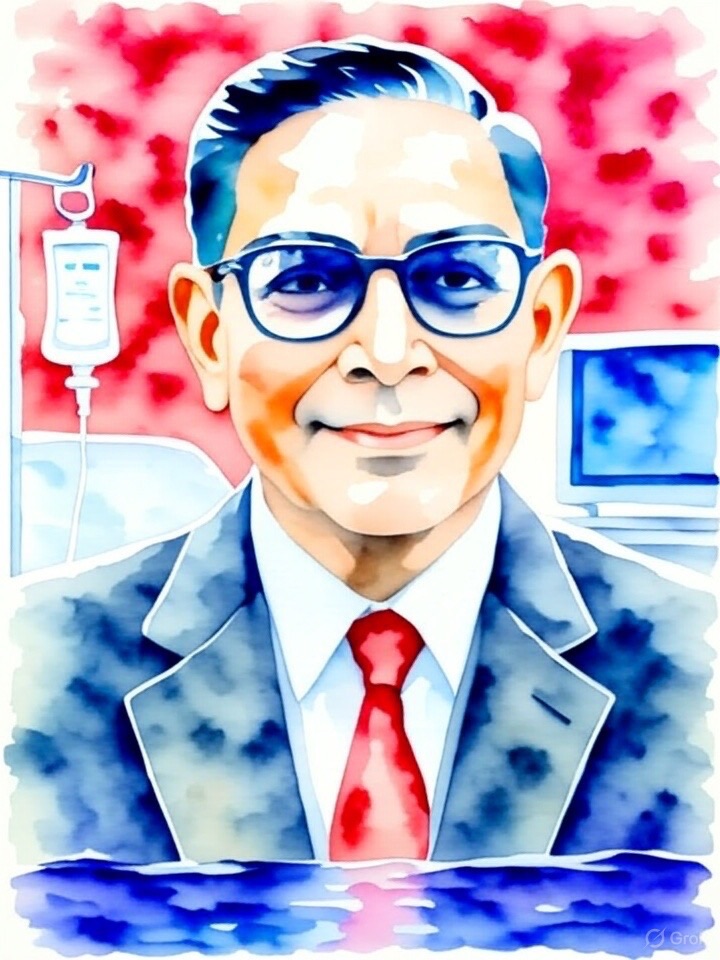
As the lecture hall clock ticked toward the end of another unforgettable session at SN Medical College, Professor M.C. Gupta would gather his notes, his dark glasses catching the light one last time, and offer a final pearl of wisdom. “Medicine is about people, not just diseases,” he’d say, his voice softening. “Listen to them, care for them, and they’ll trust you to heal them.” With a nod to his students, he’d stride out, the mustard-yellow Ambassador waiting outside, its chauffeur ready to whisk him away. Yet, his presence lingered in the room, in the minds of students who’d just played patients, doctors, and detectives under his guidance.
For those students—now doctors scattered across the globe in 2025—Professor Gupta remains a towering figure. His classes, alive with role-plays, humor, and humanity, taught them more than clinical skills; they learned to see patients as people, to build trust through empathy, and to communicate with clarity and care. From Romberg’s tests to breaking bad news, his demonstrations were lessons in connection, etched into their practice 40 years later. The image of him stepping out of that iconic car, glasses glinting, stays with them—a reminder that medicine, at its core, is about showing up for those who need you most.


 deemagclinic
 deemag and chest clinic