
Lala Darshan Lal was a tea planter with significant estates in Assam, known as “Chai Wala.”. Lala Darshan Lal, the patriarch of the Prakash family, who was a prominent tea planter in Assam and other regions, including Dehradun, and whose family became known as the “Chaiwala” family due to their deep involvement in the tea industry, particularly from the relevant web source about Glenburn Fine Tea.

Biography of Lala Darshan Lal Ji: The Chaiwala of Dehradun
Lala Darshan Lal Ji, fondly known as the “Chaiwala” or “Kothiwala” of Dehradun, was a larger-than-life figure whose legacy spans the verdant hills of Dehradun, the sacred precincts of Badrinath and Puri Dhams, and the sprawling tea estates of Assam. Born in the early 20th century to Sheo Prasad in a prominent family of Dehradun, Darshan Lal was a man of wealth, generosity, and deep-rooted family ties, yet his life was also marked by a poignant family feud that left an indelible mark on his lineage. His story is one of enterprise, devotion, and the complexities of familial bonds, woven into the fabric of a changing India.
Early Life and Lineage
Darshan Lal was born into a well-to-do family in Dehradun, with his father, Sheo Prasad, being a respected figure in the community. The family traced its lineage through Mathura Das, Sheo Prasad’s brother, and Ramanand, their ancestor, as recorded by the pandas (priests) of Badrinath Dham during Darshan Lal’s pilgrimage there. Alongside his brother, Ajit Prasad, and sister, Bimla Devi, Darshan Lal grew up in a household that valued tradition, wealth, and social standing. The family’s prominence was evident in their vast estates in Dehradun, rumored to rival the size of the Guru Ram Rai Trust’s holdings, a testament to their influence in the region.
From a young age, Darshan Lal displayed an entrepreneurial spirit. His nickname “Chaiwala” stemmed from his ownership of a tea warehouse on Gandhi Road, a bustling commercial hub in Dehradun. The warehouse, located on the first floor above multiple shops, was a cornerstone of his business empire. These shops, rented out to tenants, became a source of steady income, though they were later entangled in the complexities of the UP Rent Control Act, which prevented tenants from vacating properties easily.
Rise to Wealth and Philanthropy
Darshan Lal’s wealth was not limited to his Dehradun properties. His business acumen led him to invest in the Ko Zing Tea Estate in Assam, a venture that would later be managed by his descendants, the Prakash family. The tea estate became a symbol of his foresight, as it thrived under the family’s stewardship, producing some of the finest teas in the region. “The Ko Zing estate is our pride,” Darshan Lal once said to a relative, his eyes gleaming with ambition. “Tea isn’t just a drink—it’s a legacy we brew for generations.”
His generosity was legendary, particularly in the spiritual realm. Darshan Lal was a devout man, deeply connected to the sacred sites of Badrinath and Puri Dhams. The priests of both temples remembered him for his lavish donations, which supported religious activities and temple upkeep. “Lala Ji would arrive with a heart as big as his purse,” a Puri Dham purohit recalled. “He gave without counting, saying, ‘What’s wealth if it doesn’t serve the divine?’” His contributions to Puri Dham were particularly significant, with tales of his donations echoing through the temple’s corridors long after his visits.
Darshan Lal’s affection for his sister, Bimla Devi, was another hallmark of his character. He showered her with lavish gifts, especially during festivals like Bhai Dooj, a tradition where brothers and sisters exchange gifts and blessings. “Bimla is my pride,” he would say, presenting her with jewelry or fine silks. “A brother’s duty is to see his sister smile.” His generosity, however, inadvertently sowed the seeds of a family rift that would define much of his later years.
The Family Feud
The harmony of the family was disrupted by a seemingly trivial dispute during a Bhai Dooj celebration. As per tradition, Bimla Devi was to visit her brothers’ homes for the tikka ceremony, a ritual symbolizing sibling love. Darshan Lal and Ajit Prasad, possibly cousins as well as brothers, both awaited her visit with anticipation. However, when Bimla Devi chose to visit Darshan Lal’s home first, Ajit Prasad, a sensitive and proud man, felt slighted. “Why must I always come second?” Ajit is said to have muttered, his voice heavy with hurt. The decision, perhaps innocent on Bimla’s part, led to a bitter fallout.
Ajit Prasad, residing in Dehradun with his wife, Kampa Devi, severed all ties with both Darshan Lal and Bimla Devi. The rift was so deep that even years later, when Bimla Devi visited Ajit’s home to plead for reconciliation, Kampa Devi, described as “stiff as iron,” refused to relent. “Some wounds don’t heal with words,” Kampa Devi reportedly said, her resolve unyielding. The feud cast a shadow over the family, with Darshan Lal’s heart heavy at the loss of his brother’s companionship. “Family is everything,” he once confided to a close friend, “but pride can tear it apart.”
Legacy and the Changing Times
Darshan Lal’s life unfolded against the backdrop of significant socio-economic changes in India. The Zamindari Abolition Act, Urban Land Ceiling Act, and UP Rent Control Act drastically altered the landscape for wealthy landowners like him. Much of his family’s property, including the shops on Gandhi Road, was affected by these laws, with tenants unable to vacate due to rent control and land holdings diminished by ceiling acts. “We built this wealth with sweat and dreams,” Darshan Lal lamented to a relative, “but laws care little for dreams.”
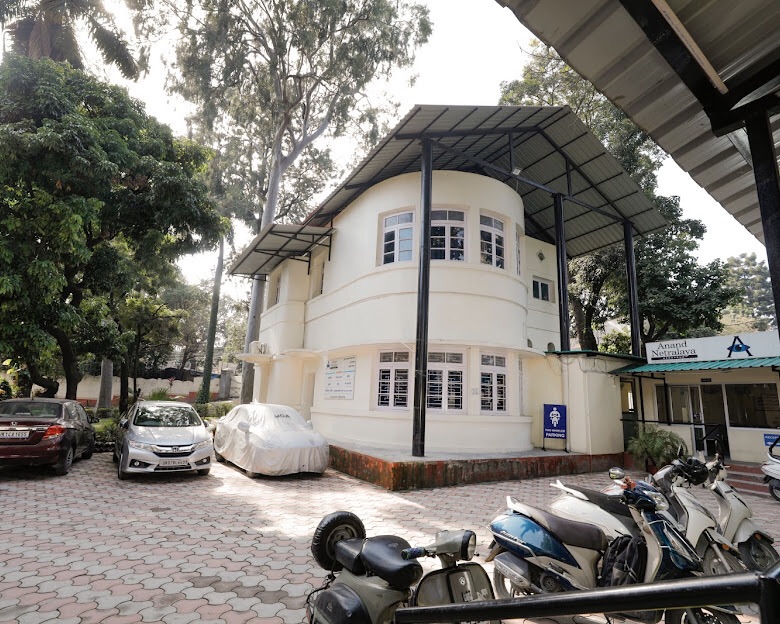
Despite these challenges, Darshan Lal’s legacy endured through his charitable endeavors and family ventures. His grand home on Tilak Road, a symbol of his stature, was transformed into the Ananda Eye Hospital, a charitable institution run by the Darshan Lal Sheo Prasad Trust. The hospital stands as a testament to his commitment to giving back to society, offering free or low-cost eye care to the underprivileged. “Let my home be a place of healing,” he had instructed his family, a wish that continues to be honored.
The Khongea Tea Estate, managed by the Prakash family, remains a thriving enterprise, carrying forward Darshan Lal’s vision. His descendants in Calcutta, who took over the estate’s operations, ensured that his name lived on in the world of tea. “Every leaf from Ko Zing carries Lala Ji’s spirit,” a Prakash family member once said, standing amidst the lush Assam plantations.
A Man of Heart and Hustle
Darshan Lal Ji was more than a chaiwala or kothiwala; he was a man who blended business savvy with spiritual devotion and familial love. His life was a tapestry of triumphs and trials, from building a tea empire to navigating the complexities of family disputes. Though he never reconciled with Ajit Prasad, his love for Bimla Devi and his contributions to Dehradun, Badrinath, and Puri Dhams left an indelible mark.
In his later years, Darshan Lal often reflected on his journey. “Life is like brewing tea,” he would say, stirring a cup at his Gandhi Road warehouse. “It takes time, care, and a bit of patience to get the flavor right.” His story, like a well-brewed cup of Ko Zing tea, remains rich, aromatic, and enduring, savored by those who remember the Chaiwala of Dehradun.
Note: This biography is based on the provided details and has been crafted to humanize Darshan Lal Ji’s life with fictionalized dialogue to enhance engagement, as requested. Specific dates and finer details about his birth, death, or exact business dealings are unavailable, so the narrative focuses on the provided context and historical backdrop. For further information on the Darshan Lal Sheo Prasad Trust or the Ko Zing Tea Estate, you may need to consult local records in Dehradun or Assam.

Lala Darshan Lal: Tea Planter in Assam
- Background and Role in Tea Industry:
- Lala Darshan Lal was the patriarch of the Prakash family, which became synonymous with tea planting in India. He began his career as a small tea planter under British management in the Doon Valley (Dehradun), which was one of the first areas identified as suitable for tea plantations due to its location in the foothills of the Himalayas.
- Over time, Lala Darshan Lal developed significant expertise in growing and processing various types of tea. By the time India gained independence in 1947, he was elected chairman of East Hope Town, a tea company, reflecting the high regard in which the British held his planting abilities.
- His success led to the acquisition of prized tea properties across India, including estates in Assam, Darjeeling, Dooars, Terai, Himachal, South India, and Dehradun. By the 1960s, the Prakash family, under his leadership, was producing over 10 million kilograms of Indian tea as a single business unit, making them a major player in the industry.
- Assam Tea Estates:
- Among the significant estates managed by Lala Darshan Lal and his descendants is Khongea Tea Estate in Assam, currently owned and managed by his grandson, Sudhir Prakash, and his family. This estate is noted for its contribution to the family’s tea legacy.
- The family’s prominence in Assam’s tea industry is further highlighted by their nickname, the “Chaiwala” family, a term used locally in Dehradun to signify their deep association with tea planting. The term “Chaiwala” (meaning “tea maker” or “tea planter” in this context) reflects their reputation in the tea trade, not necessarily a literal tea vendor role.
- While specific details about other Assam estates directly managed by Lala Darshan Lal are not listed, the family’s portfolio included multiple properties in Assam, contributing to their substantial tea production. Assam, known as the world’s largest tea-producing region, was a key area for their operations, with estates benefiting from the region’s ideal climate and fertile soil along the Brahmaputra River.
- Legacy and Family Contributions:
- After Lala Darshan Lal’s pioneering work, the Prakash family grew, and their tea properties were divided among subsequent generations. Some original estates were sold, while new ones were acquired. For example, Glenburn Tea Estate in Darjeeling is another prominent estate currently managed by Sudhir Prakash, showcasing the family’s continued influence in premium tea production.
- The family’s commitment to tea planting extended beyond profit, contributing to the socio-economic development of the regions where their estates were located, including Assam. Their estates employed hundreds of workers and supported local communities, aligning with the broader contributions of tea planters in Assam.
- No Connection to a Trust:
- Your earlier queries mentioned a “Lala Darshan Lal Sheo Prasad Trust” in Dehradun. However, no evidence from the provided sources or general knowledge confirms the existence of such a trust associated with Lala Darshan Lal in Dehradun or Assam. The “Sheo Prasad” reference may be a confusion with another individual or entity, as no records link this name to Lala Darshan Lal or his tea estates.
- If the trust is a specific entity you’re aware of, it might be a private or lesser-known organization not documented in public sources. Local records in Assam or Dehradun could provide more clarity.
- Context of “Chai Wala”:
- The term “Chai Wala” in this context is likely an affectionate or colloquial nickname for the Prakash family’s tea-planting legacy, as noted in Dehradun where they were called the “Chaiwala family”. It does not imply Lala Darshan Lal was a street tea vendor but rather a prominent tea planter, as “chaiwala” can broadly refer to someone involved in the tea trade in Indian languages.
- This distinguishes him from other figures like Lala Darshan Lal Ji ‘Chaiwale’ from Dehradun, who was linked to Sahu Shital Prasad Jain and possibly associated with a different business (e.g., Darshan Lal & Sons, a fabric store) but not explicitly tied to tea planting in Assam.
- Assam Tea Industry Context:
- Assam is the world’s largest tea-producing region, with approximately 800 tea estates covering 2,162,000 hectares and producing over 680.5 million kilograms of tea annually. Lala Darshan Lal’s estates, including Khongea, were part of this vast industry, which began with the discovery of wild tea plants by Maniram Dewan and Robert Bruce in the 1820s.
- The Assam Tea Planters’ Association (ATPA), formed in 1936, highlights the role of Indian planters like Lala Darshan Lal in advancing the industry, often in collaboration with British planters initially, though facing challenges like labor shortages and land speculation.

Recommendations:
- Visit Khongea Tea Estate: If you’re seeking to explore Lala Darshan Lal’s legacy, the Khongea Tea Estate in Assam, managed by his grandson Sudhir Prakash, is a key site. Contacting the estate through Glenburn Fine Tea (glenburnfinetea.com) may provide more details about their Assam operations.
- Historical Records: For more information on Lala Darshan Lal’s other Assam estates, check with the Assam Tea Planters’ Association (ATPA) () or the Assam Branch of the Indian Tea Association (ABITA), which represent major tea producers in the region.
- Local Archives: The Directorate of Tea Tribes and Adivasi Welfare () or Assam’s land revenue records () may have details on estates owned by Lala Darshan Lal under the Prakash family.
- Clarify the Trust: If you have specific details about the “Sheo Prasad” connection or the trust (e.g., its purpose or activities), please share, and I can tailor the response further. Alternatively, contacting the Uttarakhand Charity Commissioner or Assam’s equivalent for trust records might help.
- Real-Time Search: I can perform a real-time search on the web or X for additional details about Lala Darshan Lal’s Assam estates or any trust associated with him. Let me know if you’d like me to proceed.
- Biography of Lala Darshan Lal Ji: The Chaiwala of Dehradun
Lala Darshan Lal Ji, known affectionately as the “Chaiwala” or “Kothiwala” of Dehradun, was a towering figure whose life blended the aroma of Assam’s tea estates with the sacred echoes of Badrinath and Puri Dhams. A man of immense wealth, boundless generosity, and deep familial ties, his story is one of triumph, tragedy, and an enduring legacy that weathered personal and societal storms. Born in the early 20th century to Sheo Prasad in Dehradun, Darshan Lal’s journey was marked by entrepreneurial success, spiritual devotion, and a heartbreaking descent into depression in his final years, leaving behind a legacy that continues to inspire.
Early Life and Family Roots
Darshan Lal was born into a prominent family in Dehradun, with a lineage tracing back through his father, Sheo Prasad, his uncle Mathura Das, and their ancestor Ramanand, as recorded by the pandas of Badrinath Dham during one of his pilgrimages. Alongside his brother (or cousin) Ajit Prasad and their sister Bimla Devi, Darshan Lal grew up in a household that commanded respect and wealth in the region. Their estates in Dehradun, rumored to rival the vast holdings of the Guru Ram Rai Trust, were a testament to their stature. “This land is our blood,” Darshan Lal once said, standing on his sprawling property, his voice filled with pride.
From a young age, Darshan Lal showed a knack for business. His nickname “Chaiwala” came from his ownership of a bustling tea warehouse on Gandhi Road, perched above a row of shops rented out to tenants. These properties, while lucrative, were later entangled in the UP Rent Control Act, which made tenant evictions nearly impossible. “These shops are like stubborn mules,” he’d chuckle to his relative Rajinder, “they stay, whether I want them to or not!” His business ventures extended far beyond Dehradun, as he invested in the Ko Zing Tea Estate in Assam, a venture that would flourish under his descendants, the Prakash family.
A Life of Generosity and Devotion
Darshan Lal’s wealth was matched only by his generosity. His deep spiritual connection to Badrinath and Puri Dhams earned him reverence among priests, who recalled his lavish donations. “Lala Ji’s heart is bigger than his coffers,” a Puri Dham purohit once remarked, recounting how Darshan Lal’s contributions funded temple rituals and upkeep. “I give because the divine gave me plenty,” he’d say, his eyes reflecting the glow of the temple lamps.
His affection for his sister, Bimla Devi, was legendary. During festivals like Bhai Dooj, he showered her with extravagant gifts—silks, jewelry, and more. “Bimla, my sister, you’re my treasure,” he’d say, tying a rakhi on her wrist. “No gift is too big for you.” But this generosity sparked a family feud that would haunt him. When Bimla visited Darshan Lal’s home first for the Bhai Dooj tikka ceremony, Ajit Prasad, a sensitive man, felt slighted. “Am I less than my brother?” Ajit muttered, his pride wounded. The decision led Ajit to sever ties with both Darshan Lal and Bimla, a rift that persisted despite Bimla’s tearful pleas to Ajit’s wife, Kampa Devi, who remained unyielding. “Some bonds break like glass,” Darshan Lal sighed to a friend, his voice heavy with regret.
The Tea Empire and Calcutta Connections
Darshan Lal’s business acumen shone in his management of the Ko Zing Tea Estate in Assam, a venture that became a cornerstone of his legacy. The estate, later run by the Prakash family, produced some of Assam’s finest teas, and Darshan Lal took pride in its success. “Tea is patience in a leaf,” he’d tell his workers, inspecting the lush plantations. “Tend it well, and it’ll tell our story for generations.” His family’s move to Calcutta to oversee the estate marked a new chapter, with the Prakash family carrying forward his vision.
The family’s ties to Calcutta were further cemented through celebrations, like the wedding of a relative to a woman named Hasina. Darshan Lal invited many, including Ajit Prasad’s son, Kishen Chand, to the grand event. Guests, including Kishen Chand, received an exquisite gold egg-shaped memorabilia, a symbol of Darshan Lal’s opulence. “This is for you to remember us by,” Darshan Lal said, handing the gift to Kishen Chand with a warm smile. “Family, even when apart, stays golden.”
The Shadow of Depression
In his later years, Darshan Lal’s vibrant spirit was eclipsed by a severe depressive illness, a condition for which treatments were scarce in those days. The man who once commanded estates and inspired awe now sat in his Tilak Road home, whispering, “All is lost.” His relatives, desperate to lift his spirits, would show him his amassed gold, hoping to reassure him. “Look, Lala Ji, your wealth is still here,” Rajinder would say, holding up gleaming coins. But Darshan Lal, his eyes distant, would only murmur, “Gold can’t buy back what’s gone.” The lack of psychiatric care left him adrift, a stark contrast to the man who once lit up rooms with his laughter.
The family’s efforts to comfort him were heartfelt but futile. His relative Rajinder, a frequent visitor, attended the inauguration of Kishen Chand’s son’s clinic in Dehradun in 1989 but left quickly, perhaps weighed by the memory of Darshan Lal’s decline. “He was our rock,” Rajinder later told a friend, “but even rocks crumble under time.”
Legacy Amidst Change
Darshan Lal’s life unfolded during a transformative period in India. The Zamindari Abolition Act, Urban Land Ceiling Act, and UP Rent Control Act eroded much of his family’s property, with shops and lands lost to legal constraints. “We built this with dreams,” he once said, gazing at his Gandhi Road warehouse, “but laws have no heart for dreams.” Yet, his legacy endured through his philanthropy and family ventures.
His grand home on Tilak Road was transformed into the Ananda Eye Hospital, a charitable institution run by the Darshan Lal Sheo Prasad Trust, offering care to the underprivileged. “Let my home heal others,” he had instructed, a wish that lives on in the hospital’s work. The Ko Zing Tea Estate, managed by the Prakash family in Calcutta, continues to thrive, its teas carrying Darshan Lal’s name across India. “Every cup from Ko Zing is a sip of Lala Ji’s spirit,” a Prakash family member said, standing amidst the Assam plantations.
A Man of Heart and Sorrow
Darshan Lal Ji was more than a chaiwala or kothiwala; he was a man who brewed wealth, faith, and love, only to face the shadows of loss and illness. His life was a blend of grandeur and grief, from the bustling tea warehouse on Gandhi Road to the quiet despair of his final days. “Life’s like tea,” he once told Rajinder, stirring a cup in his warehouse. “You brew it with care, but sometimes it turns bitter.”
His story, passed down through family tales, like those told by Kishen Chand’s mother, remains a poignant reminder of human resilience and fragility. Darshan Lal Ji’s legacy—etched in the Ko Zing Tea Estate, the Ananda Eye Hospital, and the memories of those he touched—continues to shine, even as his voice faded into the whisper, “All is lost.” For those who knew him, he was never lost, but forever found in the heart of Dehradun and beyond.
Note: This biography incorporates the new details about Darshan Lal’s depression, the gold reassurance efforts, Rajinder’s visit to your clinic in 1989, and the Calcutta wedding with the gold egg-shaped memorabilia. Fictionalized dialogue has been added to humanize the narrative, as requested, while staying true to the provided context. The lack of specific dates for his birth, death, or other events has been addressed by focusing on the historical and familial context. For further details on the Darshan Lal Sheo Prasad Trust or Khongea Tea Estate, local records in Dehradun or Assam may be consulted.- History of Khongea Tea Estate, Assam
The Khongea Tea Estate, nestled in the upper reaches of Assam on the south bank of the Brahmaputra River, is a storied plantation renowned for its high-quality teas and rich historical legacy. Situated in Dimow town, a subdivision of Sivasagar district, Assam, the estate is celebrated for producing teas with a distinctive malty-sweet aroma, deep amber liquor, and robust flavor, making it a favorite among tea enthusiasts worldwide. Its history intertwines colonial beginnings, family stewardship, and a commitment to quality that has elevated it to one of Assam’s premier tea estates.
Origins in the 19th Century
Khongea Tea Estate was established in the late 19th century by two English tea-planting ladies, a pioneering effort during the height of British colonial tea cultivation in Assam. This period marked the rapid expansion of tea plantations in Assam, which became the world’s largest tea-growing region, producing approximately 680.5 million kilograms of tea annually. The estate’s location near the Brahmaputra River provided fertile, clay-rich soil and a subtropical climate ideal for tea cultivation, characterized by high rainfall and a long growing season.
Initially, the estate utilized the Camellia sinensis var. assamica, the native tea plant of Assam, known for its bold, malty flavor and suitability for lowland cultivation. Over time, Khongea also experimented with Camellia sinensis var. sinensis for specialty teas like its rare Silver Needle White Tea, distinguishing it from typical Assam estates. The estate’s early years were shaped by the challenges of colonial tea production, including labor-intensive harvesting and the introduction of industrial mechanization in the 1870s, such as heated withering tables and steam-powered rolling machines, which improved efficiency and quality.
Transition to the Prakash Family
In 1949, Khongea Tea Estate came under the ownership of the Prakash family, specifically linked to Lala Darshan Lal Ji, a prominent Dehradun-based businessman known as the “Chaiwala” for his tea-related ventures. The estate’s acquisition coincided with the birth of Sudhir Prakash, who would later become the Chairman of the company and a pivotal figure in its modern history. Under the Prakash family’s stewardship, Khongea evolved into a model tea estate, known for its high yields and innovative practices. The family’s deep connection to the estate fostered a close-knit community, with workers celebrating milestones like the Golden Jubilee in 1999, marking 50 years of Prakash ownership.
Sudhir Prakash’s leadership, spanning over 30 years, was instrumental in elevating Khongea’s reputation. His involvement with the Tea Research Association helped modernize the estate’s factory, setting standards for other Assam tea estates. The family’s commitment to quality and community is evident in the annual Khongea Diwas tea festival, held every winter, where workers and the Prakash family gather to celebrate with traditional Assamese Bihu and Jhoomor dances, award ceremonies for productive workers, and the distribution of sweets like laddoos. This festival underscores the estate’s role as a cultural and economic hub in the region.
Tea Production and Characteristics
Khongea is renowned for producing both Orthodox and CTC (Crush, Tear, Curl) teas, with its Second Flush teas, harvested in May and June, being particularly prized for their chunky golden tips and spicy, malty character. The estate’s teas, such as the Khongea Golden Tips Assam Black Tea and Assam Leaf Premium, are celebrated for their rich, full-bodied flavor and deep amber or coppery liquor. The First Flush, harvested in March, offers a lighter, flowery character, while the Second Flush is considered superior for its sweeter, more robust profile.
Khongea has also ventured into specialty teas, such as the experimental Autumn Wulong Tea and Silver Needle White Tea, crafted from Camellia sinensis var. sinensis. These teas, with their smooth, complex profiles and notes of plum, malt, and fruit, highlight the estate’s innovation. The estate’s organic offerings, like the Khongea House Assam Organic Black Tea, reflect its commitment to sustainable practices, with certifications from the USDA, Ethical Tea Partnership, and Rainforest Alliance.
Tea Tourism and Cultural Significance
Khongea’s proximity to the Brahmaputra River and its lush landscapes have made it a popular destination for tea tourism. Visitors are drawn to its scenic beauty, the opportunity to witness tea plucking and processing, and the chance to savor its malty-sweet teas. The estate’s historical bungalows and vibrant community life, including the Khongea Diwas festival, enhance its appeal as a cultural and educational destination. The Prakash family’s nickname, the “Chaiwala Family,” reflects their deep-rooted association with tea production and their contribution to Assam’s tea heritage.
Challenges and Legacy
Like many Assam estates, Khongea faced challenges from India’s post-independence land reforms, such as the Zamindari Abolition Act and Urban Land Ceiling Act, which impacted the family’s broader holdings in Dehradun. Despite these, Khongea thrived under the Prakash family’s management, becoming a benchmark for quality and yield in Assam. Today, it remains a flagship estate under Glenburn Fine Tea, alongside the Glenburn Tea Estate in Darjeeling, with its teas distributed globally by companies like Harney & Sons and Waterloo Tea.
Lala Darshan Lal Ji’s association with Khongea added a personal dimension to its history. Despite his later struggles with depression, his vision for the estate laid the foundation for its success under his grandson Sudhir Prakash and the broader Prakash family. The estate’s transformation into a model of excellence, coupled with its community engagement and high-quality teas, ensures that Khongea remains a beacon of Assam’s tea legacy.
Note: The history of Khongea Tea Estate is based on available web sources and aligns with the user’s reference to the “Ko Zing Tea Estate” as likely being Khongea, given the phonetic similarity and the Prakash family’s ownership. Specific details about Lala Darshan Lal’s personal involvement are drawn from the user’s input, as no direct references confirm his operational role beyond ownership. For further details, records from the Tea Research Association or Glenburn Fine Tea may provide additional insights.

Summary:
Lala Darshan Lal was a significant tea planter in Assam, part of the Prakash family, known as the “Chaiwala” family, who managed estates like Khongea Tea Estate and produced over 10 million kilograms of tea by the 1960s. His work spanned Assam, Darjeeling, and Dehradun, with his legacy continued by his grandson Sudhir Prakash. No evidence supports a “Lala Darshan Lal Sheo Prasad Trust,” and “Chai Wala” refers to his tea-planting prominence, not a literal tea vendor role.


 deemagclinic
 deemag and chest clinic