
Dr. Yellapragada Subbarao (January 12, 1895 – August 8, 1948) was an Indian-American biochemist whose groundbreaking contributions to medicine have saved countless lives, yet he remains relatively underrecognized. Born in Bhimavaram, Andhra Pradesh, India, Subbarao faced numerous challenges, including financial hardships and discrimination, but his perseverance led to monumental discoveries in biochemistry and pharmacology. Below is a concise overview of his life and achievements, based on available information.
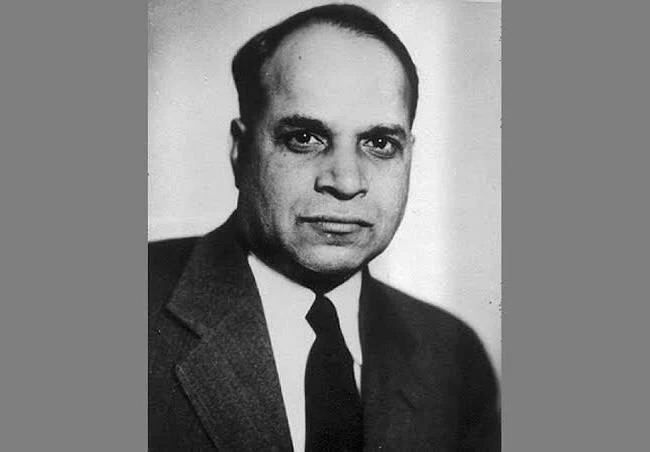
Early Life and Education
- Background: Born into a Telugu family, Subbarao faced poverty and personal tragedy, losing two brothers to tropical sprue. He studied at Madras Medical College but was denied a full MBBS degree due to his support for Gandhi’s boycott of British goods, receiving a lesser Licentiate in Medicine and Surgery (LMS) instead. His professor, M.C. Bradfield, disapproved of his wearing khadi surgical dress, a symbol of Indian nationalism.
- Ayurveda and Early Career: After failing to join the Madras Medical Service, Subbarao lectured in anatomy at Dr. Lakshmipathi’s Ayurvedic College, where he developed an interest in Ayurveda. Financial support from his father-in-law and MSN Charities enabled him to pursue further studies in the U.S.
- Harvard Journey: Arriving in Boston in 1922, Subbarao earned a diploma in Tropical Medicine from Harvard Medical School in 1924. He worked as a night porter to support himself, as his LMS degree didn’t qualify him for scholarships. Later, he joined Harvard as a junior faculty member, working under Cyrus Fiske.
Major Contributions
- Fiske-Subbarao Method (1925): Collaborating with Cyrus Fiske, Subbarao developed a colorimetric method to measure phosphorus in body fluids and tissues, still used by biologists today. This work also led to the discovery of phosphocreatine and adenosine triphosphate (ATP) as key energy storage molecules in cells. His contributions to ATP isolation were downplayed by Fiske, possibly due to jealousy, and some of his nucleotide discoveries were later rediscovered by others.
- Folic Acid and Tropical Sprue: Motivated by the loss of his brothers, Subbarao synthesized folic acid (Vitamin B9) at Lederle Laboratories, developing a cure for tropical sprue. His work on folate metabolism also advanced anemia treatment.
- Methotrexate (1947): Subbarao, with Dr. Sidney Farber, developed methotrexate, one of the first chemotherapy drugs. Initially derived from aminopterin, it became a cornerstone for treating leukemia, lymphoma, and autoimmune diseases like rheumatoid arthritis and psoriasis. It remains widely used today.
- Diethylcarbamazine (Hetrazan, 1946): Subbarao’s team synthesized this drug, which became the primary treatment for filariasis (elephantiasis), endorsed by the World Health Organization for mass campaigns.
- Tetracycline Antibiotics: At Lederle, Subbarao guided the discovery of chlortetracycline (Aureomycin), the first tetracycline antibiotic, effective against a broad range of bacterial infections. His work on Doxycycline, a third-generation tetracycline, helped control the 1994 Surat plague in India.
- Other Contributions: Subbarao contributed to the isolation of vitamin B12 for pernicious anemia, niacin for pellagra, and polymyxin for bacterial infections. His work on metabolic pathways and biochemical assays shaped modern drug discovery.
Challenges and Lack of Recognition
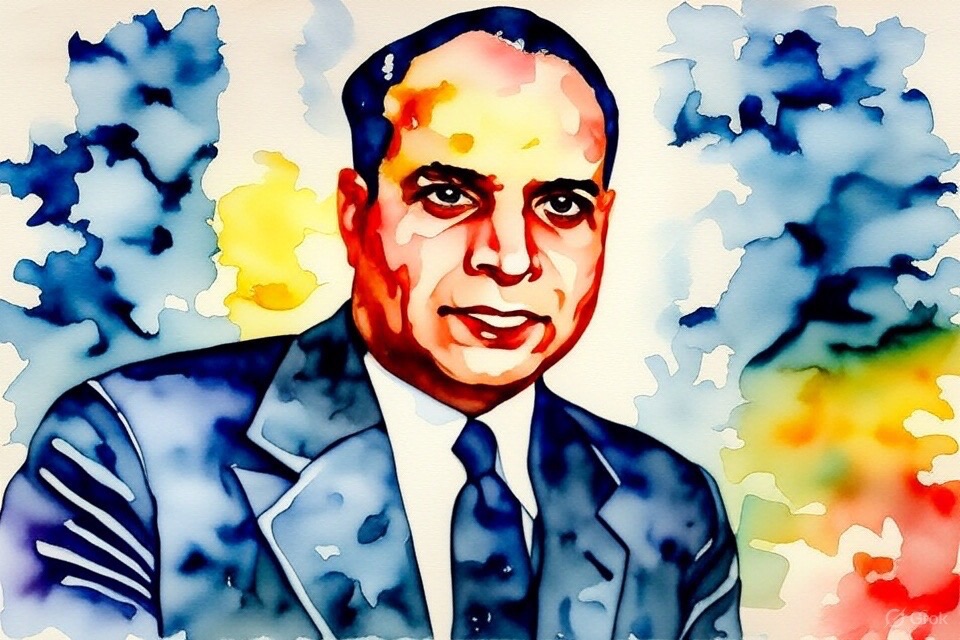
- Discrimination: Subbarao faced bias at Madras Medical College and Harvard, where he was denied tenure despite his contributions. His Indian nationality and lack of U.S. citizenship limited his opportunities, and he lived under the constant threat of deportation.
- Modesty and Suppression: Known for his humility, Subbarao often shared credit with colleagues, which sometimes led to others receiving recognition for his work. Cyrus Fiske reportedly suppressed some of his findings, including ATP isolation, which was credited to Karl Lohmann.
- No Major Awards: Despite his transformative discoveries, Subbarao received no major awards like the Nobel Prize during his lifetime, a fact lamented by contemporaries like George Hitchings, who won the Nobel in 1988.The Man Who Never Got a Nobel, But Gave the World Methotrexate
— A story of forgotten genius, cancer, arthritis, psoriasis… and hope. 💊💔🧬
1/
In 1948, a scientist in New York died alone.
No headlines. No awards.
But that same year — his drug saved the life of a child with leukemia.
His name was Dr. Yellapragada Subbarow.
You may never have heard of him.
But you should have.
Subbarow was born in 1895 in rural India.
He lost his father young.
Faced casteism, poverty, colonial injustice.
Was denied his MBBS degree for joining India’s freedom movement.
But he didn’t stop.
He taught himself.
He dreamed of healing through science.
3/
He reached Harvard on borrowed money.
Worked as a lab assistant.
Slept on floors.
Often went hungry.
Still —
✅ He co-discovered ATP
✅ Developed phosphocreatine
✅ Pioneered the first tetracyclines
But his greatest gift to medicine was yet to come…
4/
At Lederle Labs in the 1940s, Subbarow’s team studied folic acid and cell growth.
They asked:
“If folate feeds cells… can blocking it starve cancer cells?”
That insight led to aminopterin — the first antifolate.
Its modified version?
Methotrexate.
5/
1948: Leukemia in children was a death sentence.
Dr. Sidney Farber gave Subbarow’s antifolate to a few desperate patients.
Tumor growth slowed.
For the first time — remission happened.
Modern chemotherapy was born.
But Subbarow never saw it.
He died the same year. Forgotten
💡 Then came 1951:
Dr. Richard Gubner gave low-dose MTX to rats with inflammation.
Surprise — it worked like cortisone.
So he tried it in humans — with RA, psoriasis, and lupus.
It worked again. No marrow suppression.
But no one listened.
7/
Why?
Because cortisone had just won the Nobel.
And Methotrexate was stamped as a “cancer drug.”
Who would dare give chemotherapy for arthritis or skin disease?
So Gubner’s insight — anti-inflammatory MTX — was ignored.
For decades.
8/
Finally, in the 1970s–80s, bold rheumatologists revived it:
🧪 Used low-dose, weekly MTX
📊 Trials followed
✅ FDA approved it in 1988
And MTX transformed autoimmune care.
It became the anchor drug for:
RA. Psoriasis. JIA. Dermatomyositis. Sarcoidosis. SLE subsets. IgG4-RD.
9/
💊 A molecule designed to kill cancer…
Now saves joints, skin, lungs, blood vessels — and lives.
Used by 100+ million patients, worldwide.
In doses 1000× lower than cancer regimens.
But myths still surround it.
Let’s bust them 🧵👇
10/
MYTH 1: “It’s a chemotherapy drug.”
✅ High-dose MTX is chemo.
❌ Low-dose MTX (7.5–25 mg/week) is not cytotoxic.
✅ It’s immunomodulatory.
It’s like aspirin: a little for heart disease, a lot for pain.
Same molecule. Different effect.
11/
MYTH 2: “It causes lung fibrosis in everyone.”
Wrong. ❌
📉 MTX-ILD is rare (~1–2%).
🧠 Most lung issues are from RA itself, not the drug.
Don’t blame the medicine blindly.
Monitor, educate, don’t panic.
12/
MYTH 3: “It shouldn’t be used long-term.”
✅ Methotrexate is the most studied csDMARD ever.
🧪 Decades of data show:
🔹 Stable disease control
🔹 Reduced steroid burden
🔹 Slower joint damage
It’s safer than untreated autoimmune disease.
13/
MYTH 4: “It’s too toxic.”
Any drug needs monitoring.
With folic acid + 8–12 week labs (CBC, LFTs, Cr):
Side effects are rare and manageable.
What’s actually toxic?
❌ Flares
❌ Organ damage
❌ Disability
MTX helps prevent all three.
14/
Today, MTX is used by:
🟢 Rheumatologists
🟢 Dermatologists
🟢 Pediatricians
🟢 Oncologists
🟢 Pulmonologists
🟢 Immunologists
It bridges specialties.
It saves lives.
And it began with a dream… and a forgotten genius.
15/
So next time you prescribe Methotrexate, remember:
It’s not just a drug.
It’s a symbol of science, struggle, and service.
Subbarow died unknown.
No Nobel. No obituary.
But millions live better…
Because he dared to think different.
16/
📣 Tag your colleagues:
MedTwitter #RheumTwitter #DermTwitter
OncoTwitter #PedsTwitter #Immunology
GlobalHealth #ScienceTwitter #InternalMedicine
💬 Share the story.
🔁 Retweet the thread.
🧠 And never forget the man behind Methotrexate.
Legacy
- Posthumous Recognition: Subbarao’s contributions were honored with a commemorative postal stamp in India, a street named after him in Bhimavaram, and a fungus genus (Subbaromyces) and spider species (Tanzania yellapragadai) named in his honor. In 2024, the Government Medical College in Eluru was named Dr. Yellapragada Subba Row Government Medical College.
- Impact: His discoveries in ATP, folic acid, methotrexate, and antibiotics continue to influence biochemistry, oncology, and infectious disease treatment. American author Doron Antrim aptly said, “You’ve probably never heard of Dr. Yellapragada Subbarow. Yet because he lived, you may be alive and well today.”
- Death: Subbarao died of a heart attack on August 8, 1948, at age 53, while working on a polio drug. His funeral was held at Emmanuel Baptist Church in Ridgewood, New Jersey.
- Happy announce that Government Medical College, Eluru will now be named as Dr. Yellapragada Subba Row Government Medical College, Eluru.
Hon’ble Chief Minister @ncbn garu has approved a proposal in this regard in honour of the memory and scientific contributions of world renowned scientist late Dr. Subba Row garu, a Bio-chemist whose research helped saving millions of lives across the world. His pioneering research led to formulation of critical anti-biotics and several medicinies like hetrogen and tetracycline. His discovery of nature and properties of Folic Acid is acknowledged as a pioniring breakthrough. He was born in 1895 in Bhimunipatnam, West Godavari dt. and passed away in 1948.
I appreciate and thank Hon’ble Dy CM @PawanKalyan garu for proposing this re-naming of Eluru Govt. Medical College.
This is the NDA way of perpetuating the memory and legacy of great people who dedicated their lives for the welfare of mankind. In the same spirit, we recently renamed Govt. Medical College, Machilipatnam after freedom fighter late Pingali Venkaiah garu.
Unfortunately, in the recent past, other dynast parties sought to perpetuate their family legacy at public cost.
Why He Matters
Dr. Subbarao’s work laid the foundation for modern chemotherapy, antibiotic development, and nutritional science. Despite facing systemic barriers and limited recognition, his discoveries have had a lasting global impact, saving millions of lives. His story is a testament to resilience, selflessness, and the pursuit of scientific excellence.
If you’d like specific details about any of his discoveries, his life in the U.S., or recent tributes, let me know! I can also provide sources for further reading or explore related topics.


 deemagclinic
 deemag and chest clinic