
Dr. Kanvarjit Singh Sabharwal, or K.J.S. Sabharwal or just Kjs to friends, as he’s known in Dehradun’s medical circles, is a physician whose name carries the weight of expertise, intuition, and a touch of swagger. Operating out of his bustling clinic at M K P Chowk, New Road, Dehradun, he’s the go-to doctor for patients seeking answers to ailments others can’t crack. Open daily from 7:00 AM to 9:00 PM, his practice is a lifeline for the community, though it’s not without its critics—24 Google reviews average 3.8 stars.
Dr. Sabharwal’s journey began far from the spotlight. He attended the prestigious Cambrian Hall, getting ICSE and ISCE certificate. Later, his academic roots trace to King George’s Medical College (KGMC) in Lucknow, where he earned his MBBS and MD in Medicine. A star student, he thrived in the rigorous environment, often reminiscing with a grin, “Kya ghota lagaya tha!” moving his limbs as if grinding on a pestle. (What a hard study I took in KGMC.!)—his way of boasting about outsmarting tough exams and complex cases. His peers, like Dr. Sudhanshu Kalra, dubbed him “Professor” for his encyclopedic knowledge, a habit fuelled by an unusual ritual. As Nischal Jain shares with a laugh, “K.J.S. keeps journals and books in his toilet! Every morning, he’s there, reading The Lancet or some textbook, saying it’s where he thinks best!”
Dr. Kanvarjit Singh Sabharwal, or K.J.S. as Dehradun reveres him, cuts a striking figure at his clinic at MKP Chowk, New Road. A short-statured, fair-skinned man with an intelligent glint behind his shell-framed glasses, he’s often seen in a crisp shirt and trousers, topped with a loose-fitting pagri that he adjusts absentmindedly when lost in thought. His upturned mustache and brisk, confident walk—arms swinging with a swagger reminiscent of 1971 war hero Nirmaljit Singh Sekhon—lend him an air of quiet authority. “He moves like he owns the place,” says Nischal Jain, chuckling. “That pagri tilts just so when he’s puzzling out a diagnosis.”
A King George’s Medical College, Lucknow, alumnus with MBBS and MD in Medicine, Dr. Sabharwal excelled academically, boasting, “Kya ghota lagaya tha!” (What a grind I took!) about outsmarting tough exams. From humble beginnings, toting ECG equipment on a scooter, he built a formidable practice, open daily from 7:00 AM to 9:00 PM.
His intellectual appetite is legendary. Nischal Jain shares, “He keeps journals in his toilet! Mornings, he’s there, reading The Lancet, says it’s his thinking spot.” Dr. Kalra dubs him “Professor” for his vast knowledge, and Padmashree Dr. R.K. Jain told me, “Every talk with K.J.S. teaches me something. His patients hit the jackpot.” He proved it when he sent me to Dr. K.M. Cherian in Chennai for cardiac surgery, saying, “Don’t look around—he’s your man.” Spot on. His humility shines too; Mr. Das recalls him urging, “Take the patient to Delhi—they can do more there,” saving a life.
Dr. Sabharwal chairs academic meets with a discerning eye, often adjusting his pagri as he listens. “If the speaker’s off,” Jain says, “he’s out the door, muttering, ‘Waste of time!’” His diagnostic wins, like nailing Kamal Kapoor’s son’s malaria case after Dr. Gupta faltered, come with a triumphant, “See, I told you so!” But he’s not flawless. Kapoor winces, recalling, “My wife’s tremors? He said, ‘Depression, no CT needed,’ and stopped her Parkinson’s meds. It was PSP—progressive supranuclear palsy.” Dr. Sabharwal owned the mistake, redirecting her to a specialist.
With his swagger, sharp mind, and that pagri tilting just so, Dr. Sabharwal is Dehradun’s medical maverick, an intellectual powerhouse, his facial look not unlike war hero Sekhon. As he’d say, twirling his mustache, “I dive in, I figure it out. That’s the job!” His clinic, a stone’s throw from the railway station, remains a beacon, despite the occasional grumble about staff or tests.
Dr. Kanvarjit Singh Sabharwal, Dehradun’s sharp-witted physician, is a distinctive figure at his Tagore Villa clinic. Short, fair, bespectacled, and sporting a loose pagri that tilts when he’s deep in thought, he strides with a Sekhon-like swagger, his upturned mustache adding flair. During clinical exams, he’s a study in focus, muttering to himself like a diligent student: “Lymph nodes… pedal edema… heart sounds…” ticking off checkpoints to ensure nothing slips. “No other consultant does that,” says a patient, marveling. “It’s like he’s double-checking his own brilliance.”
His muttering habit, paired with his knack for tough diagnoses—like nailing a midnight malaria test for Kamal Kapoor’s son with a triumphant “See, I told you so!”—sets him apart. Though he chairs academic meets with a critical eye, walking out on weak speakers, and once misjudged Kapoor’s wife’s PSP as depression, his commitment endures. Married to Dr. Baljeet Kaur Sabharwal, who left practice but loves local gold jewelry, he teases, “Now I know where my money’s going!” Despite gripes about his scheduler or lab preferences, his clinic, open daily from 7:00 AM to 9:00 PM, remains a beacon. As he’d say, pagri askew, “I dive in, I sort it out!”
Dr. Kanvarjit Singh Sabharwal, Dehradun’s -intellectual dynamo, is a sight to behold at his clinic. Short, fair, and sharp-eyed behind shell-framed glasses, he sports a smart shirt and trousers, his loose-fitting pagri tilting as he puzzles over a case, his upturned mustache twitching with a swagger reminiscent of 1971 war hero Nirmaljit Singh Sekhon. “He walks like he’s on a mission, arms swinging, full confidence,” says Nischal Jain, grinning.
A King George’s Medical College, Lucknow, alumnus with MBBS and MD in Medicine, Dr. Sabharwal aced his studies, boasting, “Kya ghota lagaya tha!” (What a dive I took!) about outsmarting exams. Starting with just a scooter and ECG equipment, he built a formidable practice. His intellectual hunger is quirky—Jain laughs, “He keeps journals in his toilet! Mornings, he’s reading The Lancet, says it’s his thinking throne.” Dr. Kalra calls him “Professor,” and Padmashree Dr. R.K. Jain told me, “Every chat with K.J.S. is a lesson. His patients are blessed.” He proved it, directing me to Dr. K.M. Cherian in Chennai for cardiac surgery, saying, “He’s the best—don’t waste time.” Nailed it. His humility shines too; Mr. Das recalls him urging, “Get to Delhi—they’ve got the tools,” saving a life.
Married to Dr. Baljeet Kaur Sabharwal, a former practicing physician at Tagore Villa, he now runs the show solo since she stepped away from medicine. Baljeet’s love for gold jewelry from a local shop is no secret. Dr. Sabharwal, eyeing her latest bangle, often quips with a mock sigh, “Now I know where my money’s going!” Kapoor chuckles, “He says it with a wink, but you know he’s half-serious.” Despite the odd complaint about his scheduler’s attitude or lab preferences, Dr. Sabharwal’s sharp mind, Sekhon-like swagger, and that tilting pagri make him Dehradun’s medical maverick. As he’d say, twirling his mustache, “I dive in, I sort it out. That’s the job!”
His career started modestly. Fresh out of KGMC, Dr. Sabharwal set up a small practice in Dehradun, zipping around town on a scooter with portable ECG equipment strapped to the back. “He was a one-man show,” recalls Kamal Kapoor. “No fancy clinic, just him, his stethoscope, and that scooter, racing to patients’ homes.” That hustle paid off. Word of his diagnostic prowess spread, and soon, his clinic became a hub for those seeking answers. His reputation for cracking tough cases—like the time he saved Kapoor’s son from a mystery fever—cemented his legend. When pediatrician Dr. PkGupta, child specialist, gave up, saying, “I’m out of ideas,” Dr. Sabharwal ordered a malaria parasite test at midnight. When it came back positive, he smirked at Kapoor, “See, I told you so! Malaria’s no match for us.” The boy was back to health in days.
Padmashree Dr. R.K. Jain, a respected colleague, once told me, “Every time I talk to K.J.S., I learn something new. If I benefit, imagine what his patients get!” This rings true in stories like mine, when I was scrambling to find a cardiac surgeon for a loved one. Dr. Sabharwal didn’t hesitate. “Go to Dr. K.M. Cherian at Mission Hospital in Chennai,” he said, leaning forward with conviction. “Don’t waste time looking around. He’s the best.” I followed his advice, and it was a game-changer. When I thanked him, he shrugged, “I keep well-informed. That’s how I help people.”
He’s also known for his humility when cases exceed his reach. Mr. Das recounts a time when Dr. Sabharwal didn’t hesitate to say, “Take the patient to Delhi. They’ve got the setup to do something we can’t here.” That candor saved a life, as Delhi’s specialists pulled through. “He’s not too proud to admit when someone else can do better,” Das says. “That’s rare.”
Still, his supporters—like Jain, who calls him “a detective in a white coat”—outweigh the naysayers. Whether he’s poring over journals in his morning “library” or racing to a diagnosis, Dr. Sabharwal’s blend of grit, wit, and wisdom makes him a towering figure in Dehradun. As he’d say, brushing off the praise, “Bas, I do my job. Someone’s got to dive in and figure it out!”
Dr. Sabharwal’s intellectual hunger is legendary. Nischal Jain swears by his quirky habit: “He keeps medical journals in his toilet! Every morning, he’s reading, says it’s where he thinks clearest.” Dr. Kalra calls him “Professor” for his encyclopedic knowledge, and Padmashree Dr. R.K. Jain told me, “Every chat with K.J.S. teaches me something. His patients are lucky.” This shone through when he advised me to seek Dr. K.M. Cherian in Chennai for a cardiac surgery, saying, “Don’t waste time elsewhere—he’s the best.” He was right. His humility also stands out; as Mr. Das recalls, when a case was beyond him, he urged, “Get to Delhi—they’ve got the tools we don’t.” That candor saved a life.

Yet, Dr. Sabharwal is a fixture at academic meets, often chairing gatherings of doctors with a keen eye for quality. “He’s picky,” Jain says with a grin. “If the speaker’s subpar, he’ll just walk out, muttering, ‘This is a waste of my time!’” His sharp judgment usually serves him well, like when he diagnosed Kamal Kapoor’s son with malaria after Dr. Gupta gave up, smirking, “See, I told you so!” But he’s not infallible. Kapoor shares a sobering tale: “My wife was shaking, struggling to move. K.J.S. said, ‘It’s depression, no need for a CT,’ and stopped her Parkinson’s meds. Turned out it was PSP—progressive supranuclear palsy.” The misstep stung, but Kapoor adds, “He owned it later, got her to a specialist. He’s human, you know?”
Despite occasional errors, Dr. Sabharwal’s blend of brilliance and bravado—whether diving into journals, chairing meets, or racing to diagnoses—makes him a standout. As he’d say, brushing off praise, “I just do my job. It is the job of the physician to think and the job of the surgeon is to do. If the thinkers becomes doers, who will think of the patients. Someone’s got to think for the patient!” His clinic, a heartbeat from Dehradun’s clock tower, remains a beacon for those seeking answers, even if his scheduler’s attitude or lab preferences spark the odd complaint. In a world of uncertainty, He explains that in a busy OPD, it is difficult to follow a schedule. The doctor had to see the emergencies first. The emergency may arise without appointments. The VIP’s have to be catered to. The fellow doctors have to be seen by priority. Everyone has friends and relatives who also demand priority. Sometimes, if your staff’s relatives are sick, they are to be seen on priority. Obsessively following a list of appointment is not possible. About his preference for a particular pathology laboratory he says that pathology is the back of a physician. Without a strong back, errors would be made. If the physician knows that he is getting quality pathology, he can rest assured. As everyone knows, fifty percent of laboratories in suburbs are being run by unqualified technicians. How can a doctor say ‘pathology janch kahi bhi karwalo’. This will surely mess up everything. Likewise Dr. Sabharwal never writes medicines from local manufacturers. His prescriptions has medicine from reputable brands. He doesn’t seem to believe in generic prescribing. He has his reason and his confidence, however bold, keeps patients coming back.
Dr. Sabharwal’s nickname as a “professor” comes from peers like Dr. Sudhanshu Kalra, who marvels at his vast knowledge, describing him as “always well-read, well-informed, like he’s got a library in his head.” This reputation isn’t just talk—Nischal Jain, a local acquaintance, swears by a quirky anecdote: “The man keeps medical journals and books in his toilet! Every morning, he’s there, flipping through pages, catching up on the latest research. Says it’s the quietest place to think!” Whether it’s The Lancet or a dog-eared textbook, Dr. Sabharwal’s morning ritual ensures he’s always a step ahead.
His knack for diagnostics shines through in stories like the one Kamal Kapoor shares about a late-night triumph. When Kapoor’s son was burning up with fever and Dr. P k Gupta, a local pediatrician, threw up his hands, saying, “I’ve tried everything, I don’t know what’s next,” Dr. Sabharwal stepped in. It was past midnight when he ordered a malaria parasite test from his trusted Chabra pathology lab. Hours later, the results came back positive. With a glint in his eye, he turned to Kapoor and said, “See, I told you so! It’s malaria, and we’ve got this under control.” He prescribed the right treatment, and the boy was back on his feet in days. Kapoor recalls, “He was practically beaming, not because he was right, but because he knew he could fix it.”
Dr. Sabharwal’s approach blends old-school diligence with a touch of showmanship. “He’s not just a doctor; he’s a detective,” says Jain, chuckling. “You tell him your symptoms, and he’s already piecing together the puzzle before you finish talking.”
Born and trained in India, likely with decades of experience given his established practice, Dr. Sabharwal embodies the classic small-town doctor with a larger-than-life presence. His clinic, just 0.7 kilometers from Dehradun’s railway station, is a testament to his accessibility, always open, always ready. Whether he’s poring over journals in the early hours or cracking a tough case in the dead of night, Dr. Sabharwal’s passion for medicine—and his knack for saying “I told you so” with a smile—makes him a memorable figure in Dehradun’s medical scene.
Dr. Kanwarjit Singh Sabharwal (often referred to as Dr. KJS Sabharwal) is a prominent figure in Dehradun’s medical community, where he has built a reputation as a dedicated and highly sought-after general physician. Nestled in the serene foothills of the Himalayas in Uttarakhand, Dehradun has been home to Dr. Sabharwal’s practice for many years, making him a familiar and trusted name among locals who turn to him for everything from routine check-ups to complex internal medicine concerns.
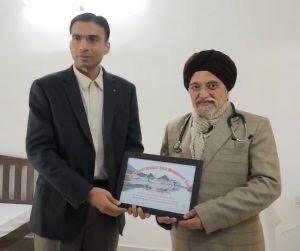
Dr. Sabharwal pursued a career in medicine, driven by a passion for helping people lead healthier lives. His approach blends clinical expertise with practical advice rooted in everyday wisdom. For instance, he has publicly emphasized the benefits of intermittent fasting, noting how ancient traditions linked it to religious practices to encourage adherence, but highlighting its real value in promoting physical well-being when done once a week. This philosophy reflects his holistic view of health, where prevention and lifestyle play key roles alongside treatment.
Dr. K.J.S. Sabharwal, a physician revered for his medical acumen, is equally famous for his quirky obsession with lifestyle modification—particularly his relentless crusade to get everyone, from spry youngsters to seasoned seniors, to break a sweat. While science firmly backs his mantra that exercise is the elixir of life, not all his patients are thrilled about trading their cozy couches for cardio. Dr. Sabharwal’s consultation room often becomes a stage for comical exchanges, where his well-meaning advice meets the playful resistance of patients who’d rather pop a pill than a squat.
Take, for instance, Mrs. Sharma, a spirited 70-year-old who visited Dr. Sabharwal expecting a quick prescription for her aches and pains. After paying a hefty ₹1500 consultation fee, she was ready for a magic pill, not a pep talk. The good doctor, with his trademark twinkle, leaned forward and said, “Mrs. Sharma, forget the pills for now—let’s get you moving! A brisk walk or some light yoga will do wonders.”
Mrs. Sharma, adjusting her saree with a dramatic huff, shot back, “Doctor Sahib, I’m 70 years old! I came here for medicine, not a gym membership. For ₹1500, I could’ve hired a trainer or bought a fancy yoga mat! Besides, where’s the time for all this exercise nonsense?”
Dr. Sabharwal, unfazed, grinned and replied, “Oh, Mrs. Sharma, are you telling me you’re busier than Mukesh Ambani? That man runs an empire, yet he finds time to jog. Surely you can squeeze in a 10-minute stroll between your kitty parties and TV soaps!”
Mrs. Sharma, rolling her eyes but unable to suppress a chuckle, countered, “Ambani has a gym in his house, Doctor Sahib! All I have is a balcony full of pigeons and a neighbor who snores louder than a treadmill. Tell me, how do I exercise with that racket?”
Unruffled, Dr. Sabharwal quipped, “Well, chasing those pigeons off your balcony sounds like a great start! Call it ‘cardio with feathers.’ And as for the neighbor, just out-snore him with some energetic dance moves. You’ll be fit in no time!”
Though Mrs. Sharma left with a prescription (and a reluctant promise to try a morning walk), she couldn’t help but laugh at Dr. Sabharwal’s infectious enthusiasm. His patients may grumble about his exercise obsession, but they secretly admire his knack for blending science with a dose of humor—making even the most reluctant among them consider swapping their pills for a pair of sneakers.
Dr. Kanvar jeet S. Sabharwal is the kind of person who walks the talk, embodying the health and vitality he encourages in others. A dedicated physician, he’s known for his lean, athletic build—not a pound of fat to spare, as if Shylock himself couldn’t find a scrap to claim. At 75 years and going, Dr. Sabharwal’s disciplined lifestyle is a testament to his principles. Every morning, before the sun rises over his hometown of Dehradun, he’s already up, lacing up his running shoes for a brisk mile jog and yoga. His commitment to daily exercise isn’t just a routine—it’s a passion, honed over decades, that keeps him sharp and energized.
What sets Dr. Sabharwal apart is his no-nonsense, efficient style—consultations are often remarkably brief, sometimes lasting just a minute, yet patients rave about his accuracy and impact. Charging ₹1,500 per session, he is considered one of Dehradun’s most successful physicians, a testament to the trust he’s earned over decades of service. His practice isn’t just about quick fixes; it’s about empowering people, as seen in his community contributions, like simplifying diabetes management through educational efforts.
In a world of flashy medical advancements, Dr. Sabharwal represents the enduring value of a compassionate, straightforward doctor who puts patient outcomes first, making him a quiet hero in the daily lives of many in Dehradun.
Dr. Kanwarjit Singh Sabharwal, fondly known as Dr. KJS Sabharwal, is a well-regarded general physician based in Dehradun, Uttarakhand, with a reputation for his sharp diagnostic skills and a touch of old-school charm. Practicing internal medicine, he’s been a trusted name in the community, running his clinic at MKP Chowk, New Road. His clinic operates daily from 7:00 AM to 9:00 PM, serving as a go-to spot for locals seeking reliable medical care. Reviews paint a mixed but vivid picture: some hail him as “the best physician in the city” for his spot-on diagnoses, while others grumble about his staff’s attitude or his insistence on in-house lab tests, calling him “more businessman than doctor.” Yet, his long hours and dedication suggest a man committed to his craft, even if his methods spark debate.
Beyond his medical practice, Dr. Sabharwal’s character shines through in a quirky, philosophical lens on life’s unpredictability. He had a distinctive habit when musing about fate: tracing the lines on his forehead with the nails of his forefingers, he’d say, “Banda sab yah likhakar aata hain”—a poetic Hindi phrase translating to, “Man comes with everything written here.” It’s as if he believed destiny was etched into the very creases of one’s brow, a map of life’s twists and turns. Picture him in his clinic, stethoscope dangling, pausing mid-consultation to deliver this gem with a knowing smile, his fingers dancing across his forehead like a sage unraveling life’s mysteries. This wasn’t just a doctor diagnosing colds; this was a man who saw the human condition as a blend of science and fate, grounded in the belief that some things are simply meant to be.
His certainty in life’s uncertainty makes him intriguing. While he’d confidently pinpoint a patient’s ailment, he seemed to embrace the idea that life’s bigger script—its joys, sorrows, and surprises—was already written in some cosmic ledger. Maybe it was his years of seeing patients through their own unpredictable health battles that shaped this view. Or perhaps it was just his way of making sense of the chaos of existence, delivered with a flair that left an impression. Imagine a patient, nervous about a diagnosis, hearing him chuckle softly, pointing to his forehead, and saying, “Don’t worry too much; it’s all written up here.” It’s the kind of moment that could make you laugh, think, and feel oddly reassured all at once.
Dr. Sabharwal’s life, though centered in Dehradun, carries the universal appeal of someone who blends hard-earned expertise with a touch of whimsy. He’s not just a doctor but a storyteller of sorts, weaving together medicine and musings on fate. His clinic might be a small dot on the map, but his perspective on life’s uncertainties—and that unforgettable forehead-tracing gesture—makes him a character worth remembering.
Years ago, i might have seen him stepping out of Jain Hospital, his two sons by his side, a quiet testament to the family values he instilled. Those moments, etched in memory, tell the story of a man whose life was about more than medicine—it was about building a legacy of healing and humanity.
His commitment to medicine wasn’t confined to his own practice—it extended to his family. One of his sons, Dr. Paramveer Singh Sabharwal, followed in his footsteps, becoming a neuro-radiologist with a DM in neuro-radiology. Dr. Paramveer, with 19 years of experience, now runs a diagnostic centre on Race Course Road, specializing in MRI and ultrasound, carrying forward his father’s dedication to precision and care. The family’s devotion to healthcare deepened further with Dr. Paramveer’s wife, an ENT specialist, adding her own expertise to their shared mission.
Dr. KJS’s life is a story of quiet impact. He didn’t just treat ailments; he nurtured trust and hope in his community. His legacy lives on through his son’s work and the family’s ongoing contributions to medicine in Dehradun. It’s a legacy built on countless small moments—like those hospital visits i recalled —where care, family, and service intertwined.


 deemagclinic
 deemag and chest clinic