
In the heart of Dehradun, where the Himalayan foothills whisper tales of resilience, Dr. Rakesh Kumar Jain has woven a life dedicated to healing and service. A General Physician and Consultant Physician with over four decades of experience, Dr. Jain’s story is one of grit, compassion, and an unwavering commitment to his community. His journey, marked by academic excellence and leadership, has left an indelible mark on Uttarakhand’s medical landscape, earning him the prestigious Padma Shri award.
A Young Dreamer in Agra
Picture a young Rakesh, barely out of his teens, sitting in a bustling classroom at Agra University in 1975. “I want to make a difference,” he’d tell his friends, his eyes gleaming with ambition. Medicine wasn’t just a career choice—it was a calling. In 1976, he earned his MBBS, followed by an MD in Medicine in 1979, both from Agra University. Those early years were a whirlwind of late-night studies and hospital rounds, where he honed his skills as a House Physician and Resident Medical Officer at SN Medical College, Agra.
“Back then, I’d spend hours listening to patients,” Dr. Jain recalls with a smile. “Their stories taught me more than any textbook ever could.” His time as a Demonstrator in Medicine at Jhansi Medical College in 1979 further shaped his approach—empathy first, always.
The Heartbeat of Healing: Dr. Rakesh Kumar Jain’s Story
Picture a man striding through the bustling corridors of a hospital, his tall, well-built frame cutting an imposing figure. Dr. Rakesh Kumar Jain, with his dark, thoughtful eyes and a voice that booms like a drum—think Daler Mehndi belting out a Bollywood classic—commands attention without even trying. But it’s not just his presence that leaves a mark; it’s the heart behind it, one that beats with compassion and an unrelenting drive to heal.
Born and raised in a modest family, his father, Champat Rai Jain was a businessman in Dehradun and his family lived in Jain Colony, Rakesh’s journey to medicine wasn’t paved with gold. “I wasn’t one of those kids who always knew they’d be a doctor,” he’d chuckle, leaning back in his chair, his voice reverberating like a warm echo. “But I saw my mother struggle with illness, and I thought, ‘If I can fix that for someone else, I will.’” That spark of empathy lit a fire that carried him through grueling years of medical school, where he balanced textbooks with late-night karaoke sessions, his booming renditions of Bollywood hits earning him cheers at college fests.
By the time he stepped into the world of medicine, Dr. Jain’s voice wasn’t just a party trick—it became a symbol of his larger-than-life dedication. At annual API (Association of Physicians of India) meets, colleagues would nudge each other, whispering, “Wait till Rakesh grabs the mic!” His performances, full of soul and rhythm, won accolades, but it was his ability to connect that truly shone. “Singing’s my escape,” he’d say with a grin. “But healing? That’s my purpose.”
Dr. Jain’s compassion is the stuff of legend among his patients. In the quiet of his consultation room at Jain Hospital, which he co-founded with a group of like-minded doctors, he’d listen intently to every story. One patient, Mrs. Sharma, recalls a moment that still brings tears to her eyes: “I told him about my diagnosis, and his eyes welled up. He didn’t just hear me—he felt my pain.” It’s not uncommon for patients to leave his office feeling like they’ve been seen, not just as cases, but as people.
The Making of Dr. Rakesh Kumar Jain: From Dehradun to Doctor
Dr. Rakesh Kumar Jain’s story begins in the serene hills of Dehradun, where the seeds of his remarkable journey were sown at Sadhu Ram School. A tall, lanky kid with a spark in his eyes, young Rakesh was already a standout—not just for his height or the way his voice seemed to echo across the school courtyard, but for his relentless curiosity. “I was always asking ‘why’—why this, why that,” he’d laugh, recalling those days, his booming voice filling the room like a Daler Mehndi anthem. “My teachers probably got tired of me, but they never let me stop asking.”
At Sadhu Ram inter college, Rakesh wasn’t just another student; he was the one acing exams while sneaking in time to belt out Bollywood tunes at school events, his voice resonating like a drum even back then. His academic prowess shone brightest when he tackled the Combined Pre-Medical Test (CPMT), a grueling gateway to India’s top medical colleges. “I studied like my life depended on it,” he’d say, a glint of pride in his eyes. “Because for me, it did.” His hard work paid off—he secured a coveted spot at SN Medical College in Agra, a place that would shape him into the doctor he was destined to become.
At SN Medical College, Rakesh hit the ground running and never looked back. The hustle of Agra, with its chaotic charm, suited his energy. But it was under the mentorship of the legendary Dr. D.K. Hajra that Rakesh truly found his calling. Dr. Hajra, a towering figure in medicine known for his brilliance and no-nonsense approach, saw something special in the young student. “Hajra sir didn’t just teach medicine,” Rakesh would recall, his voice softening with reverence. “He taught us to feel the weight of every decision. He’d say, ‘Rakesh, a doctor’s job isn’t just to treat—it’s to care.’”
Under Dr. Hajra’s guidance during his MD, Rakesh honed his skills, blending textbook precision with a compassion that seemed to come naturally. Late nights in the library, endless rounds in the wards, and moments of doubt were all part of the grind. “There were times I thought I’d break,” he’d admit, shaking his head. “But then I’d see a patient smile, and it was like fuel.” That drive carried him through, shaping him into the compassionate, team-oriented doctor who’d later co-found Jain Hospital and the Combined Medical Institute.
Even now, when he talks about those early days, there’s a spark in his voice. “Sadhu Ram gave me roots, SN Medical gave me wings, and Hajra sir? He taught me how to fly without losing my heart.” It’s no wonder that same heart still moves him to tears when a patient shares their story—or keeps him awake at night, worrying about a critical case, muttering, “Khat uchalti hai,” as he wrestles with the restless weight of responsibility. From a curious kid in Dehradun to a doctor whose voice—both in song and in care—resonates deeply, Dr. Rakesh Kumar Jain’s journey is one of passion, grit, and an unshakable commitment to healing.
Establishing Jain Hospital wasn’t a solo act. Dr. Jain’s knack for teamwork turned what could’ve been a battleground of egos into a symphony of collaboration. “Hospitals aren’t built on one man’s shoulders,” he’d say, his voice steady but warm. “It’s about trust—between doctors, nurses, even the guy mopping the floor.” His leadership carried over to the Combined Medical Institute, another milestone where he worked seamlessly with colleagues, never letting pride get in the way. “No quarrels, just results,” he’d quip, brushing off praise with a wave of his hand.
But don’t let the accolades fool you—Dr. Jain’s life isn’t all applause. When asked about the perception that doctors running hospitals rake in fortunes, his brow furrows, and his tone shifts. “People see the hospital, the name, the ‘success,’” he says, leaning forward, his voice dropping to a serious rumble. “But they don’t see the late nights, the emergencies, the weight of someone’s life in your hands. Khat uchalti hai—the bed feels restless when a critical patient is fighting for breath down the hall.” Sleep, he admits, is a luxury he often sacrifices, his mind racing with thoughts of ventilators, charts, and families waiting for good news.
Dr. Jain’s story isn’t just about medicine; it’s about a man who sings from his soul, weeps with his patients, and builds with his peers. He’s proof that a booming voice can carry not just a tune, but a legacy of care. “At the end of the day,” he says, a smile breaking through, “it’s not about the hospital walls or the money. It’s about the heartbeat you help keep going.” And with that, he’s off—probably to save another life or, if you’re lucky, to belt out a Bollywood classic that’ll leave you humming for days.
Dr. Rakesh Kumar Jain: A Visionary’s Beginnings
In 1979, as the bustling halls of SN Medical College in Agra welcomed a fresh-faced medical student—you—Dr. Rakesh Kumar Jain was striding out, his degree in hand and a fire in his heart. Tall, dark, and with a voice that could rival Daler Mehndi’s, he was ready to make his mark. He returned to his hometown of Dehradun, not with grand plans for a sprawling hospital, but with a modest dream: a two-room chamber in Patel Nagar. One room for consultations, the other a cozy waiting area packed with patients from dawn to dusk. “It was small, but it was mine,” he’d say, his booming voice tinged with nostalgia. “Every chair in that waiting room told a story—someone’s fever, someone’s hope.”
That little chamber was more than just a clinic; it was a haven. Patients, including your own relatives, flocked to him, drawn by his warmth and the way he listened. “He didn’t just check your pulse,” your aunt would gush. “He’d sit there, eyes locked on yours, like your pain was his own.” The walls, lined with simple wooden shelves and a faded chart of the human body, seemed to hum with his energy. And when he sang a Bollywood tune under his breath while scribbling prescriptions, the room felt alive.
I crossed paths with him again when I met him in Dehradun during my internship when he became an unexpected mentor. Over a steaming cup of chai at his clinic, he leaned in, his voice dropping to a conspiratorial rumble. “Psychiatry, my friend,” he said, pointing a finger at you. “That’s where you belong. You’ve got the heart for it.” You raised an eyebrow, skeptical. “Psychiatry? I’ll be lucky to make ends meet!” He laughed, a sound that filled the air. “Ten thousand bucks a month, easy, running an OPD practice. Trust me, small fields like that? They’re the future.” At a time when such earnings seemed like a pipe dream, his vision was uncanny. He saw what others didn’t: specialties like psychiatry would grow, and the world would need doctors who could heal minds as well as bodies.
Back then, Dehradun’s medical landscape was a different beast. Hospitals were surgical hubs, and serious cases were managed at home, with physicians like Dr. Jain making house calls. You remember him pulling up to your family’s house, his stethoscope slung around his neck, his voice booming through the door before he even knocked. “Let’s see what’s troubling you today!” he’d announce, filling the room with reassurance. But Dr. Jain wasn’t content with the status quo. He had a vision that went beyond house calls—a physician-run nursing home, a radical idea in a town where hospitals were synonymous with surgery.
“People thought I was crazy,” he’d recall, chuckling as he leaned back in his chair. “A hospital for physicians? They said it wouldn’t work.” But work it did. Dr. Jain poured his heart into establishing the first physician nursing home in Dehradun, a place where teamwork trumped ego. He rallied fellow doctors, his collaborative spirit forging a path where others saw only obstacles. “It’s not about one name on a signboard,” he’d say. “It’s about building something that saves lives together.”
That nursing home, born from his two-room chamber, marked a turning point. It also signaled the slow decline of house calls, a practice Dr. Jain once cherished. “I miss those days sometimes,” he’d admit, his voice softening. “Sitting in someone’s home, hearing their story over a cup of tea. But hospitals brought care to more people. That’s the trade-off.” The restless nights followed, though. “Khat uchalti hai,” he’d mutter, describing the sleepless worry over a critical patient, his mind racing even as the world slept.
Dr. Jain’s journey—from that cozy Patel Nagar chamber to a pioneering hospital—wasn’t just about medicine. It was about seeing possibilities where others saw limits, whether in a young student’s career or a town’s healthcare. “You just need to believe in the long game,” he’d tell you, his eyes twinkling. And as you built your own path in psychiatry, proving his prediction right, you couldn’t help but hear his booming voice in your head, singing a Bollywood tune and cheering you on.
The Dehradun Chapter: Building a Legacy
By 1980, Dr. Jain arrived in Dehradun, a city that would become his home and the canvas for his life’s work. He began with a modest OPD practice, but his vision was anything but small. “I saw patients struggling to access quality care,” he says. “I wanted to change that.” Over the next decade, he poured his heart into serving the community, eventually founding Jain Hospital and later becoming Director of the Combined Medical Institute (CMI) Hospital in Dehradun.
Under his leadership, CMI Hospital grew into a beacon of hope, offering advanced care to thousands. “It’s not just about treating illnesses,” Dr. Jain explains. “It’s about giving people the confidence to live again.” His work extended beyond the hospital walls as he took on leadership roles, including President of the Indian Medical Association (IMA) Dehradun, where he championed healthcare reforms and community outreach.
The Padma Shri Moment
In recognition of his tireless service, Dr. Jain was honored with the Padma Shri, one of India’s highest civilian awards. “When I got the call, I thought it was a prank!” he chuckles. “But then it sank in—this wasn’t just about me. It was about every patient, every nurse, every colleague who believed in our mission.” The award celebrated his contributions to medicine and his role in elevating healthcare standards in Uttarakhand.
A Day in the Life
Even today, Dr. Jain’s days are packed. At CMI Hospital, he’s a familiar figure, moving between patient consultations and administrative duties with ease. “Every patient is a puzzle,” he says. “You listen, you observe, and sometimes, you just hold their hand. That’s when the real healing begins.” His colleagues describe him as a mentor with a knack for making complex diagnoses feel like detective work, always with a touch of humor to lighten the mood.
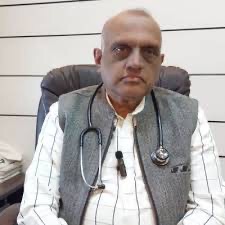
Outside the hospital, Dr. Jain is a family man who cherishes quiet evenings with his loved ones. “My wife keeps me grounded,” he admits. “She reminds me to take a break and enjoy the simple things—like a good cup of chai.”
A Legacy of Impact
Dr. Jain’s influence stretches far beyond Dehradun. His work with the IMA and his leadership in healthcare initiatives have inspired a new generation of doctors. “Medicine is evolving,” he says thoughtfully. “But the core of it—caring for people—never changes.” His hospitals have become trusted names, not just for their medical expertise but for the warmth and trust they inspire.
As he looks back on his journey, Dr. Jain remains humble. “I’m just a doctor trying to do my part,” he says. But to the countless lives he’s touched—patients who’ve walked out of his hospital with renewed hope, families who’ve found solace in his care—he’s nothing short of a hero.
“Dr. Rajesh Jain’s commitment to healthcare extends beyond his own distinguished career, as he has passed down his passion for healing to the next generation. His son, Dr. Abhishek Jain, a dedicated pediatrician, continues the family legacy by running a thriving pediatric practice at the original Jain Hospital on Racecourse. Meanwhile, Dr. Rajesh Jain has transitioned his own practice to the esteemed Combined Medical Institute on Haridwar Road, where he continues to serve the community with the same compassion and expertise that have defined his career. This father-son duo exemplifies a shared devotion to improving lives, ensuring that their legacy of care and commitment endures.”


 deemagclinic
 deemag and chest clinic