
In the heart of Dehradun, where the Himalayan foothills whisper tales of resilience and hope, I found myself standing outside a modest clinic at 7, Court Road, Tehsil Chowk, Race Course. It was August 1989, and I clutched an invitation card, its edges slightly crumpled from my nervous grip. I was a young doctor, barely finding my footing, about to open my own clinic on Gandhi Road. My mission that day was to invite Dr. Diwan Singh, a pediatrician whose reputation in Dehradun was nothing short of legendary, to the inauguration.
The air was thick with the chatter of hill folks—parents from nearby villages, their children squirming in their arms or tugging at their clothes. The waiting room was a lively chaos, a large space with tall windows letting in the soft morning light, the kind that bathes Dehradun in a golden glow. Children laughed, cried, and darted around, while their parents exchanged stories of ailments and remedies, all waiting for the man who seemed to hold the health of their little ones in his hands. Dr. Diwan Singh’s clinic wasn’t just a medical practice; it was a beacon of trust for families across Uttarakhand.
I stepped inside, weaving through the crowd, and caught a glimpse of the man himself through the door of a smaller, windowless inner room. Dr. Diwan Singh was bent over a young patient, his stethoscope pressed gently against a tiny chest. His hands moved with the steady precision of someone who had spent decades perfecting his craft—37 years, to be exact, as I later learned. His clinic, simple yet functional, was equipped with modern tools, but it was his calm, focused demeanor that stood out. He was a pediatrician who didn’t just treat symptoms; he understood the fears of parents and the fragility of childhood.
I hesitated at the threshold, not wanting to interrupt. But he glanced up, his eyes kind but sharp, and waved me in. “Come, come,” he said, his voice warm despite the busyness of the moment. I introduced myself, a bit awkwardly, and held out the invitation card. “Dr. Singh, I’m opening a clinic on Gandhi Road, and I’d be honored if you could attend the inauguration.”
He smiled, a small but genuine curve of his lips, and took the card, glancing at it briefly before setting it on his desk. “Young man,” he said, leaning back in his chair, “I’m afraid I won’t be able to make it. This place”—he gestured toward the waiting room, where a child’s wail pierced the air—“keeps me on my toes. But don’t you worry. I’ll send you patients. Plenty of them.”
There was a warmth in his tone, a sincerity that made me believe him on the spot. I mumbled a thank-you, feeling a mix of disappointment and gratitude. Starting a practice in those days was like planting a seed in rocky soil—patients were scarce, and every one was a blessing. A senior doctor’s referral? That was gold.
True to his word, Dr. Diwan Singh sent patients my way. Mothers with feverish toddlers, fathers with children who wouldn’t stop coughing—they came with his name on their lips, saying, “Dr. Singh told us you’d take good care of our little one.” Each patient felt like a vote of confidence, a nod from a man who had earned the trust of Dehradun’s families through years of dedication. His clinic wasn’t just a place of healing; it was a community hub, where parents found not only medical care but also guidance on nutrition, growth, and even the restless tantrums of childhood.
It was October 1990, and I found myself back at Dr. Diwan Singh’s bustling clinic on Court Road, Dehradun. The familiar hum of voices greeted me as I stepped into the waiting room, where hill folks from the Garhwal villages sat patiently, their children fidgeting or clinging to them. The air carried that same mix of hope and worry, the kind only parents of sick kids know. I was there for a different reason this time, not an invitation but a milestone: I was launching the first EEG laboratory in Uttarakhand, a big leap for a young doctor trying to make a mark in a town where medical advancements were still taking root.
Dr. Diwan Singh was in his inner room, as always, tending to a child with the same steady focus I’d seen a year ago. The room was small, no windows, just a desk cluttered with medical charts and a well-worn stethoscope. I waited until he finished, watching as he reassured a nervous mother with a gentle pat on her shoulder. When he spotted me, his face lit up with recognition. “You again!” he said, his voice carrying that familiar warmth. “Come in, come in. How’s the young doctor doing?”
I grinned, a little more confident than the last time. “I’m here to tell you about something new, sir. I’m starting an EEG laboratory—first in Uttarakhand. It’s opening this month.”
His eyebrows shot up, and he leaned back in his chair, folding his arms. “An EEG lab? That’s no small feat. How’s your practice holding up otherwise? Are my patient referrals reaching you?” There was a glint of curiosity in his eyes, but also something else—a quick glance at my threadbare coat and scuffed shoes. My clothes were a bit shabby, I’ll admit; starting a practice hadn’t left much room for a new wardrobe.
“They’re reaching me, sir,” I said, nodding. “Your referrals have been a lifeline. The patients you send, they trust your word. It’s made all the difference.”
He tilted his head, studying me. “Good, good. But do they come back? Are they repeating their consultations?”
“Yes, sir,” I replied, feeling a surge of pride. “They’re coming back, most of them. The clinic’s picking up.”
“That’s what I like to hear,” he said, his smile widening. But his eyes lingered on my worn-out attire, and for a moment, I saw a flicker of concern. He didn’t say it, but I could tell he was wondering if I was scraping by. Starting a practice was brutal—every rupee went into equipment, rent, or just keeping the lights on. Still, his concern wasn’t pity; it was the kind of care that came from knowing the grind himself.
“Your EEG lab,” he continued, leaning forward now, “that’s a first for Dehradun, a real boon. There’s so much hidden epilepsy in children here—cases that go undiagnosed for years. Those hill folks out there”—he gestured toward the waiting room—“they can’t afford to travel to Delhi or Chandigarh for tests. You’re bringing it to their doorstep. I’ll send you patients for that too. Plenty of them.”
True to his word, Dr. Diwan Singh became a cornerstone for my EEG lab. Almost every week for years, a new patient would arrive—often a poor family from the hills, clutching a restless child, their faces etched with worry. “Dr. Singh sent us,” they’d say, holding out a crumpled note with my address. These weren’t just referrals; they were lifelines for kids with seizures that had gone unnoticed or untreated, masked as “fits” or dismissed as something they’d outgrow. Dr. Singh’s instinct for spotting epilepsy was uncanny, honed by his decades of experience as a pediatrician. His MBBS and DCH weren’t just credentials; they were tools he wielded with a deep understanding of the children of Uttarakhand.
I left his clinic that day feeling lighter, his words echoing in my mind: “Keep doing good work. The hills need doctors like you.” As I stepped back into the waiting room, weaving through the crowd of parents and children, I caught sight of a mother soothing her toddler, her eyes fixed on Dr. Singh’s door like it was a gateway to hope. He wasn’t just a doctor; he was a pillar for these families, and somehow, he’d extended that support to me—a young doctor with big dreams and a shoddy coat. His referrals, steady and generous, didn’t just build my practice; they reminded me why I’d chosen this path in the first place.
Dr. Diwan Singh, with his MBBS and DCH qualifications, was more than a pediatrician. He was a caregiver who understood the pulse of Dehradun’s people. His clinic, now a well-known landmark, was a testament to his commitment—equipped with child-friendly amenities and a team of skilled professionals, yet always grounded in affordability and accessibility. He offered everything from routine check-ups to emergency care, and his approach was personal, tailored to each child’s needs. Parents trusted him not just for his expertise but for his compassion, the way he listened to their worries as much as he examined their children.
As I left his clinic that day in 1989, I couldn’t help but feel I’d met someone extraordinary. “Keep your doors open and your heart kind,” he called after me, his voice carrying over the hum of the waiting room. Those words stayed with me, as did the steady stream of patients he sent my way, each one a reminder of his generosity. In a town where every new doctor struggled to find their place, Dr. Diwan Singh was a mentor without ever claiming the title—a pediatrician whose legacy was built not just on medicine, but on the trust and warmth he extended to everyone who walked through his door.
By the time I met Dr. Diwan Singh in 1989, he was already a towering figure in Dehradun’s medical community, a senior pediatrician whose reputation stretched from the bustling streets of the city to the remote villages nestled in the Garhwal hills. He had served his time at the government-run Doon Hospital, a place where the grind of public healthcare shaped doctors into either cynics or saints. Dr. Singh, it seemed, had emerged as the latter. After his stint there, he set up his private practice at 7, Court Road, Race Course, strategically positioned just across from the hospital’s gate—a move that, as I’d later learn, sparked no small amount of envy among his former colleagues.
His clinic was a modest affair, a large waiting room with sunlit windows and a smaller, windowless inner sanctum where he worked his magic on restless children. It was an OPD practice, focused on outpatient care, with modern pediatric equipment and a child-friendly setup that put anxious parents at ease. But what made Dr. Singh stand out wasn’t just his skill or his DCH qualification; it was his knack for building trust. Hill folks flocked to him, their kids in tow, seeking his calm expertise for everything from fevers to hidden epilepsy. His practice thrived, and the crowd outside his door was a testament to his pull.
Inside Doon Hospital, though, his success stirred murmurs of resentment. I heard it firsthand one evening in 1990, when I bumped into an old friend, an emergency doctor at the hospital, over chai at a roadside stall. “Diwan Singh?” he said, shaking his head with a wry grin. “Malai vo kha lete hai, chhach hamare paas bhej dete hai.” He skims the cream and sends us the buttermilk. It was a sharp jab, laced with the kind of gallows humor only overworked doctors could muster. The gist was clear: Dr. Singh, with his flourishing OPD, got the “easy” cases—the routine check-ups, the manageable ailments, the grateful parents who’d return with sweets and blessings. Meanwhile, the hospital’s emergency ward got the spillover—his serious cases, the kids too critical for his outpatient setup, landing in their laps often in the dead of night.
“Every time a kid comes in with a high fever or a seizure that’s gone too far,” my friend went on, stirring his tea, “you can bet it’s one of Diwan’s referrals. He patches them up enough to get them to us, but we’re the ones wrestling with the chaos.” There was no real malice in his tone, just the weary frustration of a doctor stretched thin. Dr. Singh’s practice was OPD-only, so anything requiring hospitalization—severe infections, uncontrolled epilepsy, or emergencies—went straight to Doon Hospital. It made sense, but to the emergency doctors, it felt like they were cleaning up after his feast.
Yet, standing in his clinic that second time in October 1990, telling him about my EEG lab, I saw no hint of the rivalry. He was as warm as ever, his focus on me and my fledgling venture. “Your EEG lab will save lives,” he said, his voice steady as he examined a chart. “So many kids out there, especially from the hills, with seizures nobody’s caught. I’ll send you plenty for testing.” And he did—one patient a week, sometimes more, often poor families clutching their kids, their faces etched with fear and hope. He wasn’t just skimming the cream; he was funneling care where it was needed, building a network of trust that extended beyond his clinic’s walls.
Dr. Singh never spoke of the hospital’s grumbles, but I suspect he knew. His practice, opposite the hospital gate, was a quiet rebellion—a space where he could offer personalized care without the bureaucracy of government service. The jealousy from Doon Hospital’s doctors didn’t seem to faze him; he was too busy listening to parents, examining kids, and sending me patients who’d become the backbone of my own practice. “Keep your heart in it,” he told me as I left that day, his words carrying the weight of someone who’d seen it all. In a town where medicine was as much about survival as compassion, Dr. Diwan Singh was a bridge between the two, skimming the cream, maybe, but always sharing the best of what he had.
Dr. Diwan Singh was a striking figure, the kind of man whose presence filled a room without trying. He was fair-skinned, always clean-shaven, bespectacled, aquiline nose with neatly combed hair swept to the side in a style that spoke of quiet discipline. His wardrobe was simple but deliberate—crisp white safari suits or pressed shirt-and-pants combos, always paired with polished black shoes. But it was his eyes that you noticed most: expressive, almost luminous, sparking with life when he spoke. When he got animated—and he often did, especially when recounting tales of his patients—those eyes would light up, his fist would clench, and his voice would carry a mix of passion and conviction that made you lean in.
I’d see him at the Indian Medical Association (IMA) meetings in Dehradun, a regular fixture among the city’s doctors, where he’d hold court not with arrogance but with stories. “This one boy from Chakrata,” he’d say, his fist tightening as he leaned forward, “came in seizing three times a day. Parents thought it was a curse. Took one EEG—your machine, by the way,” he’d nod at me with a grin, “and we got him on the right dose. He’s running around now, chasing goats!” His eyes would gleam, and you could feel the weight of that victory, one child at a time.
I met him often at those IMA gatherings, where the air was thick with debates about medicine, politics, and the grind of running a practice. Dr. Singh was never one for small talk. He’d dive into discussions about pediatric care, the challenges of treating hill kids who’d traveled hours to reach him, or the latest research he’d read in some dog-eared medical journal. His clinic at 7, Court Road, just opposite Doon Hospital’s gate, was a hub for those kids—poor families from the hills, clutching their little ones, trusting him to unravel mysteries no one else had. He’d tell me about them with that same fire: a girl with a fever that wouldn’t break, a boy whose asthma flared up every monsoon. Each story came alive, his hands gesturing, his voice rising and falling like he was reliving the moment.
When I’d seen him in October 1990, telling him about my EEG lab, he’d been just as animated. “Hidden epilepsy, that’s the thief in the night,” he’d said, his fist clenched on his desk, eyes blazing. “You’re doing God’s work with that machine. I’ll keep those patients coming.” And he did—week after week, families showed up at my lab, sent by Dr. Singh, their kids’ seizures finally getting names and treatments. Mostly hill folk, their clothes worn thin, their gratitude boundless.
At the IMA meets, he’d check in on me, always with that same warmth. “How’s the lab? Patients coming back?” he’d ask, his gaze sharp but kind, noticing the frayed cuffs of my shirt but never mentioning it. He’d share tips—how to talk to parents who feared tests, how to spot the subtle signs of a seizure in a restless toddler. His practice, an OPD setup with child-friendly touches and modern tools, was a model of efficiency, but it was his heart that made it work. The Doon Hospital doctors might’ve grumbled about him “skimming the cream” and sending emergencies their way, but at those meetings, he was one of us, a doctor who’d seen the system’s flaws and built something better across the street.
“Medicine’s not just about curing,” he said once, his fist clenched as we stood in a corner of an IMA hall, the clink of teacups in the background. “It’s about giving these kids a chance to live their stories.” His eyes lit up, and I knew I was seeing a man who didn’t just practice medicine—he lived it. Dr. Diwan Singh, with his white safari suit and side-combed hair, was more than a pediatrician; he was a storyteller, a mentor, and a lifeline for Dehradun’s children, whose passion left a mark on every doctor lucky enough to cross his path.
Dr. Diwan Singh’s home on New Road was a world away from the bustle of his clinic. Tucked inside a quiet, secluded lane, the house exuded a understated elegance—posh without being flashy, surrounded by tall trees that muffled the sounds of Dehradun’s streets. It was the kind of place that felt like a retreat, a sanctuary for a man who spent his days amidst the chaos of sick children and worried parents. I’d been invited there one evening, sometime after our meetings at his clinic and the IMA gatherings, to discuss a few patient cases he’d referred to my EEG lab.
When I arrived, Dr. Singh welcomed me with his usual warmth, his fair face clean-shaven, hair combed neatly to the side, dressed in a crisp white shirt and trousers, though he’d swapped his black shoes for comfortable slippers. His expressive eyes lit up as he led me into a cozy drawing room, where the walls were lined with bookshelves and a faint scent of sandalwood lingered. “Come, sit,” he said, gesturing to a plush sofa. “We’ll talk about those cases—some tricky ones, you’ll see.” His fist clenched lightly, a habit I’d come to recognize when he was about to dive into something he cared about.
His daughter was there too, a young woman who’d just completed her MBBS from Maulana Azad Medical College in Delhi—a prestigious achievement that Dr. Singh mentioned with a proud, almost shy smile. She had his sharp eyes but a quieter demeanor, and she joined us at the table with a notebook, ready to discuss the patients. We started talking about a couple of kids with suspected epilepsy, cases Dr. Singh had sent my way. “This one boy from Mussoorie,” he said, his voice rising, eyes gleaming, “his seizures come at night, but the parents didn’t notice for months. Your EEG caught it. Good work.”
But then, as we sipped tea, the conversation took an unexpected turn. His daughter mentioned a book she’d been reading, and I caught the name—The Pickwick Papers by Charles Dickens. My face must have lit up because I couldn’t help myself. “Mr. Pickwick!” I said, laughing. “That bumbling, lovable man stumbling through England with his club—those stories are gold!” She grinned, and suddenly we were off, trading favorite moments from the book. “Remember when Pickwick gets stuck in the pound, chasing his hat?” I said, chuckling. “Or Sam Weller’s cheeky one-liners? That man could outwit anyone.”
She laughed, leaning forward. “Oh, Sam Weller’s the real hero! The way he handles that trial scene—pure wit.” We went back and forth, recounting the absurd misadventures of the Pickwick Club, from the chaos of the Eatanswill election to Mr. Winkle’s disastrous attempts at being athletic. I was so immersed, gesturing wildly as I described Pickwick’s run-in with the horse-drawn carriage, that I didn’t notice Dr. Singh watching us, his fist unclenched, his expressive eyes wide with surprise.
“You two,” he finally said, his voice tinged with amusement, “I call you here to talk about patients, and you’re lost in Dickens!” He shook his head, but his smile betrayed him—he was enjoying the detour. “I didn’t know you were such a bookworm,” he added, looking at me with a mix of curiosity and approval. I felt a bit sheepish, realizing I’d completely forgotten the patient files on the table, but his daughter jumped in. “Papa, let us have this! It’s not every day you meet someone who loves Pickwick as much as I do.”
We eventually circled back to the patients, but that moment stuck with me. Dr. Singh’s home, with its quiet charm and walls full of books, was a reflection of the man himself—grounded, thoughtful, and full of unexpected depth. His daughter, clearly inheriting his intellect and warmth, was carving her own path in medicine, and I could see why he was so proud. As I left that evening, he clapped me on the shoulder, his eyes twinkling. “Keep reading Dickens,” he said, “but don’t forget the EEGs. Those kids need you.”
Walking down that secluded lane, I couldn’t help but smile. Dr. Diwan Singh wasn’t just a pediatrician or a mentor; he was a man who made room for stories—whether they were about patients or Pickwick’s misadventures—and that made him all the more extraordinary.
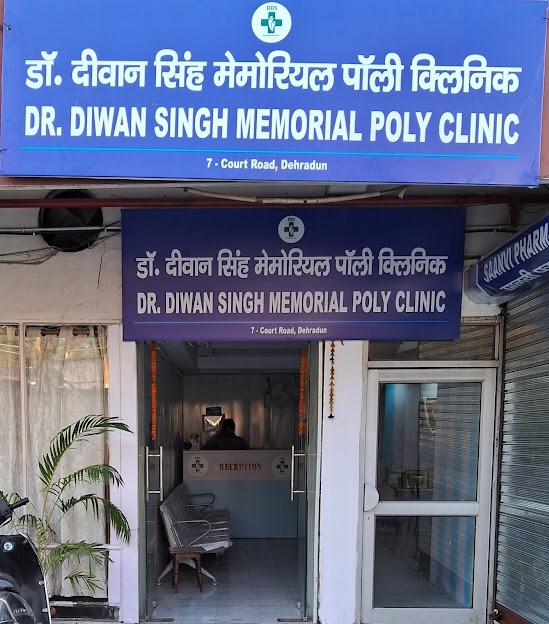
Dr. Diwan Singh was a highly experienced pediatrician based in Dehradun, Uttarakhand, with over 37 years of practice in the field of pediatrics. He held qualifications of MBBS and DCH (Diploma in Child Health) and MD, and was recognised for his expertise in providing comprehensive healthcare for children. Dr. Singh is no more and Dr. Diwan Singh memorial Clinic, located at 7, Court Road, Tehsil Chowk, Race Course, Dehradun, Uttarakhand, 248001 is running in his memory. The clinic is well-regarded for offering a wide range of pediatric services, including routine check-ups, vaccinations, management of chronic conditions, emergency care, and guidance on nutrition, growth monitoring, and behavioral development.
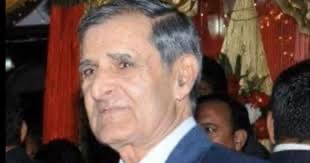
His memorial clinic is equipped with modern diagnostic tools and child-friendly amenities, creating a comfortable environment for both children and their parents where other doctors are noted for their compassionate caregiving and commitment to excellence, which has earned the clinic a strong reputation in the community for delivering high-quality, accessible, and affordable pediatric care. The clinic also promotes health education and preventive care to raise awareness about children’s health issues.
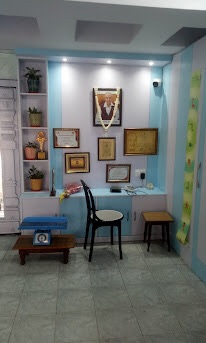
Appointments at Dr. Diwan Singh memorial Clinic can be scheduled by calling 074097 31310 or through online platforms such as Lybrate, Sehat, or Bajaj Finserv Health, where Dr. Singh is listed with positive user reviews and ratings. The clinic’s consultation fees are approximately ₹1,000, as noted on Lybrate.
Life has a way of slipping through your fingers, doesn’t it? You’re caught up in the daily grind—patients, clinics, the hum of an EEG machine—and suddenly, years have passed, and the people who shaped you are gone. The last time I saw Dr. Diwan Singh was in the early 1990s, when he walked into my clinic on Gandhi Road, his white safari suit as crisp as ever, hair still combed neatly to the side. His expressive eyes held a quiet intensity that day, but he was unusually reserved. “I’d like an EEG,” he said, his voice steady but clipped. “For myself.”
I didn’t ask why. It wasn’t my place, and something in his demeanor told me he wasn’t ready to share. I set up the machine, attached the electrodes, and watched the lines trace across the screen. Normal. Perfectly normal. “All clear, sir,” I told him, handing him the report. He nodded, his fist clenching briefly, those eyes searching mine for a moment before he offered a small smile. “Good,” he said simply, and that was that. He thanked me, wished me well, and walked out, his black shoes clicking softly on the floor. I didn’t know it then, but it was the last time I’d see him.
A few years later, he was gone. No fanfare, no warning—just the quiet exit of a man who’d spent decades being a lifeline for Dehradun’s children. The news hit hard, like losing a mentor you didn’t realize you were still learning from. Dr. Singh’s life had been medicine, but his family took different paths. His son, instead of following him into the world of stethoscopes and sleepless nights, opened a medical store just opposite Doon Hospital’s gate, right across from his father’s old clinic. Smart move, really—stocking syringes and pills turned out to be more lucrative than chasing diagnoses. His daughter, the one I’d laughed with over Pickwick Papers in their New Road home, had finished her MBBS at Maulana Azad Medical College and married, moving away to start her own life elsewhere.
But Dr. Singh’s legacy didn’t vanish. At the back of his old clinic on Court Road, where the hill folks once crowded with their restless kids, they opened the Dr. Diwan Singh Memorial Clinic. It’s a quiet nod to the man who’d been more than a pediatrician—a storyteller, a mentor, a bridge for families who trusted him with their children’s lives. His memory lingers there, in the walls that once echoed with his voice, his fist clenched in passion, his eyes lighting up over a patient’s recovery or a Dickensian tale.
I think of him often, especially when a patient walks into my lab, sent by someone who heard of me through the network he helped build. Life is too short, and it’s finish time before you realize it. Dr. Singh taught me that medicine isn’t just about healing bodies; it’s about carrying stories, sharing burdens, and leaving something behind that outlasts you. His clinic still stands, his name lives on, and in the hum of my EEG machine, I can still hear the echo of his warmth, guiding me forward.


 deemagclinic
 deemag and chest clinic