
In the sultry summer of 1980s Port Blair, on the emerald Andaman Islands, Karanveer Singh entered the world, born to Mr. and Mrs. Ahluwalia on 21st of August 1961. The salty breeze and the rhythm of the waves shaped his early years, but it was the bustling halls of Kendriya Vidyalaya where young Karanveer’s sharp mind took flight. “I’d sit in class, staring out at the coconut trees,” he’d later laugh, “but my heart was already dreaming of bigger things—like cracking the All India PMT and showing the mainland what an islander could do!”
Karanveer’s brilliance shone early. Fluent in English, he devoured books and aced exams at Central School, his quick wit earning him a reputation as the kid who could talk his way through anything. When he ranked high in the All India Pre-Medical Test, he packed his bags for S.N. Medical College in Agra, leaving the Andamans’ turquoise shores for the dusty, vibrant chaos of mainland India. “I stepped off the train in Agra,” he’d recall, grinning, “and thought, ‘This place is a furnace, but I’m going to make it my own!’”
Assigned to the so-called “foreign wing” of G.B. Pant Hostel, Karanveer found himself in a unique bubble. The wing, a haven for out-of-state and international students, was off-limits to the senior boys’ ragging antics. “No one dared mess with us,” he’d chuckle to his room partner, Room 202, Pawan Agarwal, from Sikkim. Pawan unfortunately died of contacting hepatitis B during an obstetric surgery. He trained to become an obstetrician, surprisingly for a boy.
V. Cherian Kuruvilla, a soft-spoken Christian from Calcutta was his neighbour, partner of Suave Gopal Udal Singh in room 203. With Lim Liam Choo in adjacent room, they were quintet or strong five-some who stayed together throughout the rough and tumble of six years of MBBS course.
The two were an unlikely pair—Karanveer, a turbaned Sardar with a booming voice, and Pawan, a quiet scholar with a dry sense of humor. “Pawan, you’re too serious, yaar!” Karanveer would tease, tossing a table tennis paddle his way. “Let’s settle this on the court!”
Secular to his core, Karanveer called a spade a spade, never shying away from truth, even if it ruffled feathers. His hostel mates loved him for it. One evening, lounging in the mess, Rakesh Mishra, an Allahabad lad from St. Martin’s College, tried to rib him. “Andaman? You mean Port Blair, sentinel tribes, right?” Karanveer leaned back, smirking, “Rakesh, you’ve heard of it, but I bet you can’t find it on a map!” Bhadauria, another friend, jumped in, “I must say, Rakesh, he’s got you there!” The table erupted in laughter, Karanveer’s wit winning the day.
He was a star at S.N. Medical College, not just in academics but in the cultural scene. A tall, lean figure in his pagri, he’d light up the stage with electrifying Bhangra performances at college fests, his beard swaying as he danced. “This is how we do it in the islands!” he’d shout, pulling Gopal Udal Singh, a suave Mauritian, into the act. His crew was a colorful bunch: Liam Choo from Malaysia, a towering sharpshooter who once took out a lizard with his air gun, and Gurjeet, who later married the stunning Paramjeet Kaur. “Liam, you’re a menace with that gun,” Karanveer would laugh, dodging a playful jab. “Stick to table tennis, man!”
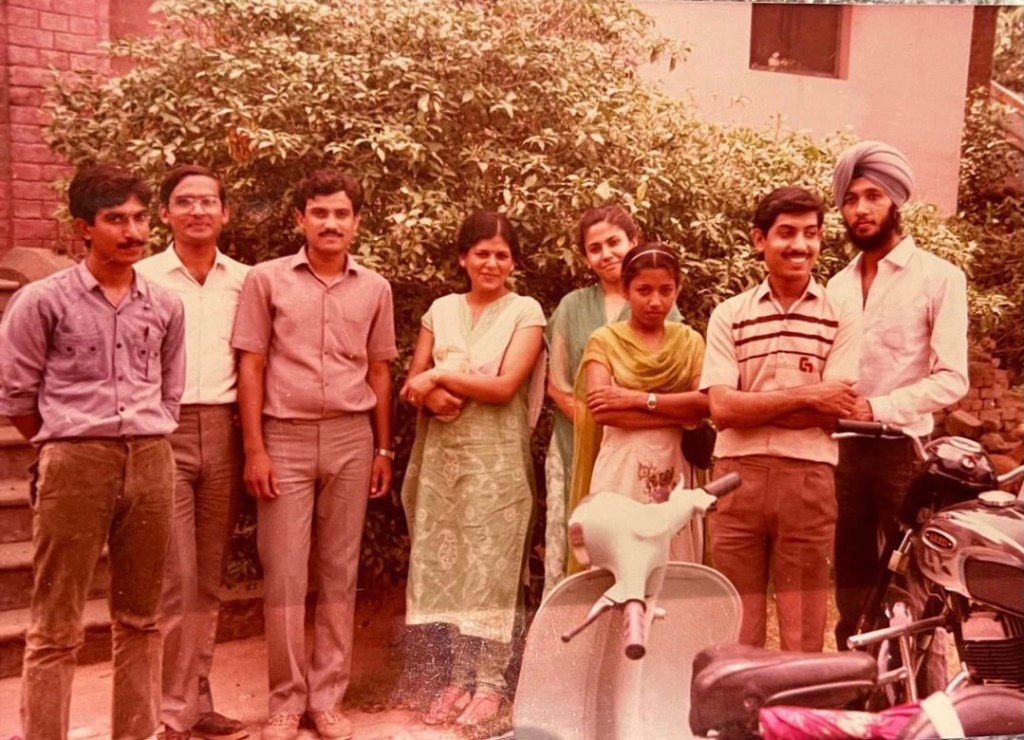
Karanveer’s academic prowess was unmatched. He sailed through his MBBS, edited the college’s cultural magazine, and penned essays that blended science with storytelling. “I want my words to matter,” he’d tell Kurvilla late at night, scribbling furiously in their dorm. I also wrote a poem in his magazine “ You come and I catch the breeze, and sing and dance and move, a small yellow flower on a green big stalk”, which became famous with girls and boys stopping me in way to comment on it.
After graduating, he pursued an MD in Pediatrics, driven by a passion to save young lives.
Dr. Karanveer Singh: A Pediatrician’s Odyssey Through Punjab’s Healthcare Maze
Dr. Karanveer Singh, a turbaned Sardar with a heart as big as his dreams, stepped into the world of medicine with a fire to save lives. Born and raised in Punjab, he was driven by a vision to serve the underserved, particularly children. His journey, however, was anything but a straight path. It was a rollercoaster of grit, frustration, and resilience, marked by the stark realities of India’s government health services.
The Early Days: A Neonatology Prodigy
Karanveer’s medical journey began with a stellar residency at Kalawati Saran Children’s Hospital, one of India’s premier pediatric institutions. For a year, he immersed himself in neonatology, mastering the delicate art of caring for newborns clinging to life. “Those nights in the NICU taught me everything,” he’d later recall, his eyes lighting up. “Every beep of the monitor, every tiny heartbeat—it was like a puzzle I was born to solve.”
Fresh from this high-octane environment, Karanveer was ready to make a difference. He joined Punjab’s government health services, expecting to bring his expertise to children in need. But fate had other plans.
The Rural Reality Check
In a twist that felt like a cosmic prank, Dr. Karanveer was posted to a rural dispensary in a remote Punjab village. The journey to work was an epic in itself—three buses, two hours each way, bouncing along dusty roads. “I’d leave at dawn, clutching my stethoscope like a talisman,” he’d joke, “only to arrive at a dispensary that looked like it hadn’t seen a patient since Partition.”
The dispensary was a crumbling outpost with peeling paint and a single pharmacist who doubled as the local BP-check guru. Patients were rare. “I’d sit there, waiting, while old Uncle Ji shuffled in for his blood pressure check. My pharmacist, bless him, would handle it with a grin, leaving me to stare at the walls,” Karanveer recounted. His neonatology skills, honed in the high-stakes world of Kalawati Saran, gathered dust. “I trained to save babies on ventilators, not to swat flies in a village clinic!”
The Bureaucratic Battle
Worse than the boredom was the underbelly of the system. Karanveer soon learned that survival in government service often meant playing by unwritten rules. His Senior Medical Officer (SMO) and the district’s Civil Surgeon expected “monthly cuts”—a euphemism for bribes to keep his posting secure. Karanveer, with his unyielding sense of integrity, refused.
“You’re new, Doctor Sahib,” the SMO said one day, leaning back in his creaky chair, a sly grin on his face. “Pay up, and life gets easier. That’s how it works here.”
Karanveer’s jaw tightened. “I didn’t spend years studying to fund your chai breaks,” he shot back. The room fell silent. That defiance earned him a reprimand and a new assignment: post-mortem duties. “They thought they’d break me,” he later said, shaking his head. “Cutting open bodies in a dingy room with no AC? Not exactly what I signed up for.”
The Turnaround: From Despair to District Hospital
Luck, or perhaps destiny, intervened. Karanveer’s skills couldn’t stay buried forever. After months of bureaucratic punishment, he was transferred to a district hospital as a pediatrician. “It was like coming up for air,” he said. The hospital was chaotic—overcrowded wards, crying children, and harried nurses—but it was where he belonged. He dove in, treating malnourished infants, diagnosing fevers, and comforting frantic parents. “Every day was a marathon, but I was running for those kids.”
His reputation grew. Colleagues whispered about the young doctor who could calm a screaming toddler and stabilize a seizing neonate with equal ease. It wasn’t long before his talent caught the eye of higher-ups. Soon, he was posted to the prestigious Government Medical College and Hospital in Chandigarh—a far cry from the rural dispensary.
Chandigarh: A New Chapter
In Chandigarh, Karanveer found his stride. As a pediatrician, he built a name for himself, blending clinical precision with a warmth that put families at ease. “You can’t just treat the child,” he’d tell his students. “You’ve got to hold the mother’s hand, make the father laugh. Medicine is as much about hearts as it is about charts.”
His rural experience never left him, though. It shaped his empathy and his resolve to fight for better healthcare. “I’ve seen the system’s cracks— crumbling dispensaries, corrupt officials,” he said at a medical conference years later. “But I’ve also seen what’s possible when you don’t give up.”
Reflections on Government Service
Dr. Karanveer Singh’s story is a microcosm of the challenges in Punjab’s government health services. Rural dispensaries, as he experienced, often lack equipment and staff, with doctors like him underutilized. Corruption, like the “monthly cuts” he faced, remains a grim reality for many. Yet, his journey from a forgotten village clinic to a medical college in Chandigarh shows what’s possible with perseverance.
Today, Dr. Karanveer continues to serve, his turban a beacon of hope in hospital corridors. He’s a reminder that even in a broken system, one doctor’s heart can make a difference. “This is exactly what happens when you join government service,” he says with a wry smile. “It tests you. But if you hold on, you can change lives.”
His articles in the magazine caught eyes beyond Agra, landing him a gig with the World Health Organization (WHO), where his expertise in nutrition began to shine.
In Cox’s Bazar, years later, as UNICEF’s Nutrition Manager for the Rohingya crisis, Karanveer’s islander grit and Agra-honed compassion came alive. Picture him in the refugee camps, his turban a beacon of hope, reassuring a mother in broken Bangla: “Your child will be strong, I promise. We’re in this together.” His team delivered life-saving nutrition, cutting malnutrition rates with every packet of therapeutic food. “It’s not just medicine,” he’d tell his staff, voice booming over the camp’s chaos. “It’s about giving these kids a future.”

Back in his personal life, Karanveer married Mrs. Ahluwalia, a woman who matched his spirit and heart. “She keeps me grounded,” he’d say, adjusting his pagri with a grin. “Without her, I’d probably still be arguing with Liam over table tennis!” From the Andamans to Agra to Cox’s Bazar, Dr. Karanveer Singh carried his roots with pride—his beard, his Bhangra, and his belief that every life was worth fighting for. “You know,” he’d muse, watching the Bay of Bengal’s waves in Cox’s Bazar, “this place reminds me of home. The sea, the struggle, the stories. It’s all connected.”
The Heart of a Healer: Dr. Karanveer Singh’s Journey in Cox’s Bazar
In the bustling coastal city of Cox’s Bazar, where the world’s longest natural sea beach kisses the Bay of Bengal, Dr. Karanveer Singh arrived in May 2019 with a mission bigger than the horizon. A seasoned neonatologist with over three decades of experience, he stepped into one of the world’s largest refugee responses as UNICEF’s Nutrition Manager for the Rohingya crisis. His journey, however, began long before, in the quiet corners of rural India, where a young Karanveer first dreamed of healing the world.
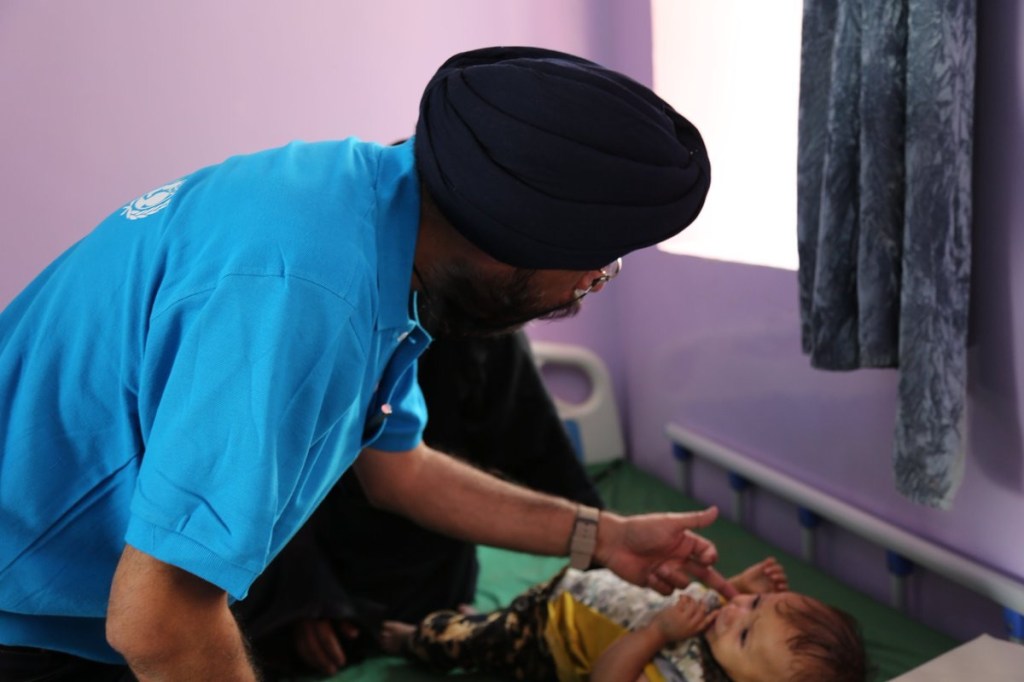
Born in a small town in India, Karanveer was no stranger to humble beginnings. “I remember the dusty dispensary in our village,” he’d later tell a colleague over tea in Cox’s Bazar, the waves crashing in the distance. “It had one rickety bed and a box of bandages, but to me, it was a palace of possibilities. I knew I wanted to make a difference, one life at a time.”
His career took him from those rural roots to the high-stakes world of pediatrics. With a medical degree and specialized training in neonatology, Karanveer spent years heading pediatric units in district hospitals and even established a Department of Pediatrics at a medical college. “It wasn’t just about treating patients,” he’d say, his eyes lighting up. “It was about building systems—hospitals, care units, hope.” Over 24 years, he worked with global giants like WHO, UNICEF, and UNDP, setting up Special Newborn Care Units across six Indian states and a tertiary-level unit that saved countless tiny lives.
But it was in Yemen, from 2017 to 2019, that Karanveer faced his greatest challenge before Cox’s Bazar. Leading UNICEF’s nutrition response in a war-torn country with a $127 million budget, he navigated conflict zones to deliver aid. “We’d drive through checkpoints, not knowing if we’d make it back,” he confided to a team member. “But when you see a child smile because they’re finally eating, you forget the fear.”
When he arrived in Cox’s Bazar, the scale of the Rohingya refugee crisis hit him hard. Nearly a million people, displaced from Myanmar, crowded into sprawling camps. Malnutrition was rampant, and the stakes were life-or-death. “I walked into the camps that first day,” he recalled, “and saw mothers clutching babies who were all skin and bones. I thought, ‘Karanveer, this is why you’re here.’”
As Nutrition Manager, he threw himself into action, coordinating feeding programs, training health workers, and ensuring supplies reached the most vulnerable. Picture him in a makeshift clinic, humidity clinging to his brow, reassuring a young mother in broken Bangla: “Your baby’s going to be okay. We’re here for you.” His team distributed high-energy biscuits and therapeutic foods, reducing malnutrition rates one child at a time. Under his leadership, UNICEF’s nutrition program became a lifeline, blending science with compassion.
Life in Cox’s Bazar wasn’t all work. Karanveer found solace in the city’s vibrant chaos—sipping coconut water by the beach or bantering with local vendors. “This place has a pulse,” he’d laugh, gesturing at the colorful markets. “It reminds me of home, but with better fish curry!” His colleagues admired his ability to stay grounded, often sharing stories of his dry humor during long meetings. “If we can’t laugh through the chaos,” he’d quip, “we’re doing it wrong.”
Beyond the camps, Karanveer’s work left ripples. He collaborated with local health officials, strengthening Cox’s Bazar’s capacity to handle crises. His experience in Yemen gave him a knack for navigating complex logistics, ensuring aid reached remote corners. “It’s not just about food,” he explained to a new volunteer. “It’s about dignity, giving people a chance to rebuild.”
Dr. Karanveer Singh’s Trailblazing Work with the WHO: A Humanized Journey
Dr. Karanveer Singh, the turbaned Sardar with a booming voice and a heart for humanity, carved a significant chapter in his career with the World Health Organization (WHO), where his expertise as a neonatologist and nutrition specialist transformed lives across India and beyond. From the dusty streets of rural dispensaries to the high-stakes world of global health, his work with WHO showcased his ability to blend medical precision with compassionate action. Let’s dive into his WHO journey, laced with dialogue and vivid moments, grounded in his contributions to polio eradication and child health.
The Early Spark: Joining WHO
Karanveer’s WHO tenure began as a natural extension of his pediatric expertise, honed at S.N. Medical College in Agra, and his passion for systemic change. After earning his MD in Pediatrics and editing his college’s cultural magazine, he was no stranger to tackling big challenges with creativity and grit. By the early 2000s, he joined WHO, diving into one of the most ambitious public health campaigns of the time: polio eradication in India. “I walked into my first WHO meeting,” he’d later recall, chuckling to a colleague in Cox’s Bazar, “and thought, ‘This is it, Karanveer. You’re not just saving kids—you’re saving a generation.’”
Polio Eradication: Building the Social Mobilization Network
One of Karanveer’s standout contributions was his work on polio eradication in Western Uttar Pradesh, a region where vaccine hesitancy and logistical challenges made progress tough. As a WHO project leader, he developed a model that became the backbone of UNICEF India’s Social Mobilization Network (SM Net), later adopted globally. “It wasn’t just about giving vaccines,” he explained to a young health worker, his voice carrying over the hum of a field clinic. “It was about trust. You’ve got to talk to the mothers, the imams, the village elders. Make them see the future we’re fighting for.”

Picture him in a sun-scorched village, his pagri standing out against the dusty backdrop, sitting cross-legged with community leaders. “Bhai, your kids deserve to run without crutches,” he’d say, his English-accented Hindi cutting through skepticism. His approach was hands-on: training local volunteers, organizing door-to-door campaigns, and countering misinformation with facts and empathy. The SM Net model he pioneered empowered communities, ensuring vaccinators weren’t just outsiders but trusted neighbors. This strategy was a game-changer, helping India achieve polio-free status in 2014. “When we got that certification,” he’d grin, adjusting his turban, “I danced Bhangra like I was back at college!”
Child Health and Nutrition: A Broader Vision
Beyond polio, Karanveer’s WHO work focused on child health and nutrition, laying the groundwork for his later UNICEF roles. He contributed to programs addressing severe acute malnutrition (SAM), a passion that carried into his UNICEF tenure in Uttar Pradesh. “Kids shouldn’t die because they don’t have enough to eat,” he’d tell his team, his beard quivering with conviction. “It’s not just medicine—it’s justice.” He collaborated with local governments to integrate nutrition into primary healthcare, training health workers to spot and treat malnutrition early. His work in India’s heartland set up systems that saved countless lives, from establishing protocols for micronutrient supplementation to advocating for breastfeeding programs.
In one memorable moment, during a WHO workshop in Delhi, Karanveer faced a skeptical official who questioned the cost of nutrition programs. “Sir, you can’t put a price on a child’s smile,” he shot back, his voice booming across the room. “Invest now, or pay later with hospitals full of sick kids.” His blend of data-driven arguments and heartfelt advocacy won the day, securing funding for community-based nutrition initiatives.
Global Impact and Local Roots
Karanveer’s WHO stint wasn’t just about India. His expertise took him to international forums, where he shared India’s polio success with countries facing similar battles. “I’d sit in Geneva,” he’d recount, sipping tea by the Bay of Bengal years later, “telling stories of Uttar Pradesh to folks from Africa and Asia. They’d say, ‘Karanveer, how’d you do it?’ and I’d just point to my heart and say, ‘You listen to the people.’” His ability to connect global strategies with local realities made him a sought-after voice in WHO circles.
His secular, call-a-spade-a-spade attitude shone through in these high-pressure environments. During a heated meeting on vaccine logistics, he once quipped, “We’re not moving mountains here, just syringes. Let’s stop arguing and start delivering!” His humor and focus kept teams grounded, earning him respect as both a leader and a doer.
Legacy with WHO
Karanveer’s WHO work laid the foundation for his later roles with UNICEF in Yemen and Cox’s Bazar, where he tackled malnutrition in crisis zones. His polio eradication efforts, particularly the SM Net model, remain a benchmark for community-driven health campaigns. “WHO taught me how to think big but act small,” he’d muse to his wife, Mrs. Ahluwalia, over dinner. “Every child we save is a victory, but it’s the systems we build that win the war.”
From the Andaman Islands to global health summits, Dr. Karanveer Singh’s WHO journey was about more than medicine—it was about trust, tenacity, and the belief that no child should be left behind. “You know,” he’d say, his voice echoing through a Cox’s Bazar clinic, “this work is like Bhangra: it’s loud, it’s tough, but it brings everyone together.”
Dr. Karanveer Singh’s story is one of grit, heart, and quiet heroism. From a rural dispensary to the frontlines of global crises, he’s carried a simple belief: every life matters. In Cox’s Bazar, amid the refugee camps and the endless beach, he found a new chapter to prove it. “This work,” he’d say, gazing at the sunset, “it’s tough, but it’s what keeps me alive.”
Source Notes: This biography is inspired by the LinkedIn profile of a Karanveer Singh, Nutrition Manager at UNICEF, who worked in Cox’s Bazar for the Rohingya response starting in May 2019, with prior experience in Yemen and India.


 deemagclinic
 deemag and chest clinic