
Picture a young Naresh Trehan, a curious boy growing up in a modest three-room apartment in Connaught Place, Delhi, where two rooms doubled as his parents’ medical clinic. His mother, a gynecologist, and his father, an ENT specialist, had fled Lyallpur (now Faisalabad, Pakistan) during the 1947 partition, carrying little but their dreams and dedication to healing. “I’d watch them work tirelessly,” Naresh recalls, his voice warm with nostalgia. “They’d treat the poor for free, and I saw how a doctor’s hands could change lives. That’s when I knew I wanted to be like them.”

The Shadow of Partition: Its Lasting Impact on Medicine in India
The 1947 partition of India and Pakistan wasn’t just a geopolitical upheaval—it reshaped the medical landscape in profound ways, leaving scars and sparking resilience that influenced pioneers like Dr. Naresh Trehan. Imagine the chaos: millions displaced, communities torn apart, and healthcare systems thrown into disarray. For Naresh Trehan’s family, the partition was personal. His parents, both doctors, fled Lyallpur (now Faisalabad, Pakistan), abandoning their home and clinic. “They left with nothing but their skills and a will to start over,” Naresh recalls, his voice heavy with respect. “That grit shaped me—seeing them rebuild in Delhi showed me medicine could thrive even in crisis.”
Disruption of Medical Infrastructure
Partition split British India’s medical resources unevenly. Major hospitals like King Edward Medical College in Lahore went to Pakistan, while India retained institutions like Calcutta Medical College. “It was a scramble,” Naresh explains, reflecting on stories from his parents’ era. “Hospitals in Punjab and Bengal were overwhelmed with refugees, many injured or sick from the journey.” Data from the time is sparse, but estimates suggest over 15 million people migrated, with up to 2 million deaths due to violence, starvation, or disease. Makeshift refugee camps became breeding grounds for cholera, dysentery, and smallpox, stretching medical facilities to their limits. Doctors, like Naresh’s parents, worked tirelessly, often without supplies. “My mother would talk about stitching wounds with whatever thread she could find,” he says, shaking his head.

Loss and Migration of Medical Professionals
The human toll on medicine was stark. Many doctors, nurses, and midwives were among the displaced. Hindu and Sikh doctors in what became Pakistan, like Naresh’s parents, fled to India, while Muslim practitioners moved westward. “It was a brain drain on both sides,” Naresh notes. “India lost talent, but it also gained doctors determined to serve.” His parents set up a clinic in Delhi’s Connaught Place, treating refugees for free. This ethos of service in crisis became Naresh’s North Star. “I grew up hearing, ‘If you can help, you must,’” he says. The loss of professionals, though, created gaps—India’s doctor-to-patient ratio in the late 1940s was roughly 1:6,000, far worse in rural areas, compared to 1:2,000 in urban centers today.

Rise of Resilience and Innovation
Partition forced medical communities to adapt. In India, new hospitals and training institutes emerged to fill the void, like the All India Institute of Medical Sciences (AIIMS) in 1956. “The crisis pushed us to build,” Naresh says. “My parents’ generation showed me that necessity breeds innovation.” Makeshift clinics in refugee camps, staffed by doctors like his parents, became models for accessible care. Traditional medicine, like Ayurveda, also surged as Western-trained doctors were scarce. Naresh’s father, an ENT specialist, learned to blend modern and local remedies to treat patients. “That taught me flexibility,” Naresh admits. “You work with what you have.”
Long-Term Impact on Medical Pioneers
For Naresh, born in 1945, the partition’s legacy was a backdrop of purpose. His parents’ stories of treating partition survivors instilled a drive to make healthcare universal. “I saw how they served the poorest,” he says. “It’s why I came back from the U.S. to build Escorts and Medanta—to bring world-class care to India.” The partition also highlighted India’s lag in specialized fields like cardiology. “Back then, heart surgeries were a pipe dream here,” Naresh explains. “I wanted to change that.” His work, including over 48,000 surgeries and founding Medanta, reflects a mission rooted in the partition’s lessons: resilience, accessibility, and innovation.
A Lasting Echo
Partition’s impact on medicine wasn’t just immediate—it shaped a generation of doctors like Naresh Trehan, who saw healthcare as a tool for rebuilding a fractured nation. “The chaos of ’47 showed us medicine’s power to heal more than bodies,” he says, his eyes steady. “It can mend hope, too.” From refugee clinics to modern hospitals, the partition’s shadow pushed India’s medical pioneers to create a system that, while still imperfect, strives to serve all—a legacy Naresh carries forward with every heartbeat he saves.

Born on August 12, 1945, in Batala, Punjab, Naresh wasn’t just a dreamer—he was a doer. A natural left-hander, he faced an unusual challenge early on. “My Hindi tutor thought left-handedness was a flaw,” he chuckles, shaking his head. “He forced me to write with my right hand—broke my left hand, literally! But you know what? That made me ambidextrous, and it’s been my secret weapon in the operating room.” This resilience would define his life.
At Modern School in New Delhi, Naresh wasn’t all books. “I was out there on the cricket and hockey fields, even leading the aero-modeling club,” he says with a grin. “Sports taught me stamina—vital when you’re standing through a six-hour heart surgery.” His parents, though, weren’t thrilled about his career choice. “They knew medicine was grueling,” he admits. “But I was stubborn. I wanted to make a difference.”
In 1963, Naresh joined King George’s Medical College in Lucknow, earning his MBBS by 1968. Love came early too—he met Madhu, a spirited journalist-to-be, at 16. “We were young, reckless, and in love,” he laughs. They married in September 1969, and by November, they were off to the U.S., chasing bigger dreams. “Philadelphia was a shock—cold, fast-paced,” he recalls. “But at Thomas Jefferson University Hospital, I found my calling.”
Under the mentorship of Dr. Frank Spencer at New York University Medical Center, Naresh chose heart surgery over neurosurgery. “The heart was magical,” he says, eyes lighting up. “One moment, a patient’s fading; the next, you give them life.” From 1971 to 1988, he honed his craft in Manhattan, performing surgeries that saved countless lives. “I’d see Indian patients fly to the U.S. for heart surgeries because India didn’t have the facilities,” he says, his tone turning serious. “That hit me hard. I knew I had to go back.”
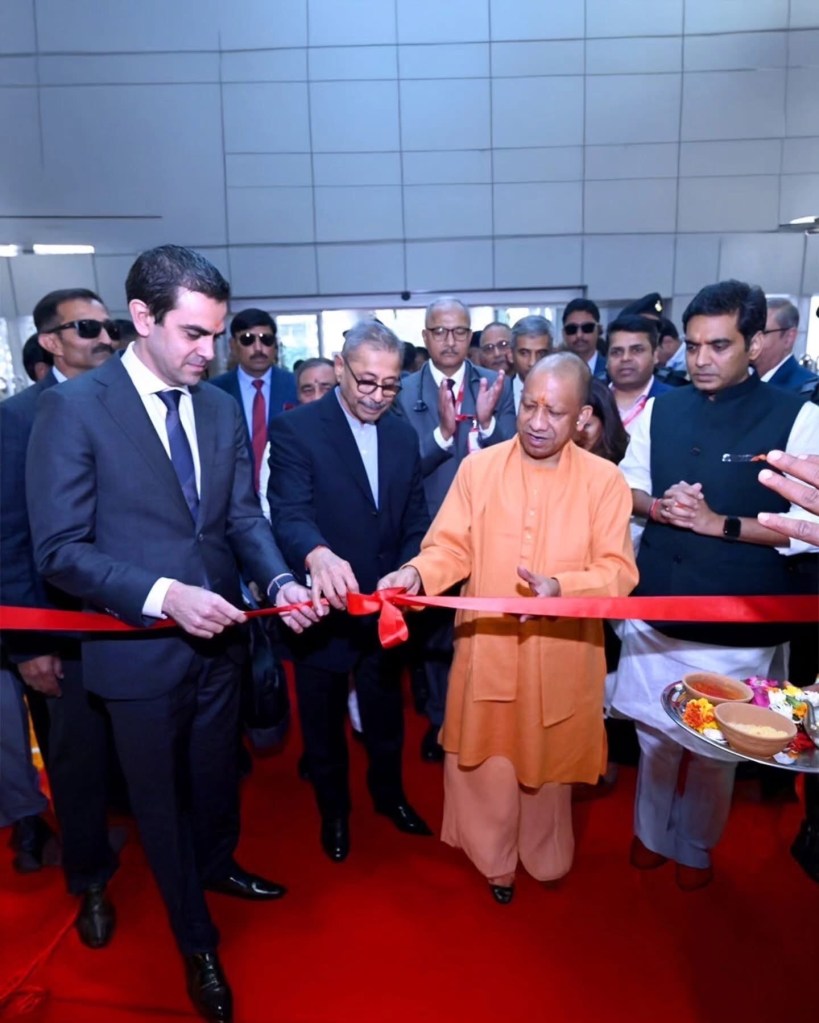
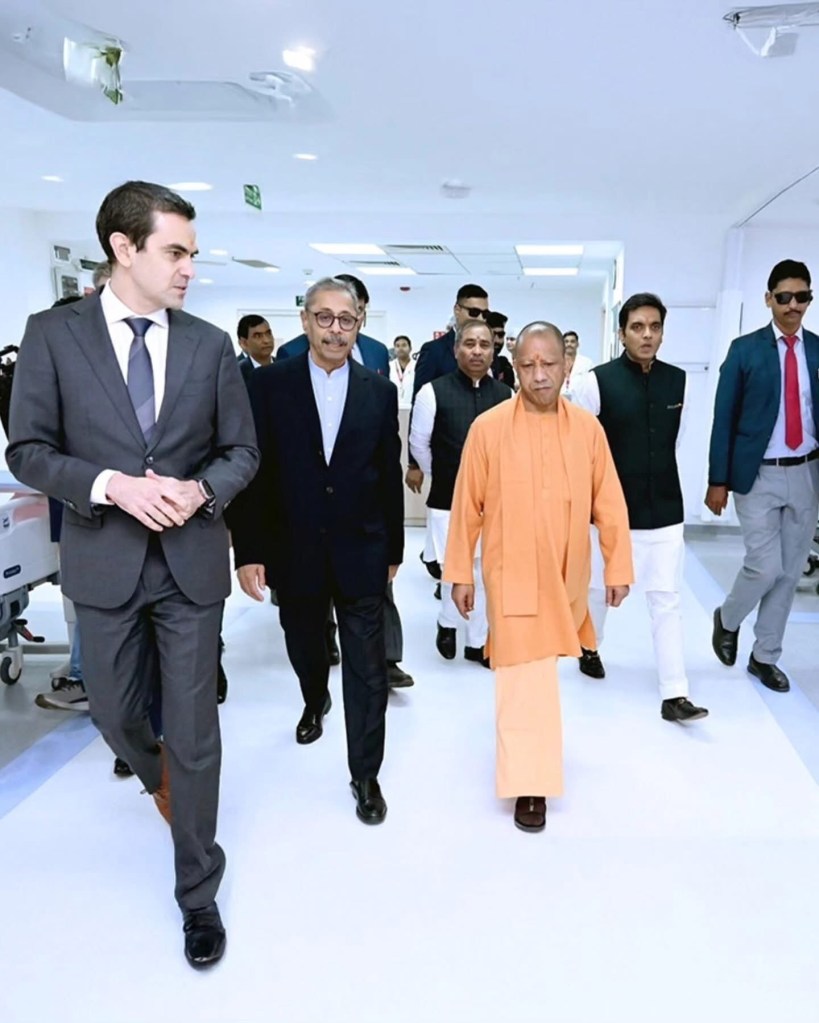
In 1988, Naresh returned to India and founded the Escorts Heart Institute and Research Centre in Delhi. “It wasn’t just a hospital,” he explains. “It was a mission—to bring world-class cardiac care to India.” His vision paid off. By 2009, he’d launched Medanta-The Medicity in Gurgaon, a 1,400-bed marvel blending cutting-edge technology with compassion. “We wanted it to be the Cleveland Clinic of the East,” he says proudly. Today, Medanta spans Delhi, Lucknow, Patna, Indore, and Ranchi, with over 2,700 beds and 30+ specialties.
With over 48,000 open-heart surgeries under his belt—coronary bypasses, valve replacements, even a historic surgery on a 98-year-old patient—Naresh’s hands have worked miracles. “Every surgery is a life,” he says softly. “You feel the weight of that trust.” His expertise earned him the Padma Shri (1991), Padma Bhushan (2001), Dr. B. C. Roy Award (2002), and the title of one of the “Seven Legends” in heart surgery by the International Congress of Cardiac Surgery in 2024. Since 1991, he’s been the personal surgeon to the President of India, a role he carries with quiet pride.
But success didn’t come without sacrifice. “Long hours, endless emergencies,” he admits. “Madhu and our daughters, Shyel and Shonan, kept me grounded.” Shyel, a lawyer, is married to Pankaj Sahni, Medanta’s CEO. “Family is my anchor,” Naresh says. His wife, Madhu Trehan, a renowned journalist, adds, “He’s a beast in the operating room but a teddy bear at home.”
At 77, Naresh is a billionaire, with a 33.06% stake in Global Health, Medanta’s parent company, valued at over $1 billion in 2023. Yet, he’s no ivory-tower tycoon. A fitness enthusiast, he starts his day with yoga and small, healthy meals—nuts, fruits, salads. “A surgeon needs stamina,” he says, flexing his fingers. “And a clear mind.” He’s also a mentor, having trained countless surgeons, and a researcher with over 350 scientific publications.
Reflecting on his journey, Naresh gets philosophical. “Medicine isn’t just science—it’s obsession,” he says. “You’re holding someone’s heart in your hands. There’s no room for error, but there’s endless room for hope.” His advice to aspiring doctors? “Be relentless. Love what you do. And never forget the person behind the patient.”
From a boy in Connaught Place to a global icon, Dr. Naresh Trehan’s story is one of grit, heart, and a relentless drive to save lives—one surgery at a time.


 deemagclinic
 deemag and chest clinic