
The Calcutta Medical College (CMC), now known as Medical College and Hospital, Kolkata, was established on January 28, 1835, under the governorship of Lord William Bentinck, not in 1839 as stated in the query. It was the first institution in India to impart systematic Western medical education in English, marking a significant shift from traditional Ayurvedic and Unani systems. The college was founded to train Indian youth in European medical science to meet the healthcare needs of the British East India Company and the local population. Below is a detailed account of its history, staff, principal, students, and syllabus based on available information, focusing on the early years, particularly around 1835–1839.
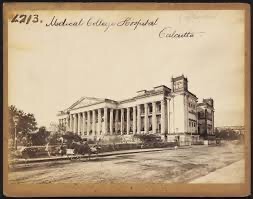
History of Calcutta Medical College
The origins of CMC trace back to the early 19th century, with initial efforts to introduce Western medical education in India. In 1822, the Native Medical Institution (NMI) was established to train Indian medical practitioners, with classes conducted in Sanskrit at the Calcutta Sanskrit College and in Urdu at the Calcutta Madrassa. Western medical texts, such as The London Pharmacopoeia, were translated into vernacular languages. However, the NMI was deemed inadequate due to its limited practical training, especially in anatomy.
In 1833, Lord William Bentinck formed a committee to evaluate medical education in Bengal. The committee found the NMI’s training deficient and recommended its dissolution. On January 28, 1835, the NMI was abolished, and the Calcutta Medical College was established to provide a structured, English-medium medical education. The college began operations in May 1835 in a temporary building behind the Hindu College, later moving to a new building on land donated by Motilal Sheel. This marked the formal introduction of Western medical pedagogy, emphasizing anatomy, dissection, and scientific principles.
The college was a pioneering institution, introducing rigorous training in anatomy, physiology, and pathology. It played a crucial role in breaking cultural barriers, notably through the first human cadaver dissection in India by Pandit Madhusudan Gupta in 1836, which challenged religious and social taboos. By 1839, the first batch of students graduated, becoming the first Indian doctors trained in Western medicine, known as “native doctors.”
Staff and Principal (1835–1839)
The early staff of CMC consisted of British and Indian medical professionals who laid the foundation for modern medical education in India. Key figures include:
- Principal:
- Dr. M.J. Bramley (1835): Appointed as the first principal of CMC, Dr. Bramley was a pioneer in medical education and envisioned sending promising students to England for advanced studies. His leadership was instrumental in establishing the college’s academic rigor.
- Notable Faculty:
- Henry Goodeve: Assistant surgeon and professor, Goodeve was a key figure in teaching and published cases from CMC in The Lancet in 1838, marking the first publication by a medical college in the British colonies. He also supported students traveling to England for further studies.
- William Brooke O’Shaughnessy: Professor of chemistry, O’Shaughnessy conducted pioneering work on intravenous hydration for cholera, cannabis effects, and laid the first telegraph line on CMC premises in 1839. He is also credited with early systematic vivisection in India.
- Madhusudan Gupta: A native staff member and Ayurvedic practitioner, Gupta was the first Indian to perform a human cadaver dissection on January 10, 1836, a landmark event in Indian medical history.
- Nabinkrishna Gupta and Ramisswar Avasti: Native staff who assisted in teaching and administration during the college’s early years.
- David Hare: Served as the secretary of CMC, Hare was a tireless advocate for the college’s establishment and its mission to provide Western medical education.
These individuals were instrumental in shaping the college’s early academic and administrative framework, blending European expertise with Indian collaboration.
Students (1835–1839)
The first batch of students at CMC was admitted in 1835, with strict criteria: candidates had to be aged 14–20 and proficient in English reading and writing. The initial cohort was small, reflecting the cultural resistance to Western medicine, particularly due to the requirement of human dissection, which was taboo among high-caste Hindus.
- First Batch Graduates (1839):
- The first batch of students graduated in 1839, becoming India’s first MBBS graduates. Specific names of the 1839 graduates are not fully documented in the sources, but they were referred to as “native doctors” capable of practicing both medicine and surgery with a starting salary of ₹30/month in the East India Company’s service.
- Notable early students who graduated slightly later (1845) included:
- Surya Coomar Goodeve Chuckerbutty: The first Indian to join the Indian Medical Service (IMS) in 1855, he later became a professor of materia medica at CMC.
- Bholanath Bose: The first Indian to earn an MD from University College London (UCL).
- Dwarkanath Bose: The first Indian to become a Member of the Royal College of Surgeons (MRCS).
- Gopal Chandra Seal: Another student sent to England for advanced studies.
- These students, supported by scholarships from figures like Dwarkanath Tagore and the Nawab of Murshidabad, traveled to England in 1845, marking a significant step in globalizing Indian medical education.
- Cultural Milestone:
- On October 28, 1836, students Umacharan Sett, Dwarakanath Gupta, Rajkrishna Dey, and Nabinchandra Mitra performed the first human cadaver dissection by Indian students under Madhusudan Gupta’s guidance, a pivotal moment in overcoming cultural barriers.
Syllabus (1835–1839)
The initial curriculum at CMC was designed to provide a comprehensive Western medical education, shorter than modern MBBS programs, lasting three years. The syllabus emphasized practical and theoretical training to produce competent practitioners for the East India Company. The course structure included:
- Year 1:
- Anatomy
- Physiology
- Pharmacology
- Years 2 and 3:
- Medicine
- Surgery
- Additional Subjects (introduced progressively by 1839):
- Midwifery
- Ophthalmology
- Chemistry
- Practical Training:
- Students gained hands-on experience at the General Hospital, the Company’s Dispensary, the Eye Infirmary, and the Vaccination Department.
- The curriculum included practical exposure to human dissection, a significant departure from traditional Indian medical practices, which avoided such procedures due to cultural taboos.
- Medium of Instruction: English, making CMC the first institution in Asia to teach Western medicine in English.
- Challenges: The early curriculum faced limitations, including the absence of a dedicated medical library and laboratory facilities. Course duration varied (4–6 years for some candidates), but by 1839, the three-year structure was standardized.
The syllabus was designed to align with British medical standards, and by 1846, CMC’s training was recognized by the Royal College of Surgeons, University College London, and the Royal Society of Apothecaries.
Additional Context
- Cultural Resistance: High-caste Hindus initially resisted the program due to dissection requirements. Pandit Madhusudan Gupta’s 1836 dissection was a turning point, encouraging broader enrollment.
- Infrastructure: Classes began in a temporary building behind Hindu College, with new premises constructed by May 1835. The main hospital building’s foundation was laid in 1848 and completed in 1852.
- Legacy: The 1839 graduates were cultural intermediaries, bridging traditional Indian medicine with Western science. Their training laid the foundation for India’s modern medical infrastructure, influencing subsequent colleges in Bombay and Madras.
Sources
The information provided is based on web sources, including Wikipedia, Indianetzone, and Edufever, among others, which detail the history, staff, students, and curriculum of CMC during its early years. Specific details about the 1839 staff and students are limited, as historical records from this period often focus on key figures rather than comprehensive lists.
If you need further details or have additional sources to provide, I can refine the response. Alternatively, if you’d like me to search for more specific information (e.g., additional student names or detailed staff roles), please let me know!


 deemagclinic
 deemag and chest clinic