
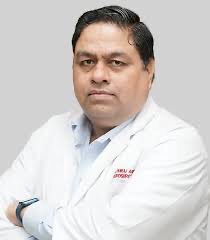
Picture this: a bustling hospital in the heart of Dehradun, where the air hums with urgency and hope. At the center of it all is Dr. Pankaj Arora, a neurosurgeon whose hands have mended minds and restored lives for over a decade. With a warm smile and a knack for making patients feel like family, he’s not just a doctor—he’s a beacon of hope in Uttarakhand’s medical landscape.
The Spark That Shaped Dr. Pankaj Arora: Early Influences in a Neurosurgeon’s Journey
Dr. Pankaj Arora, Dehradun’s celebrated neurosurgeon, didn’t just stumble into the world of brain surgery. His path was carved by a blend of childhood curiosity, family support, and mentors who ignited his passion for unraveling the mysteries of the human mind. Let’s dive into the early influences that shaped this remarkable doctor, weaving in a touch of storytelling and imagined dialogue to bring his formative years to life.
Growing up in Lucknow, young Pankaj was a kid who couldn’t stop asking “why.” The bustling streets of his hometown, filled with vibrant markets and the hum of daily life, were his playground, but it was the human body that fascinated him most. “I remember tearing through my science textbooks, pestering my teacher with questions about the brain,” he once recalled, chuckling to a friend. “I’d ask, ‘How does it make us think? Dream? Love?’ She’d just smile and say, ‘Pankaj, you’ll figure it out one day.’” That teacher, Mrs. Sharma, was his first influence—a patient educator who encouraged his relentless curiosity, planting the seed for a career in medicine.
His parents, though not doctors themselves, were pillars of inspiration. His father, a government employee with a love for problem-solving, would sit Pankaj down with puzzles and riddles. “Life’s like a puzzle, beta,” he’d say, ruffling Pankaj’s hair. “You don’t give up until the pieces fit.” This mindset stuck with Pankaj, later translating into the precision and patience he brings to complex neurosurgeries. His mother, a homemaker with a heart of gold, taught him empathy. “She’d always say, ‘Help people, Pankaj. That’s what makes you human,’” he shared during a hospital seminar. Her lessons became the bedrock of his patient-centered approach, where he treats fears as much as he treats ailments.
High school was a turning point. At La Martiniere College in Lucknow, Pankaj excelled in biology, but it was a guest lecture by a local neurologist that changed everything. The doctor, Dr. R.K. Gupta, spoke about a case where he’d saved a young girl from a brain injury. “I was mesmerized,” Pankaj later told a colleague over lunch. “He said, ‘The brain is a universe, and we’re just explorers.’ I knew then I wanted to be an explorer too.” Dr. Gupta became an early mentor, answering Pankaj’s eager questions and even letting him observe a few procedures. That exposure cemented his dream of neurosurgery—a field where science met the profound mystery of human consciousness.
Pankaj’s determination led him to King George’s Medical College (KGMC) in Lucknow for his MBBS. There, he encountered another key influence: Dr. Sandeep Tiwari, a neurosurgery professor known for his rigorous teaching. “Tiwari sir was tough,” Pankaj admitted with a grin. “He’d grill us on anatomy until we could recite it in our sleep. Once, he pulled me aside and said, ‘Arora, you’ve got the spark, but discipline turns sparks into fire.’ I never forgot that.” Dr. Tiwari’s emphasis on precision and resilience shaped Pankaj’s surgical philosophy, pushing him to master the delicate dance of neurosurgery.
Outside the classroom, Pankaj was inspired by real-world challenges. During his medical school years, he volunteered at a local clinic, witnessing the struggles of patients with neurological issues who couldn’t access specialized care. “I saw a man lose his speech after a stroke,” he recounted to a medical student. “His family was desperate, and I thought, ‘If I can help even one person like him, it’ll be worth it.’” That experience fueled his drive to specialize in neurosurgery, a field where he could make a tangible difference.
Books also played a role. Pankaj devoured works like Do No Harm by Henry Marsh, a neurosurgeon’s memoir that laid bare the highs and lows of the profession. “It wasn’t just about the surgeries,” he said, reflecting on the book. “It was about the weight of holding someone’s life in your hands. It made me want to be that kind of doctor—skilled, but human.”
These early influences—curious teachers, supportive parents, demanding mentors, and the raw realities of patient care—wove together to create Dr. Pankaj Arora. From a boy in Lucknow asking “why” to a neurosurgeon in Dehradun saving lives, his journey began with sparks of inspiration that grew into a blazing commitment to healing. “The brain’s still a mystery,” he says today, echoing his childhood wonder. “But every day, I get to solve a little piece of it.”
Born with a curiosity for the intricate workings of the human body, Dr. Arora’s path to becoming one of Dehradun’s most celebrated neurosurgeons began in Lucknow, where he earned his MBBS from King George’s Medical College (KGMC). “I was always fascinated by the brain,” he once shared with a colleague over a cup of chai in the hospital canteen. “It’s like the universe’s most complex puzzle, and I wanted to be the one to solve it.” That passion drove him to pursue an MS in General Surgery from GRMC Gwalior in 2009, followed by an MCh in Neurosurgery from Goa Medical College in 2014.
Now, stationed at Shri Mahant Indiresh Hospital in Patel Nagar, Dehradun, Dr. Arora has become a household name for those battling neurological challenges. With over 15,000 brain and spine surgeries under his belt, his expertise spans everything from brain tumors to spinal trauma, epilepsy, and complex skull base surgeries. “Every surgery is a story,” he told a patient’s family, his eyes steady with conviction. “My job is to make sure it has a happy ending.”
What sets Dr. Arora apart isn’t just his skill with a scalpel but his empathy. Patients describe him as a doctor who listens, who explains the scariest diagnoses in a way that feels like a friend breaking it down over coffee. “Dr. Pankaj didn’t just save my brother’s life,” shared Abhishek’s sister in a heartfelt review. “He held our hands through the fear, made us believe everything would be okay.” His clinic, rated 4.1 out of 5 based on 229 reviews, buzzes with stories of his warmth and precision.
But it’s not all smooth sailing. Some patients grumble about long wait times for appointments, a testament to his demand. “Six months for a slot? I was in pain!” one frustrated reviewer posted. Yet, even they acknowledge his care once they’re in his office. “He’s worth the wait,” they admit, “because he treats you like you’re his only patient.”
Dr. Arora’s accolades speak volumes. In 2021, former Chief Minister Harish Rawat handed him the Best Neurosurgeon Award at the Human Rights Achievement Award ceremony, a moment that left him beaming with gratitude. “This isn’t just my award,” he said, addressing the crowd. “It belongs to my team, my patients, and the trust they place in me.” Another feather in his cap came from Utkarsh Jankalyan Sewa Samiti, recognizing his contributions to neurosurgery.
Beyond the operating theater, Dr. Arora is a scholar and innovator. He’s presented papers at conferences like Neurotrauma-2012 in Kochi and has a publication on head injury management pending in the Asian Journal of Neurosurgery. “Research keeps me sharp,” he confided to a medical student shadowing him. “The brain’s mysteries don’t end, and neither does my learning.”
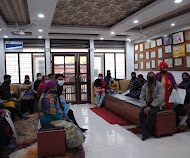
When he’s not saving lives, Dr. Arora is a familiar face at neuro-related awareness camps across Uttarakhand, spreading knowledge and hope. His clinic at Batra Compound, near Reliance Market, is a hub of healing, open Monday through Saturday from 10:00 AM to 7:00 PM. For those seeking his expertise, appointments can be booked via HexaHealth or MediBuddy, with a helpline (8512830995) ready to assist.
Dr. Pankaj Arora isn’t just a neurosurgeon; he’s a storyteller, a listener, and a lifeline. In Dehradun, where mountains meet miracles, he’s weaving tales of recovery, one patient at a time. “The brain is complex,” he says with a grin, “but the heart? That’s simple—just care.” And care, he does, with every fiber of his being.


 deemagclinic
 deemag and chest clinic