
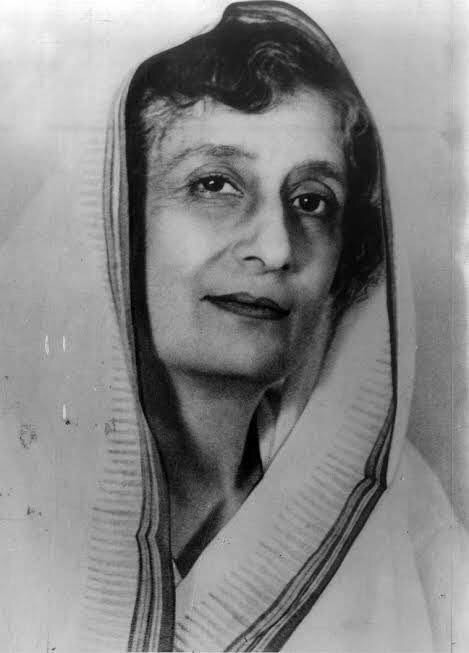
Rajkumari Amrit Kaur’s establishment of the All India Institute of Medical Sciences (AIIMS) in New Delhi stands as one of her most enduring contributions to India’s healthcare landscape. As the first Health Minister of independent India (1947–1957), she envisioned AIIMS as a world-class institution for medical education, research, and patient care—a “temple of healing” that would serve all Indians, regardless of class or creed. Below is a humanized account of how she brought AIIMS to life, infused with imagined dialogue to capture her passion and the challenges she faced.
The Vision Takes Root
In the early years of independent India, healthcare was in a dire state. Colonial neglect had left the country with inadequate medical facilities, rampant diseases like malaria and tuberculosis, and a severe shortage of trained doctors. Amrit Kaur, with her deep commitment to social welfare, saw a modern medical institute as a cornerstone for nation-building. Inspired by institutions like Johns Hopkins and the Mayo Clinic, she dreamed of an Indian equivalent that would combine cutting-edge research with accessible care.
“We can’t just patch up the sick,” she told Prime Minister Jawaharlal Nehru in a 1948 cabinet meeting, her voice firm yet hopeful. “We need a place that trains the best doctors, pioneers new treatments, and heals the poorest among us. That’s my dream for AIIMS.” Nehru, a close ally and admirer of her resolve, nodded. “Amrit, if anyone can make this happen, it’s you. But it won’t be easy.”
Laying the Foundation
The idea for AIIMS was born out of a 1946 health survey and planning committee report, which recommended a premier medical institute to address India’s healthcare needs. As Health Minister, Amrit took this recommendation and ran with it. She spearheaded the drafting of the AIIMS Act, which was introduced in Parliament in 1952 and passed in 1956, laying the legal groundwork for the institute. Her vision was ambitious: AIIMS would not only train doctors but also set a global standard for medical research and public health.
Securing funding was a massive hurdle. India, still reeling from partition and economic strain, had limited resources. Amrit turned to international allies, negotiating grants from the Rockefeller Foundation, the Ford Foundation, and the government of New Zealand. “Gentlemen,” she said during a meeting with foreign donors, her regal poise commanding attention, “invest in AIIMS, and you invest in the future of a billion people. This isn’t charity—it’s partnership.” Her diplomacy paid off, bringing in crucial financial support.
Overcoming Challenges
The journey wasn’t smooth. Bureaucratic red tape, political skepticism, and logistical issues threatened to derail the project. Some critics argued that India should focus on basic healthcare rather than an elite institute. “Basic care is vital, yes,” Amrit countered in a heated parliamentary debate, “but without trained doctors and new knowledge, we’re just putting bandages on a broken system.” Her ability to balance passion with pragmatism won over many doubters.
Finding the right location was another challenge. Amrit personally oversaw the selection of a 150-acre site in New Delhi’s Safdarjung area, chosen for its accessibility and potential for expansion. She also insisted on recruiting the best minds—Indian and international—to shape AIIMS’s faculty and curriculum. “We need brilliance, not just bodies,” she told her team. “Find me people who care as much about patients as they do about progress.”
Bringing AIIMS to Life
Construction began in the early 1950s, and Amrit was a hands-on leader, visiting the site, meeting architects, and ensuring her vision stayed intact. She wanted AIIMS to be a place of excellence but also compassion, where no patient would be turned away for lack of money. “This hospital isn’t for the rich alone,” she reminded the planning committee. “Every bed, every doctor, must serve the poorest villager who walks through those doors.”
On February 25, 1956, AIIMS was inaugurated by President Rajendra Prasad, with Amrit’s tireless efforts behind every detail. The institute started with a 460-bed hospital, a medical college, and research facilities, designed to train postgraduate doctors and conduct cutting-edge studies. Amrit also ensured AIIMS had a nursing college (later named the Rajkumari Amrit Kaur College of Nursing in her honor), recognizing nurses as the backbone of healthcare. “A hospital without good nurses is like a body without a heart,” she said, smiling at the first batch of nursing students.
Impact and Legacy
AIIMS quickly became India’s premier medical institution, setting standards for healthcare and research. It pioneered advancements in cardiology, neurology, and public health, while its graduates went on to transform medicine across India and beyond. Amrit’s insistence on autonomy for AIIMS—enshrined in the AIIMS Act—protected it from political interference, ensuring its excellence endured.
Even after her tenure as Health Minister ended in 1957, Amrit remained deeply connected to AIIMS, chairing its governing body until her death in 1964. “AIIMS is my child,” she once confided to a colleague, her eyes glistening with pride. “It must outlive me and serve India for centuries.”
A Personal Touch
Amrit’s work on AIIMS was deeply personal. Her own health had suffered during her years in the freedom struggle, and she knew the pain of illness firsthand. She often visited AIIMS’s early patients, chatting with them in her warm, approachable way. “How’s the food here?” she’d ask with a grin, sitting by a patient’s bedside. “If it’s bad, I’ll have a word with the kitchen!” Her presence brought comfort and reminded staff that AIIMS was about people, not just prestige.
Lasting Impact
Today, AIIMS remains a beacon of medical excellence, with multiple campuses across India. Its creation reflects Amrit Kaur’s ability to dream big, navigate challenges, and deliver results. “Build something that lasts,” she once told her team, “not for fame, but for the future.” AIIMS stands as a testament to her vision—a legacy that continues to save lives and inspire generations.
If you’d like more details on specific aspects—like the AIIMS Act, its early years, or Amrit’s role in its global partnerships—just let me know!


 deemagclinic
 deemag and chest clinic