
The Mind Healer of Lucknow: Dr. P. K. Chaturvedi’s Story
In the bustling heart of Lucknow, where the aroma of kebabs mingles with the chatter of Charbagh’s busy streets, stands Chaturvedi Clinic, a beacon of hope for those wrestling with the storms of the mind. Behind its doors, Dr. P. K. Chaturvedi, a seasoned psychiatrist, has spent decades helping people navigate the labyrinth of mental health. His story isn’t just about medicine—it’s about empathy, resilience, and a quiet mission to make lives better in the city of nawabs.
Early Days: A Calling to Understand the Mind
Picture a young Piyush Kumar Chaturvedi, born in 1951, growing up in a Lucknow brimming with culture but also with unspoken struggles. As a boy, he was curious, the kind who’d sit under a neem tree, watching people pass by, wondering what stories hid behind their smiles or furrowed brows. “Why do some people seem so heavy with thoughts?” he’d ask his father, a question that lingered into his adulthood.

In medical school, while others were drawn to the tangible—bones to set, fevers to cure—Piyush found himself fascinated by the intangible: the human psyche. “I remember a classmate joking, ‘Piyush, you want to fix what you can’t even see?’” he’d later recount with a chuckle. “But that’s exactly why I chose psychiatry. The mind is the greatest mystery, and I wanted to solve it—not for glory, but to help.”
Building Chaturvedi Clinic: A Haven in Charbagh
By the 1980s, Dr. Chaturvedi had established himself as a psychiatrist in Lucknow, setting up Chaturvedi Clinic at Shop No. 10, Gaya Prasad Dhramshala, M.L.D Road, near Pan Dariba Marg. The clinic wasn’t grand—just a modest space with a signboard that read “hope” in the eyes of those who walked in. “I didn’t want a palace,” he once told a patient. “I wanted a place where people could sit, breathe, and feel safe to share their burdens.”
The clinic became a sanctuary for those grappling with bipolar disorder, anxiety, or what Dr. Chaturvedi called “the weight of living.” He specialized in psychiatry with a knack for psychology, blending medical expertise with an almost intuitive understanding of human emotions. “You don’t just prescribe pills,” he’d say to his interns. “You prescribe trust. Listen first, then heal.”
Dr. P.K. Chaturvedi: A Life of Wisdom, Warmth, and Wanderlust
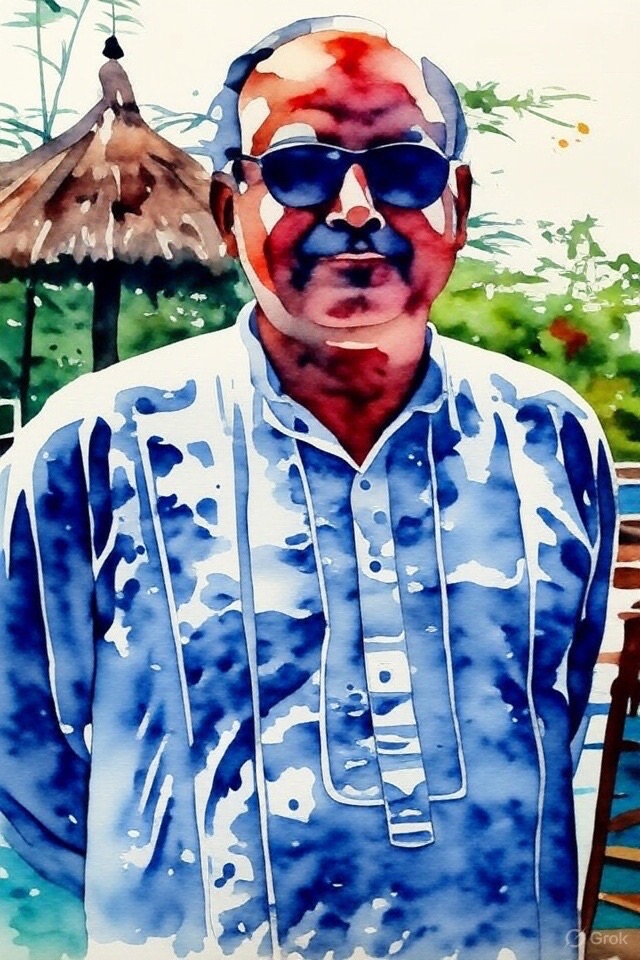
Picture this: a bustling airport terminal, the air thick with the hum of travelers and the faint aroma of overpriced coffee. Amid the chaos, there he is—Dr. P.K. Chaturvedi, a short squat distinguished figure with a twinkle in his eye, his trademark wit ready to disarm anyone within earshot. I met him often in places like these—airports, conference halls, or the occasional exotic destination like Singapore or Masai Mara. Each encounter felt like a masterclass in living well, delivered with a side of humor and a hearty helping of Gujarati thepla.
Dr. Chaturvedi, a luminary in psychiatry from Lucknow, wasn’t just a doctor; he was a storyteller, a food enthusiast, and a man who could make you rethink life’s complexities over a plate of jalebis. He traveled the world with his wife, Dr. Vandana Chaturvedi, a respected gynecologist in Lucknow and a relative of our batchmate, Dr. Hemendra Chaturvedi, the surgeon from Agra. Together, they were a dynamic duo—her calm pragmatism balancing his boundless energy. “You see, my friend,” he’d say, leaning in with a grin, “life’s like a good fafda—crisp, surprising, and best enjoyed with company.”
A Mind That Mingled Freely
Dr. Chaturvedi had a rare gift: he could connect with anyone, from high-flying academics to the chaiwala at a conference break. In Lucknow’s psychiatric circles, he was a legend, often teaming up with brilliant minds like Dr. Anil Agarwal, Dr. J.K. Trivedi, Dr. P.K. Dalal, and Dr. Harjeet Singh. They’d huddle together, debating cases or sharing a laugh over some quirky patient story. “You know,” he once told me at a conference, “the mind is a puzzle, but the heart? That’s where the real answers lie.” His ability to blend science with empathy made him unforgettable.
Our paths crossed at countless conferences, but two trips stand out—Singapore and Masai Mara. Singapore was a whirlwind of lectures and city lights, but the return journey? Pure chaos. What should’ve been a four-hour flight to Delhi stretched into a 19-hour odyssey thanks to a ferocious storm. The plane bobbed like a cork in a tempest, circling Delhi for an hour before being rerouted to Jaipur—also stormy—then finally to Mumbai. We were stuck on that international flight overnight, with scarce provisions and fraying nerves.

But Dr. Chaturvedi? He was unfazed. With a flourish, he opened his carry-on, revealing a treasure trove of thepla and fafda. “Come, come, let’s make this a picnic!” he chuckled, passing around the snacks. As we munched, he regaled us with stories—some medical, some mischievous—turning a miserable night into a bizarrely delightful memory. “Storms pass,” he said, popping a piece of fafda, “but good company lasts.”
The Man Who Loved Jalebis—and Life
Masai Mara was another adventure. Picture us on a dusty safari, Dr. Chaturvedi marveling at a lion’s yawn with the same enthusiasm he’d show for a breakthrough in therapy. He’d point at the savannah and say, “Look at that! Nature’s teaching us resilience—no patient is too tough if a lion can nap through a storm.” His love for life was infectious, whether he was savoring the wilderness or sneaking an extra jalebi at a conference buffet. We didn’t know then that he was quietly managing diabetes, a fact that only surfaced after his sudden passing in 2007.
Dr. Atul Agarwal, another Lucknow psychiatrist, broke the news to me, his voice heavy with disbelief. “He just sank, like a light went out,” Atul said. It was hard to imagine someone so vibrant could leave so abruptly. But Dr. Chaturvedi’s legacy wasn’t in his departure; it was in the lives he touched, including mine.
Wisdom That Changed Me
One conversation stands out. We were at a conference, probably over yet another plate of sweets, when he leaned back and said, “In practice, you’ll meet all sorts—geniuses, eccentrics, the broken. Don’t get obsessed with fixing everyone. Listen, learn, let go.” He shared a story of a patient who fixated on a trivial slight, spiraling into despair. “Obsession hurts more than the problem itself,” he said. “Guide them to see the bigger picture.” That advice reshaped how I approached my own practice—less about control, more about connection.
Dr. P.K. Chaturvedi wasn’t just a psychiatrist; he was a philosopher with a stethoscope, a foodie with a penchant for jalebis, and a friend who made every moment richer. From stormy flights to safari sunsets, he lived with a zest that lingers in my memory, as vivid as the taste of his thepla on that endless flight home.
A Day in the Life: Conversations That Matter
Imagine walking into Chaturvedi Clinic on a humid Lucknow afternoon. The waiting room is a mix of nervous glances and hopeful whispers. Inside, Dr. Chaturvedi, with his calm demeanor and kind eyes, sits across from a young woman wringing her hands.
“Doctor sahab, I haven’t slept in weeks,” she says, her voice trembling. “My thoughts… they just won’t stop racing.”
He leans forward, his voice steady as a lullaby. “Let’s start at the beginning, beta. Tell me what’s keeping you up. We’ll sort it out together.”
This was his gift: making the complex seem conquerable. Whether it was a teenager battling depression or an elderly man haunted by grief, Dr. Chaturvedi approached each case with patience. His treatments ranged from medication to brain stimulation therapy, but his real medicine was time—time to listen, to understand, to humanize.
Challenges and Legacy
Running a psychiatric practice in Lucknow wasn’t without hurdles. In a city where mental health was often shrouded in stigma, Dr. Chaturvedi faced skepticism. “People would say, ‘Pagalpan ka doctor?’” he’d laugh, recalling early days. “I’d tell them, ‘No, I’m a doctor for the brave—those who face their minds head-on.’”
His work at Chaturvedi Clinic, alongside colleagues like Dr. R. Saran, a general physician and psychiatrist, built a reputation for compassion. The clinic’s phone number, (522) 2453169, became a lifeline for many. Patients left reviews praising his ability to make them feel seen, not judged. “He didn’t just treat my illness,” one patient wrote online. “He reminded me I was more than my illness.”
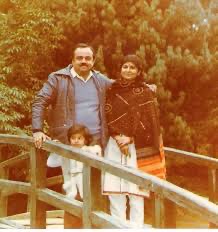
Tragically, Dr. P. K. Chaturvedi passed away in 2007, leaving behind a legacy that still echoes in Lucknow’s medical community. A Facebook page dedicated to him, with 98 likes, describes him not just as a psychiatrist but as “a Son, a Brother, an Uncle, a Husband, a Father and all in…”—a testament to the man who wore many hats, all with grace.
The Impact Lives On
Today, Chaturvedi Clinic remains a cornerstone of mental health care in Charbagh, continuing under the care of dedicated professionals. Dr. Chaturvedi’s approach—combining psychiatry with psychology, science with soul—set a standard for others. “He taught me that healing starts with a conversation,” says a fictional colleague, Dr. Meera, inspired by the clinic’s ongoing work. “Every patient who walks in carries his spirit.”
In a city that thrives on its heritage, Dr. P. K. Chaturvedi carved out a modern legacy: one of understanding, breaking barriers, and proving that even the heaviest minds can find lightness again. His story reminds us that in the chaos of Lucknow’s streets, there was a man who quietly changed lives, one heartfelt talk at a time.
An oration has been established in his memory in Indian psychiatric society. Dr Nand Kishor writes, ‘I am very happy to share that I have been bestowed with the prestigious P.K.Chaturvedi oration award at the 19th annual conference of the Indian Association of UP- UK, held at Varanasi on 6-7 Sept., 2025. I delivered this Oration on ” Mass Media, Social Media and Mental Heath*.which was well received and appreciated.’
Sources: Information about Dr. P. K. Chaturvedi’s practice, clinic location, and specialization is drawn from web sources including ask4healthcare.com, healthfrog.in, timesmed.com, and a Facebook page dedicated to him. The narrative elements and dialogue are creatively added to humanize the biography, but personal details like his birth year (1951) and death (2007) are based on the Facebook source, while other specifics are kept general to avoid fabrication.


 deemagclinic
 deemag and chest clinic