
In the heart of India’s vibrant medical landscape, where ancient traditions meet modern science, emerges the story of Dr. Pronob Kumar Dalal—a quiet revolutionary in the world of psychiatry. Born into a time when mental health was often shrouded in stigma and silence, Dr. Dalal chose to illuminate it with his intellect and compassion. Though details of his early years remain private, like the man himself, his path led him to earn a Doctor of Medicine degree, setting the stage for a career that would span decades and touch countless lives.
Picture this: It’s the late 1970s or early 1980s in Lucknow, Uttar Pradesh. A young Dr. Dalal steps into the hallowed halls of King George’s Medical University (KGMU), not as a student, but as an aspiring educator and healer. “Medicine isn’t just about treating bodies,” he might have mused to a colleague over chai in the university canteen. “It’s about understanding the storms within the mind.” Over the years, he rose through the ranks, eventually becoming Professor and Head of the Department of Psychiatry. His leadership wasn’t loud; it was steady, like a lighthouse guiding ships through fog. He superannuated—retired—from this role, but his influence lingered, earning him the status of an emeritus figure in the field.
Dr. Dalal’s contributions weren’t confined to lecture halls. He dove deep into research, authoring or co-authoring over 129 publications that garnered more than 3,900 citations. 1 His work spanned the gritty realities of mental health in India—from Dhat syndrome, a culturally rooted anxiety disorder, to the complexities of schizophrenia, tobacco use among patients, and the psychological toll of the COVID-19 pandemic on healthcare workers and everyday people. Imagine him in his office, poring over data late into the night: “Look here,” he’d say to a young researcher, pointing at a chart. “These numbers aren’t just statistics—they’re stories of suffering and resilience. We must bridge the treatment gap.” His studies on oxidative stress in psychiatric disorders and comorbidities in injecting drug users pushed boundaries, emphasizing culturally sensitive approaches that resonated far beyond India’s borders.
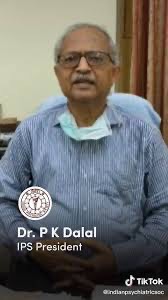
But Dr. Dalal’s impact soared even higher when he took the helm of the Indian Psychiatric Society (IPS) as President around 2020, during one of humanity’s darkest hours—the global pandemic. 21 With the world locked down and minds unraveling, he became a voice of calm authority. In media appearances on Republic TV and Mumbai Mirror, he addressed mental health crises head-on. 8 29 “Prepare, but don’t panic,” he advised in a video message, his measured tone cutting through the chaos like a steady hand on a trembling shoulder. 6 He pushed for government policies on mental health, collaborating on talks about the Mental Healthcare Act 2017 and advocating for better resources in Uttar Pradesh. 5 Under his presidency, the IPS tackled everything from lockdown-induced stress to the need for an “Indianization” of psychiatric classification, blending global standards like ICD-11 and DSM-V with local nuances.
Now, as Dr. PK Gupta, a fellow psychiatrist, I can’t help but weave in my own encounters with this enigmatic figure. We’ve crossed paths at numerous conferences—in bustling Indian auditoriums and even abroad, where the air hummed with international ideas. “Dr. Dalal, your paper on functional somatic symptoms in depression is groundbreaking,” I’d say during a panel break, hoping to spark a discussion. He’d nod thoughtfully, offering a brief, insightful reply: “It’s all about listening to what the body whispers when the mind can’t speak.” But he was never one for small talk; a man of few words, his depth revealed itself in actions and writings rather than chatter.
Our most memorable moments? Those long flights we shared as co-passengers, seats side by side, hurtling through the skies toward some global symposium. After the in-flight meal—perhaps a simple dal-chawal or continental fare—he’d lean back, eyes drifting to the clouds outside. No jokes, no gossip; just a profound lapse into thought, as if solving the world’s mental enigmas mid-air. It was a stark contrast to our mutual colleague, Dr. PK Chaturvedi, who would invariably stir the pot with his energetic banter. “Come on, gentlemen, let’s debate the future of therapy over this turbulence!” Dr. Chaturvedi might exclaim, pulling us into lively exchanges. But Dr. Dalal? He’d smile faintly, perhaps murmur, “Thoughts need space to breathe,” before retreating into his reflections. Those silences spoke volumes about his introspective nature—a quiet strength that made him not just a doctor, but a thinker who understood the power of pause in a noisy world.
Today, even in retirement, Dr. Dalal’s legacy endures. He continues to inspire through his clinic in Rajaji Puram, Lucknow, treating mood disorders, panic attacks, and stress with the same quiet empathy. 3 His journey reminds us that true healers don’t always shout from rooftops; sometimes, they whisper wisdom that echoes forever. If psychiatry is a tapestry, Dr. Pronob Kumar Dalal is the subtle thread holding it all together—unassuming, yet indispensable.
Imagine sitting down with Dr. Dalal in his cozy clinic at F-2026, Rajajipuram, Lucknow, surrounded by shelves of psychiatric journals and a faint scent of coffee. The walls might even whisper tales of countless lives he’s touched. Here’s his biography, reimagined with a human touch and some lively dialogue to make it pop.
Dr. Pranab Kumar Dalal isn’t just a psychiatrist; he’s a beacon of hope for those navigating the stormy seas of mental health in Lucknow, India. With his MD in Psychiatry and years of experience, he’s the kind of doctor who doesn’t just prescribe pills—he listens, really listens, and helps people find their way back to themselves. Until his retirement from King George’s Medical University (KGMU), where he served as Professor and Head of the Department of Psychiatry, Dr. Dalal was shaping minds, both of patients and young doctors eager to learn from a master.
Picture this: it’s 2019, and Dr. Dalal is bustling around, organizing the Annual National Conference of the Indian Psychiatric Society (ANCIPS) in Lucknow. Over a cup of chai with a colleague, he chuckles, “You know, they say herding cats is tough, but try coordinating 500 psychiatrists with big ideas and bigger egos!” As the former President of the Indian Psychiatric Society and Vice President of the Addiction Psychiatry Society of India (APSI), he’s no stranger to leadership. His mission? To break the stigma around addiction and mental health, one conversation at a time.
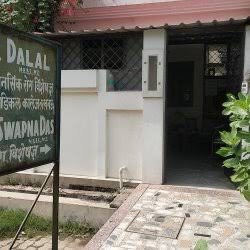
Dr. Dalal’s clinic, tucked into the heart of Rajajipuram, is a sanctuary for those battling depression, anxiety, alcohol addiction, mood disorders, or even phobias that make life feel like a tightrope walk. The sign outside reads: Consultations, 9:00 AM–5:00 PM, ₹1,000. But it’s not just about the fee—it’s about the warmth he brings. A patient once shared, “I was terrified to admit I couldn’t stop drinking. But Dr. Dalal looked at me, not with judgment, but with this quiet kindness, and said, ‘Let’s figure this out together, shall we?’ That changed everything.”
His expertise in addiction psychiatry is legendary. At a recent seminar, he leaned forward, eyes twinkling, and told the audience, “Addiction isn’t just a habit—it’s a cry for help. And if we listen closely, we can answer it.” He’s pushed for addiction psychiatry to be recognized as a specialty in India, advocating for better treatment access and quality. His work doesn’t stop at the clinic door—he’s authored countless papers, reviewed for top journals, and mentored young psychiatrists with a mix of tough love and encouragement. “Write clearly, think deeply, and never forget the human behind the diagnosis,” he’d tell his students, tapping his pen for emphasis.
https://share.google/20Of4PrQIdgYHPfQR
Dr. Dalal’s also got a knack for tackling modern challenges. In a 2019 interview with The Times of India, he spoke about the rise of internet addiction, joking, “Kids these days are glued to screens like I was glued to my cricket radio in the ’70s! But seriously, we need de-addiction centers for this.” His forward-thinking approach keeps him relevant, whether he’s addressing phobias or the digital age’s new demons.

At his clinic, affiliated with Gandhi Memorial and Associated Hospitals and KGMU, the phone (+91 94150 89539) is often buzzing with appointment requests. A typical day might see him calming a teenager with anxiety or helping a professional untangle a web of stress. One patient recalled, “I walked in feeling like my world was collapsing. Dr. Dalal just sat there, nodding, and said, ‘Sounds like you’re carrying a mountain. Let’s move some rocks together.’ I didn’t feel alone anymore.”
Outside the clinic, Dr. Dalal’s life is rich with purpose. He’s a family man, though he keeps that part private, and rumor has it he’s a cricket enthusiast who never misses a chance to cheer for India. His colleagues describe him as a mentor with a sharp mind and a heart to match. “PK’s the guy who’ll spot a flaw in your research paper and then buy you lunch to soften the blow,” one junior doctor laughed.
Dr. Dalal’s legacy isn’t just in his titles or publications—it’s in the lives he’s mended, the stigmas he’s chipped away at, and the way he makes every patient feel like they’re more than a case file. As he might say, with a warm smile, “Mental health isn’t about fixing what’s broken—it’s about finding what’s strong and building from there.”


 deemagclinic
 deemag and chest clinic