
In the misty foothills of the Himalayas, where the air carries the whisper of ancient pines and the distant call of the Ganges, lies Dehradun—a city that has long been a cradle of serenity, yet also a silent battleground for unseen struggles. It was here, amid this tranquil backdrop, that Dr. Vineet Kumar Gupta was born and raised, destined to become one of Uttarakhand’s most compassionate warriors against the shadows of the mind. Born in the 1960s on 13 Th march to be exact, young Vineet grew up in a family that valued education and service, but little did he know that his path would lead him to challenge the deepest taboos of society: mental health.
Picture a curious boy wandering the bustling streets of Dehradun, his eyes wide with wonder at the world around him. “Why do some people seem lost in their own thoughts, Papa?” he might have asked his father one evening, as the sun dipped behind the Doon Valley. His father, perhaps a simple man of the land or a local professional, would have replied with a sigh, “Beta, the mind is like the mountains—beautiful but full of hidden valleys we can’t always see.” Those early questions planted the seeds of empathy in Vineet, a trait that would define his life’s work. By the time he was a teenager, the weight of societal expectations and personal dreams pushed him toward medicine.
The Tale of Dr. Vineet Kumar Gupta: The Dehradun Dynamo
Picture Dehradun in the late 1970s, a sleepy hill town with St. Thomas School buzzing with teenage dreams. Among the pack was Vineet Kumar Gupta, a tall, strapping lad who turned heads with his easy smile and knack for conversation. Fluent in both English and Hindi, Vineet had that rare gift of making everyone feel like they’d known him forever. “He was the kind of guy who could charm the socks off a teacher and then ace a debate,” recalls Dr. P.K. Gupta, a year his junior at St. Thomas. “I’d spot him in the school courtyard, always with Anirudh Dharni—the blue-eyed boy who breezed into IIT Delhi like it was a Sunday picnic—or hanging with Dhar, who later joined the Indian Navy, and Mukul Gupta, the guy who ran that shop in Arhat Bazar.”
Vineet graduated ISCE in 1978, a year before P.K., who cracked the CPMT in ‘79 and dove into medicine. Vineet, though, took his time, savoring his youth before destiny called. In 1981, he earned his spot at King George’s Medical College (KGMC) in Lucknow for his MBBS. “He wasn’t in a rush,” P.K. chuckles. “Vineet had this calm confidence, like he knew he’d get there.”
Fast forward to the early ‘90s, and Vineet, now a freshly minted psychiatrist with an MD under his belt, strolled into P.K.’s Dehradun clinic one lazy afternoon. P.K. was slouched in his chair, the slow hum of a ceiling fan cutting through the silence. Vineet, all six feet of him, grinned and quipped, “What’s this, P.K.? You planning to stare at that wall all day? I’m off to Muzaffarnagar to set up shop, or we’ll just keep looking at each other’s faces!” P.K. laughs at the memory. “He was right. Back then, psychiatry in Dehradun was like trying to sell snow to Eskimos. The specialty hadn’t caught on, and patients were scarce.”
Muzaffarnagar, that bustling, slightly chaotic town, became Vineet’s proving ground. For a decade, he built a thriving practice there, his warm demeanor and sharp mind winning over patients. But Muzaffarnagar had a reputation. “An income tax officer once told me there’s something in the water there,” P.K. says, raising an eyebrow. “Said it made everyone a bit too excitable, always picking fights. Vineet, though? He held his own.” Some whispered about lithium levels in the water affecting mental health—there’s even research suggesting low lithium in drinking water might correlate with higher mental illness rates. Whether it was the water or just the town’s vibe, Vineet thrived, his practice buzzing with clients.
Still, Dehradun tugged at his heart. His parents lived there, and he’d visit often, swapping stories with P.K. over chai. Around the early 2000s, something shifted. Maybe it was family pulling him back, or, as P.K. muses with a smirk, “some Muzaffarnagar mafia giving him grief.” Whatever the reason, Vineet packed up and moved his practice to Dehradun for good. He set up shop opposite the IMA Hall, and word spread fast. “Dr. Vineet’s in town!” patients would say, drawn to his easy charm and sharp insights. His clinic became a beacon for those seeking help, and his reputation soared.
“Vineet was a natural,” P.K. says, leaning back with a grin. “Tall, confident, and with that gift of gab—he could talk a storm and still make you feel heard. Dehradun was lucky to have him back.”
In 1987, he graduated with his MBBS from the prestigious University of Lucknow, stepping into a world where healing bodies was the norm, but mending souls was still whispered about in hushed tones.
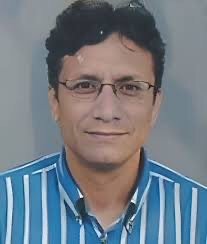
But Vineet’s journey didn’t stop at general medicine. Drawn by a deeper calling, he pursued his MD in Psychiatry at King George’s Medical College (KGMC) in Lucknow, one of India’s most revered institutions. It was during his postgraduate years that a fire was kindled within him. As he delved into his thesis on societal misconceptions about mental illness, he uncovered a harsh reality: stigma was chaining people to their suffering. “How can we call ourselves civilized if we treat the mind like a forbidden territory?” he confided to a fellow student late one night in the dim-lit library, surrounded by stacks of forgotten journals. His friend nodded, but Vineet was already plotting his rebellion—not with protests, but with patience and pills, therapy and talk.
Fresh out of residency, in 1991, Dr. Gupta launched his private practice in Muzaffarnagar, Uttar Pradesh. For nearly a decade, he toiled there, treating everything from anxiety-ridden professionals to families torn by addiction. Yet, the pull of home was irresistible. “Dehradun is in my blood,” he later reflected in an interview, his voice steady but eyes twinkling with nostalgia. “After years away, I realized Uttarakhand needed me more than ever—our hills hide so many hurting hearts.” In 2000, he returned to his birthplace and founded Maanavta Psychiatry and De-Addiction Centre on Chakrata Road, opposite the Indian Medical Association building in Adarsh Nagar. The name “Maanavta”—meaning humanity—was no accident. In an era when psychiatry often felt cold and clinical, Vineet envisioned a sanctuary where patients were treated not as cases, but as fellow humans deserving of dignity.
Under his guidance, Maanavta grew into Dehradun’s premier inpatient facility for mental health and de-addiction, offering holistic care for conditions like depression, bipolar disorder, schizophrenia, anxiety, dementia, personality disorders, addictions, epilepsy, and even geriatric psychiatry. He pioneered family therapy sessions, believing that healing ripples outward. “It’s not just about the patient,” he’d tell his team during morning rounds, “it’s about rebuilding the entire circle of support. Imagine a family fractured by addiction—how do we mend that? With empathy, one conversation at a time.” His son, Dr. Dhruv Gupta, joined him as co-founder, bringing fresh energy and research-driven approaches, but Vineet remained the heart of the operation. Today, with over 34 years of experience, the clinic boasts a 4.5-star rating from thousands of patients, a testament to lives transformed.
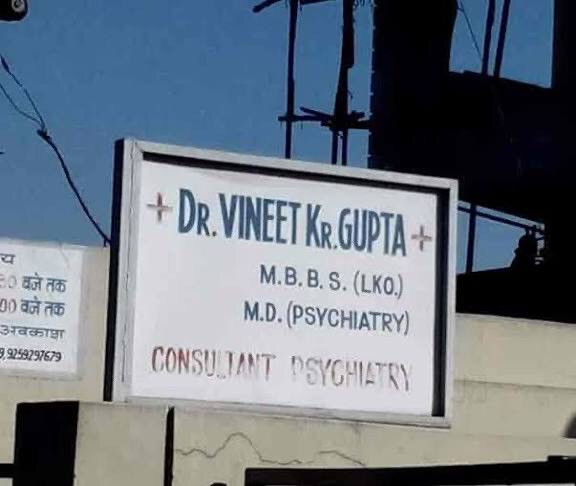
Dr. Gupta’s influence extends far beyond his clinic walls. A prolific speaker, he has delivered over 200 orations at academic conferences, national forums, and even events graced by dignitaries. His mission? To shatter the stigma surrounding mental health.
Dr. Vineet Kumar Gupta: The Humble Healer with a Mercedes Flair
Dr. Vineet Kumar Gupta was a walking paradox—a man so humble you’d forget he rolled up in a gleaming, brand-new Mercedes GLX. True to his name, which evoked the humility of a vine, Vineet was as down-to-earth as they came. “He’d laugh about the kids these days,” Dr. P.K. Gupta recalls, leaning forward with a nostalgic grin. “We’d be sipping tea, and Vineet would say, ‘P.K., back in our time, if my parents told me, “Beta, get the flour ground,” I’d hop on my bicycle, strap a tin of wheat to the back, and pedal to the neighborhood chakki. No complaints, no fuss. These youngsters? They think manual work’s beneath them!’” P.K. nods, chuckling. “I had to agree. We were cut from a different cloth.”
Back at St. Thomas School in Dehradun, Vineet was the tall, strapping lad with a smile that lit up the courtyard, holding court with the likes of Anirudh Dharni, the golden boy who sailed into IIT Delhi, or Dhar, who joined the Indian Navy, and Mukul Gupta, the Arhat Bazar shopkeeper. Vineet aced his ISCE in 1978, a year before P.K., and by 1981, he was off to KGMC Lucknow for his MBBS, his calm confidence paving the way. After earning his MD in psychiatry, he swung by P.K.’s quiet Dehradun clinic one day, spotting his old friend idle. “P.K., what’s this? You planning to stare at that fan all day?” he teased. “I’m heading to Muzaffarnagar to start my practice, or we’ll just sit here staring at each other’s faces!” And off he went, diving into a decade-long adventure in Muzaffarnagar, where his charm and skill built a thriving practice, despite the town’s rumored “excitable” water—some said it was low lithium levels stirring up tempers.
When Vineet returned to Dehradun, possibly nudged by family ties or, as P.K. jokes, “some Muzaffarnagar mafia drama,” he set up his clinic opposite the IMA Hall. It didn’t take long for his name to become synonymous with compassion and expertise. But what set Vineet apart wasn’t just his clinical prowess—it was his gift for storytelling. His lectures for the IMA Dehradun branch were the stuff of legend, drawing doctors from far and wide. “Vineet didn’t just lecture; he performed,” P.K. says, eyes sparkling. “He’d find the most creative ways to get his point across.”
One unforgettable talk had the room buzzing. Vineet lugged in an old tape recorder, popped in a cassette, and let a soulful Hindi song fill the air—a heart-wrenching melody of loss. As the notes faded, he leaned into the mic and said, “That, my friends, is the sound of depression. It’s not just sadness—it’s a weight that drowns you.” Then he’d switch to an upbeat, foot-tapping track, all energy and joy, and declare, “And this? This is hypomania—when the world feels like it’s yours, until it spins out of control.” The room would erupt in applause, doctors scribbling notes, hooked on his novel approach. “He had a way of making psychiatry feel alive, like a story you couldn’t put down,” P.K. adds.
Yet, for all his flair, Vineet stayed grounded. Sure, he drove that Mercedes GLX, its sleek frame glinting in the Dehradun sun, but he’d shrug it off, saying, “It’s just a car, P.K. Doesn’t change who I am.” His clinic became a haven, his reputation soaring as patients flocked to the tall, eloquent doctor who could explain their struggles with a song and a smile. Dehradun was home, and Vineet was its heart.
“In Uttarakhand, drug abuse was rising like a storm in the hills, and awareness was zilch,” he once shared at a community seminar, his words cutting through the room like a mountain breeze. “People thought psychiatry was for the ‘mad’—but madness is ignoring the cries for help. Let’s humanize it; let’s talk.” His efforts have educated generations, from schoolchildren learning about stress to policymakers addressing addiction epidemics. He’s also integrated lifestyle changes, yoga, and even pain management for somatoform disorders, blending Eastern wisdom with Western science.
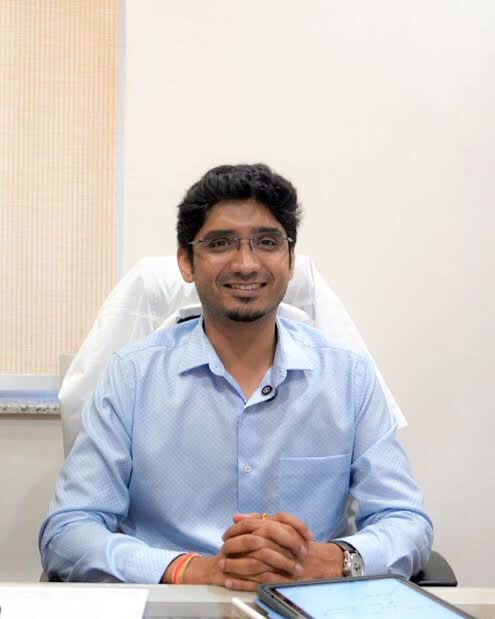
Yet, what makes Dr. Vineet Kumar Gupta truly remarkable isn’t just his expertise—it’s his unyielding humanity. Patients’ stories paint him as a gentle giant: the doctor who stays late to console a grieving widow with dementia, or the one who turns a de-addiction session into a heartfelt chat over chai. “Doctor sahab, I thought I was broken forever,” a recovering addict might say in a testimonial, to which Vineet would reply with his signature warmth, “Arre, beta, we’re all a little cracked—that’s what lets the light in. Now, let’s fix the pieces together.” In a field often marred by judgment, he has made psychiatry approachable, proving that the greatest medicine is often a listening ear.
Dr. Vineet Kumar Gupta: The Soul of Psychiatry
Dr. Vineet Kumar Gupta wasn’t just a psychiatrist—he was a man who found his calling in the quiet depths of the human mind. A tall, strapping figure with a warm smile and a knack for storytelling, Vineet’s journey to psychiatry was anything but straightforward. Back at St. Thomas School in Dehradun, where he graduated ISCE in 1978, he was the charismatic lad who could hold court with anyone—whether it was Anirudh Dharni, the golden boy who waltzed into IIT Delhi, or Mukul Gupta, the Arhat Bazar shopkeeper. But it was at King George’s Medical College (KGMC) in Lucknow, after securing his MBBS spot in 1981, that Vineet’s true path unfolded.
“KGMC was a wild ride for him,” recalls Dr. P.K. Gupta, a fellow St. Thomas alum and psychiatrist, sipping tea as he shares the tale. “Vineet told me once, ‘P.K., those early days in medicine were chaos. I’d stand in the surgical OT, feeling like a fish out of water—everything was so rushed, so mechanical.’ But then he found psychiatry, and it was like the world slowed down.” Vineet’s eyes would light up when he spoke of it: “It was as if a calmness enveloped me, P.K. For the first time, I didn’t feel out of place. Psychiatry wasn’t just a job—it was home.”
Dr. Vineet Kumar Gupta’s KGMC Days: Finding His Calling
In 1981, a young Vineet Kumar Gupta stepped onto the sprawling campus of King George’s Medical College (KGMC) in Lucknow, a tall, strapping lad from Dehradun with a knack for connection and a head full of dreams. Fresh off his ISCE from St. Thomas School in 1978, he’d secured his MBBS spot, ready to conquer medicine. But KGMC, with its intense corridors and relentless pace, wasn’t quite what he expected. “Those early days were a storm,” Vineet later confided to his old schoolmate, Dr. P.K. Gupta, over tea in Dehradun. “P.K., I’d stand in the surgical OT, surrounded by all that clanging metal and urgency, feeling like I was drowning. It was chaos—nothing felt right.”
The operating theater, with its high-stakes precision, left Vineet restless. He was fluent in English and Hindi, a natural communicator who thrived on understanding people, not just fixing bodies. The mechanical rhythm of surgery—scalpel, suture, repeat—felt alien to the boy who used to charm classmates like Anirudh Dharni back at St. Thomas. “I was good at it, sure,” he’d tell P.K. with a wry grin, “but it was like wearing someone else’s skin.”
Then came psychiatry, and everything changed. In the quiet of KGMC’s psychiatry department, Vineet found his sanctuary. “It was like a calmness enveloped me,” he’d say, his eyes lighting up. “For the first time, I didn’t feel out of place. Listening to patients, unraveling their stories—it was like solving a puzzle, but with heart.” The department, likely under the influence of luminaries like Dr. B.B. Sethi, known for shaping psychiatrists of that era, offered Vineet a space to blend his empathy with his intellect. He dove into the study of the mind, finding solace in its complexities. Whether it was late-night discussions with peers or poring over Freud and Jung, Vineet felt at home.
“P.K., psychiatry wasn’t just medicine for me,” he once said, leaning back with that easy smile. “It was like finding a language I didn’t know I spoke.” Those KGMC years shaped him, not just as a doctor but as a storyteller who’d later captivate IMA audiences with Hindi songs and insights on depression or hypomania. By the time he earned his MD, Vineet was no longer the restless student of the surgical OT—he was a psychiatrist with a purpose, ready to bring his calm to the chaos of Muzaffarnagar and, later, Dehradun.
That sense of home defined Vineet. After earning his MD, he swung by P.K.’s quiet Dehradun clinic one day in the early ‘90s, spotting his friend idling under a lazily spinning fan. “What’s this, P.K.? Planning to stare at that wall all day?” he teased with a grin. “I’m off to Muzaffarnagar to start my practice, or we’ll just sit here staring at each other’s faces!” Off he went, building a thriving practice in Muzaffarnagar for a decade, charming patients despite the town’s rumored “excitable” vibe—some whispered about low lithium in the water stirring tempers. When he returned to Dehradun, possibly for family or, as P.K. jokes with a smirk, “to dodge some Muzaffarnagar mafia,” Vineet set up his clinic opposite the IMA Hall. His reputation soared, fueled by his warmth and a flair for making psychiatry come alive.
Vineet’s lectures for the IMA Dehradun branch were legendary. He’d haul in an old tape recorder, play a soulful Hindi song, and say, “This is depression—it’s not just sadness, it’s a weight that drowns you.” Then he’d switch to a peppy track: “And this? Hypomania, when the world feels like it’s yours—until it spins out of control.” Doctors hung on his every word, scribbling notes as he wove music into medicine.
Despite his success—and the sleek Mercedes GLX he drove—Vineet stayed humble, true to his name. “He’d laugh about the kids today,” P.K. says. “He’d tell me, ‘P.K., back in our day, if my parents said, “Beta, get the flour ground,” I’d hop on my bicycle, strap a tin of wheat to the back, and pedal to the chakki. No complaints. This generation? They think manual work’s beneath them!’” P.K. nods, chuckling. “He had a point.”
Vineet’s love for psychiatry wasn’t just personal—it was a family affair. He passed the torch to his son, Druv, and his daughter, both of whom became psychiatrists and joined his Dehradun practice. “He was so proud of them,” P.K. says, his voice softening. “He’d say, ‘P.K., they get it. They feel that same calm I did when I found psychiatry.’ Working side by side with Druv and his daughter, it’s like he built a legacy of healing.” He has writers cramps and his wife Ila,
Let’s dive back into Dr. Vineet Kumar Gupta’s story, adding the new layers you’ve shared, Dr. P.K. Gupta, to paint an even richer picture of this humble, passionate psychiatrist from Dehradun. I’ll weave in his love for psychiatry, his transformative experience at KGMC Lucknow, and the legacy he passed on to his children, keeping the narrative engaging with dialogue and a human touch.
Dr. Vineet Kumar Gupta: The Soul of Psychiatry
Dr. Vineet Kumar Gupta wasn’t just a psychiatrist—he was a man who found his calling in the quiet depths of the human mind. A tall, strapping figure with a warm smile and a knack for storytelling, Vineet’s journey to psychiatry was anything but straightforward. Back at St. Thomas School in Dehradun, where he graduated ISCE in 1978, he was the charismatic lad who could hold court with anyone—whether it was Anirudh Dharni, the golden boy who waltzed into IIT Delhi, or Mukul Gupta, the Arhat Bazar shopkeeper. But it was at King George’s Medical College (KGMC) in Lucknow, after securing his MBBS spot in 1981, that Vineet’s true path unfolded.
“KGMC was a wild ride for him,” recalls Dr. P.K. Gupta, a fellow St. Thomas alum and psychiatrist, sipping tea as he shares the tale. “Vineet told me once, ‘P.K., those early days in medicine were chaos. I’d stand in the surgical OT, feeling like a fish out of water—everything was so rushed, so mechanical.’ But then he found psychiatry, and it was like the world slowed down.” Vineet’s eyes would light up when he spoke of it: “It was as if a calmness enveloped me, P.K. For the first time, I didn’t feel out of place. Psychiatry wasn’t just a job—it was home.”
That sense of home defined Vineet. After earning his MD, he swung by P.K.’s quiet Dehradun clinic one day in the early ‘90s, spotting his friend idling under a lazily spinning fan. “What’s this, P.K.? Planning to stare at that wall all day?” he teased with a grin. “I’m off to Muzaffarnagar to start my practice, or we’ll just sit here staring at each other’s faces!” Off he went, building a thriving practice in Muzaffarnagar for a decade, charming patients despite the town’s rumored “excitable” vibe—some whispered about low lithium in the water stirring tempers. When he returned to Dehradun, possibly for family or, as P.K. jokes with a smirk, “to dodge some Muzaffarnagar mafia,” Vineet set up his clinic opposite the IMA Hall. His reputation soared, fueled by his warmth and a flair for making psychiatry come alive.
Vineet’s lectures for the IMA Dehradun branch were legendary. He’d haul in an old tape recorder, play a soulful Hindi song, and say, “This is depression—it’s not just sadness, it’s a weight that drowns you.” Then he’d switch to a peppy track: “And this? Hypomania, when the world feels like it’s yours—until it spins out of control.” Doctors hung on his every word, scribbling notes as he wove music into medicine.
Despite his success—and the sleek Mercedes GLX he drove—Vineet stayed humble, true to his name. “He’d laugh about the kids today,” P.K. says. “He’d tell me, ‘P.K., back in our day, if my parents said, “Beta, get the flour ground,” I’d hop on my bicycle, strap a tin of wheat to the back, and pedal to the chakki. No complaints. This generation? They think manual work’s beneath them!’” P.K. nods, chuckling. “He had a point.”
Vineet’s love for psychiatry wasn’t just personal—it was a family affair. He passed the torch to his son, Druv, and his daughter, both of whom became psychiatrists and joined his Dehradun practice. “He was so proud of them,” P.K. says, his voice softening. “He’d say, ‘P.K., they get it. They feel that same calm I did when I found psychiatry.’ Working side by side with Druv and his daughter, it’s like he built a legacy of healing.” He has writer’s cramps and his wife Ila Gupta, sometimes helps him in writing his prescription. The trio’s clinic, opposite the IMA Hall, became a beacon for those seeking solace, with Vineet’s storytelling spirit and calm wisdom at its heart.
“Vineet didn’t just practice psychiatry,” P.K. reflects, leaning back with a smile. “He lived it. And he made sure his kids did, too.”
The trio’s clinic, opposite the IMA Hall, became a beacon for those seeking solace, with Vineet’s storytelling spirit and calm wisdom at its heart.
“Vineet didn’t just practice psychiatry,” P.K. reflects, leaning back with a smile. “He lived it. And he made sure his kids did, too.”
As of 2025, at an age where many might retire to the hills, Dr. Gupta continues his work at Maanavta (located at 129 Adarsh Nagar, Chakrata Road, Dehradun—near Hotel Ramada), mentoring the next generation and advocating for better mental health policies in Uttarakhand. His life is a beacon: a reminder that in the quiet valleys of Dehradun, one man’s vision can illuminate countless paths out of darkness. If you’re seeking help or inspiration, his story whispers, “Reach out—humanity awaits.”


 deemagclinic
 deemag and chest clinic