
Miss Thakar Das was a memorable fixture in the hallowed halls of St. Thomas’ College in Dehradun, Uttarakhand—a venerable institution founded in 1916 to nurture young minds in the shadow of the Himalayan foothills. For many years, she served as the biology teacher, guiding (or, as some might diplomatically say, occasionally prodding) students through the wonders of the natural world. Though her tenure likely spanned the mid-to-late 20th century—drawing from alumni recollections of the 1970s and ’80s—she left an indelible mark on generations of pupils at this co-educational ICSE-affiliated school, known for its blend of academic rigor and holistic development.
A Distinctive Presence
In her middle years, Miss Thakar Das cut a striking figure: fair-skinned with salt-and-pepper hair cropped short and combed back in a practical style that brooked no nonsense. She favored traditional salwar kameez ensembles, the loose-fitting pyjamas accommodating a modest paunch that spoke to a life of hearty school canteen meals rather than gym memberships. Her English was serviceable—clear enough to command attention, if not always to dazzle with eloquence—and she possessed an aggressive personality that could fill a classroom like a sudden monsoon storm. “Use your grey matter!” she’d bark at dawdlers, her voice echoing off the lab’s specimen jars, a rallying cry that was equal parts encouragement and exasperation.
Yet, beneath that stern exterior lay a woman who, by all accounts, chose solitude over matrimony. “She never married,” one former student reflected years later, “and perhaps that’s why her discipline carried such an unyielding edge—channeling a life’s full vigor into shaping young scientists.” It was a life lived fiercely, devoted to the classroom and the quiet rhythms of Dehradun’s colonial-era charm.
Teaching with a Twist: Art Meets Anatomy
Miss Thakar Das’s lessons were a unique alchemy of science and serendipity, particularly suited to the inquisitive high schoolers under her charge. While she shone brightest with younger classes—where her straightforward approach felt like a steady hand on the tiller— the rigors of 12th-standard ISC biology sometimes tested her depths. “This is BSc stuff, you know,” she’d declare with a wave of her chalk-dusted hand when pressed on complexities like gram staining, deftly sidestepping the query with the wisdom that not every mystery needed unraveling just yet. It was a gentle reminder that curiosity, while commendable, had its seasons.
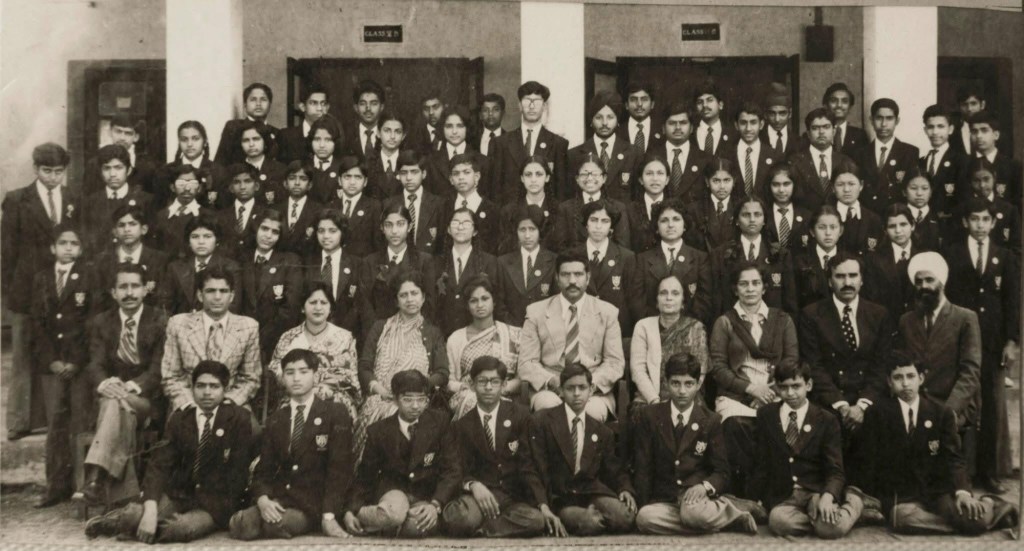
Her classes often veered delightfully off-script, transforming the biology lab into an impromptu art studio. Rows of preserved specimens—sea horses curled in eternal vigilance, jellyfish adrift in cloudy formalin jars—would emerge from dusty shelves, pencils replacing pipettes. “Draw it properly, now—every fin, every tentacle,” she’d instruct, pacing the aisles with a critical eye. “This isn’t just doodling; it’s observing life itself!” For students like a certain young Pradeep Gupta (later Dr. PK Gupta, a testament to her indirect influence), these sessions sparked a lifelong fascination with the natural world, even if they occasionally felt more like watercolor workshops than dissections.
The Human Touch (and Occasional Twinge)
Miss Thakar Das’s rapport with students was as colorful as her specimen sketches—affectionate in quirks, if not always in volume. Names were her Achilles’ heel; she’d fondly (or firmly) rechristen Vipin as “Vipan” and Pradeep as “Pardeep,” turning roll calls into a linguistic adventure. Her favorites, however, were unmistakable. Dr. PK Gupta recalls being her “blue-eyed boy,” a nod to his prowess in human physiology and beyond. “Well done, Pardeep— you’ve got the makings of a proper biologist,” she’d say with a rare smile, her approval warmer than the Dehradun sun.
That said, her threshold for trifles was famously low, leading to moments of swift, if selective, justice. Take poor Sunil Arora: once tagged as a culprit in her mind (for reasons lost to time, perhaps a misplaced eraser or a whispered giggle), he’d face the music in assembly— a sharp slap, even if evidence pointed elsewhere. “Sunil, you know better!” she’d proclaim, her sense of order unswayed by nuance. It was, in the kindest light, a zealous commitment to accountability, though it undoubtedly kept the student body on its toes.
Embarrassing topics elicited her trademark deflection, handled with the poise of a seasoned educator navigating minefields. When a curious class broached the female rat’s reproductive system—or other blush-worthy anatomies—she’d pivot with masterful redirection. “Go on, ask Lalit Mohan,” she’d say, nodding toward the class’s hefty heartthrob, her eyes twinkling with mischief. “He’s got the diagram down pat!” Laughter would ripple through the room, tension dissolved in the shared awkwardness of adolescence.
Life Beyond the Lab: A Secluded Haven in Dalanwala
Away from the school’s Cross Road campus, Miss Thakar Das retreated to a charmingly weathered home in Dalanwala, a leafy enclave of Dehradun’s old-world grace. The house, an antique charmer enveloped by a canopy of ancient trees, featured a sturdy metal gate that clanged like a sentinel’s warning. Woe betide the visitor who left it ajar—her voice would boom from within, a clarion call across the garden: “Close that gate properly! Do you want the monkeys staging a takeover?” It was a glimpse into her private world: solitary, verdant, and fiercely guarded, much like the specimens she so meticulously preserved.
In the end, Miss Thakar Das embodied the spirited contradictions of a bygone era’s educator—demanding yet devoted, rigorous yet refreshingly relaxed. She may not have penned textbooks or claimed Nobel laurels, but in the hearts (and sketchbooks) of her students, she cultivated something enduring: a reverence for life’s oddities, delivered with a slap, a sketch, and a stern “Use your grey matter!” Though time has faded her footsteps from the school registers, her legacy endures in the tales of alumni like Dr. PK Gupta, who credit her unpolished passion for igniting their own paths in science. In Dehradun’s gentle valleys, she remains a force of nature—untamed, unforgettable, and utterly human.


 deemagclinic
 deemag and chest clinic
Thank you for this engaging piece about your teacher. My grandparents lived in the adjoining house at 9 Pritam Road. In the early 1960s, I remember meeting a Mrs Thakar Das at her lovely bungalow. She was associated with the Cheshire Homes and must have been from the generation before Miss Thakar Das.
LikeLike