
In the bustling heart of Agra, where the majestic Taj Mahal stands as a testament to enduring love, another kind of quiet heroism unfolds every day in the sterile glow of operating rooms. Dr. B.K. Singh isn’t the type to chase spotlights or plaques—his battlefield is the delicate dance between life and the unknown, where a single breath can mean everything. As one of Agra’s most revered anesthesiologists, he’s the invisible thread holding surgeries together, ensuring that when the scalpel meets skin, fear gives way to calm. But behind the steady hands and measured voice lies a story of grit, heart, and those split-second decisions that turn tragedy into triumph.
Picture this: It’s a sweltering summer evening in 1995, and young B.K. Singh, barely out of his teens, is hunched over a flickering lantern in a modest home on the outskirts of Agra. The air is thick with the scent of monsoon rains just on the horizon, and his textbooks—dog-eared volumes on physiology and pharmacology—are his only companions. “Beta, why this path? Surgery’s flashy, but anesthesia? It’s like being the shadow behind the star,” his father, a schoolteacher with calloused hands from years of chalk and correction, had asked one night over a simple dal-chawal dinner.

B.K. looked up, his eyes fierce with a fire that belied his lanky frame. “Papa, shadows don’t just follow—they protect. In the OR, the surgeon carves the path, but I… I make sure the patient walks it without pain. Without fear. That’s my light.” It was a vow born of necessity. Growing up in a family where medical bills had once drained their savings after his mother’s sudden illness, B.K. had watched helplessly as pain twisted her face. That image haunted him through sleepless nights at Sarojini Naidu Medical College in Agra, where he earned his MBBS with honors. But it was the MD in Anesthesiology that sealed his fate—a grueling residency where he learned to read heartbeats like poetry and veins like maps.
A Portrait of Dr. Brijesh Kumar Singh: The Unyielding Anaesthetist of Agra
In the hallowed halls of Sarojini Naidu Medical College (SNMC) in Agra, where the air hummed with the scent of antiseptic and the weight of futures being forged, the student body divided itself into invisible fiefdoms—like a real-life Pickwickian farce, minus the top hats but heavy on the pride. There were the English-speaking lads, strutting about with their Oxford accents and dog-eared copies of Gray’s Anatomy, too lofty to deign a “hello” to the Hindi heartlanders. The Hindi speakers, in turn, puffed up their chests and refused to mingle with the Assamese crew, who whispered in their lilting tongues and stuck to their own. It was a comedy of errors, really, with egos clashing louder than stethoscopes on marble floors. But then there were the bridge-builders, the rare souls who danced across these lines without a care. Dr. Brijesh Kumar Singh wasn’t one of those universal mixers, but he wasn’t a snob either. Born on 23rd of September 1958 in Etawah and hailing from the dusty, resilient heart of Hindi-speaking Uttar Pradesh—the Etawah-Mainpuri belt, to be precise—he anchored firmly in the second group, a wheatish-complexioned man of average height and build, with the kind of unassuming intellect that sneaks up on you like a well-timed epidural.
Picture him as a young man joining MBBS in the late 1970s or early ’80s, already a family man ahead of his peers. “Beta, shaadi kar lo pehle,” his mother must have said, pressing a garland of marigolds into his hands before he left for Agra. By the time he unpacked his battered suitcase in the hostel, he was married with children in tow—tiny tots back home in the village, their cries a distant echo amid the chaos of lectures and dissections. It was a practical choice, fitting for a man who viewed life through the lens of the pragmatic. Brijesh wasn’t the type to chase starry-eyed dreams of neurosurgery glory; no, he saw medicine as a craft, a trade to be honed like a surgeon’s scalpel. “Why bleed for ideals when you can bill for them?” he’d quip later in life, his eyes twinkling with that sharp, no-nonsense glint.
I am Dr. P.K. Gupta, and our paths crossed not in the grand operating theaters, but in the smoky haze of Guddi Tea Restaurant, that unpretentious Agra haunt where the evening sun dipped low and the world felt a little less sterile. As fellow residents, we’d claim our corner table each dusk, the one scarred from years of absent-minded knife taps. “Ek omelette, double masala, aur chai—garam, bhaiya!” Brijesh would bark at the waiter, his voice carrying over the clatter of chai glasses. We’d devour those fluffy omelettes, yolks spilling like secrets, while dissecting the day’s dramas. “Arre PK, these surgeons think they’re gods,” he’d growl one evening, fork in hand, “treating us anaesthetists like sidekicks in their Bollywood blockbuster. But without us, their show flops—flatline, kaput!” His laugh was a rumble, deep and infectious, but beneath it simmered that infamous temper, a volcano disguised as a mild-mannered dost. Offend him—God forbid, over some imagined slight, like a misplaced chart or a whispered joke—and the eruption was biblical. “Tumhare jaise log hi medicine ko badnaam karte ho!” he’d thunder, veins bulging like rivers in flood, only to cool off an hour later with a sheepish grin and another round of tea. “Chhodo, PK, zindagi mein itna gussa theek nahin.”

That practical streak, though—it was his superpower. In the cutthroat arena of SNMC’s surgery suites, where surgeons barked orders and junior anaesthetists scurried like underpaid extras, Brijesh saw the exploitation for what it was: a racket begging for reform. “Enough is enough,” he declared one monsoon-soaked night over our cooling chai. “We’re not mules; we’re the ones keeping the pulse steady.” With the fire of a trade unionist and the cunning of a village panchayat head, he rallied his colleagues. Enter the Association of Anaesthetists—a force so formidable it became the gatekeeper of every scalpel in Agra. No surgery could proceed without their nod; fees were negotiated upfront, juniors deployed only after the coffers were lined. “Sign here, Doctor Sahib,” Brijesh would say to a flustered surgeon, pen poised like a guillotine, “or your appendix patient waits till Diwali.” The association wasn’t just bureaucracy; it was revolution wrapped in paperwork, ensuring fair play in a field where the house always won. Under his watch, anaesthesiology in Agra shed its shadow role, emerging as the unsung hero of the OR.
Happy World Anaesthesia day
होशवालों को खबर क्या
बेहोशी क्या चीज़ है l
किटामिन दीजिए फिर समझिये
मदहोशी क्या चीज़ है ll
ओटी टेबल पर नज़रें क्या मिलीं
रौशन फिज़ाएँ हो गयीं l
आज जाना फेंटानिल प्रिमेडिकेशन की
जादूगरी क्या चीज़ है ll
बिखरी दाढ़ी ने सिखाई
मास्क वेंटिलेशन की शायरी l
झुकती आँखों ने बताया
सिवोफ्लोरेन इंडक्शन क्या चीज़ है ll
हम मॉनिटर पर पढ़ते रहें,
उनका हाले दिल सभी l
और वो समझे नहीं
ये बेहोशी क्या चीज़ है ll
But Brijesh’s ambitions didn’t stop at advocacy. Ever the tinkerer, he dabbled in the gritty world of medical manufacturing, crafting operation theater instruments in a makeshift workshop that smelled of solder and ambition. “Why import from Delhi when we can forge it here?” he’d muse, hands blackened with grease, testing a prototype retractor on a mango for flex. His crowning venture, though, was taking over Dr. Kusum Gupta’s nursing home on hire—a rundown gem he transformed into Agra’s premier hub for critical care. Under his stewardship, it buzzed with ventilators humming like contented bees, nurses darting with purpose, and patients breathing easier. “This isn’t a home; it’s a fortress,” he told me proudly one visit, gesturing to the gleaming ICU bays. “Here, we don’t just treat—we conquer.”
His charm extended beyond charts and contracts. With the junior nursing staff—those wide-eyed warriors of the night shift—Brijesh was a legend. He had a knack, a gentle sleight-of-hand with words, turning exhaustion into esprit de corps. “Sister ji, aaj ka shift aapne jeet liya,” he’d say, slipping a ladoo from his pocket as a midnight morale boost, his smile disarming any fatigue. They adored him, these women who saw the worst of humanity under fluorescent lights; to them, he was less a doctor and more a dai—like the protective auntie who chased away ghosts.
Years later, when fate pulled me to Dehradun’s greener hills, Brijesh made the trek to visit—an old friend’s pilgrimage across dusty highways. I was there in the clinic; but my house stood locked, my wife had gone away taking the keys. He was fuming no doubt, that temper flaring at my inability to invite him inside the house. “PK, tum bhi na—chai bhi nahi pilayi!” he must have muttered on the drive back, phone clutched like a lifeline. We laughed about it later, over a crackly call, but I could hear the hurt beneath the jest. That’s Brijesh: fiercely loyal, quick to blaze, but quicker to forgive.
In the end, Dr. Brijesh Kumar Singh was no larger-than-life icon—no towering genius or silver-tongued orator. He was darmiyana—thoroughly average in height, build, and that quiet intellectual hum—but what a life he carved! A family man who balanced hearth and scalpel, a reformer who turned underdogs into overlords, a tinkerer who built empires from scraps. In Agra’s medical lore, he’s the anaesthetist who didn’t just numb the pain; he numbed the inequities, one firm handshake at a time. If medicine is an art, Brijesh painted it bold, unapologetic, and utterly human. “Zindagi ek operation hai, PK,” he’d say, raising his chai glass. “Bas, sahi fees le lo—phir sab theek.” And damn if he wasn’t right.
By the early 2000s, Dr. Singh had carved out his niche at Pushpanjali Hospital & Research Centre, a beacon of hope tucked away in Civil Lines, just beyond Delhi Gate. The hospital, with its gleaming corridors and state-of-the-art suites, became his second home. Colleagues remember him as the guy who’d show up at 5 a.m., thermos of black tea in hand, reviewing charts like a general prepping for war. “He’s not just precise; he’s poetic about it,” says Dr. Ranveer Singh Tyagi, a fellow anesthesiologist and old residency mate, over a hurried coffee in the hospital cafeteria. “Once, during a marathon 12-hour cardiac bypass, the monitors started screaming—patient crashing, blood pressure tanking. Everyone froze, but B.K.? He leaned in, adjusted the drip with that steady calm, and whispered to the team, ‘Breathe with me, folks. We’ve got this symphony to finish.’ And we did. Saved the guy’s life, no drama.”
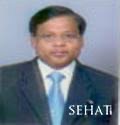
That “symphony” is Dr. Singh’s hallmark. Specializing in the high-stakes worlds of pediatric anesthesia—where tiny hearts beat like hummingbirds—cardiac cases that demand split-second valor, neuro procedures threading the needle between brain and blade, obstetric deliveries welcoming new life without a hitch, and critical care where the line between stable and chaos is razor-thin, he’s administered thousands of doses that have turned terror into tranquility. Patients rave about him on forums and in hushed hospital corridors: a perfect 5.0 rating on Justdial from those who’ve trusted him with their deepest vulnerabilities. “He held my hand—literally—while the world faded to black,” recalls Meera, a mother from Agra’s old city who underwent an emergency C-section in 2018. “As they wheeled me in, I was shaking, tears streaming. He knelt by the gurney, mask half-off, and said, ‘Meera ji, imagine this: you’re soaring over the Yamuna at dawn, weightless, free. I’ll be right here, catching the wind for you.’ Woke up to my baby in my arms. That man? He’s magic.”
But Dr. Singh’s magic isn’t without its shadows. The pandemic hit Agra hard in 2020, waves of desperation crashing through Pushpanjali’s ICU like a relentless tide. Sleepless shifts blurred into days, his scrubs stained with sweat and sanitizer. “There were nights I questioned it all,” he confessed later to a group of wide-eyed interns during a rare quiet moment in the lounge. One junior, a fresh-faced girl named Priya, had just botched a simulation and was fighting back tears. “Sir, how do you not break? All those faces… the ones we lose?” B.K. paused, stirring his cooling chai, his voice a gentle rumble. “Priya, breaking isn’t the enemy—it’s the glue. I break a little each time, then rebuild with their stories. That uncle who joked about pestering his grandkids post-surgery? He’s why I suit up again. We’re not gods; we’re guides. And guides don’t quit the trail.”
Today, at an age where many peers eye retirement, Dr. B.K. Singh remains a pillar—mentoring the next generation at Pushpanjali, where he’s not just a doctor but a teacher who insists on “humanizing the machine.” He’s lectured at regional conferences on painless protocols and patient-centered care, earning nods from peers across Uttar Pradesh. Yet, ask him about awards or accolades, and he waves it off with a chuckle: “My trophy room? It’s the waiting room—full of families hugging, relieved. That’s enough.”
In Agra’s chaotic rhythm, where history whispers from marble domes and life pulses through crowded streets, Dr. B.K. Singh stands as a quiet revolution. He’s the voice in the void, the steady pulse in the storm, reminding us that true healing isn’t just about mending bodies—it’s about holding souls through the dark. And if you ever find yourself under his watchful eye, listen close: You might just hear him humming an old Agra lullaby, turning surgery into a dream worth waking from.


 deemagclinic
 deemag and chest clinic