
In the dusty village of Sarwania, nestled in the heart of Madhya Pradesh, India, a young boy named Chitranjan Singh Ranawat grew up under the vast, unyielding skies of rural life. Born in the 1930s into a modest family, Chitranjan—Chitti to his siblings—spent his days chasing goats across sun-baked fields and dreaming of worlds beyond the horizon. “Beta, the body is like this earth,” his father would say, wiping sweat from his brow after a long day in the fields, “tough, but it breaks if you don’t tend to it.” Little did they know, those words would plant the seed for a legacy that would mend millions of broken bodies across the globe.
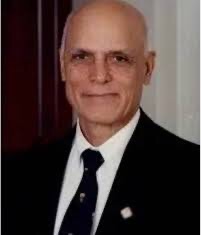
Schooling at The Daly College in Indore sharpened young Chitti’s mind, but it was the halls of Mahatma Gandhi Memorial Medical College that ignited his passion. Medicine wasn’t just a profession; it was a rebellion against the fragility he saw in his village—farmers crippled by falls, elders hobbling on twisted limbs. “I want to fix what’s broken,” he confided to a classmate one humid evening in the anatomy lab, his scalpel steady as he dissected a cadaver under the flicker of a bare bulb. “Not just patch it up, but make it stronger than before.”
By the mid-1960s, ambition carried him across oceans to America, a land of gleaming steel and endless possibility. He trained at St. Peter’s Hospital in Albany, New York, then dove deeper into orthopedics at Albany Medical Center, earning his certification from the American Board of Orthopaedic Surgery in 1969. But it was his fellowships at the prestigious Hospital for Special Surgery (HSS) in New York—from 1966 to 1969—that transformed him. There, amid the whir of early surgical tools and the scent of antiseptic, Chitti became Dr. Chitranjan Ranawat, a pioneer in a field on the cusp of revolution.
Picture this: It’s 1970, and Dr. Ranawat is in the operating room at HSS, his gloved hands poised over a patient whose hip joint has betrayed them after decades of wear. Joint replacement surgery was still in its infancy—crude metal balls and sockets that often failed spectacularly. “This won’t do,” he muttered to his colleague Albert Burstein, frustration etching his brow as they reviewed X-rays of yet another botched implant. “We need something that moves like nature intended, not like a rusty hinge.” Together, they invented the Ranawat-Burstein femoral stem, a game-changer in hip replacements that prioritized durability and natural motion. Marketed by Biomet, it became a cornerstone of modern orthopedics, allowing patients to dance at weddings and hike mountains they’d long abandoned.
But Dr. Ranawat didn’t stop at hips. His wizardry extended to knees, elbows, and wrists, where he championed minimally invasive techniques that slashed recovery times and pain. “Surgery isn’t about cutting deeper,” he’d tell his residents during marathon teaching rounds, his voice a mix of stern mentor and wise uncle, “it’s about cutting smarter—preserving what God gave us.” He co-designed the PFC Sigma total knee replacement system and the Accolade hip implant, systems still in use today, saving limbs and restoring lives. Over 50 years, he performed thousands of these miracles, his precision earning him the nickname “The Joint Whisperer” among grateful patients.
His influence rippled far beyond the OR. As an attending surgeon at HSS starting in 1969, he rose to professor at Weill Cornell Medical College, mentoring generations of surgeons—many of whom, like his own sons Amar and Chitranjan Jr., followed in his footsteps at HSS. “Dad, how do you stay so calm when everything’s on the line?” Amar once asked during a late-night strategy session over chai, a nod to their Indian roots. Dr. Ranawat chuckled, his eyes twinkling. “Fear is the real enemy, beta. Focus on the patient, not the scalpel, and the rest falls into place.” He founded the Journal of Arthroplasty, the Knee Society, and the Ranawat Orthopaedic Research Foundation, pouring his energy into education. To date, he’s authored over 346 peer-reviewed papers, 19 book chapters, and three books—blueprints for the future of joint surgery.
Yet, for all his accolades—the Padma Bhushan from India in 2000, Lifetime Achievement Awards from the American Academy of Orthopaedic Surgeons, and the Sushruta Award from the Association of Indians in America—Dr. Ranawat’s heart never left his roots. In 1986, he established the Ranawat Foundation Trust, a beacon of hope back home. Partnering with hospitals in Pune and beyond, it trains Indian surgeons in cutting-edge techniques, providing free or low-cost care to those who can’t afford it. “I’ve fixed kings and paupers,” he said in a 2018 tribute dinner speech at HSS, his voice cracking with emotion as he accepted the Lifetime Achievement Award, “but it’s the farmer from Sarwania who reminds me why I started. We don’t just replace joints; we replace despair with dignity.”
Now in his late 80s, Dr. Chitranjan Ranawat still strides the halls of HSS, an attending surgeon whose fire burns as bright as ever. He’s not just a doctor—he’s a bridge between worlds, a man who turned village dreams into global triumphs. As he often quips to wide-eyed fellows, “The body heals itself if you give it a fighting chance. And that’s the real magic.” In a world of fleeting fixes, Dr. Ranawat’s story endures: a testament to grit, innovation, and the unshakeable belief that every broken bone deserves a second dance.
The Ranawat-Burstein Femoral Stem: A Pillar of Cemented Hip Innovation
In the early 1970s, as total hip arthroplasty was still shaking off its experimental roots, Dr. Chitranjan Ranawat and engineer Albert Burstein huddled over blueprints at the Hospital for Special Surgery (HSS) in New York. “We’ve got to make this thing last,” Ranawat reportedly said, tapping a pencil against a sketch of a flimsy early implant. “No more patients limping back in after a few years—let’s build something that grips like it belongs there.” Their collaboration birthed the Ranawat-Burstein (RB) femoral stem, a cemented design that revolutionized how surgeons anchor hip replacements, prioritizing longevity and natural feel over quick fixes.
A Bit of History: Born from Frustration
Developed in the late 1960s and introduced clinically in the early 1970s, the RB stem emerged during a golden age of orthopedic innovation. Ranawat, fresh from his training and already a rising star at HSS, teamed up with Burstein, a biomedical engineer whose expertise in materials science complemented Ranawat’s surgical vision. This wasn’t just tinkering; it addressed glaring flaws in first-generation stems like the Charnley, which often loosened due to uneven cement distribution and stress shielding—where the implant bore too much load, weakening surrounding bone.
By 1992, an evolved version, the RB Interlok, hit the scene with refined third-generation cementing techniques: vacuum mixing for bubble-free cement, pulsatile lavage to clean the canal, and distal centralizers for a uniform mantle. Marketed by Biomet Orthopedics (now part of Zimmer Biomet), it became part of the broader Ranawat/Burstein Hip System, often paired with the RB acetabular shell for full replacements. Imagine the OR buzz: surgeons whispering, “Finally, a stem that doesn’t ghost you after a decade.”
Design Features: Engineered for Endurance
What sets the RB stem apart? It’s a cemented, collarless, straight-stemmed prosthesis made primarily from cobalt-chrome alloy, with a polished or grit-blasted surface finish optimized for cement bonding. The key innovation lies in its surface roughness—specifically, a controlled “Interlok” texture on later models that creates microscopic peaks and valleys, enhancing mechanical interlock with the polymethylmethacrylate (PMMA) bone cement. This isn’t smooth sailing; it’s a deliberate roughness (around 1-2 microns Ra) that minimizes debonding while allowing even stress distribution.
- Geometry: Tapered distally for better fit in the femoral canal, with a rectangular proximal cross-section to resist rotation and subsidence. No collar means less bone resorption risk, but it demands precise sizing.
- Cement Interface: Designed for a 2-3 mm uniform mantle, achieved via meticulous prep—reaming, brushing, and drying the canal. Early studies emphasized plugging the distal femur to pressurize cement, forcing it into cancellous bone for a “biological” fix.
- Modularity: Integrates with modular heads (ceramic, metal, or poly) for fine-tuning leg length and offset, reducing dislocation odds.
As Ranawat quipped in a 2004 lecture, “It’s like a handshake with the bone—firm, but not crushing.” This design philosophy shifted cemented stems from “temporary crutches” to durable allies, especially for older patients (60-80 years) with good bone stock.
Clinical Impact: Numbers That Dance
The RB stem’s track record? Stellar. In a landmark HSS study of 100 RB Interlok implants (1992-1994) in patients aged 60-80, Kaplan-Meier survivorship hit 99.5% at 9 years for any revision, soaring to 90-95% at 15-20 years across cohorts—outpacing many uncemented rivals. Pain relief is near-universal: Harris Hip Scores jumped from preoperative lows (around 40-50) to 90+ postoperatively, with excellent function recovery in 96% of cases at 2-5 years.
Long-term data from registries like the Nordic Arthroplasty Register echo this: RB systems show low aseptic loosening rates (under 1% at 10 years) when cemented with high-viscosity brands like Palacos or Simplex. Complications? Rare—think 0.55% femoral loosening in anterior approaches, mostly tied to surgical technique rather than the stem itself. One quirky MAUDE report from 2013 highlighted a snapped extractor during revision, but that’s user error, not design flaw.
Today, it’s a go-to for hybrid THAs (cemented femur, uncemented acetabulum), with ongoing trials like the 2007 ClinicalTrials.gov study tracking outcomes up to 10 years using RB shells and compatible stems. “We’ve fixed the fixation,” Burstein might’ve joked post-launch, and the data backs it: millions of hips later, it’s still striding strong.
In essence, the Ranawat-Burstein femoral stem isn’t just metal and cement—it’s a testament to human ingenuity, turning “I can’t walk without pain” into “Watch me hike the Grand Canyon.” For surgeons, it’s reliable; for patients, it’s freedom. If you’re pondering a hip swap, this one’s got the pedigree.
Daly College
… Dr. Chitranjan Singh Ranawat, originally from Sarwania Maharaj, District Neemuch (M.P.), passed away today in the USA.


 deemagclinic
 deemag and chest clinic