
In the bustling town of Muzaffarnagar, Uttar Pradesh, where the air carries the scent of sugarcane fields and the hum of everyday life, Dr. Rakesh Khurana was born and raised. Though details of his early years remain private, one can imagine a young Rakesh, wide-eyed and curious, shadowing local doctors or poring over biology books under the dim light of a study lamp. “From the moment I held my first stethoscope as a kid,” he might recall with a chuckle, “I knew healing wasn’t just a job—it was a calling.”
Driven by this passion, Dr. Khurana pursued his medical education with unwavering determination. He earned his MBBS degree, followed by an MS in General Surgery, solidifying his foundation as a postgraduate in the field. 19 These qualifications weren’t just pieces of paper; they were the keys to unlocking a career dedicated to saving lives. “Medicine chose me,” he’d often say to his students, “but surgery? That’s where the real magic happens—it’s like solving a puzzle with someone’s future on the line.”
In the dusty, vibrant lanes of Muzaffarnagar, a small-town kid named Rakesh Khurana was already plotting his escape—not from home, but into the wild, pulsing world of medicine. Barely out of short pants, he was shipped off to a hostel for primary school, a place where most kids would’ve clung to their mothers’ sarees. Not Rakesh. “First night in the dorm, I thought, ‘This is my kingdom now,’” he’d later boast, his eyes glinting with that signature bravado. The hostel, a chaotic symphony of clanging plates and rowdy boys, was where he cut his teeth on independence. Over dinner, he’d regale us with tales of the legendary ‘Maharaj,’ the cook who didn’t just serve rotis but launched them like frisbees across the mess hall. “Catch it or starve, boys!” Maharaj would bellow, and Rakesh, barely tall enough to see over the table, would dive for his dinner with the reflexes of a street cricketer.
His room, number 233, was a stone’s throw from mine—236, just two doors down. He shared his cramped, poster-plastered kingdom with Raj Kumar Agarwal, a lanky guy from Titron, Saharanpur, who’d roll his eyes every time Rakesh spun another yarn. “You’re full of it, Khurana,” Raj would mutter, but he’d still lean in, hooked. Rakesh was short, slight, with a thinning mop of hair even back then, but what he lacked in stature, he made up for in sheer swagger. The guy walked like he owned the place, and somehow, you believed he did.

Medical school was where Rakesh found his true calling: surgery. While I was dodging blood and needles, Rakesh was practically sprinting to the emergency department, eyes gleaming like a kid in a candy store. “Got a vein to stitch up? A laceration to close? I’m your man,” he’d say, scrubbing in with a grin that said he was born for this. I remember one night, a patient rolled in with a gnarly gash from a bar fight. I was ready to bolt, but Rakesh? He was elbow-deep, cool as a cucumber, while I thanked every god he was there to take the heat off me.

After acing his MS in General Surgery, Rakesh never looked back. He set up shop at Vardhman Trauma & Laparoscopy Centre in Muzaffarnagar, where he’s been wielding his scalpel for over a decade now. The man’s a local legend—patients swear by his steady hands and cool head. One story still circulates: a guy came in with 63 spoons lodged in his stomach, a bizarre case that had even the nurses whispering. “Two hours, start to finish,” Rakesh told me later, shrugging like it was just another Tuesday. “You just keep cutting till the job’s done.”
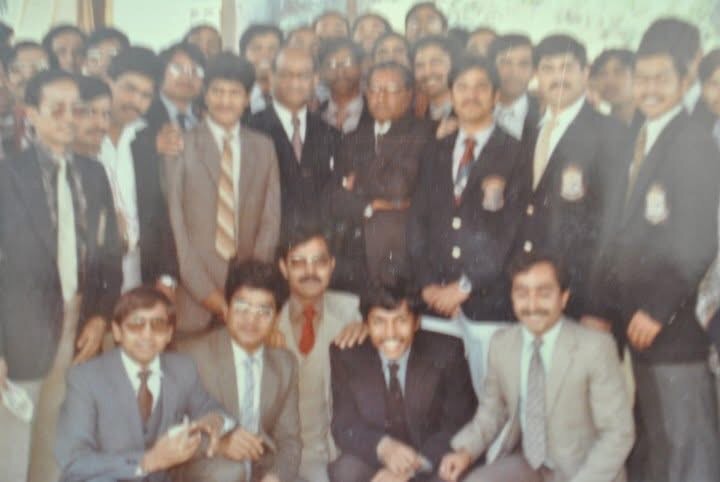
Back in our hostel days, as we’d sprawl on creaky cots, Rakesh would hold court, dreaming big. “One day, I’ll be the guy they call when it’s life or death,” he’d say, tossing a roti back at an imaginary Maharaj. And damn if he didn’t make good on that promise. Want me to dig deeper into his journey or maybe hunt down another hostel tale? What’s the vibe?
With over 35 years of hands-on experience in general and laparoscopic surgery, Dr. Khurana has become a cornerstone of healthcare in Muzaffarnagar. 19 He’s affiliated with Vardhman Hospital, where he serves as a beacon for patients facing everything from routine procedures to life-threatening emergencies. As a life member of the Indian Medical Association, he stays connected to the broader medical community, always eager to learn and share knowledge.
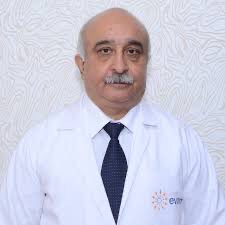
What sets Dr. Khurana apart is his expertise in handling the tough cases—the ones that make headlines or leave colleagues in awe. Specializing in complex abdominal trauma surgery, laparoscopic cholecystectomy, appendectomy, and hernia repairs, he thrives in high-stakes environments. He’s no stranger to polytrauma patients, those with multiple injuries from accidents that demand quick thinking and steady hands. “In the OR, every second counts,” he once explained to a nervous intern. “You don’t just cut—you listen to the body, anticipate the chaos, and turn it into order.”
One particularly unforgettable case etched his name into local lore. In September 2022, a 22-year-old man named Vijay arrived at the hospital complaining of severe abdominal pain. An X-ray revealed something bizarre: metallic objects cluttering his stomach. As Dr. Khurana prepared for surgery, he turned to his team with a mix of disbelief and focus: “Team, this isn’t your average appendix. We’ve got spoons—dozens of them. Let’s get them out before they cause more trouble.” During the two-hour operation, they extracted an astonishing 63 spoons, each one a testament to the patient’s unusual compulsion to swallow them over two years. 14 Post-surgery, as Vijay recovered, Dr. Khurana visited his bedside. “Why spoons, Vijay?” he asked gently. The young man, sheepish but grateful, replied, “Doctor sahab, it started as a habit, but you saved me from myself.” Smiling, Dr. Khurana responded, “Habits can be broken, lives rebuilt. Just promise me—no more cutlery for dessert!”
Beyond the operating theater, Dr. Khurana’s achievements include mastering a wide array of laparoscopic and general surgeries, earning him a reputation as one of the best in Uttar Pradesh. 19 He’s undergone specialized training in abdominal trauma, ensuring he’s always at the forefront of his field. 19 Patients describe him as approachable and compassionate, often sharing stories of how his calm demeanor turned their fears into hope. “It’s not about the glory,” he’d humbly admit in conversations with peers. “It’s about that moment when a patient wakes up and says, ‘Thank you, Doc—I get another chance.'”
Today, at Vardhman Trauma & Laparoscopy Centre near Mahavir Chowk, Dr. Khurana continues his mission, blending skill with humanity. In a world of medical marvels, he’s a reminder that behind every scalpel is a story of perseverance, empathy, and the unyielding drive to heal. If you ask him about his journey, he might lean back with a warm smile and say, “Life’s full of surprises—like 63 spoons. But with the right tools and heart, we can handle anything.”

Holi Hai! The Siege of the Girls’ Hostel
This Holi episode with Khurrana is quite memorable. The air was thick with the scent of gulal and the electric buzz of Holi at the university campus. It was that time of year when the boys’ hostels turned into war camps, and the girls’ hostel became the ultimate fortress to conquer. A ragtag army of us—Khurana, Mukesh, Nirmal Pandey (the self-proclaimed boss), J-Dash, Srinivas, Sandeep Gupta from the ’78 batch, and me, Sanjeev Sharma—marched toward the girls’ hostel, armed with packets of colored powder and unstoppable enthusiasm.
The two-story girls’ hostel loomed ahead, its iron gates barred and locked tighter than a vault. Undeterred, we gathered in front of it, a mob of rowdy boys chanting our war cry: “Holi hai! Holi hai!” The sound echoed off the walls, a rhythmic battle anthem. We banged on the gate, the metal clanging under our fists, as if we could will it open with sheer determination.
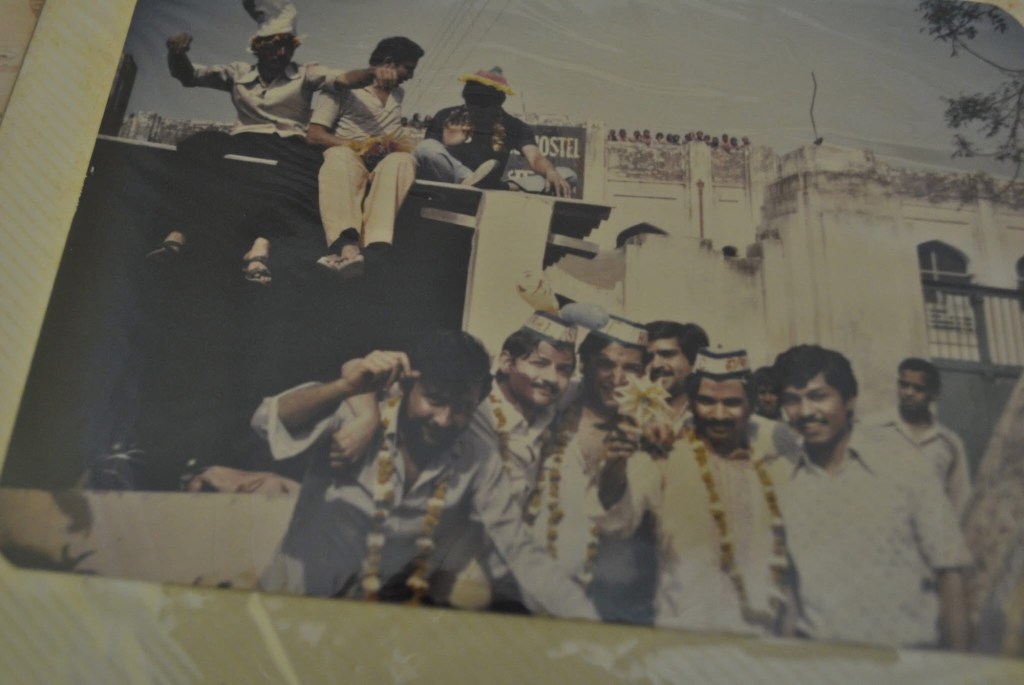
“Open the gate, beheno! It’s Holi!” Mukesh shouted, tossing a handful of red gulal into the air, where it floated like a battle flag.
“Arre, they’re not coming out!” J-Dash laughed, wiping green powder off his face. “We’ll have to storm the castle!”
Suddenly, a few girls appeared on the hostel’s rooftop, their silhouettes framed against the bright March sky. They leaned over the edge, giggling, their faces smeared with colors. One of them waved, her dupatta fluttering like a victory banner. Khurana, ever the daredevil, zeroed in on her.
“Sanjeev, look! She’s calling me!” he declared, his eyes glinting with mischief.
I squinted up, catching the girl’s gesture. It wasn’t a wave—it was a defiant middle finger aimed straight at Khurana. “Khurri, hold up!” I grabbed his arm. “She’s not calling you, bhai. She’s telling you to get lost!”
Khurana scoffed, brushing me off. “Arre, Sanjeev, you’re too cautious! I’m climbing up there, and I’ll paint her face with gulal myself. If I don’t, naam badal do mera!”
The crowd roared with laughter and cheers. Khurana, lean and wiry, sized up the drainpipe running along the hostel wall. “This is my moment!” he said, cracking his knuckles like a Bollywood hero. He grabbed the pipe and started climbing, his movements surprisingly agile for someone fueled by Holi bravado and maybe a little bhaang.
“Jai ho, Khurana!” Nirmal Pandey bellowed, tossing more gulal into the air. The boys below erupted, some egging him on, others shouting warnings. “Khurri, don’t fall! The pipe’s shaking!”
It was like a scene from a historical epic—the siege of Chittorgarh Fort, except instead of swords and shields, we had gulal and sheer stupidity. The drainpipe wobbled under Khurana’s weight, creaking ominously. Halfway up, he paused, looking down at us with a mix of pride and panic.
“Sanjeev, if I die, tell my mother I was a hero!” he called out, grinning.
“Hero nahi, zero banega tu!” I shot back, laughing.
Meanwhile, emboldened by Khurana’s stunt, a few of us—Mukesh, J-Dash, Sandeep Gupta, and I—decided to up the ante. We scrambled onto the chaukidar’s hut nearby, its sloped roof giving us a better vantage point. From there, we lobbed handfuls of gulal toward the rooftop girls, though the powdery clouds barely reached the first floor.
“Sanjeev, aim higher!” Mukesh said, tossing a fistful of yellow powder that promptly blew back into his face.
“Arre, it’s a two-story building, Mukesh! Unless you’ve got a cannon, we’re not hitting them!” I replied, wiping my glasses, now speckled with pink.
Suddenly, the girls on the roof vanished. “They’re planning something!” J-Dash said, his voice tinged with mock fear. “Johar ki taiyari, maybe?”
Before we could speculate further, a stern voice cut through the chaos. “What are you doing up there, gentlemen?”
I froze. It was Dr. Srivastava, the hostel warden, standing below with his arms crossed, his white kurta pristine amidst our colorful carnage. The boys on the ground scattered like roaches, leaving me stranded on the chaukidar’s hut.

“Uh, sir…” I stammered, my brain scrambling for an excuse. “Mai toh babaji ke darshan karne aaya tha!”
The warden raised an eyebrow, unimpressed. “Babaji, is it? And what about him?” He pointed at Khurana, still clinging to the drainpipe like a determined monkey.
“Beta, neeche aa jao,” Dr. Srivastava called, his tone a mix of exasperation and paternal concern. “Dekho, chot lag jayegi.”
Khurana, realizing his conquest was doomed, slid down the pipe with a sheepish grin. The crowd groaned, half in disappointment, half in relief. Dr. Srivastava shook his head, muttering something about “youngsters these days,” and shooed us away. The siege of the girls’ hostel had ended in a glorious, colorful failure.

The Nurses’ Hostel Misadventure
A few days later, still buzzing from our Holi high, we set our sights on the nurses’ hostel. This time, we had wheels—a rickety van that sputtered as much as it moved. Our crew, including Jagath Bansal from the ’78 batch, rolled up to the hostel, gulal packets in hand and mischief in our hearts.
“Gentle this time, boys,” I warned, remembering the girls’ hostel fiasco. “No climbing pipes!”
Jagath, however, had other plans. As we parked near the hostel, he leaned out the window and shouted something crude—something about “Holi ke rang, nurses ke sang.” The senior nurses on the balcony didn’t take kindly to it. Their laughter turned to fury, and within seconds, a group of them stormed toward the stairs, ready to give us a piece of their mind.
“Jagath, you idiot!” Sandeep Gupta hissed, slamming his foot on the accelerator. “Drive, drive, drive!”
The van coughed and lurched forward, leaving a cloud of dust and gulal in our wake. We sped off, laughing hysterically, as the nurses shook their fists from the hostel steps. Another Holi mission, another narrow escape.
Holi at Dr. Nawal Kishore’s House
Not all our Holi adventures were battles. One year, word spread that Dr. Nawal Kishore, a professor known for his hospitality (and rumored delicious snacks), was hosting a Holi gathering. Our crew—Sundeep Gupta, Arora, Ajay Khanna, Praveen Shukla, and I—decided to crash it, lured by the promise of gujiyas and maybe some pakoras.
We arrived at his house, a modest bungalow with a small garden, our faces already smeared with colors. Dr. Nawal Kishore greeted us at the gate, his smile polite but his eyes wary, like a man expecting a tornado.
“Welcome, boys! Come, play Holi!” he said, handing us a plate of gujiyas. But his gaze kept darting to the gate, as if he feared we’d storm his drawing room and track gulal all over his carpets.
“Sir, your gujiyas are legendary!” Ajay Khanna said, stuffing one in his mouth.

“Bas, bas, eat slowly,” Dr. Nawal Kishore replied, forcing a chuckle. “And… stay in the garden, haan?”
We smeared a bit of gulal on his cheeks, and he humored us, sitting for a while as we danced to a scratchy cassette of Holi songs. But it was clear he was on edge, glancing over his shoulder every time someone got too close to the house. Eventually, we took pity on the man, thanked him for the snacks, and left, our Holi spirit satisfied but our chaos quota unfulfilled.
A Glimpse of the Scenes
If you could see the pictures from those days, you’d see me perched awkwardly on the chaukidar’s hut, my kurta a tie-dye of red, green, and yellow, with Mukesh and J-Dash laughing below. Another snapshot captures Nirmal Pandey and me at the nurses’ hostel, our faces caked with gulal, grinning like we’d just won a war. And then there’s the one in front of the girls’ hostel, where Sundeep Gupta, Arora, Ajay Khanna, Praveen Shukla, and I are caught mid-dance, arms flailing, colors flying, pure joy frozen in time.
Reflections
Those Holi festivals were much ado about nothing, really—just a bunch of boys chasing fun, fueled by youth and the thrill of rebellion. We never did breach the girls’ hostel gates or win over the nurses, and Dr. Nawal Kishore probably sighed in relief when we left his house. But those moments—Khurana on the drainpipe, Jagath’s ill-fated comment, the gujiyas at Dr. Nawal Kishore’s—live on in our stories, as vivid as the colors we threw. Holi hai, indeed.


 deemagclinic
 deemag and chest clinic