
In the sun-drenched corridors of a modest family home in Gaziabad Uttar Pradesh, a young Sunil Kumar first discovered the magic of sight—not through books or lectures, but through the quiet joy of helping his grandmother thread a needle after a simple eye check-up. That moment, etched in the late 1970s, planted a seed of purpose in him: to chase away the shadows that steal the world’s colors from those who need it most. Born on 27 Th of September 1960 in Gaziabad, he is now turning elder citizen in Canada. Today, Dr. Sunil Kumar stands as a beacon of hope in the Arab world, an ophthalmologist whose steady hands and warm heart have brightened thousands of lives across the sands of the UAE and beyond. His story isn’t one of glamour or headlines; it’s a heartfelt odyssey of grit, growth, and giving back, proving that true healing blooms from the soil of empathy.

Born in the early 1960s ,27 th September to be exact, in a close-knit town of Gaziabad, India, Sunil grew up amid the rhythmic hum of daily life—rickshaws clattering past ancient monuments, families gathering under banyan trees for stories that stretched into the night. His parents, simple folk with unyielding faith in education, watched their son’s curiosity unfold like a lotus at dawn. Medicine called to him early, inspired by a local doctor who turned house calls into acts of kindness. By the mid-1980s, he was immersed in the hallowed halls of Sarojini Naidu Medical College (SNMC) in Agra, where the air buzzed with ambition and the scent of antiseptic. It was here, in 1989, that he earned his MS in Ophthalmology—a milestone that felt like reclaiming a piece of the world for every patient he’d one day touch. The rigorous days of residency, poring over textbooks under flickering bulbs and practicing sutures until his fingers ached, forged not just a surgeon, but a storyteller who saw eyes as windows to unspoken dreams.
In the bustling lanes of Agra, where the air carried the scent of the desert and the chatter of medical students, Dr. Sunil Sharma was a character who could light up any room—or ward—with his wit and rapid-fire speech. Smallish in stature, with a fair complexion and an uncanny resemblance to the Bollywood heartthrob Rajender Kumar, Sunil was a walking paradox. His words tumbled out so fast that the “S” in his name often vanished into thin air, earning him the affectionate nickname “Unil.” “Arre, slow down, Unil!” his friends would tease, mimicking his breathless delivery. But Sunil, with a twinkle in his eye, would just grin, his face morphing into what his hostel mates dubbed the “Rajender Kumar constipation face”—a dramatic grimace that looked like he was battling painful piles and a bad day at the same time.
Sunil’s heart, however, beat for shayari. He wasn’t just a medical student grinding through textbooks; he was a poet, weaving Urdu couplets with the finesse of a seasoned shayar. His love for poetry was infectious, spreading like wildfire among his peers. “Listen to this one,” he’d say, standing on a hostel bed, reciting a verse from Ghalib with such flair that even the most stoic students would clap. His passion inspired others, including a certain friend who started buying shayari books just to keep up. Soon, Dehradun’s cafés buzzed with students dropping poetic one-liners, all thanks to Sunil’s influence. “Yaar, Sunil, you’ve turned us into poets!” one exclaimed. “Ab toh girls bhi impress ho jayengi!” Sunil would wink, “Bas, shayari dil se dil tak jati hai, degree toh bas excuse hai!.
Dard-e-dil ka ilaaj Sunil ke paas,
Har marz ka hai uske dil mein aas.
Ek dawai se badal de zindagi,
Roshni bhar de har ek udaas.
Sunil ke haathon mein shifa ka jadoo,
Nabz se samjhe dil ka har guroor.
Bimari bhage, sehat aaye ghar,
Uska likha hai har dard ka noor.
Marz ka toofan ho ya chhota sa gham,
Sunil ki qalam se milta hai sanam.
Dawa aur dua ka jab hota mela,
Zindagi khilti hai jaise naya mausam.
Sunil ke likhe har ek nuskhe mein,
Chhupa hai sehat ka anmol chain.
Dil se dil tak jati hai uski baat,
Har rogi ko milta hai nayi raah.
His hostel roommate, Parveen Bansal—fondly called Bandhu—was Sunil’s perfect foil. Bandhu, a larger-than-life figure with a penchant for pedantry, once famously declared his fat was “cell-bound, like a fixed deposit.” Sunil never let that gem go. Every day brought a new opportunity for Sunil to unleash his razor-sharp wit on Bandhu. “Oye, Bandhu, your fixed deposit’s earning interest faster than your Grey’s Anatomy notes!” he’d quip, sending their hostel mates into fits of laughter. Bandhu, bless his soul, took it in stride, though his pedantic streak often made him the butt of Sunil’s jokes.
One unforgettable day in the medical college, the boys were in stitches over a patient’s complaint of erectile dysfunction. Bandhu, true to form, launched into a long-winded lecture, his face reddening with indignation. “This is a serious medical condition!” he scolded, wagging a finger at the giggling group. “You lot have no -gain- gain -what do you call- respect for pathology!” Bandhu used to start speaking in English when angry, sputtering, and stuttering. The room fell silent—until Sunil, with impeccable timing, sauntered in. “Arre yaar, tumne Bandhu ki dukti rag par hath rakh diya, naaraj toh wo hoga hi!” he declared, his Rajender Kumar-esque grimace breaking into a grin. The room erupted in guffaws, and even Bandhu couldn’t help but crack a smile. “Sunil, tu bhi na!” he muttered, shaking his head.
But Sunil’s wit wasn’t just for teasing. Bandhu had a peculiar study habit: he’d hang upside down from the hostel window while poring over Grey’s Anatomy, claiming it boosted blood flow to his brain for better retention. Sunil, ever the pragmatist, couldn’t resist. “Bandhu, yeh sab toh theek hai,” he said, leaning against the wall with a smirk, “but the only problem is, you can’t do this in the examination hall!” The hostel roared, and Bandhu, dangling like a bat, just groaned, “Sunil, ek din tujhe yeh window se fenk doonga!”
Dr. Sunil Sharma wasn’t just a doctor-in-training; he was a maestro of mirth, a shayar with a stethoscope, and a friend who made the grind of medical school feel like a grand adventure. His quick tongue, poetic soul, and that unforgettable Rajender Kumar face left an indelible mark on Agra medical corridors—and on everyone lucky enough to know him.
With his degree in hand, Dr. Sunil’s early career took root in India’s vibrant medical landscape. He honed his craft in bustling clinics, mastering the delicate dance of cataract extractions and glaucoma interventions—those “silent storms” that erode vision without warning. But the pull of new horizons grew stronger, whispering of places where innovation met diverse faces, and where his skills could ripple further. In the early 2000s, he answered that call, venturing abroad to the United Arab Emirates, a land of gleaming skylines and boundless opportunity. What began as a professional leap became a profound homecoming of sorts. In Abu Dhabi and Dubai, he joined leading eye centers, where the multicultural tapestry of patients—from South Asian laborers to Gulf families—reminded him daily of the universal language of gratitude: a child’s first clear glimpse of the stars, or an elder’s tearful nod after years in fog.
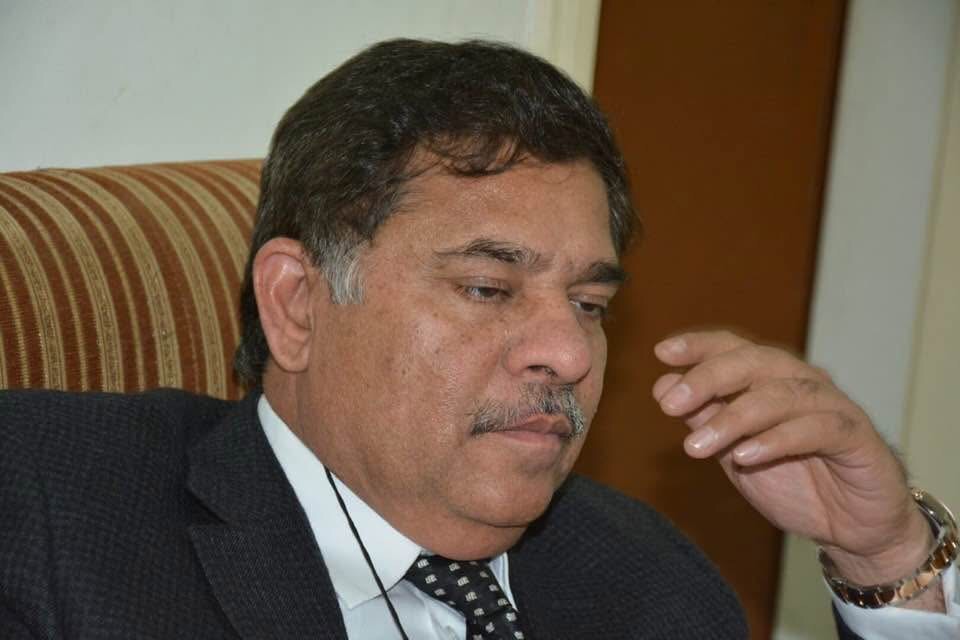
Now, with over three decades of experience, Dr. Sunil specializes in phacoemulsification for cataracts and advanced glaucoma management, blending cutting-edge tools like laser-assisted surgeries with the timeless art of listening. His clinics in the UAE are sanctuaries of calm—soft lighting, Arabic tea for nervous visitors, and explanations in Hindi, English, or Urdu that demystify the scary. Colleagues speak of him as the doctor who lingers after hours, not for the clock, but for the conversation that eases a family’s burden. He’s contributed to research on early detection in high-risk populations, presenting at regional forums and mentoring young residents who arrive wide-eyed, much like he once did. Yet, for all his accolades, it’s the quiet victories that define him: the expat mechanic who returned to his village a hero, vision restored, or the young mother who saw her baby’s smile anew. He writes,”
Thank you PK. That’s way more generous than I deserve — but thank you! It means a lot coming from someone who’s known me since the DH days. I left Saudi last year after serving as Director of neurophthalmolgy and visual electrophysiology services for almost two decades.
Now I settled in Calgary. I extend my invitation to all batchmates to visit me wherever convenient.
Once again thank you.
Away from the operating room, Dr. Sunil is the anchor of a loving family, sharing sunset walks along the Arabian Gulf with his wife and trading tales of Agra’s taj with his grown children, now scattered but forever tied by video calls laced with laughter. He unwinds with a well-worn copy of Rumi’s poetry or a game of chess that stretches into philosophical debates—reminders that life’s greatest clarity comes from balance. At 62, he shows no signs of slowing, driven by a belief that every eye he saves is a story extended, a legacy woven into the fabric of tomorrow.
Dr. Sunil Kumar’s path from the historic streets of Agra to the modern marvels of the Arab world isn’t just a biography—it’s a gentle revolution, one where precision meets compassion, and abroad becomes a bridge to deeper roots. In a region hungry for trusted care, he doesn’t just treat eyes; he reignites souls, proving that the light we seek often starts with the courage to see clearly ourselves. If his journey echoes your own curiosities about medicine’s human side, it’s a reminder: healing is, at its core, the most beautiful way to connect.

Dr. Sunil Kumar appears to be a neuro-ophthalmologist with a background in research and clinical practice. Here’s what I found based on available sources:
- Professional Background: He holds credentials including MS (Master of Surgery) from S.N. Medical College in Agra, India, FRCS (Fellow of the Royal College of Surgeons) from Edinburgh, and completed a fellowship in neuro-ophthalmology at the University of Toronto in Canada. His expertise is in neuro-ophthalmology, with research publications on topics like internuclear ophthalmoplegia, compressive optic neuropathy, and Balint syndrome, often affiliated with the University of Toronto’s Department of Ophthalmology and Vision Sciences and University Health Network in Toronto, Ontario. He is settled in Calgary.
- Work Experience: He spent over 13 years at Dhahran Eye Specialist Hospital in Saudi Arabia, where he served as Co-Director of the Neuro ophthalmology fellowship program.
- Current Status in Canada: His LinkedIn profile lists his location as Canada, suggesting he is now based there (consistent with your query). However, I couldn’t find a current clinical practice listing in Canadian physician registries like CPSO (Ontario), and he may be involved in research or non-clinical roles. No active X (Twitter) profile was identified under this name matching the description.


 deemagclinic
 deemag and chest clinic