
A Journey to Remember: Dr. Raj Kumar Agarwal’s Adventurous Spirit
Dr. Raj Kumar Agarwal, MS (Ophtha), now a respected ophthalmologist practicing in Saharanpur, Uttar Pradesh, has always been a man with an insatiable wanderlust and a gift for forging deep, enduring friendships. Back in the mid-1980s, during his residency days at G.B. Pant Hospital in Agra, he shared Room No. 233 in the hostel with his close friend Rakesh Khurrana. Life was simple then—meagre stipends from MBBS internships barely covered basics—but Raj’s enthusiasm for travel turned those constraints into unforgettable adventures.
With relatives scattered across India and friends in far-flung places like Mumbai and Srinagar, Raj never lacked an excuse (or a free place to crash) for a trip. One such relative was Pintu, who later went on to work in a sugar mill. But in those days, connections like these opened doors to spontaneous escapades.
One memorable journey took place in 1985, in the peaceful pre-militancy era of Kashmir. Raj, along with a group of fellow interns scraping by on modest salaries, decided to head to Katra for the Vaishno Devi pilgrimage and then push on to Srinagar. “Come on, yaar,” Raj would say with his infectious grin, “life’s too short to sit in the hostel. Let’s make some memories!”
A relative of Raj’s, studying at the engineering college in Srinagar, warmly hosted them in his room and mess. No formalities—just pure hospitality. They explored the breathtaking valleys, strolled through the vibrant baghs (gardens): Nehru Bagh, Shalimar Bagh, Nishat Bagh—all the classics. And of course, they couldn’t resist buying crates of juicy Kashmiri apples to take back home.
The real adventure unfolded on the bus ride back. The group had stacked their luggage, including a large peti (wooden crate) brimming with apples. The conductor, spotting the crate, insisted on charging extra for it as “luggage.”
“Arey bhaiya, yeh ticket kyun?” Raj protested, his voice rising in mock outrage. “These are apples, not some suitcase! We’re carrying them on our laps if needed!”
The conductor wasn’t budging. “Rules are rules, sahab. Peti ka ticket lagao, warna utaar do!” he shot back, arms crossed.
What started as a light-hearted argument quickly escalated into a full-blown quarrel. The other passengers watched in amusement as the young doctors-in-training stood their ground. “This is daylight robbery!” one of Raj’s friends chimed in. “We’re students, earning peanuts—how can you charge for fruits?”
In the heat of the moment, emboldened by youthful bravado, the group decided to take matters higher—straight to the Chief Minister’s residence! Those were simpler times in Kashmir: no barbed wires, no heavy security, just a single constable standing lazily with a lathi (stick) outside Farooq Abdullah’s house.
The constable eyed the dishevelled group—dusty from travel, clutching their apple crate like a trophy—and chuckled. “Kya baat hai, beta? Baitho yahan, madam Abdullah abhi ja rahi hain. Phir Chief Minister se milwa doonga.” (What’s the matter, sons? Sit here; Madam Abdullah is just leaving. Then I’ll let you meet the Chief Minister.)
They waited briefly, imagining themselves lodging an official complaint over bus tickets and apples. The absurdity hit them soon enough. “Yaar, we’re here to complain about a bus conductor to the CM?” Raj laughed, shaking his head. “We could’ve actually met Farooq Abdullah over this trivia! But come on, we’ve got a train to catch—no time for politics.”
With that, they bid the amused constable goodbye and headed off, apples intact (and ticket-free, as it turned out).
Adventures in the Snow: Dr. Raj Kumar Agarwal’s Kashmir Escapade Continues
Dr. Raj Kumar Agarwal’s love for travel didn’t stop at Vaishno Devi or the lush gardens of Srinagar. In that unforgettable 1985 trip, the group—fueled by youthful energy and the thrill of exploration—pushed further into the highlands, chasing the magic of snow in the meadows of Khilanmarg and Sonmarg (affectionately misremembered over the years as “khillenmerg and sinners”).
“Yaar, we’ve come this far—how can we miss real snow?” Raj urged his friends as they piled into a bus from Srinagar, bundled in borrowed woolens and whatever warm layers they could scrounge on their intern budgets. The air grew crisp, then biting, as the road wound upward, revealing vast white expanses that sparkled under the sun like scattered diamonds.
At Khilanmarg, a short trek from Gulmarg, the group romped like children—throwing snowballs, sliding down gentle slopes, and gasping at the panoramic views of the Himalayas. Raj, ever the adventurer, spotted a glistening ice cave carved into the hillside. “Come on, let’s explore!” he called, leading the way with a flashlight borrowed from their host.
Inside, the cave was a frozen wonderland—blue-tinged walls, icicles dangling like chandeliers. Raj pulled out a key or coin from his pocket and etched his name deep into the ice: R-A-J K-U-M-A-R. “There,” he grinned, stepping back to admire his work. “Now the mountain will remember me forever!”
Laughter echoed through the cave as others followed suit, carving their initials. But nature, as always, had its own surprises in store.
Back outside, amid the pristine meadows of Sonmarg, disaster struck one of the friends—we’ll call him Bandhu for the tale. The rich Kashmiri food, wazwan feasts, and street eats from the trip had finally caught up. “Arre bhai, mera pet kharab ho gaya!” Bandhu whispered urgently, clutching his stomach and shifting uncomfortably. “I need to go—now!”
The group scanned the horizon: endless snowfields, distant pine trees, not a single toilet, bush, or even a rock cluster in sight. They were in high-altitude wilderness, dressed for sub-zero temperatures—multiple sweaters, jackets, mufflers, gloves, and thick pants.
“Ab kya karen?” Raj chuckled nervously, trying to keep spirits high. “No facilities here, yaar. This is real adventure territory!”
Bandhu l, pale and desperate, had no choice. “Bas karo mazak—help me!” He started peeling off layers one by one: jacket first, then sweater, thermal, until he was down to the bare essentials in the freezing wind. Shivering but determined, he spotted a small ice cliff—a natural ledge overhanging a deep crevasse.
With friends forming a protective circle (partly for privacy, partly to block the wind), Bandhu climbed atop the icy perch. “Don’t look!” he yelled, half-laughing through his discomfort.
The deed done, he suddenly panicked. “Arre, I’ve dirtied the mountain! Yeh toh pristine snow hai—log dekhenge toh kya kahenge?”
But Mother Nature had a hilarious mercy in mind. The warmth from the fresh deposit began melting the ice almost instantly. Before Vikram could even count “one… two… three,” the evidence slid smoothly into the depths below, vanishing into a hidden abyss with a faint plop.
“Wow!” Raj burst out laughing, clapping Bandhu on the back as he hurriedly redressed. “See? Even the mountain didn’t want to embarrass you. Gone in seconds—pristine again!”
The group erupted in relieved guffaws, the tension dissolving into one of those stories that bonds friends forever. “Beta, next time stick to dal-chawal on trips,” someone teased. Bandhu, red-faced but grinning, shot back, “Never again outside food in Kashmir—but what an exit that was!”
Years later, Dr. Raj Kumar Agarwal still recounts this tale with sparkling eyes, a reminder that his travels weren’t just about sights seen, but the raw, unscripted moments of joy, embarrassment, and camaraderie that made them legendary. From carving names in eternal ice to nature’s quick cleanup crew—the mountains of Kashmir kept their secrets, and the friends kept their laughter.
Sun, Sand, and Spontaneous Shenanigans: Dr. Raj Kumar Agarwal’s Goa Arrival
After that magical overnight voyage on the Arabian Sea—feni-fueled laughter with Swedish window cleaners, sea gulls performing acrobatics for popcorn, and the glittering coastline fading into memory—the ship’s horn finally announced landfall. It was early morning when the steamer docked at Panjim’s old port, the air already thick with the scent of salt, coconut, and promise.
“Goa at last!” Raj exclaimed, stretching as the group gathered their backpacks and chaddars on the deck. The Swedish girls waved goodbye with promises of postcards that never came, and the friends descended the gangway into a chaotic whirl of porters, taxi drivers, and fellow passengers haggling in Konkani, Hindi, and English.
No pre-booked hotels, no plans—just the address of yet another distant relative scrawled on a scrap of paper, courtesy of Pintu’s endless family network. “Chalo, auto pakdo,” Raj directed, negotiating with a grinning driver who piled six young men and their luggage into one rickety auto-rickshaw. “Calangute beach jaana hai—koi sasta guesthouse milega wahan?”
The ride was pure joy: palm trees whipping past, red laterite soil flashing by, and Goan music blaring from roadside shacks. By mid-morning, they tumbled out at Calangute, the legendary hippie haven that in 1985-86 was still more laid-back paradise than party central.
Their first sight of the beach stopped them dead. Endless golden sand, gentle waves rolling in, and only a scattering of foreign tourists in swimsuits alongside local fishermen hauling nets. “Yeh toh heaven hai, yaar!” one friend whispered, as if speaking louder might break the spell.
The “guesthouse” turned out to be a row of basic rooms behind a family home—wooden beds, mosquito nets, and a shared bathroom with a bucket shower. The landlady, a cheerful aunty in a cotton saree, eyed the disheveled doctors suspiciously until Raj flashed his trademark smile.
“Aunty, hum sab medical students hain—interns. Bas teen-chaar din rehna hai. Breakfast mein kuch Goan milega?”
The suspicion melted. “Arre beta, doctors? Baitho! Abhi poi aur sorpotel banati hoon!” Soon they were devouring fresh poi bread with spicy sorpotel, washed down with coconut water straight from the tree in her yard.
Days blurred into a dreamy routine:
- Mornings: Long walks along the beach, collecting shells and watching dolphins leap in the distance.
- Afternoons: Renting rusty bicycles for a rupee or two and pedaling to nearby Baga and Anjuna, where flea markets were just starting to bloom. They haggled for tie-dye shirts, bead necklaces, and wooden carvings—souvenirs to prove they’d really been to “the real Goa.”
- Evenings: Sunset at the shore, followed by candle-lit dinners at shacks serving fresh kingfish, prawns, and rice. Someone always produced a bottle of feni, and the group sang old Hindi songs badly while waves provided the rhythm.
One memorable mishap happened on their second day. Eager to swim, they rushed into the sea—only to discover strong undercurrents. Vikram (the same friend from the Kashmir ice-cliff episode) got pulled out a bit too far. “Bachao!” he yelled dramatically, flailing like a Bollywood hero.
Raj and another friend swam out, laughing even as they towed him back. “Arre drama king,” Raj teased once they collapsed on the sand, “Goa mein bhi adventure chahiye tha kya?”
Safe on shore, a group of local fishermen who’d watched the rescue clapped and offered them fresh coconut as reward. “Tum log doctor ho? Accha kaam kiya!” they said, turning potential panic into another story of instant Goan warmth.
Nights brought bonfires with other travelers—Germans playing guitars, Israelis sharing hash cookies (politely declined by the cautious medicos), and endless debates about life, love, and future careers. “Ek din yahan practice kholenge,” Raj dreamed aloud one starry night. “Beach ke paas clinic—patients ko sea breeze prescription!”
Goa’s Festivals Come Alive: Dr. Raj Kumar Agarwal Remembers the Magic
Decades after that unforgettable ship arrival in Goa, Dr. Raj Kumar Agarwal still gets a sparkle in his eye when December rolls around. “Yaar, if we’d stayed just a few more days back then,” he often tells his friends over chai, “we would have crashed straight into Christmas madness. Imagine—us broke interns in the middle of Goa’s biggest party!”
Goa’s cultural festivals aren’t quiet affairs you read about in guidebooks. They’re loud, colorful, delicious explosions of life that pull everyone—locals, tourists, even skeptical medicos—into the celebration.
Christmas in Goa: Lights, Feasts, and Midnight Mass
Picture this: It’s Christmas Eve in a quiet Goan village like Siolim or Candolim. Every house is outlined in twinkling fairy lights. Homemade star lanterns hang from balconies. The air smells of bebinca baking, sorpotel simmering, and fresh coconut dodol cooling on window sills.
Raj leans back in his chair, reminiscing. “We reached Panjim once during Christmas week—by bus this time, not ship. The whole city was glowing! Churches lit up like jewels. We wandered into a little chapel for midnight mass, still sandy from the beach.”
One friend had teased, “Arre Raj, tu doctor banega ya padre? Church mein kyun ghus raha hai?”
Raj laughed. “Bas feel karne aaya hoon, yaar! Sun—carols in Konkani. Aunty next to me offered me sweets during the service. Stranger, but felt like family.”
After mass, the streets turned into open-air feasts. Families invited passers-by for a plate of pork vindaloo or sweets. Fireworks cracked over the Mandovi River. “We danced with random people on the road,” Raj says. “No one asked who we were—just handed us feni and said ‘Merry Christmas, beta!’”
Carnival: King Momo and Pure Madness
Fast-forward to February–March, and Goa flips into Carnival mode. King Momo—a jolly, oversized figure—kicks off three days of nonstop parades, music, and mischief.
“If we’d hit Goa during Carnival,” Raj grins, “forget sleeping! Panaji’s streets would be packed with floats taller than buildings. People in crazy costumes throwing confetti, dancing to brass bands.”
He paints the scene: “Imagine us trying to squeeze through the crowd. One float has a giant satirical politician made of papier-mâché. Red devils chasing angels. And King Momo on his throne shouting, ‘Khavo, pivo, mauj koro!’—Eat, drink, enjoy!”
Someone in the group would have shouted back, “Your Majesty, hum toh already mauj kar rahe hain—just short on cash!”
São João: Jumping into Wells Like Madmen
Then there’s the monsoon festival of São João in June—unique to Goa, nowhere else in India.
“Young boys—and now girls too—wear flower crowns called kopels and jump into village wells and ponds,” Raj explains, chuckling. “It’s to honor St. John the Baptist leaping for joy. But really, it’s an excuse for the wildest water party.”
He imagines their younger selves there: “We’d have been right in the front, yaar! Feni bottles floating in the water, guitars on the banks, everyone soaking wet and singing. One local uncle grabs me—‘Come, doctor saab, jump for blessings!’—and next thing I know, splash! Cold well water in June heat. Best shock ever!”
Shigmo: Colors and Warrior Dances
In spring, rural Goa erupts with Shigmo—Goa’s answer to Holi, but fiercer.
“Massive parades with folk dancers in warrior costumes,” Raj describes. “Men on hobby horses doing Ghode Modni, swords flashing. Drums so loud your chest vibrates. Then they throw gulal—clouds of red, yellow, green.”
He laughs at the thought. “We’d have come back to the hostel looking like rainbows. Warden would’ve asked, ‘Yeh kya operation theatre se paint chori kiya?’”
A Timeless Spirit
Whether it’s Christmas lights reflecting on wet sand, Carnival confetti sticking to sweaty faces, São João well-jumps at dawn, or Shigmo drums echoing through paddy fields, Goan festivals share one thing: they make strangers into friends in minutes.
“That’s what I loved most,” Dr. Agarwal says softly. “Same feeling we had arriving by ship—tired, broke, but instantly welcomed. Goa doesn’t just host festivals; it pulls you in, makes you part of the family.”
He raises his imaginary glass of feni. “To Goa—and to the festivals we missed, the ones we crashed, and the ones still waiting for us. Viva São João! Jai Mata Di! And Merry Christmas, always!”
All too soon, the meager funds ran low, and reality called them back to Agra’s hostels and wards. On the last morning, they stood knee-deep in the water, letting waves wash over their feet.
“Promise karo,” Raj said solemnly, “har saal Goa aayenge. Interns ho ya doctors—doesn’t matter.”
They didn’t keep that exact promise—life, marriages, careers intervened—but decades later, Dr. Raj Kumar Agarwal still lights up recounting those arrival days in Goa: the first glimpse of paradise, the taste of authentic feni without hangovers, the kindness of strangers who became temporary family, and the sheer freedom of being young, broke, and utterly alive under the Goan sun.
For him, that ship docking wasn’t just an arrival—it was the moment a lifelong love affair with travel, friendship, and the unexpected truly began.
Stories like these capture the essence of Dr. Raj Kumar Agarwal: a man whose love for travel, unbreakable bonds of friendship, and sheer zest for life turned ordinary days into extraordinary tales. Even now, decades later, those apple-scented memories from 1985 bring a smile to his face—and to anyone lucky enough to hear him recount them.
Biography of Dr. Raj Kumar Agarwal
Dr. Raj Kumar Agarwal, MS (Ophthalmology), is a distinguished Indian ophthalmologist renowned for his extensive contributions to clinical practice, teaching, and medical literature. Born and raised in Titron, a small village in the Saharanpur district of Uttar Pradesh, India—famed for its local wildlife such as titer (Indian roller birds) and battair (quails)—Dr. Agarwal’s early life was rooted in a rural setting that contrasted sharply with the urban environments he would later navigate in his professional journey.
Early Education and Medical Training
Dr. Agarwal’s academic prowess was evident from a young age. He completed his early education at Maharaja Singh College in Saharanpur, where his intelligence and dedication stood out. In 1979, he was selected for the MBBS program at the prestigious Sarojini Naidu Medical College (SNMC) in Agra, Uttar Pradesh, one of India’s esteemed institutions for medical education at the time. This selection was highly competitive, reflecting his exceptional merit.
A personal anecdote from a fellow inductee, Dr. P.K. Gupta (the first to greet him during pre-induction activities in the college library), highlights Dr. Agarwal’s approachable demeanor. When asked, “Bhai Sahab, aap kaha se ho?” (Brother, where are you from?), he replied simply, “Titron se” (From Titron). Dr. Gupta later reflected that Titron felt like a “city abroad” due to its unfamiliar rural charm, underscoring the cultural bridge Dr. Agarwal crossed from village life to medical academia.
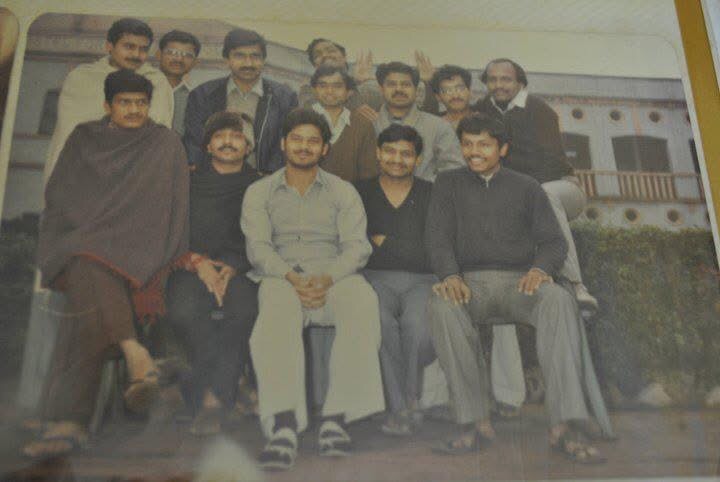
During his time at SNMC Agra, Dr. Agarwal pursued his postgraduate specialization in ophthalmology, earning his MS degree from the same institution. He also resided in Room 234 of the G.B. Pant Hostel, sharing it with fellow student Rakesh Khurana, forging bonds that likely influenced his formative years in medicine.
Professional Career
With over 30 years of experience in ophthalmology, Dr. Agarwal established himself as a leading consultant in Saharanpur, Uttar Pradesh. His practice is conveniently located near the iconic Clock Tower in the heart of the city, making eye care accessible to a wide population in this region. Clinical work and teaching remain his lifelong passions, where he has mentored generations of medical students and residents, emphasizing practical skills alongside theoretical knowledge.
Contributions to Medical Literature
Dr. Agarwal is a prolific author, extending his expertise beyond clinical practice into scholarly works. Contrary to any assumptions of specialization solely in ophthalmology, his writings span interdisciplinary fields, including chemistry—likely drawing from his foundational scientific training—and ophthalmology. Notably, he has co-authored several influential texts, including the acclaimed Textbook of Ophthalmology (Thieme Publications, 2021; Second Edition, 2022) with Dr. Sanjeev Kumar Mittal, MS, FICO (Japan), Professor and Head of the Department of Ophthalmology at All India Institute of Medical Sciences (AIIMS), Rishikesh. This comprehensive volume, tailored for undergraduate medical students and aligned with the competency-based curriculum of the Medical Council of India, covers anatomy, physiology, therapeutics, and community ophthalmology, enriched with over 300 clinical images, algorithms, and procedural videos. It serves as a foundational resource for MBBS students, postgraduate residents, and practicing ophthalmologists alike.
His collaborations with Dr. Mittal underscore a commitment to advancing eye health education, with additional publications blending chemistry principles (such as in biochemical aspects of ocular diseases) and clinical ophthalmology. These works have earned praise for their clarity, practical illustrations, and role in bridging theoretical gaps for learners.
Dr. Raj Kumar Agarwal, a distinguished ophthalmologist from Saharanpur, Uttar Pradesh, wasn’t just a healer of eyes but a spirited adventurer whose love for travel wove unforgettable stories into the fabric of his life. With over 30 years of expertise, co-authoring the Textbook of Ophthalmology with Sanjeev Kumar Mittal, Raju, as his friends fondly called him, balanced his professional rigor with a zest for exploring India alongside a tight-knit group of companions. This crew—Dr. Bohra, Dr. Bahukhandi, me- Dr. P.K. Gupta and Raju’s cousin Pintu, —formed a travel posse that crisscrossed the country, Mumbai, Goa, Rohtang pass, Kausani, Almora, relying on the hospitality of Raju’s vast network of relatives for boarding and lodging, leaving their wallets free for the journey itself.

One of the group’s most memorable escapades was a voyage from Mumbai to Goa by ship. The overnight journey on the deck, under a canopy of stars, buzzed with the chatter of Swedish travelers. “Look at these folks, Raju,” I said, nudging him as we leaned against the railing, the sea breeze whipping around us. “They’re probably writing postcards about this already.” Raju grinned, his eyes glinting with mischief. “Let’s give ‘em a story to tell—pass me that soda, let’s toast to the ocean!” The night dissolved into laughter, shared snacks, and tales swapped with strangers, with Raju’s infectious energy keeping the group’s spirits high.
In Goa, Raju’s sharp instincts shone through during a trip to South Goa. I’d left my room unlocked at the guesthouse—a rookie mistake. Halfway down the road, Raju’s voice cut through the hum of our chatter: “Wait, whose room’s open? Doc, is it yours?” I froze, realizing my error. “Let’s check,” he insisted, already turning back. Sure enough, the door was ajar. “You’re lucky I’m here,” he teased, securing the lock with a flourish. “Next time, I’m charging you for babysitting!” His care for details, masked by playful jabs, saved the day, and we continued our adventure, exploring Goa’s beaches and vibrant markets.
Another journey took us to Kanpur, where Raju introduced me to Renu, his would-be wife, then a sharp-witted MS Gynecology student at Kanpur Medical College. She stepped out to meet us, clutching a pencil like a weapon, her eyes sizing us up. “Raju, you didn’t say your friends were this rowdy,” she quipped, a smile breaking through. Raju laughed, “Renu, they’re harmless—just don’t let them near your books!” Their chemistry was instant, a blend of wit and warmth. Raju and Renu later married, settling in Saharanpur, where they built a thriving practice together—his ophthalmology expertise complementing her gynecological prowess. Their two daughters, Archi and Akshi, followed in their footsteps, becoming doctors themselves. Archi, the elder, a pathologist, married an army officer, while Akshi, the younger, chose gynecology like her mother. “My girls are tougher than me,” Raju would boast, his pride unmistakable.

Raju’s love for life extended to Dehradun, where he relished the crisp hill air and the laid-back vibe of Rajpur Road. After a couple of drinks, he’d lead our group on late-evening wanders, the streets alive with the hum of night markets and distant music. “This is living,” he’d say, raising an imaginary glass to the starry sky. “Why stay cooped up when you can roam?” Those nights were filled with banter, from debating the best roadside chai to dodging stray dogs, with Raju’s laughter echoing down the road.
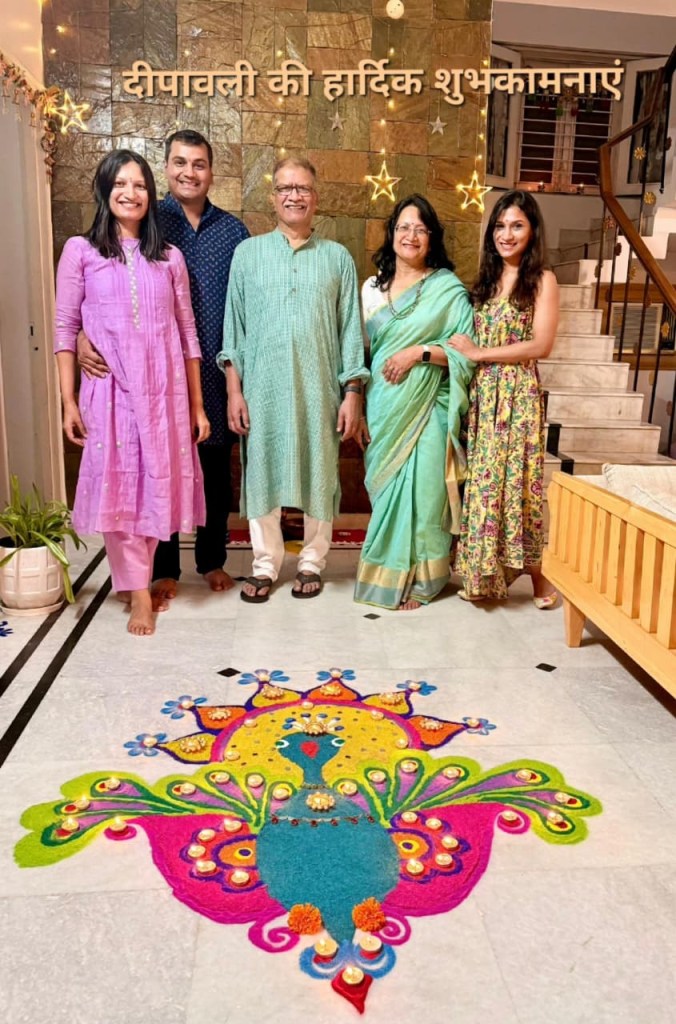
Dr. Raj Kumar Agarwal’s life was a tapestry of precision in his profession and passion in his pursuits. Whether saving a forgetful friend’s belongings in Goa, charming his future wife in Kanpur, or savoring Dehradun’s evenings, Raju lived with a careful eye and an open heart, leaving a trail of stories as vivid as the places he explored.
Personal Life and Legacy
Dr. Agarwal’s journey from the verdant fields of Titron to the corridors of SNMC Agra and beyond exemplifies resilience and intellectual curiosity. His dedication to underserved communities in Saharanpur reflects a deep-seated passion for equitable healthcare. Today, at an age that places him in his mid-60s (based on his 1979 entry into medical college), he continues to inspire through his practice and writings, leaving an indelible mark on ophthalmology in northern India.


 deemagclinic
 deemag and chest clinic