
In the sweltering summer of 1979, when the Yamuna’s banks shimmered like a mirage and the streets of Agra buzzed with the chaos of med school dreams, a towering figure from Ghaziabad rolled into Sarojini Naidu Medical College like a storm cloud on legs. Dr. Satish Sharma—fair-skinned, above-average height, with a muscular build that strained every kurta he owned—was no ordinary fresher. Nicknamed “Pahalwan ” (or simply “Pahelwan”) by his awestruck batchmates, Satish was a walking testament to discipline and dairy: a man who squatted daily like a wrestler prepping for the akhara, his thick mane of hair and booming voice completing the picture of a pahalwan straight out of a dusty village dangal. “Yaar, tu toh Himalaya se utra lagta hai!” his roommate once joked. Satish, flexing absentmindedly as he cracked open an anatomy text, would rumble back in his gravelly baritone, “Himalaya nahi, Ghaziabad ka asli pahad hoon main—mazboot, aur kabhi na tootne wala!”
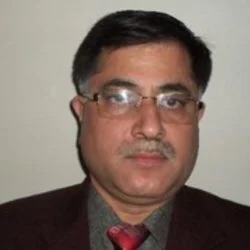
Satish hailed from the bustling lanes of Ghaziabad, where his father was the principal, Adhyatmik Nagar inter college, a prestigious local college. Born on 3rd October 1961 in Gaziabad Uttar Pradesh l, he is a legend in many ways.
Satish writes..- PK Bhai though full of artistic liberty but some corrections ,I was in room no 231 Pant hostel, my father was Principal , Adhyamik nagar Inter college .yes my Dadaji n Grandpa were Agriculturist/ farmer.
But it was his grandfather, a wiry old patriarch with a mustache like a broom and eyes sharp as a surgeon’s scalpel, who set the tone for Satish’s med school saga. As the young man packed his bags for Agra—a three-hour chug on a rattling bus—Dada ji pulled him aside in the dim glow of a kerosene lamp. “Beta Satish,” he said, clapping a gnarled hand on his grandson’s broad shoulder, “Agra ja raha hai tu padhne, par yaad rakh: khana theek se khana, aur dahi dood ki kami nahi honi chahiye. Dahi khayega toh sharir mazboot rahega, dimag tez chalega.” Satish, towering over the old man but grinning like a schoolboy, straightened up and thumped his chest. “Dada ji, chinta mat karo. Dahi ki kami? Nahi hogi—promise! Main toh Agra pahunchte hi doodh-dahi ka factory laga doonga!” Little did Dada ji know, Satish took that vow to heart, turning it into a lifelong creed of strength through sustenance.

Life in G.B. Pant Hostel was a pressure cooker of ragging, all-nighters, and stolen samosas, but Satish’s room—Number 231, third floor—was a sanctuary of the absurd. Amid the clutter of stethoscopes and scribbled notes, there sat a permanent fixture: a massive aluminium cauldron in bubbling away on a single electric stove, perpetually filled with boiling milk sweetened with white sugar from a ever-present sugar pot. The air was thick with the caramelized scent, a beacon for hungry wanderers. “Pahwan, ek glass de de!” batchmates would plead, banging on the door after late lectures. Satish, mid-squat—his daily ritual of 100 reps with a backpack stuffed with bricks—would rise like a genie, ladle out a steaming mug, and declare in his pahalwan growl, “Piyo, bhai! Yeh doodh mera secret hai—muscles banata hai, aur surgery mein haath steady rakhta hai. Par yaad rakh, meat ya daru? Kabhi nahi! Main wahi hoon jo Dada ji ne banaya—pakka vegetarian pahad!”
I remember it like yesterday—I’m Dr. P.K. Gupta, his old neighbor from Room 236, and one monsoon evening in our first year, disaster struck. I’d hung my socks to dry on the third-floor railing, only for a gust to send them fluttering down to the muddy courtyard below. Heart pounding, I vaulted over the edge, dangling precariously by my fingertips, yelling for help like a fool. “Arre Satish! Upar kheench le mujhe!” I hollered, my arms burning. In seconds, the door flew open, and there was Pahalgam, his thick hair tousled, eyes wide but calm. Without a word, he leaned out, wrapped one massive hand around my wrist—like I weighed nothing more than a scalpel—and hauled me back over the railing in a single, effortless heave. I collapsed onto the floor, gasping, while he dusted his hands and boomed, “PK, tu toh chidiya hai mere saamne! Agli baar socks girenge toh pehle bata—main neeche jaake utha launga. Par yeh pahalwan ka haath hai, dekh liya na?” We laughed till our sides ached, sharing a glass of his cauldron brew, the rain pattering outside like applause.
Satish wasn’t just brawn; he was a bulldozer on the field. Thick-skulled when powerlifting, intelligent when in surgery, in the best (and sometimes worst) ways, he channeled his energy into sports, hurling shot puts and hammer throws with the focus of a man wrestling destiny. But directions? Eh, not his strong suit. During college athletics, he’d grip the shot put, muscles rippling under his vest, and launch it with a roar—”Le jaa!”—only for it to veer wildly, nearly clocking a hapless spectator. “Satish, direction dekh le pehle!” the coach would bellow. Satish, rubbing his neck sheepishly, would mutter, “Sir, ball ko bola tha seedha jaane ko, par woh sunta nahi!” No malice, just pure, reckless power—like a truck ignoring the lane lines.
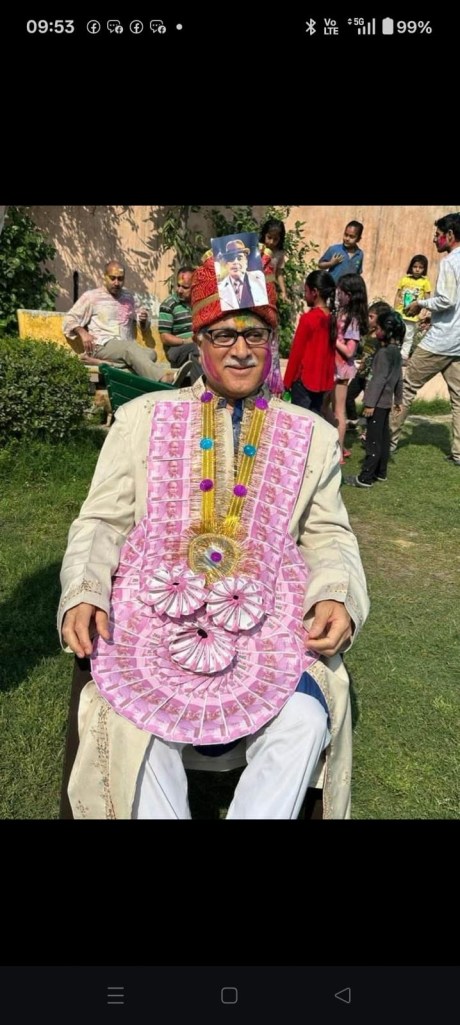
His inseparable sidekick was Dr. Parveen Bansal, the squat orthopaedic dynamo from our batch, with his milk rituals and upside-down study fads. Together, they were a sight: Satish the towering Tata truck, heavily laden and thundering ahead; Parveen the compact hauler beside him, both speeding recklessly down Agra’s potholed roads on a shared scooter that groaned in protest. “Bandhu, dheere chal!” Parveen would yell over the engine’s whine, clinging to Satish’s back as they weaved through cycle rickshaws. Satish, wind whipping his thick hair, would laugh that deep pahalwan bellow: “Arre Parveen, zindagi short hai—speed se jeeyenge! Tu apni haddiyan sambhaal, main scooter sambhal loonga!” Off they’d zoom to the canteen or a midnight anatomy run, two forces of nature leaving dust and awe in their wake.
By the time Satish wrapped his MBBS and powered through his MS in General Surgery at SNMC, he was a legend: the undefeated pahalwan who never touched alcohol or meat, whose squats outlasted the fittest juniors, and whose cauldron milk had fueled more all-nighters than coffee ever could. Agra couldn’t contain him. Back in Ghaziabad, he channeled that unbreakable spirit into Tej Nursing Home in Kavi Nagar—a bustling surgical haven at J-154, Patel Nagar (just a stone’s throw from the heart of the action), where he now wields the scalpel with the same steady hand that once lifted me from doom. Patients flock to him for everything from appendectomies to hernia repairs, drawn by his booming reassurance: “Chinta mat karo, bhai—main yeh kaam kar doonga, jaise pahalwan kaatil ko hara deta hai!”

Decades on, Satish remains unchanged, a proud teetotaler and vegetarian colossus, still squatting daily and preaching the gospel of dahi and doodh. At batch reunions, as the pegs flow and the stories fly, he’ll raise a glass of lassi and thunder, “Dekho, main wahi hoon—kabhi na badla! Dada ji ka vada nibhaaya, aur ab patients ka ilaaj kar raha hoon.” And we, his old mates, nod with grins, knowing the pahalwan from Ghaziabad didn’t just build muscles—he built a legacy, one milky boil at a time.


 deemagclinic
 deemag and chest clinic