
In the bustling corridors of New Delhi’s Fortis hospital medical world, where the air hums with the urgency of beeping monitors and hurried footsteps, Dr. Subhash Shalya stood out not for his booming voice or flashy demeanor, but for the quiet precision of his hands. An orthopedic surgeon whose life seemed woven from the same unyielding steel he used to mend broken bones, Subhash was a man who fixed what was fractured in others while carrying his own subtle cracks. Born into a time when India was still finding its footing post-independence, he chose a path of service that echoed the simplicity of his roots—rooted in Agra, the city of the Taj, where love stories are etched in marble, but his own tale was one of solitary devotion to the human frame.
Picture a young Subhash in 1977, a lanky 18-year-old with eyes sharp as scalpels, pedaling into the sun-baked gates of SN Medical College in Agra on his trusty black Atlas cycle. The college, with its echoing lecture halls and the faint scent of antiseptic mingled with monsoon mud, was about to become his forge. “Beta, why waste time on buses when these legs and this cycle can carry you anywhere?” his father would chide with a chuckle, slapping the handlebars as if they were old friends. Subhash just grinned, his white kurta flapping like a sail in the wind. He wasn’t one for small talk, but those early mornings on the cycle—dodging potholes and street vendors—taught him resilience, the kind that would later steady his hand during a 12-hour knee replacement.
Medicine wasn’t a family legacy; it was a quiet rebellion against the grain merchants and shopkeepers of his neighborhood. Subhash dove in headfirst, earning his MBBS in 1981 amid late-night cram sessions under a single bulb, fueled by endless cups of milky chai. But it was orthopedics that hooked him—the poetry of bones, the architecture of joints that could crumble like ancient minarets or rebuild stronger than before. “You see, Ramesh,” he’d confide to a classmate over a shared plate of aloo parathas in the canteen, his voice low and thoughtful, “a fracture isn’t just a break; it’s a chance to realign. Like life, no?” By 1988, he’d clinched his MS in Orthopedics, followed by an MS in General Surgery in 1990, his thesis on trauma care earning nods from professors who saw in him a rare blend of empathy and engineering.
But Subhash’s signature wasn’t in dusty degrees—it was in the crisp white safari suit he favored, a nod to the old-school elegance of 1970s Bollywood heroes. Even as a senior resident, he’d arrive at rounds impeccably dressed, the fabric spotless despite the Agra dust, his black Atlas parked defiantly outside like a loyal steed. Patients whispered about it: the doctor who looked like he’d stepped out of a wedding invitation, yet knelt on grimy floors to examine a laborer’s twisted ankle. “Doctor saab, aap toh bilkul film star lagte ho!” an elderly auntie once teased during a clinic visit, her arthritic knee propped on his stool. Subhash’s laugh was rare, a soft rumble like distant thunder. “Arre aunty ji, yeh suit sirf bones ko impress karne ke liye hai. Aapka dard hi mera asli star hai.” He’d adjust her knee brace with the gentleness of a storyteller turning a page, explaining the joint’s mechanics as if sharing a secret from the stars.

The stress of postgraduation
The emergency ward at S N Hospital was a whirlwind of controlled chaos—beeping monitors, hurried footsteps, and the sharp scent of antiseptic. It was well past midnight, and the fluorescent lights cast a stark glow over the scene. Dr. Shalya, (who later became a renowned orthopaedic surgeon whose reputation for precision bone-setting was matched only by his larger-than-life personality), had just burst through the doors. His usually confident demeanor was gone, replaced by wild-eyed panic. His hands clutched his chest, his voice echoing through the ward: “I’m having a decerebrate attack! I’m dying! Someone call Dr. M.C. Gupta—now!”
The junior doctors froze, exchanging glances. A decerebrate attack? The term, tied to severe brain stem damage, seemed wildly out of place for the robust, larger-than-life Dr. Shalya, who’d been operating on complex fractures just hours earlier. But his distress was real—sweat beaded on his forehead, his breathing ragged, his voice a desperate howl. “Get Dr. Gupta! He’ll know what to do!” he gasped, collapsing onto a stretcher as nurses scrambled to check his vitals.
The call went out, piercing the Agra night. Far across the city, Dr. M.C. Gupta, the beloved professor known for his dark glasses and mustard-yellow Ambassador, was roused from sleep. His phone rang insistently, and the voice on the other end, a trembling intern, relayed the situation. “Sir, it’s Dr. Shalya—in the ER, saying he’s having a decerebrate attack. He’s asking for you.”
Dr. Gupta sighed, rubbing his eyes. “A decerebrate attack? Shalya’s flair for drama hasn’t changed,” he muttered, already pulling on his coat. “Tell him I’m coming.” He climbed into his Ambassador, the engine rumbling to life as his loyal chauffeur, ever unruffled, navigated the empty streets toward Hospital. The journey was long, cutting through the humid night, but Dr. Gupta’s mind was already at work. Shalya, his former postgraduate student, was brilliant but prone to high-strung moments. This didn’t sound like a neurological crisis—it sounded personal.
Back in the ER, Dr. Shalya was a storm of anxiety. “My arms—they’re stiffening!” he shouted, clutching at a nurse. “It’s my brain, I know it! I’ve seen it in textbooks!” The junior doctors, unsure how to handle a senior colleague in such a state, tried to calm him. “Sir, your vitals are stable,” one ventured. “It might not be—”
“Don’t lecture me!” Dr. Shalya snapped, his voice cracking. “I fixed femurs before you! Where’s Dr. Gupta?”
The ward doors swung open, and there he was—Dr. M.C. Gupta, his dark glasses swapped for regular ones in the late hour, but his presence as commanding as ever. The room seemed to exhale. He approached the stretcher, his eyes scanning Shalya with a mix of concern and amusement. “Shalya, my boy, what’s this about a decerebrate attack?” he said, his voice warm but teasing. “You’re howling loud enough to wake half of Agra.”
Dr. Shalya’s eyes locked onto his mentor, relief flickering through his panic. “Sir, I—I can’t breathe, my heart’s racing, my arms feel wrong. It’s decerebrate posturing, I’m sure of it!” His voice trembled, but Dr. Gupta’s steady gaze held him.
“Alright, let’s sort this out,” Dr. Gupta said, pulling up a chair to sit at eye level. He placed a hand on Shalya’s shoulder, his touch firm yet gentle, a trick he’d taught countless students to calm a frightened patient. “First, take a slow breath with me. In… and out.” Shalya, still shaking, followed reluctantly, his breaths uneven but slowing.
“Good,” Dr. Gupta said, nodding. “Now, tell me exactly what happened tonight.” His tone was unhurried, as if they were chatting over chai, not in a bustling ER. Shalya stammered through his story—a stressful day, a dengue case spiking his own fears (he’d lost a patient to it years ago), and then a sudden wave of terror that his symptoms matched some catastrophic neurological event.
Dr. Gupta listened, nodding thoughtfully, letting Shalya’s words spill out. When he finished, Dr. Gupta leaned back, a small smile tugging at his lips. “Shalya, you’re a brilliant, but you’ve diagnosed yourself into a corner. This isn’t a decerebrate attack—it’s a panic attack. Your heart’s racing because you’re scared, not because your brain’s shutting down.”
Shalya blinked, his face a mix of doubt and hope. “But sir, the stiffness, the—”
“Your arms are tense because you’re clenching every muscle,” Dr. Gupta interrupted gently. “I’ve seen you operate—you’re stronger than most. Let’s try something.” He guided Shalya’s hands to relax, showing him how to unclench his fists. “See? No posturing. Just a body reacting to stress. And this dengue fear—have you had a fever? Rash?”
Shalya shook his head, his breathing steadier now. “No, sir. Just… worry.”
Dr. Gupta chuckled softly. “Worry’s a powerful thing. I had a patient once, a farmer, convinced his cough was lung cancer. Talked him through it, asked about his crops. He calmed down, and we found it was just bronchitis. You’re not so different right now.”
The ER staff watched, marveling at how Dr. Gupta’s calm presence tamed the storm. He turned to a nurse. “Get him some water and a quiet room for a bit. No monitors, no fuss.” To Shalya, he added, “You’re going to sit, breathe, and tell me about that new knee replacement technique you’re so proud of. Deal?”
Shalya managed a weak smile, the first since he’d arrived. “You came all this way, sir… I’m sorry.”
“Nonsense,” Dr. Gupta said, waving a hand. “You trusted me enough to call. That’s what matters.”
As Dr. Gupta stepped out, leaving Shalya in the care of a now-relaxed ER team, he climbed back into his Ambassador. The night was still, the city asleep, but he felt the quiet satisfaction of a crisis averted—not with drugs or scalpels, but with words, presence, and trust. Years later, students like Dr. Shalya—whose life was tragically cut short by dengue—would remember him not just as a skilled surgeon, but as a man who’d once been saved by the steady hand and warm voice of Professor Gupta, the mentor who always answered the call.
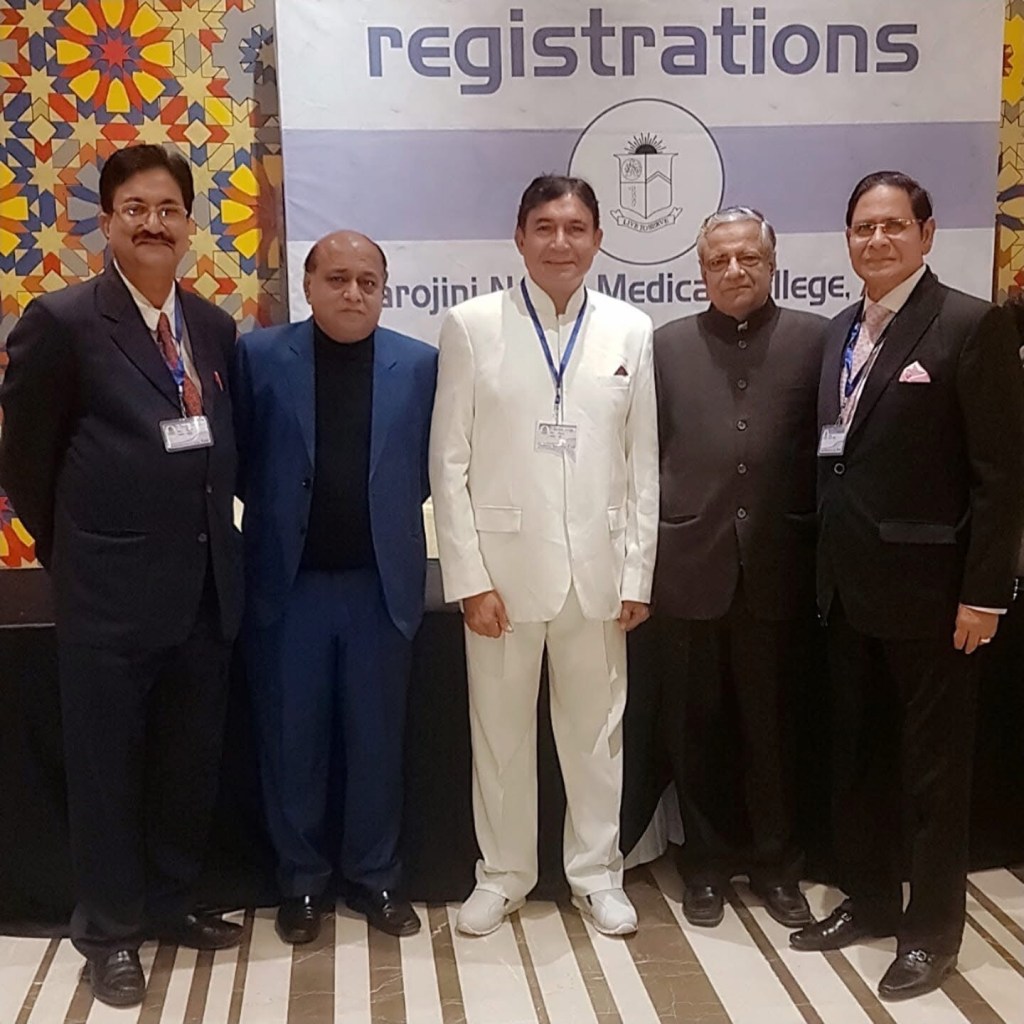
By the mid-1990s, with a Postgraduate Diploma in Rehabilitation from AIIPMR Mumbai under his belt, Subhash had traded the cycle lanes of Agra for the chaotic pulse of New Delhi. He settled in Sarita Vihar, a pocket of South Delhi where the Yamuna’s whisper met the roar of urban ambition. In 2005, he founded the Bone Joints Care Foundation of India, an NGO that became his quiet crusade—a haven for pediatric and geriatric patients battling deformities and disabilities. No frills, just free consultations and rehab sessions where he’d roll up his safari sleeves and demonstrate exercises himself. “Healing isn’t about the knife alone,” he’d tell wide-eyed interns, his voice steady as he fitted a child’s custom brace. “It’s about giving them wings on feet that once faltered.”

His scalpel shone brightest at Apollo Hospital in Delhi, where he pioneered knee transplants that turned despair into dance floors. Over the years, he performed hundreds—perhaps thousands—of these life-altering surgeries, each one a testament to his mastery of arthroscopy, complex trauma, and reconstructive wizardry. One patient, a retired cricketer whose knee had buckled under a lifetime of boundaries, recalled the OR moment vividly: “Doc, I thought this was it—end of the innings. But you looked at me over your mask and said, ‘Captain, we’re just switching to the second over. You’ll be batting centuries again.'” True to his word, the man walked out unaided weeks later, sending Subhash a signed bat that hung proudly in his clinic. Subhash’s expertise earned him spots as a visiting senior consultant at Fortis C-Doc, Max Hospital Noida, and NMC Hospital—places where his white-suited calm steadied the stormiest cases. He was a member of the Indian Orthopaedic Association and Delhi Orthopaedic Association, rubbing shoulders with giants, yet always the one slipping away early to check on a follow-up patient.

Subhash’s life, though, was a solo symphony. He never married, channeling his boundless energy into travels that fed his soul as much as his craft. From the orthopedic conferences in Vienna, where he’d sketch joint models on napkins, to volunteer stints in rural Rajasthan fitting prosthetics for accident victims, his passport stamps outnumbered wedding invitations. “Marriage? That’s for those who need anchors,” he’d quip to a probing colleague over filter coffee at India Habitat Centre. “Me? I’m happiest chasing horizons—or a perfect alignment.” Back home, evenings were for his Atlas, now retired but polished, symbolizing a freedom he guarded fiercely. No family photos on his desk, just X-rays transformed into triumphs.
https://www.facebook.com/share/v/19wBsfeuVn/?mibextid=wwXIfr
But even the sturdiest frames can falter. In the sweltering summer of 2025, dengue struck like a silent ambush—a mosquito’s whisper turning venomous. Subhash, ever the stoic, dismissed the early fevers as “just another long day in the OR.” Admitted to Apollo, the same halls where he’d saved so many, he fought with the grit that defined him. Extracorporeal treatments—dialysis machines humming like weary sentinels—pushed back the shadows, but the virus clawed deeper. Nurses hovered, whispering encouragements he’d once given freely. “Doctor saab, aap toh humare hero ho. Thoda aur lad lo,” one pleaded, tears blurring her scrubs. In his delirium, Subhash murmured, “Bones heal… but time? That’s the real surgeon.” On a rain-lashed September evening in 2025, surrounded by the colleagues he’d mentored and patients he’d reborn, Subhash slipped away peacefully at 66. The man who’d mended countless knees couldn’t outrun his own fragility.
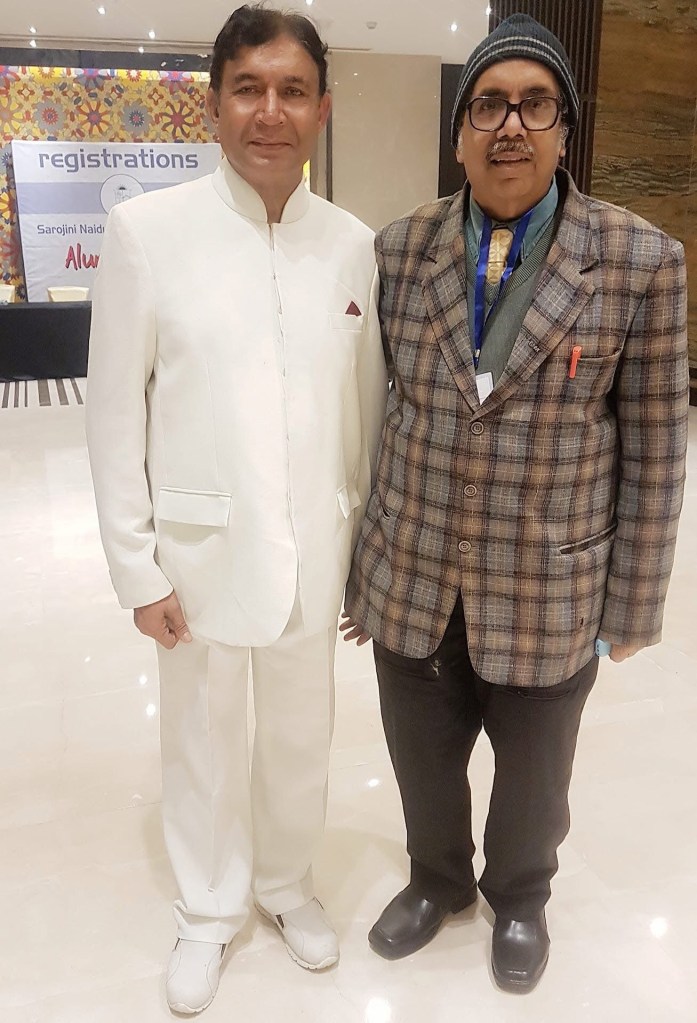
Delhi’s orthopedic community mourned not with fanfare, but with quiet resolve—much like him. His foundation thrives, a living brace for the broken. And if you pedal through Sarita Vihar on a black Atlas today, you might feel a breeze, like a safari-suited ghost whispering: “Keep moving. The next alignment awaits.” Subhash Shalya didn’t just fix bodies; he reminded us that in the grind of fractures and fevers, it’s the unyielding spirit that truly stands tall.


 deemagclinic
 deemag and chest clinic