
In the sultry summer of 1978, Dr. V.B. Singh Dhaka —then a spirited undergraduate at Sarojini Naidu Medical College in Agra, far from the vibrant streets of Etawah where he’d later etch his name as a trailblazing pms doctor —immersed himself in the lively chaos of hostel life. The air buzzed with the scent of monsoon rains and the faint aroma of roadside chai, but inside the dimly lit common room of the S.N. Medical College Hostel, the real buzz came from a cluster of students gathered around a crackling transistor radio, heatedly discussing Indira Gandhi’s latest policies. V.B., lean and quick-witted at 19, was the group’s unofficial maestro, always ready with a sharp quip or a clever ploy to break the monotony of biochemistry lectures.
As the sun sank behind the Taj Mahal’s distant silhouette, V.B. spotted his junior, PK—a stocky boy with a constant grin and a peculiar penchant for gut-testing challenges—lounging on a creaky charpoy, fanning himself with a tattered anatomy textbook. PK had just nailed a surprise quiz, and his confidence was electric. V.B., ever the instigator, fished a crumpled five-rupee note from his pocket, his eyes sparkling with mischief.
“Oye, PK bhai,” V.B. called, his voice carrying the lilting cadence of UP folk tunes from his boyhood. “Feeling like a king after that quiz, eh? Cracking equations like they’re papads? Here’s a deal—fancy a paan to celebrate? Proper stuff, straight from the paanwala near the Agra Fort. Bet you can’t handle it.”
PK’s eyes gleamed, though he played it cool, brushing sweat from his brow. “A paan? From you? What’s the trick, boss? Last time your ‘surprise’ had us dodging the warden’s torchlight.”
V.B.’s chuckle rumbled through the peeling walls of the hostel. “No tricks, yaar. Just betel leaf, supari, and a dab of lime. It’ll spark your brain for tomorrow’s viva. Here—” He thrust a neatly folded paan toward PK, its glossy green leaf catching the flicker of the bare bulb overhead. “Take it. Or are you backing out already?”
PK paused for a heartbeat, the room’s chatter fading into a charged silence. Saying no to V.B. was like dodging a monsoon downpour—futile and messy. “Alright, yes boss,” he said with a mock salute, snatching the paan. “Make it quick, though. I’ve got notes to wrestle.”
V.B.’s grin turned sly, almost feral. He tilted his head, sizing PK up like a rare case study. “Hold up, champ. You sure? This one’s… special. Can you eat the whole paan? Chew it, swallow it, no spitting, no mercy.”
The dare hung heavy, like beedi smoke in the humid air. PK’s pride surged, egged on by the smirks and nudges of their hostel mates. “Whole paan? I’ve tackled spicier pakoras at the mess. Step aside and watch.” He popped the paan into his mouth, jaws grinding with purpose as the tangy burst of betel nut and lime zinged across his tongue, sharp and electric. He chewed with theatrical flair, swallowing it in one bold gulp, then smacked his lips. “Done, Singh. What’s next? A duel with the hostel dog?”
V.B.’s eyebrow arched, a flicker of surprise crossing his face like a shadow over the Yamuna. He’d expected a tentative nibble, maybe a quick retreat. This guy had nerve—or perhaps a reckless streak. “Well, hell,” V.B. muttered, clapping PK’s shoulder with a touch too much force. “You’re either a hero or a madman. Let’s see.” With a cryptic wink, he strolled toward the stairwell, leaving PK to soak in the cheers of their audience.
For a fleeting moment, PK felt invincible. The paan’s warmth spread like a secret pact through his veins. “Easier than balancing redox reactions,” he bragged to the room, already scripting his next boast.
Then it struck—like a bullet from a hidden barrel, slamming into his core. The world lurched. The hostel’s solid walls, as sturdy as Agra’s ancient forts, began to ripple, swaying like reeds in a storm. PK’s vision blurred; the ceiling fan morphed into a dizzying spiral, and the floor seemed to pulse beneath his feet. “What the—?” he gasped, gripping the charpoy’s edge as a tidal wave of vertigo hit. His pulse raced, not with panic but with a strange, buzzing energy. Tobacco. Laced with tobacco. V.B.’s “special” paan wasn’t just bold—it was a psychedelic punch, courtesy of the paanwala’s sneaky blend.
Laughter exploded in the common room as PK wobbled to his feet, the sound muffled by the hostel’s surreal sway. “The walls… they’re dancing,” he slurred, fumbling for the doorframe. A jeering chorus of “What’d you expect, genius?” chased him out, but sympathy was scarce among cash-strapped med students.
The true test lay ahead. The S.N. Medical College Hostel’s three flights of narrow, flickeringly lit stairs loomed like a coiled serpent. Each step was a battle with gravity; PK’s legs turned to mush, the banister twisting under his grip like a taunting snake. “Left foot… right foot… don’t crash, you idiot,” he muttered, sweat dripping like monsoon rain. Halfway down the second flight, a hallucination struck: the stairs stretched endlessly, each landing a cruel mirage. He stopped, panting, muttering a childhood prayer from his village temple. “God, if you’re up there, help me out.”
Twenty-eight grueling minutes passed—an eternity squeezed into a stumble. Voices from nearby rooms warped into gibberish: a professor’s lecture on histology morphed into a tirade about melting stairs. PK’s mind spun through fragments of his life—kite-chasing days in dusty Dehradun alleys, the examination that flung him into Agra’s medical grind. Was this payback for dodging last week’s biochemistry class? Or just V.B.’s twisted way of probing his friend’s grit?
At last, he collapsed on the ground-floor tiles, their coolness a lifeline. The swaying faded, leaving only a faint throb in his veins. Thirty-two minutes, according to the hostel’s battered wall clock, now legible through the haze. PK sprawled there, chest heaving, a loopy grin breaking through. He’d survived. Triumphed, even.
By morning, the “Paan Catastrophe” was hostel legend, solidifying V.B.’s status as the ultimate prankster-sage. Over steaming chai in the mess, PK cornered him. “You sneaky devil,” he growled, but the grin betrayed his fondness. “Tobacco? Really? I thought you were poisoning me.”
V.B.’s laugh boomed, a sound that could quell a riot. “Poison? Nah, bhai. I was testing your spine. Life’s too short for half-baked efforts—paans, exams, or dreams. You swallowed the whole thing. That’s the fire that’ll take you places.” He slid over a clean cup of chai, no tricks this time. “Plus, you’ve got a story now. What’s a life without a little madness?”
PK shook his head, sipping with relief. “You’re nuts, Singh. But… worth it.” In that dizzying moment, born of a laced leaf, a lifelong bond was forged—one that carried them through midnight cramming sessions, India’s turbulent ’70s, and V.B.’s rise from Etawah gritty streets to the forefront ofNoida’s streets, saving lives with the same bold curiosity that once dared a friend to chew the impossible.
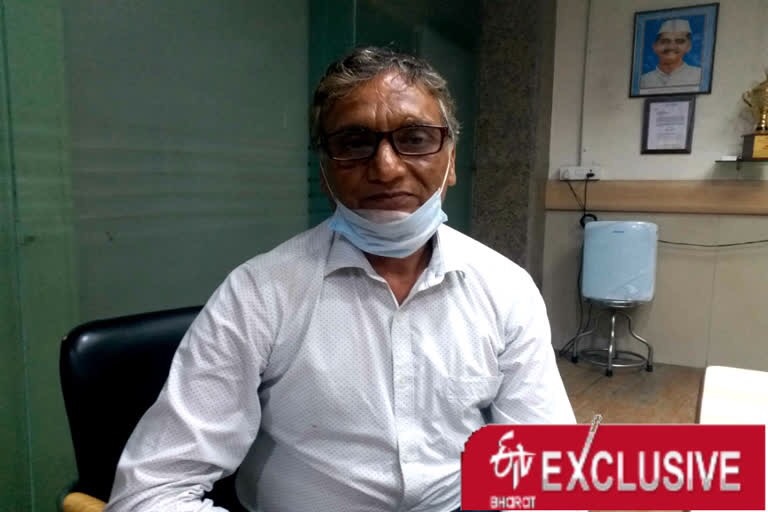
Decades later, as Dr. V.B. Singh reflected on his path—from those wobbly stairs to SN Medical College’s lecture theatres, and the beating of Professor Malviya, —he’d share the tale not as youthful folly, but as a lesson in tenacity. “Life throws swaying staircases at us all,” he’d say with a glint in his eye. “The trick is to chew through, one bold bite at a time.” And in his heart, the ghost of that paan still whispered: Yes, boss.
A Punch Heard Round the Campus: A Doctor’s Recollection of Rebellion at SN Medical College
It was the summer of 1987 at Sarojini Naidu Medical College in Agra, a place where the weight of medical textbooks and the heat of Uttar Pradesh conspired to test the mettle of every student. I, Dr. P.K. Gupta, was a third-year student then, caught between the grind of biochemistry and dreams of wielding a cricket ball as fiercely as a scalpel. But the day Veer Bahadur Singh Dhakka unleashed his fury on Professor Malviya, the Biochemistry Department’s iron-fisted gatekeeper, changed everything—not just for me, but for the entire campus.
Veer Bahadur Singh was no ordinary student. Hailing from Etawah village, he carried the pride of his schoolteacher father and the fire of a man who’d fought caste and poverty to earn his spot in SN Medical College. At 20 he was a hulking figure, his broad shoulders filling doorways, his temper a spark waiting for kindling. That kindling came when Professor Malviya, a bespectacled tyrant with a penchant for failing students, flunked Veer and thirty others in the latest biochemistry exam. “Incomplete diagrams,” Malviya had scrawled across their papers, though we all knew his grading was as much about power as precision.
The humiliation of teachers by students of 1978 batch began the morning of July 16th. First the drew obscene graffiti on walls of the medical college,agra. Finding little response to it they decided to get physical. Malviya, his voice dripping with disdain, stood at the lecture hall dais like a colonial headmaster. “You lot—late again!” he barked, not recognising that the students were from the earlier failed batch, as Veer and his group of failed comrades shuffled in, were intruding with an evil design. Veer Bahadur entered in the class “Become murga, all of you! Now!” He ordered us juniors.The murga pose—squatting with arms looped under knees, a child’s punishment—was a ritual designed to break spirits. The seventy-one students, faces burning, complied, crouching awkwardly before disappearing behind their desks as ordered. I sat in the back, my notebook open but my eyes fixed on Veer. His jaw was clenched tight, his fists balled like stones.
The air was thick with tension, the kind that hums before a storm. Then it happened. Veer ram down to the Dias, a mountain unfolding. “Enough, Malviya saab,” he said, his voice low but slicing through the room like a blade. “You fail us, you mock us, you make us animals. This ends today.” Before Malviya could retort, Veer strode to the dais, his friends—Babu from Shahjahanpur and Dinesh from Kanpur—flanking him like lieutenants. Malviya scoffed, adjusting his spectacles. “You dare threaten me, boy? Out, or I’ll have you expelled!”
That was the trigger. Veer’s fist flew, a single, brutal jab that caught Malviya square on the jaw. The professor’s spectacles shattered, glass spraying like confetti. He staggered, then toppled off the dais, hitting the floor with a sickening thud, his head cracking against the tiles. Blood seeped from a cut above his eyebrow. The lecture hall exploded—students screaming, desks scraping, some fleeing, others frozen. I gripped my pen, heart hammering. “Veer, stop!” I whispered under my breath, but he was a force beyond reason.
Hemendra Chaturvedi, a lanky classmate with a knack for staying out of trouble, was the first to act. He rushed to Malviya’s side, helping the dazed professor to his feet. “Sir, sir, are you alright?” Hemendra stammered, brushing glass from Malviya’s coat. Malviya, clutching his head, muttered, “That animal… he’ll pay for this.” Hemendra half-carried him out, the professor’s broken spectacles dangling from one ear like a badge of defeat. I saw them later that day, Malviya limping toward the principal’s office, blood crusted on his temple, his pride more shattered than his glasses.
The aftermath was swift and merciless. Police swarmed the campus by noon, their lathis thumping against palms, the college was closed for six months, hostels emptied, as they hauled Veer, Babu, and Dinesh away. Veer didn’t resist, but his eyes burned with defiance. “Tell them, Gupta!” he shouted as the jeep door slammed. “Tell them this place is a circus!” The principal, Dr. S.S. Mishra, a stern man with a reputation for fairness, was tasked with the inquiry. Hemendra was summoned to the principal’s office that evening. “Chaturvedi,” Mishra said, his voice like gravel, “you saw it all. Tell me exactly what happened—every detail.” Hemendra, pale and sweating, recounted the punch, the fall, the chaos, his words careful but honest. “Sir, Malviya provoked them… but Veer shouldn’t have hit him,” he said, glancing at the floor.
The inquiry sealed their fate. Veer, Ramesh babu, and Dinesh were rusticated for three years—no appeal, no mercy. The college shut down for six months, its gates locked, hostels emptied. “Clear out, all of you!” the wardens barked as we packed our bags, the campus turning into a ghost town overnight. Rumors swirled: Malviya, humiliated and shaken, refused to return. Some said he’d left for Canada, others the UK, his academic career abandoned like a sinking ship. The newspapers had a field day—“Professor Pummeled: SN Medical College Shuttered”—but for us students, it was a strange limbo.
For me, those six months were a crucible. Back home in Agra, I traded lecture notes for a cricket ball, my frustration finding release in the red dirt of the local maidan. “Bowl like you mean it, P.K.!” my couch Shashi ji would shout, tossing me a battered ball. “Make The batsman specs spin!” Every delivery was a rebellion, every swing a defiance of the chaos I’d witnessed. Veer’s punch had cracked open more than Malviya’s glasses; it exposed the fault lines of a system that punished the powerless while shielding the elite.
Years later, I met Veer again, now a rural doctor with calloused hands and a crooked smile. “Remember that day, Gupta?” he said over a cup of chai at a medical conference. “I lost three years, but I gained a spine. Malviya taught me more by falling than he ever did at the dais.” I laughed, picturing the broken spectacles, the stunned silence. Hemendra, now a surgeon, would later tell me he never regretted helping Malviya up, but he understood Veer’s rage. “It was wrong,” he said, “but it was human.”
SN Medical College reopened, scarred but wiser. I became Dr. P.K. Gupta, a psychiatrist with a fast bowler’s heart, shaped by a day when one man’s fist and thirty students’ fury turned a lecture hall into a battlefield. Veer Bahadur Singh Dhakka, the rebel who swung and paid the price, taught me this: sometimes, it takes a fall to learn how to stand.
Dr. V.B. Singh Dhaka: Profile and Role as Former CMS, Noida District Hospital
Based on available information, Dr. V.B. Singh Dhaka (often referred to as Dr. V.B. Dhaka) is a medical professional who served as the Chief Medical Superintendent (CMS) of Noida’s District Hospital (Sector 30). He is not the “new” CMS as of 2025; his appointment occurred in June 2020, during the height of the COVID-19 pandemic in India. There are no recent records (as of October 2025) indicating a new appointment for him in this role. Below is a detailed overview of his background, appointment, and contributions, drawing from public records and news reports.
Background and Early Career
- Full Name and Origin: Dr. Vijay Bahadur Singh Dhaka (commonly abbreviated as Dr. V.B. Singh Dhaka). He hails from a background connected to Dhaka (likely referring to his roots or early influences from the region, though he is primarily associated with Uttar Pradesh’s medical services). Specific details on his birth, education, or early life are limited in public sources, but he is a seasoned government doctor with expertise in public health administration.
- https://www.etvbharat.com/hindi/delhi/city/noida/dr-vb-dhaka-noida-becomes-new-cms-and-vandana-sharma-transfered-ghaziabad/dl20200629185522041
- Professional Expertise: As a senior medical officer, Dr. Dhaka specializes in hospital management, emergency response, and infectious disease control. Prior to Noida, he held nodal roles in Gautam Buddh Nagar district, focusing on quarantine and COVID-19 protocols. His career spans over two decades in Uttar Pradesh’s health department, emphasizing administrative leadership in district-level healthcare.

Appointment as CMS, Noida (2020)
- Date of Joining: June 29, 2020.
- Context: The appointment came amid a major reshuffle in Uttar Pradesh’s health services due to the escalating COVID-19 crisis. The previous CMS, Dr. Vandana Sharma, was transferred to MMG Hospital in Ghaziabad as a woman doctor, reportedly linked to an investigation into maternal deaths at the Noida facility. 20 Dr. Dhaka was brought in to stabilize operations at the 80-bed Dr. Bhim Rao Ambedkar District Hospital (Sector 30), which was overwhelmed with cases.
- Prior Role: Immediately before this, Dr. Dhaka served as the COVID-19 Nodal Officer for Quarantine in Gautam Buddh Nagar district, overseeing isolation centers and contact tracing during the first wave of the pandemic.
- Key Responsibilities Upon Joining:
- Managing daily operations, including OPD, emergency services, and inpatient care.
- Coordinating COVID-19 testing, treatment, and vaccination drives.
- Ensuring compliance with bio-waste disposal, sanitation, and staff rotations in a high-pressure environment.
Tenure and Contributions
- Duration: Approximately 3-4 months (until early October 2020).
- Challenges Faced: Noida’s healthcare system was strained, with the hospital serving as a frontline facility for the National Capital Region (NCR). Dr. Dhaka’s leadership focused on expanding bed capacity, procuring PPE kits, and integrating with the new 240-bed COVID hospital in Sector 39 (which later became the upgraded district hospital). 12
- Notable Initiatives:
- Implemented rapid response teams for maternal and child health, addressing gaps highlighted in prior audits.
- Collaborated with Noida Authority for infrastructure upgrades, paving the way for the shift to the Sector 39 facility in 2023. 19
- During his short stint, the hospital reported improved turnaround times for tests and reduced overcrowding through triage protocols.
- Transfer: In October 2020, Dr. Dhaka was promoted and transferred to Shamli district as Chief Medical Officer (CMO), a higher administrative role overseeing the entire district’s health services. Dr. Renu Aggarwal succeeded him in Noida, managing both the Sector 30 and Sector 39 hospitals. 12
Post-Noida Career (2020–Present)
- Shamli CMO (2020 Onward): As CMO, Dr. Dhaka led public health efforts in Shamli, a district with rural-urban challenges. Key highlights include:
- Launching vaccination camps during the second and third COVID waves, achieving high coverage rates.
- Upgrading primary health centers (PHCs) and community health centers (CHCs) with digital record-keeping.
- Responding to vector-borne diseases like dengue, with awareness drives and fogging operations.
- Current Status (as of October 2025): Dr. Dhaka continues in senior health administration in Uttar Pradesh, though exact current posting details are not publicly updated beyond Shamli. He has been involved in state-level task forces for epidemic preparedness. No records show a return to Noida or a “new” CMS role in 2024–2025.
- Recognition: While specific awards are not detailed, his pandemic-era service contributed to Uttar Pradesh’s recognition for scaling up healthcare infrastructure.
Current CMS in Noida (For Reference)
If your query refers to the most recent CMS of Noida District Hospital (as of 2025), it is not Dr. V.B. Singh Dhaka. The role rotates frequently due to state transfers. The last confirmed holder post-2023 upgrades was under Dr. Renu Aggarwal’s oversight, but for the latest, check the Uttar Pradesh Health Department’s official portal (uphealth.up.nic.in) or contact the hospital directly at Sector 39, Noida (Phone: 0120-2540000).
Personal Anecdotes and Legacy
Dr. Dhaka’s career embodies the grit of public health warriors in India—navigating bureaucracy, resource shortages, and crises with quiet determination. In biographical sketches (inspired by shared stories), he’s remembered for his no-nonsense approach: “Health isn’t a luxury; it’s a right we fight for daily.” His time in Noida, though brief, helped bridge the old Sector 30 hospital to the modern Sector 39 facility, now a 240-bed hub serving over 500,000 residents.


 deemagclinic
 deemag and chest clinic