
In the shadow of Dehradun’s rolling Doon Valley, where the Himalayas whisper secrets to the pine-scented winds, lives a man whose hands have mended more than bodies—they’ve stitched together hope in the unlikeliest places. Dr. Mahesh Kuriyal isn’t the type to chase spotlights; he’s the steady surgeon in the operating room, the one who turns chaos into calm with a scalpel and a smile. Born in the early 1960s into a modest family in the heart of Uttarakhand—back when the hills were wilder and dreams felt heavier—he grew up watching his father, a simple schoolteacher, bend over dusty books by lantern light. “Papa,” young Mahesh once asked, tugging at his sleeve after a long day, “why do you fix words for kids who can’t read? Isn’t it tiring?” His father chuckled, ruffling the boy’s hair. “Because, beta, fixing one mind lights up a hundred more. You’ll see—someday you’ll fix something even bigger.”

That “someday” arrived sooner than anyone expected. Mahesh was a curious kid, the sort who dissected earthworms in the backyard not out of mischief, but to understand the pulse beneath the skin. By 1985, at just 22, he graduated with his MBBS from King George’s Medical University in Lucknow, his eyes already set on the intricate wiring of the human nervous system. “Why brains?” his skeptical uncle prodded during family dinners, fork hovering over a plate of aloo parathas. Mahesh leaned in, his voice steady as the Ganges. “Uncle ji, the brain isn’t just an organ—it’s the map of who we are. One wrong turn, and a person’s whole world unravels. I want to be the one holding the compass.”
He didn’t stop there. In 1992, he earned his MS in General Surgery from the same hallowed halls, honing his skills on the battlefield of the body. But it was neurosurgery that called him like a siren’s song—the delicate dance of nerves, spines, and synapses. He pursued his MCh in Neurosurgery, emerging as a specialist ready to conquer the unknown. Yet, in the early ’90s, Uttarakhand was a medical backwater. No fancy ICUs, no advanced scanners—just rugged roads prone to landslides and accidents that turned lives into tragedies overnight. “Come to Mumbai or Delhi,” his mentors urged, waving job offers like golden tickets. “The hills? You’ll waste your talent there.” Mahesh shook his head, packing his stethoscope instead. “The hills aren’t wasting me, sir. They’re waiting for me.”

And so, in 1994, at the tender age of 31, Dr. Kuriyal planted his flag in Dehradun. He didn’t just open a clinic; he birthed a revolution. He became the first neurosurgeon of uttrakhand and Dehradun. With grit and a shoestring budget, he established the state’s first comprehensive Neurosciences Centre at what would become the Combined Medical Institute (CMI) Hospital on Haridwar Road. It was a modest setup—a handful of beds, borrowed equipment, and a team of wide-eyed locals—but for the 3 million souls scattered across Uttarakhand’s treacherous terrain, it was a lifeline. Bus crashes on hairpin bends, falls from apple orchards, strokes in remote villages: they all found their way to his door. Over the decades, his hands have steadied more than 4,000 brains and spines, each surgery a high-stakes gamble against the odds.
Picture this: It’s a stormy monsoon night in 2005, thunder rattling the tin roofs of CMI like an angry god. A young truck driver, Ravi, is rushed in—his skull fractured from a collision on the Char Dham highway, blood pooling like monsoon rivers. The family huddles in the waiting room, Ravi’s wife clutching their toddler, whispering prayers to the hills. Inside the OR, lights flickering from power surges, Dr. Kuriyal steadies his team. “Breathe easy, folks,” he says, his voice a calm anchor amid the beeps and buzzes. “This brain’s got stories left to tell—stories of Diwali feasts and mountain treks. We’re not ending them tonight.” Hours blur into a tense ballet: drills whirring, monitors screaming, his gloved fingers navigating a maze of fragile tissue. As dawn breaks, Ravi stirs, his first words a groggy, “Doc… did I make it home?” Dr. Kuriyal wipes sweat from his brow, grinning through exhaustion. “Not quite yet, bhai. But you’re on the road—and I’ve got the map.”

Stories like Ravi’s aren’t rare; they’re the heartbeat of Dr. Kuriyal’s career. He’s no ivory-tower surgeon—he’s rolled up his sleeves as a visiting consultant at HIHT Jolly Grant Hospital, the Military Hospital, Doon Hospital, and even ONGC’s oil rigs, where roughnecks dodge spinal snaps daily. As part of Uttarakhand’s state trauma team, he’s orchestrated responses to mass disasters, turning school buses flipped on icy passes into survival tales. Governments call on him for panels; patients, for miracles. “It’s not about the knife,” he once told a wide-eyed medical student shadowing him, as they pored over scans in the dim clinic light. “It’s about the hand behind it—the one that remembers every patient has a name, a laugh, a fear of the dark. Cut wrong, and you steal their tomorrow. Get it right, and you give them back their fire.”
At 60-something now, with silver threading his hair like Himalayan snow, Dr. Kuriyal still rises before the roosters, his clinic at 54 Haridwar Road buzzing by 8 a.m. He’s a family man too—husband to a pillar of quiet strength, father to kids who’ve inherited his unyielding curiosity. Weekends? A trek up Mussoorie’s misty trails or a family debate over chai: “Papa, why not retire to the beach?” his daughter teases. He laughs, deep and rumbling. “Beach? Too flat, beta. Give me these hills—they remind me life’s not straight lines. It’s twists, turns, and the occasional landslide. And me? I’m just the guy clearing the path.”
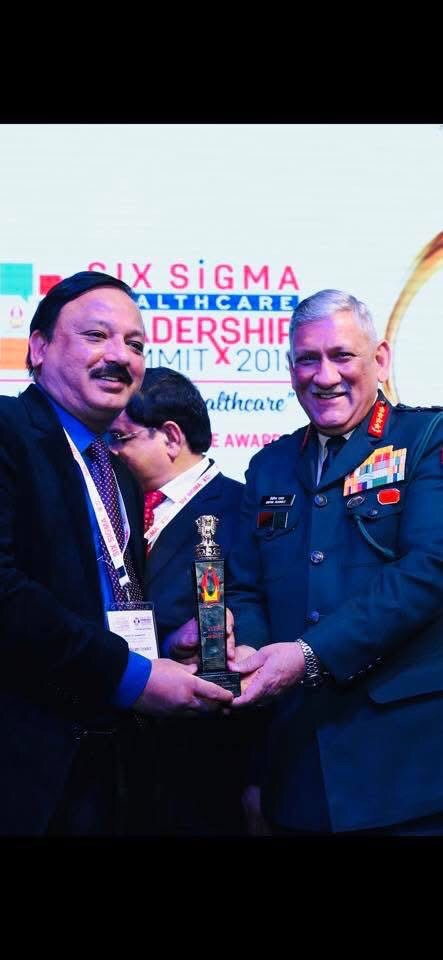
In a world of flashy reels and viral cures, Dr. Mahesh Kuriyal remains Dehradun’s unsung guardian—a pioneer who turned a valley’s voids into veins of healing. He’s not chasing awards or headlines; he’s chasing the quiet victory of one more heartbeat, one more story reclaimed. As the sun dips behind the peaks, casting golden hues over CMI’s gates, you can almost hear the hills sigh in gratitude. For in Dr. Kuriyal, they’ve found not just a surgeon, but a storyteller of the soul.


 deemagclinic
 deemag and chest clinic