
In the heart of Dehradun, where the Doon Valley hums with life, Tejwant Singh Gupta cuts a striking figure. His turban, or pugree, sits proudly atop his head, a vibrant emblem of his Sikh identity. But his surname? Gupta. That’s what throws people off. “A Sardar named Gupta?” they’d whisper, eyebrows raised, as if he were a puzzle missing a piece. Tejwant, with his booming laugh and twinkling eyes, would set them straight. “You think this is odd? Back in Mughal times, Bania families like mine sent one son to become a Sikh warrior, to take up the sword against tyranny. I’m just carrying the legacy!” he’d say, his voice rich with pride, as if he could still hear the clash of steel from centuries past.
Born in the late 1950s, Tejwant grew up in the leafy lanes of Dehradun, a lanky boy with dreams bigger than the Mussoorie hills. At St. Thomas High School, where I too wrestled with ICSE exams, Tejwant was a star. His crisp English, delivered with the precision of a cricket commentator, left teachers and students in awe. “Tejwant, recite that poem again!” Mrs. Jain, our English teacher, would urge, and he’d stand tall, his voice filling the room like a monsoon breeze. By his final year, he was school captain, leading with a mix of charm and authority. “Boys, let’s show ‘em what St. Thomas is made of!” he’d rally us before inter-school debates, his turban bobbing as he clapped us on the back.

The stage was his second home. In school plays, Tejwant was unstoppable, especially as the “ Man with the Iron Mask” in a historical drama about the man in the iron mask, by Alexandre Dumas. “I am the king’s brother, I have been imprisoned wrongly!” he’d thunder, his turban gleaming under the stage lights, while the audience erupted in applause. Offstage, he’d grin and say, “Acting’s easy when you’ve got a pugree to steal the show!”
Academics? He aced those too. Tejwant pursued a B.Sc. in Science, graduating with a solid 72%—a feat he’d boast about with a wink, saying, “Not bad for a Sardar who spent half his time rehearsing lines!” After college, he joined Pfizer, climbing the ranks to become an area manager. “It’s not just selling medicines,” he’d tell his team, “it’s about giving people hope in a pill.” His colleagues loved him—his sharp suits, sharper wit, and that ever-present turban made him unforgettable. Now retired, he lives in Patel Nagar, Dehradun, in a cozy bungalow filled with books and the aroma of kachoris.
Oh, the kachoris. Like any true Gupta, Tejwant’s heart beats for Chetan Puri Wala’s crispy, oily delights. Every Sunday, he’d drag his friends to the bustling eatery, declaring, “This, my friends, is the most ethnic breakfast in Dehradun!” He’d bite into a kachori, oil dripping down his chin, and sigh, “This is what life’s about.” His love for puris and kachoris, though, has left him a bit rounder than his schoolboy days. “More of me to love!” he’d joke, patting his belly.
But don’t mention the BJP around Tejwant. Like many Sikhs, he harbors a deep resentment, convinced they’ve stripped power from his community, unlike the Congress days when Sikhs held sway. “The BJP’s ruined everything!” he’d fume, his turban almost quivering with indignation. His sense of history, though, is a bit… creative. He once blamed the BJP for the Hindu massacres after the 1921 Moplah Rebellion in Kerala, a colonial-era event. When I pointed this out, he waved me off, flustered. “Details, details! They’re all the same, these politicians!” Praising the BJP in his presence? A surefire way to see his face turn as red as the kachori chutney.
Tejwant Singh Gupta’s Pfizer Journey: From Sales Rep to Area Manager
Tejwant Singh Gupta’s career at Pfizer was a vibrant chapter in his life, blending his natural charisma, sharp intellect, and that unmistakable turban-clad presence into a remarkable professional story. Joining Pfizer in the early 1980s, fresh from his B.Sc. with a solid 72%, Tejwant stepped into the pharmaceutical world with the same confidence that made him school captain at St. Thomas High School. His journey from a rookie sales representative to a respected area manager in Dehradun is a tale of grit, charm, and a knack for turning challenges into opportunities.
The Early Days: A Sardar in a Suit
Tejwant started as a medical representative, a role that demanded long hours, endless travel, and the ability to win over skeptical doctors. “It’s not about selling pills; it’s about selling trust,” he’d tell his colleagues, adjusting his turban before striding into a clinic. His crisp English, honed during school debates, was his secret weapon. Doctors in Dehradun’s hospitals, from Doon Hospital to private practices, couldn’t resist his polished pitch. “Dr. Jain, Pfizer’s new antibiotic isn’t just a drug—it’s a lifeline,” he’d say, his eyes gleaming with conviction. His turban, always impeccably tied, became his trademark. “The Sardar from Pfizer” was how doctors referred to him, often with a smile.
The job wasn’t easy. The 1980s pharmaceutical scene in India was cutthroat, with multinational giants like Pfizer competing against local players. Tejwant crisscrossed Uttarakhand, lugging sample cases through dusty towns, charming pharmacists and convincing doctors to prescribe Pfizer’s drugs. “I once drove 200 kilometers in a monsoon to Ambala for a pharma meet and 100 km to meet a doctor in Haridwar,” he’d recount, laughing. “Got there soaked, but I closed the deal!” His persistence paid off—within two years, he was consistently hitting sales targets, earning bonuses and a reputation as a rising star.
Tejwant Singh Gupta was a character who left an impression, not just with his actions but with the quirky way he carried himself. As his classmate, Dr. P.K. Gupta, recalls, every encounter with Tejwant came with his signature line, delivered with a mischievous grin: “Yaar, chamchguri toh humse hoti nahi!” The phrase, dripping with playful defiance, always left P.K. scratching his head, wondering what exactly Tejwant meant by it. Was it a dodge, a boast, or just his way of shrugging off the world’s expectations? Whatever it was, it was pure Tejwant—enigmatic, cheeky, and impossible to pin down.
One story from their days in Dehradun perfectly captures Tejwant’s knack for leaving a trail of bemused friends behind him. Tejwant often visited Dr. Nand Kishor, a well-known psychiatrist in the city, for professional calls. On one such visit, while cooling his heels in the waiting room, Tejwant picked up a Reader’s Digest and dove into a story. Halfway through, engrossed in the tale, he was called in for his appointment. But Tejwant wasn’t one to let a good story go unfinished. With the confidence only he could muster, he tucked the magazine under his arm and strolled into Nand Kishor’s office.
The session came and went, but the Reader’s Digest did not return to its rightful place. Weeks later, Nand Kishor ran into P.K. and, with a mix of amusement and exasperation, said, “Arre yaar, wo tumhara friend hai na, Tejwant? Wo Reader’s Digest le gaya aur lautaya nahi! Tell him to bring it back, will you?” P.K., caught off guard, promised to pass on the message.
When P.K. finally cornered Tejwant about the pilfered magazine, Tejwant’s reaction was classic. His brow furrowed, and with a huff, he shot back, “Yaar, chamchguri toh humse hoti nahi! What’s this nonsense about a magazine? I’ll return it when I’m done!” P.K. couldn’t help but laugh—Tejwant’s indignation was as theatrical as it was endearing. Whether he ever returned that Reader’s Digest remains a mystery, but the story became a legend among their circle, a testament to Tejwant’s knack for turning mundane moments into memorable anecdotes.

Climbing the Ranks: Leadership in Action
By the late 1980s, Tejwant’s success caught the eye of Pfizer’s regional leadership. Promoted to a supervisory role, he began overseeing a small team of reps. “Leading a team is like captaining a cricket match,” he’d say, drawing on his St. Thomas days. “You set the pace, but you’ve got to trust your players.” His leadership style was a mix of encouragement and discipline. He’d take his team for chai breaks, regaling them with stories of his school plays as the “Man with Iron Mask,” but come review time, he’d be all business, pushing them to exceed quotas. “We’re not just selling medicine,” he’d remind them, “we’re saving lives.”
In the mid-1990s, Tejwant was promoted to Area Manager for Uttarakhand, a role that put him in charge of Pfizer’s operations across the region. Now based in Dehradun, he managed a larger team, coordinated with distributors, and strategized to expand Pfizer’s market share. He was a natural at building relationships, whether negotiating with wholesalers or schmoozing at medical conferences. “Tejwant could walk into a room full of strangers and leave with ten new contacts,” a former colleague once said. His turban, always a conversation starter, helped him stand out at corporate events, where he’d proudly explain his Gupta-Sardar heritage. “My ancestors fought Mughals; I fight for market share!” he’d quip, earning laughs and respect.
Challenges and Triumphs
The job wasn’t without hurdles. The pharmaceutical industry faced scrutiny over pricing and ethics, and Tejwant navigated these with care. He insisted on transparency with doctors, refusing to play the “freebies for prescriptions” game some competitors indulged in. “If they trust you, they’ll choose you,” he’d say. He also dealt with logistical nightmares—stock shortages, delayed shipments, and the occasional grumpy distributor. Yet, his optimism was infectious. During a particularly tough quarter, when a competitor undercut Pfizer’s prices, he rallied his team: “Let’s show them quality beats cheap every time!” They did, and Pfizer regained its edge.
Tejwant’s proudest moment came in 2005, when his region topped Pfizer’s national sales charts for a new cardiovascular drug. At the company’s annual meet in Mumbai, he was called on stage, his turban a beacon under the spotlights. “This is for my team,” he said, holding up the award, his voice as crisp as ever. Offstage, he celebrated with his signature flair—treating his team to kachoris at a local eatery, declaring, “Nothing says victory like Chetan Puri Wala!”
Retirement and Legacy
By the late 2000s, after nearly three decades with Pfizer, Tejwant retired. His farewell party was a lively affair, with colleagues toasting “the Sardar who sold hope.” He left with a hefty pension, a drawer full of awards, and stories that still circulate among Pfizer’s Dehradun crew. Settling into his Patel Nagar home, he swapped suits for kurtas but kept his turban as proud as ever. His Pfizer days shaped him—teaching him resilience, strategy, and the art of connection. Even now, when he bites into a kachori and rants about the BJP, you can hear echoes of the Area Manager who once commanded a room with a single sentence.
“Pfizer wasn’t just a job,” he told me once, sipping chai at Chetan’s. “It was my stage, and I played my part well.” And that, perhaps, is the essence of Tejwant Singh Gupta—a man who turned every challenge into a performance, his turban always stealing the show.
One evening, over a plate of puris at Chetan’s, I asked him, “Tejwant, what’s the secret to your spark?” He leaned back, stroking his beard. “Live with pride, eat with joy, and never let anyone dull your shine,” he said, then popped another kachori in his mouth. That’s Tejwant Singh Gupta—a Sardar with a Gupta heart, a man who wears his contradictions as proudly as his turban, and a friend who makes every breakfast an adventure.
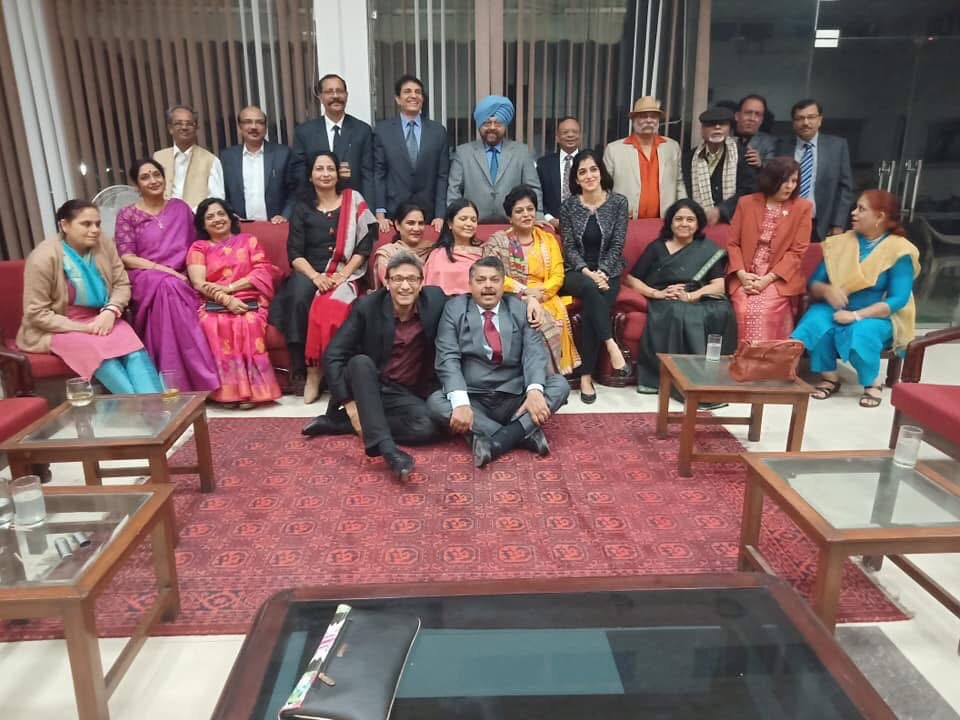
Tejwant Singh Gupta and the Sikh Identity Conundrum: A Tale of Passion and Missteps
In the bustling lanes of Patel Nagar, Dehradun, where the scent of Chetan Puri Wala’s kachoris wafts through the air, Tejwant Singh Gupta holds court. His turban, a proud symbol of his Sikh identity, sits high, but his surname—Gupta—sparks curiosity. Yet, there’s one topic that lights a fire in his eyes faster than a BJP praise session: the question of whether Sikhs are Hindus. For Tejwant, this isn’t just a debate—it’s personal. And, as I learned the hard way, it’s a minefield that can explode in unexpected ways.
The Spark: Tejwant’s Stance
Tejwant’s conviction is unshakable. “Sikhs are not Hindus,” he’d declare, his voice rising over the clink of chai glasses at Chetan’s. “We have our own faith, our own Gurus, our own history!” His turban would bob emphatically, as if nodding in agreement. If you dared suggest that Sikhism emerged from Hindu roots, he’d lean forward, eyes narrowing. “Samja karo yaar—you’re missing the point! Our identity is distinct, forged in sacrifice against Mughal oppression. Don’t lump us with Hindus!” No amount of reasoning—be it historical texts or shared cultural practices—could sway him. He’d wave it off, flustered, muttering, “Samja karo yaar,” as if your ignorance was a personal affront.
I once tried to reason with him over a plate of oily puris. “Tejwant, mate, Sikhism was born in Punjab, surrounded by Hindu traditions. Doesn’t that mean there’s some overlap?” He slammed his hand on the table, startling the waiter. “Overlap? We’re not a branch of Hinduism! Guru Nanak rejected caste, rituals, all that nonsense. Samja karo yaar—we’re our own people!” His passion was infectious, but his refusal to entertain nuance left me scratching my head.
The Misstep: My Brush with Sikh Fury
Tejwant’s fervor rubbed off on me, but not in the way I expected. Last year, at a community event in Dehradun, I found myself chatting with a group of prominent Sikhs—respected members of a local gurdwara committee. Thinking I was echoing Tejwant’s pride, I casually said, “You know, Sikhs aren’t Hindus, right? You’ve got your own distinct identity.” I expected nods of agreement, maybe a pat on the back for “getting it.” Instead, the group went ballistic.
“What nonsense is this?” thundered Mr. Singh, a towering man with a beard that rivaled Tejwant’s. “Who told you we’re not part of the broader Indian family? You think we’re some foreign tribe?” Another chimed in, “You’re insulting our heritage! Sikhism grew from this soil, alongside Hindus!” The abuses flew—words like “ignorant” and “divisive” stung worse than a Dehradun winter chill. I stood there, dumbfounded, as they lectured me on Sikhism’s roots in India’s pluralistic culture, intertwined with Hindu traditions yet distinct in faith. My attempt to channel Tejwant’s view had backfired spectacularly.
Later, I confronted Tejwant at his Patel Nagar home, still smarting from the ordeal. “Tej, you got me into trouble! I told those Sikh folks what you always say—that Sikhs aren’t Hindus—and they nearly tore me apart!” He chuckled, biting into a kachori, crumbs falling onto his kurta. “Arre yaar, you picked the wrong crowd! Not every Sikh thinks like me. Some see the Hindu connection as cultural, not religious. But me? I say we’re separate. Samja karo yaar—don’t drag me into your mess!” His laugh was infuriating, but classic Tejwant—unapologetic and stubborn.
The Bigger Question: Why the Divide?
The incident left me wondering: why can’t Sikhs—or anyone, really—settle this debate once and for all? Are Sikhs Hindus, or are they distinct? The answer, it seems, depends on who you ask. For Tejwant, Sikhism’s unique identity—its Gurus, scriptures like the Guru Granth Sahib, and rejection of Hindu practices like caste—makes it wholly separate. “We fought to carve out our path,” he’d say, gesturing passionately. “Guru Gobind Singh didn’t create the Khalsa to blend in!”
Yet, the Sikh group I offended saw it differently. They pointed to shared festivals like Diwali, historical intermarriages, and Punjab’s cultural tapestry as evidence of a broader Indian identity, even if Sikhism’s theology stands apart. “We’re distinct, but not divorced from our roots,” one of them had said, still glaring at me. Historical texts muddy the waters further: Sikhism emerged in the 15th century amid Hindu and Muslim influences, rejecting certain Hindu practices while retaining cultural ties. The 19th-century Singh Sabha movement sharpened Sikh identity, emphasizing separation, which resonates with Tejwant’s view. But India’s pluralistic fabric means many Sikhs see no contradiction in cultural overlap with Hindus.
The lack of consensus frustrates everyone. “Why don’t Sikhs just decide and tell us?” I grumbled to Tejwant one evening. He shrugged, sipping chai. “Yaar, it’s not a board meeting. Identity’s messy. Some Sikhs feel the Hindu link; others, like me, don’t. Let us be!” His samja karo yaar mantra felt less like wisdom and more like a dodge, but it hinted at the truth: no single voice can define Sikh identity.
Tejwant’s Legacy: Passion Over Clarity
Tejwant’s stance, rigid as it is, comes from pride, not malice. His life—school captain, Pfizer star, kachori enthusiast—reflects a man who lives his truth unapologetically. But my misadventure taught me a lesson: repeating Tejwant’s views without context is like stepping into a Dehradun street fight unarmed. Sikh identity isn’t a monolith, and assuming it is can land you in hot water.
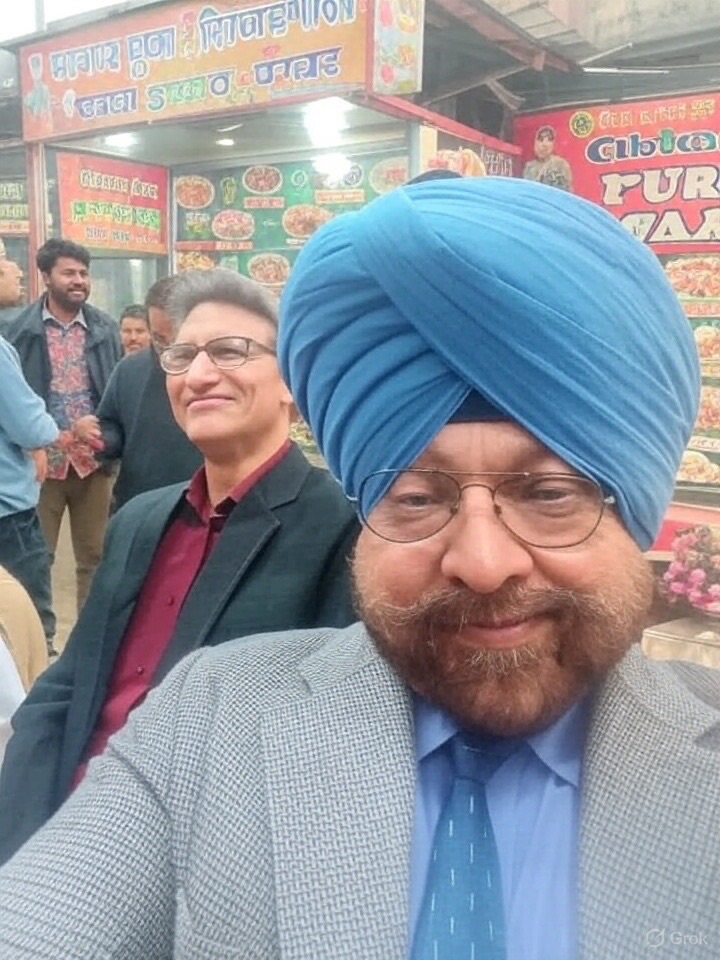
As we sat at Chetan’s last week, Tejwant grinned over his plate of puris. “Still sore about your Sikh friends, eh? Next time, keep my name out of it!” I laughed, despite myself. “Tej, you’re trouble, you know that?” He winked, his turban catching the sunlight. “Samja karo yaar—trouble’s what makes life interesting.” And with that, he ordered another round of kachoris, blissfully unconcerned with the debates swirling around him.
His philosophy is simple. Keep the plate heavy and the mind light.


 deemagclinic
 deemag and chest clinic