
In the bustling corridors of Sarojini Naidu Medical College in Agra, where the shadow of the Taj Mahal loomed over aspiring healers, Prof. Dr. P.K. Wahal stood as a pillar of medical wisdom. Born in an era when medicine was as much art as science, he rose to become a revered Professor of Medicine, shaping generations of doctors with his sharp intellect and unyielding dedication. But beyond the textbooks and stethoscopes, Wahal was a man of quiet charisma—a figure who embodied the essence of a healer, right down to his impeccable white safari suit paired with polished black shoes. Very fair-skinned, with a balding head that seemed to reflect the weight of his knowledge, and a slightly asymmetrical face framed by thick, form-rimmed bifocal spectacles, he looked every bit the doctor from a classic medical drama. Students whispered that he could diagnose a patient just by glancing at them, and honestly, who could doubt it?

Wahal’s teaching days were legendary, especially in the third-year MBBS history-taking classes, where he transformed mundane patient interviews into riveting detective stories. I, Dr. P.K. Gupta, remember those sessions vividly. Picture this: a packed lecture hall, the air thick with anticipation and a hint of formaldehyde from the labs next door. Wahal would perch at his desk, his pen stand proudly displaying a four-color fountain pen—like a artist’s palette ready for precision notes. One day, during a mock patient history, a flustered student (me, actually) stumbled over anatomy terms. “The pain is in the truck,” I blurted out, meaning the trunk of the body. Wahal paused, adjusted his bifocals, and with a wry smile said, “Ah, young Gupta, I believe you mean the torso. Trucks are for hauling cargo, not harboring ailments. Precision, my boy—it’s the difference between a cure and a catastrophe!” The class erupted in laughter, but it stuck with me. He had this way of correcting without crushing, turning slip-ups into teachable moments that made us all better.
His reputation extended far beyond the classroom. In Agra, where ailments seemed as eternal as the Yamuna River, people flocked to him—ordinary folks, colleagues, and even his own medical students. They preferred Wahal for his uncanny diagnostic skills and that reassuring presence that screamed “trust me, I’m a doctor.” Take Sanjeev Sharma, a fellow student (sadly no longer with us), who once dragged himself to Wahal’s clinic with a raging sore throat. It was late evening, and Sanjeev was the last patient of the day. “Professor, my throat feels like I’ve swallowed sandpaper,” Sanjeev croaked. Wahal examined him thoroughly, prescribed the right meds, and then, with a straight face, handed over the bill. “Full fees, even for the last one?” Sanjeev teased weakly. “Illness doesn’t discount for timing, Sharma,” Wahal replied with a chuckle, “but good health is priceless. Take this and rest.” Sanjeev recovered swiftly, and stories like that spread like wildfire.
Clever students, ever the opportunists, found ways to ingratiate themselves. Many, like my batchmate Arvind Jain, would visit his personal OPD at home—not just for check-ups, but to ensure their faces were etched in his memory come exam time. “Professor, just a quick consult on this persistent cough,” Arvind would say, flashing a grin. Wahal, ever professional, would nod and say, “Come in, Jain. Let’s see what ails you—and perhaps review that hypertension case from class while we’re at it.” It was a subtle game, but Wahal played along, knowing it fostered loyalty and learning.
Tragically, the healer who mended so many couldn’t escape his own fate. In his later years, Wahal fell ill with acute myeloid leukemia, a ruthless disease that ravaged his body and led to ascites, swelling his abdomen like a cruel irony. Desperate for options, he traveled to Dehradun and reached out to Lt. Col. Malhotra, a trusted contact. Malhotra, in turn, directed me to connect with Vaidya Balendu Prakash, an Ayurvedic practitioner gaining fame for his leukemia treatments. I picked up the phone, my heart heavy. “Vaidya ji, this is Dr. Gupta calling about Prof. Wahal’s case—acute myeloid leukemia,” I said. There was a pause on the line. “I’m sorry, Doctor,” Vaidya replied thoughtfully, “I only take on acute lymphocytic leukemia cases. Why? Because the results are consistently good there. I must focus where I can make the most difference.” It struck me as strange—selective healing in a world of universal suffering—but that’s the pragmatism of medicine sometimes.
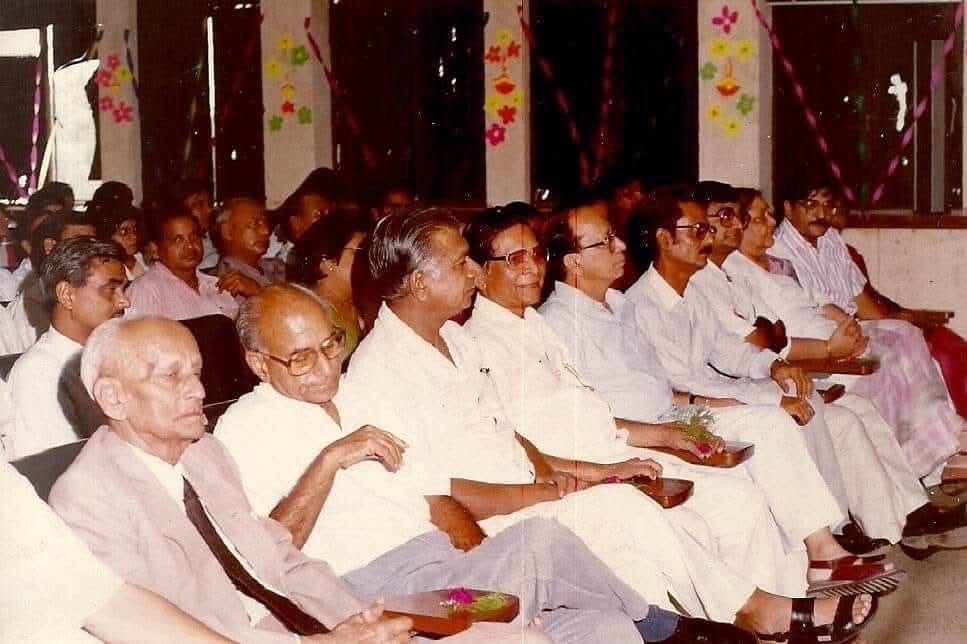
Undeterred, Prof. Wahal pursued the treatment anyway, clinging to hope. But the disease was unforgiving. Nothing could be done, and he passed away shortly after, leaving a void in Agra’s medical community. Yet, his legacy endures in the countless doctors he trained, the patients he healed, and the stories we share. Prof. Wahal wasn’t just a professor; he was the archetype of a doctor—white suit, bifocals, and all—reminding us that medicine is about humanity as much as science. If there’s a lesson in his life, it’s this: Heal with precision, teach with kindness, and face the end with grace.


 deemagclinic
 deemag and chest clinic