
Ah, let me tell you about my dear friend and colleague, Dr. Basant Kumar Oli—a true pillar in the world of ophthalmology here in Dehradun. I’m Dr. PK Gupta, and I’ve had the privilege of knowing Basant for decades, sharing late-night discussions over chai about tricky cataract cases and the evolving landscape of eye care in Uttarakhand. He’s not just a doctor; he’s a storyteller with a scalpel, a man whose life reads like a heartfelt novel set against the misty foothills of the Himalayas. Allow me to paint his portrait for you, with a few personal anecdotes thrown in to bring it to life.
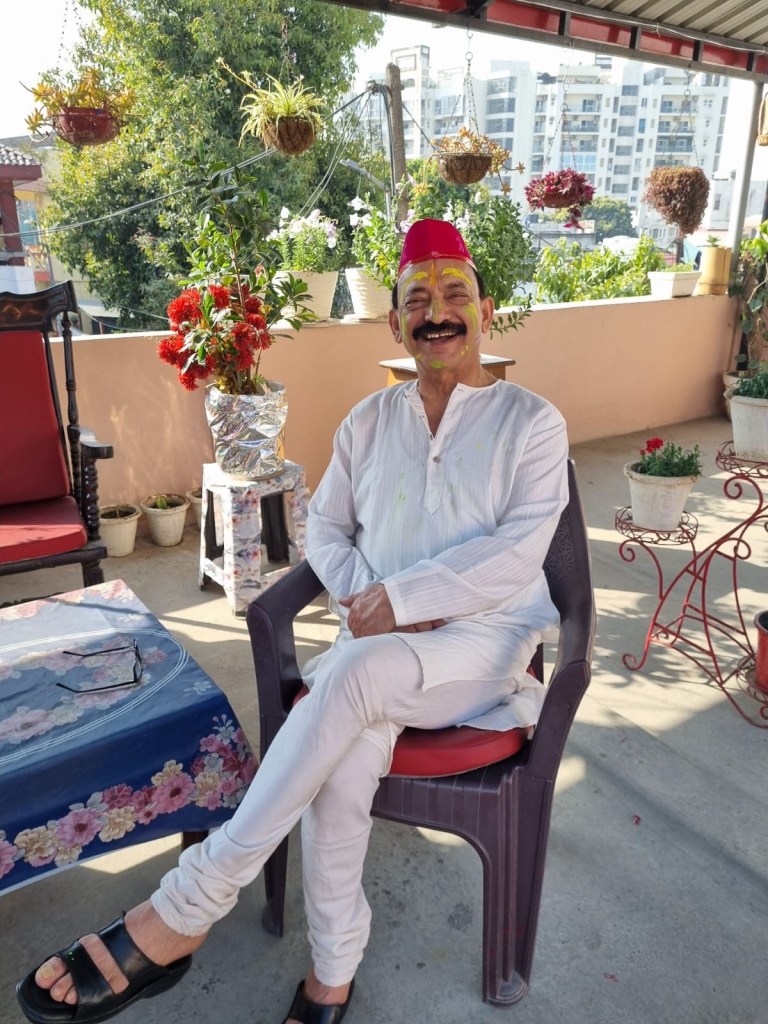
Basant was born in the serene valleys of Uttarakhand—I believe it was in the early 1950s, though he’d always chuckle and say, “Age is just a number, PK, like the diopters on a lens.” He pursued his medical dreams with the quiet determination of a mountain climber. After earning his MBBS, he specialized in ophthalmology, completing his MS in the field. Those early years were all about honing his craft, diving deep into the intricacies of the eye, from glaucoma evaluations to intricate surgeries that restored sight to countless patients.
His career kicked off in the public sector, where he dedicated a good chunk of his life—over two decades, if memory serves—to the Government Doon Hospital under the Provincial Medical Services. Picture this: Basant in the bustling wards, surrounded by patients from remote villages who’d traveled hours just for a consultation. I remember visiting him there once during a particularly hectic day. “PK,” he said, adjusting his stethoscope with a grin, “these eyes aren’t just organs; they’re windows to people’s worlds. Fix one, and you light up a life.” He was the go-to expert for complex cases, training young residents and pushing for better equipment in a system that often stretched resources thin. His commitment was unwavering—he’d often stay late, poring over charts under flickering lights, ensuring no one left without hope.
But life has its turns, doesn’t it? After years of government service, Basant decided to venture into private practice. He set up his clinic on Haridwar Road, a cozy spot that quickly became a beacon for eye care in Dehradun. Oli Eye Centre— that’s what he named it, simple and straightforward, just like him. Patients flock there for his expertise in everything from routine check-ups to advanced treatments. With over 42 years in the field now, he’s seen it all: the shift from basic lenses to laser precision, and he’s adapted with the grace of a seasoned pro. “Why switch to private?” I asked him once over dinner. He leaned back, eyes twinkling, and replied, “PK, in government, I served the masses. Here, I can give each one the time they deserve—like crafting a bespoke pair of spectacles.”
Now, Basant isn’t all work and no play. He’s a family man at heart, and I got a front-row seat to that at his son’s wedding a few years back. Normally, you’d spot him in his signature English suit—crisp shirt, tie, polished shoes—the epitome of professional elegance, even on casual days. But oh, that wedding day! He ditched the Western attire for traditional Indian garb: a pristine kurta, dhoti, and a topi perched jauntily on his head. The venue was alive with music and laughter, but half the guests were squinting around, whispering, “Where’s Dr. Oli? Has he not arrived yet?” I finally spotted him mingling with relatives, looking every bit the proud father. When I teased him about it later, he laughed heartily and said, “PK, sometimes you need to blend in to stand out. Besides, the dhoti lets me dance better!” It was a joyous affair, filled with garlands, sweets, and stories of his son’s childhood antics—reminding us all that behind the doctor’s coat is a man who cherishes his roots.
And just today, October 16, 2025, at the OphthCon conference— that bustling gathering of ophthalmologists from across the region—Basant was honored with a Lifetime Achievement Award. Can you imagine the applause? I wish I could’ve been there, but I heard the room erupted as he took the stage. It’s a fitting tribute to a career spent illuminating lives, one eye at a time. “This isn’t just for me,” he’d probably say in his humble way, “it’s for every patient who trusted me with their vision.”

Dr. Basant Kumar Oli isn’t just an ophthalmologist; he’s a healer, a friend, and a quiet force for good in Dehradun. If you’re ever in town and need eye care, pop by his clinic—you might leave with clearer sight and a good story too. Cheers to you, Basant; you’ve earned every bit of this recognition.
Ah, where were we? Oh yes, weaving in more tales from Basant’s remarkable journey. As his old compatriot Dr. PK Gupta, I can’t resist sharing a few surgical anecdotes that highlight his skill under the lights—moments that turned operating rooms into stages for quiet heroism. These stories aren’t just about incisions; they’re about the human connections he forged, one precise move at a time. Let me sprinkle them into his biography to give you the full picture.
Basant was born in the serene valleys of Uttarakhand—I believe it was in the early 1950s, though he’d always chuckle and say, “Age is just a number, PK, like the diopters on a lens.” He pursued his medical dreams with the quiet determination of a mountain climber. After earning his MBBS, he specialized in ophthalmology, completing his MS in the field. Those early years were all about honing his craft, diving deep into the intricacies of the eye, from glaucoma evaluations to intricate surgeries that restored sight to countless patients.
His career kicked off in the public sector, where he dedicated a good chunk of his life—over two decades, if memory serves—to the Government Doon Hospital under the Provincial Medical Services. Picture this: Basant in the bustling wards, surrounded by patients from remote villages who’d traveled hours just for a consultation. I remember one particularly stormy evening in the late ’90s when a farmer from a far-flung Garhwal village arrived with a traumatic eye injury from a farming accident—a shard of wood had pierced his cornea, threatening permanent blindness. The power flickered as thunder rolled outside, but Basant stayed steady. “PK, hand me the forceps,” he said calmly over the hum of the backup generator, his voice cutting through the tension like a laser. With meticulous precision, he removed the fragment and repaired the damage in a surgery that lasted hours. The next morning, as the man blinked in the sunlight, he grasped Basant’s hand and whispered, “Doctor sahib, you’ve given me back my fields.” Moments like that defined his government days—he wasn’t just fixing eyes; he was mending livelihoods.
Another gem from those hospital years: We had a young girl, barely 10, with congenital cataracts that had left her world a blur since birth. Her family couldn’t afford private care, so she landed in Basant’s queue. I assisted him that day, and as he prepped for the phacoemulsification, he turned to her with a gentle smile. “Beta, imagine this: after this, you’ll see the colors of Holi like never before,” he said, easing her fears with that fatherly warmth. The procedure was flawless—ultrasound waves breaking down the cloudy lens, a new intraocular one slipping in seamlessly. When she opened her eyes post-op and gasped at the vibrant hospital walls, she hugged him tight. “Uncle, it’s magic!” she exclaimed. Basant just laughed and replied, “No magic, little one—just a bit of science and a lot of care.” He trained so many of us on cases like that, emphasizing not just technique but empathy.
But life has its turns, doesn’t it? After years of government service, Basant decided to venture into private practice. He set up his clinic on Haridwar Road, a cozy spot that quickly became a beacon for eye care in Dehradun. Oli Eye Centre—that’s what he named it, simple and straightforward, just like him. Patients flock there for his expertise in everything from routine check-ups to advanced treatments. With over 42 years in the field now, he’s seen it all: the shift from basic lenses to laser precision, and he’s adapted with the grace of a seasoned pro. “Why switch to private?” I asked him once over dinner. He leaned back, eyes twinkling, and replied, “PK, in government, I served the masses. Here, I can give each one the time they deserve—like crafting a bespoke pair of spectacles.”
One surgical story from his private practice days still makes me smile. A few years back, an elderly businessman came in with advanced glaucoma, his vision tunneling fast. Basant recommended a trabeculectomy to relieve the pressure, but the man was terrified— he’d heard horror stories. During the prep, Basant chatted about cricket to distract him. “Think of this like bowling a yorker—precise and game-changing,” he quipped as he made the tiny incision to create a new drainage path. The surgery went off without a hitch, and weeks later, the patient returned beaming, handing Basant a box of sweets. “Doc, I can see my grandkids’ faces clearly again. You’re the captain of my team now!” Basant just nodded humbly, but I know it fueled his fire.
And let’s not forget the time we collaborated on a tricky retinal detachment case—a middle-aged teacher whose world had suddenly gone wavy after a fall. Basant led the vitrectomy, removing the vitreous gel and reattaching the retina with scleral buckling. Midway through, as I held the instruments, he paused and said, “PK, remember: the eye is resilient, like our hills. It bounces back with the right nudge.” His steady hands saved her sight, and she later sent a thank-you note: “You’ve reopened the pages of my books to me.” These anecdotes? They’re the heartbeat of his career.
Now, Basant isn’t all work and no play. He’s a family man at heart, and I got a front-row seat to that at his son’s wedding a few years back. Normally, you’d spot him in his signature English suit—crisp shirt, tie, polished shoes—the epitome of professional elegance, even on casual days. But oh, that wedding day! He ditched the Western attire for traditional Indian garb: a pristine kurta, dhoti, and a topi perched jauntily on his head. The venue was alive with music and laughter, but half the guests were squinting around, whispering, “Where’s Dr. Oli? Has he not arrived yet?” I finally spotted him mingling with relatives, looking every bit the proud father. When I teased him about it later, he laughed heartily and said, “PK, sometimes you need to blend in to stand out. Besides, the dhoti lets me dance better!” It was a joyous affair, filled with garlands, sweets, and stories of his son’s childhood antics—reminding us all that behind the doctor’s coat is a man who cherishes his roots.
And just today, October 16, 2025, at the OphthCon conference—that bustling gathering of ophthalmologists from across the region—Basant was honored with a Lifetime Achievement Award. Can you imagine the applause? I wish I could’ve been there, but I heard the room erupted as he took the stage. It’s a fitting tribute to a career spent illuminating lives, one eye at a time. “This isn’t just for me,” he’d probably say in his humble way, “it’s for every patient who trusted me with their vision.” From what I gather, there’s even an award named in his honor by the Uttarakhand State Ophthalmological Society, recognizing yeoman service in the field—talk about leaving a legacy!
Dr. Basant Kumar Oli isn’t just an ophthalmologist; he’s a healer, a friend, and a quiet force for good in Dehradun. If you’re ever in town and need eye care, pop by his clinic—you might leave with clearer sight and a good story too. Cheers to you, Basant; you’ve earned every bit of this recognition.


 deemagclinic
 deemag and chest clinic