
Picture this: Agra, mid-90s, the iconic Taj Mahal looming in the distance, but for us at SN Medical College, it was all about cadavers, clinics, and caffeine. Sanjeev and I were in the same MD batch, he in internal medicine dr p k gupta in psychological medicine, slogging through those intense years at one of Uttar Pradesh’s top medical schools. Even back then, Sanjeev had this knack for making complex cases seem simple. I remember him in the ward, calmly explaining a tricky differential diagnosis to a panicking intern while sipping lukewarm chai from the canteen. “P.K., it’s just pattern recognition,” he’d say with a grin, “like solving a puzzle.”
The Making of a Doctor
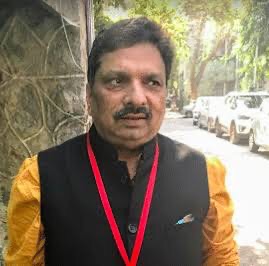
Sanjeev earned his MBBS—don’t ask me where exactly; we were too busy surviving exams to swap origin stories! But his MD in General Medicine from SN Medical College, Agra, was where he really shone. That place, established way back in 1854, was no joke—grueling rounds, endless patient charts, and professors who’d grill you like you were on trial. Sanjeev thrived there. I’d catch him in the library, nose buried in Harrison’s Principles of Internal Medicine, muttering, “P.K., this book’s thicker than my mom’s parathas, but it’s got all the answers.” He had this quiet confidence, never flashy, just rock-solid.He was a slogger, never seen him enjoying himself, a (j)- dash of good times.
The Legend of Jay Dash: A Doctor’s Tale from the Heart of Agra
Picture this: It’s 1979, and the dusty corridors of Sarojini Naidu Medical College (SNMC) in Agra are buzzing with the kind of energy only a fresh batch of wide-eyed medical students can muster. The air smells like a mix of antiseptic, street-side chaat from the vendors outside, and the faint perfume of ambition. That’s the year Dr. P.K. Gupta and a lanky young man from the Hindi heartland of Uttar Pradesh born on 16 Th of February 1960, step through those gates together—two dreamers ready to battle textbooks, sleepless nights, and the occasional bout of homesickness for the sugarcane fields back home.
Dr. Sanjeev Agarwal wasn’t just any student. Hailing from the sun-baked Pilibhit, where dacoits like Phoolan Devi became notorious, a land of yellow mustard all over as far as eyes can see—where the Yamuna River winds lazily through villages dotted with mustard fields and the call of the koel echoes at dawn—he carried the unhurried rhythm of that world into the frantic pace of med school. Tallish, with a fair complexion that made him stand out among the tanned Agra crowd, and a full head of thick, black hair that he swore was his “secret weapon against stress” (though we all knew it was just good genes), Sanjeev had a voice like warm ghee—smooth, with that unmistakable UP twang. He’d say “jay” when he meant “yay,” in Hindi, drawing it out like a gentle nod to his roots, and his “je” for “ye” had a playful lilt that could disarm even the sternest professor. To understand properly he would say, ‘ je ka hi ro hai’ for, ‘what is going on here’.
But here’s where the story gets fun—and a little chaotic. See, SNMC already had its resident “J” guy: a quick-witted chap nicknamed simply “J” for his jittery energy during exams. Everyone loved him; he was the one who’d crack jokes in the middle of anatomy dissections to keep the group from fainting. Then along comes Sanjeev Agarwal, fresh off the train from Pilibhit, unpacking his trunk in the hostel with that easy smile. The roommates took one look and burst out laughing. “Arre bhai, tu bhi ‘J’ lagta hai!” someone quipped, mimicking his “je.” But how do you tell two “J”s apart? Confusion reigned supreme. One evening, as the gang huddled in the common room over smuggled samosas and lukewarm tea, the debate erupted.
“Yaar, pehla wala already ‘J’ hai,” grumbled Rajesh, the self-appointed naming committee chair, waving a half-eaten samosa for emphasis. “Ab yeh naya wala kya, ‘J Number Two’?”
Sanjeev chuckled, leaning back on his charpoy, his hair flopping boyishly over his forehead. “Arre, mujhe toh ‘Sanjeev’ hi theek hai. Yeh sab kya tamasha hai?”
But the tamasha was just beginning. Sudeep Kachla, Sanjeev’s soon-to-be roomie and a meticulous organizer who could fold his stethoscope like origami, piped up from the corner. “Nahin bhai, yeh confusion nahi chalega. Ward rounds mein professor chillayenge, ‘J, idhar aa!’ and dono bhaagenge.”
Enter Sanjeev Sharma—the fixer of all hostel dilemmas, a guy whose idea of fun was solving riddles at 2 a.m. He snapped his fingers, eyes lighting up like he’d just aced pharmacology. “Simple! We call him ‘J Dash’—Jay Dash. Like the punctuation. Clean, short, and no mix-ups. Pehla wala plain ‘J’, yeh ‘J-‘ with a dash. Genius, na?”
The room exploded in approval. “Jay Dash!” they chorused, clinking their steel tumblers like it was a toast at a wedding. Sanjeev—er, Jay Dash—tried to protest, but it was too late. By morning, the nickname had spread faster than a game of antakshari during power cuts. “Jay Dash, notes copy kar de!” “Jay Dash, mess mein extra dal le!” Even the peons in the library started using it. His real name? Sanjeev Agarwal? Forgotten like last semester’s syllabus. To this day, if you whisper “Jay Dash” in the halls of SNMC, a few old-timers will grin and nod knowingly.
Life in the hostel was no fairy tale, mind you. Jay Dash and Sudeep Kachla made an unbeatable duo as room partners—Sudeep, the neat-freak who alphabetized their textbooks, and Jay Dash, the hardworking anchor who turned their cramped space into a command center for late-night study marathons. Picture them: desks piled high with Harrison’s Principles and dog-eared notebooks, a single bulb swinging overhead as monsoon rains hammered the tin roof. “Sudeep, ye case history samajh nahi aa rahi,” Jay Dash would mutter at 3 a.m., rubbing his eyes. Sudeep, ever the organizer, would slide over a neatly tabbed file. “Dekh, step by step: history, exam, differentials. Tu kar lega, Jay Dash—tu toh machine hai!”
And a machine he was. Those ten years from MBBS in 1979 to MD in 1989 weren’t easy. Agra’s sweltering summers tested their resolve, with heat waves turning the lecture halls into saunas and the attached hospital wards into battlegrounds of typhoid fevers and malaria outbreaks. But Jay Dash thrived on it. He was the guy who’d volunteer for extra shifts in the medicine OPD, his tall frame bent over charts as he patiently explained insulin doses to anxious diabetics from nearby villages. “Je bhaiya, tension mat lo—ye injection sirf thodi si cheeni control karegi,” he’d say in that soothing baritone, turning scared patients into loyal ones.
The pinnacle came in 1989, when both Jay Dash and Dr. P.K. Gupta—roomies in grit if not always in quarters—nailed their MD in Medicine. Jay Dash’s thesis? A deep dive into something cardiac, no doubt, under the watchful eye of the legendary Dr. M.M. Singh, the department head whose reputation for precision was as sharp as his bow tie. Dr. Singh was a taskmaster, the kind who’d quiz you on electrolyte imbalances over chai. “Agarwal—no, Jay Dash—kya soch raha hai? Spill it!” he’d bark during rounds. Jay Dash, unflappable, would respond with a crisp “Je, sir,” and launch into a flawless differential diagnosis. Dr. Singh once pulled him aside after a grueling case presentation: “Beta, tu organized hai, hardworking hai—ye field mein yahi chalta hai. Keep that fire.”
Decades later, as Dr. Sanjeev “Jay Dash” Agarwal looks back from his practice—perhaps still in Agra’s bustling clinics, healing the same heartland that raised him—you can’t help but smile at the man who turned a simple speech quirk into a legend. He’s more than a doctor; he’s a story—a reminder that in the chaos of med school, it’s the nicknames, the late-night laughs, and the unbreakable bonds that make legends out of ordinary folks. And if you ever run into him, just say “Je, Jay Dash!” He’ll flash that full-haired grin and buy you a plate of petha. After all, in the Hindi belt, that’s how you say thanks.
Building a Legacy in Ghaziabad
Fast forward to today, and Sanjeev’s been practicing for over 26 years, mostly in Ghaziabad, where he’s a household name in Nehru Nagar. He runs Dr. Sanjeev Agarwal’s Clinic, a cozy setup where he sees patients Monday through Saturday, 11:00 AM–1:00 PM and 6:00 PM–8:00 PM. I dropped by once a few years back, and it was classic Sanjeev: patients chatting with him like he’s their favorite uncle, while he’s scribbling prescriptions and cracking dad jokes. “P.K.,” he told me over a quick coffee, “you gotta listen to the patient’s story, not just their symptoms. That’s where the diagnosis hides.”
He’s also tied up with Columbia Asia Hospital (now Manipal Hospitals) on Hapur Road, Ghaziabad, handling everything from diabetes to heart issues. Cardiology’s his thing—he’s got a sixth sense for reading ECGs. I teased him once, “Sanjeev, you love hearts more than a Bollywood hero!” He just laughed and said, “Hearts are honest, P.K. They don’t lie like patients sometimes do.”
What Makes Sanjeev Tick
Sanjeev’s not your stereotypical white-coat doc. He’s approachable, the kind who’ll explain your cholesterol levels in terms you actually get. Back in college, he was the guy who’d share his notes before exams and still ace them. Now, he’s all about preventive care—pushing patients to eat better, walk more, stress less. “P.K., half my job is convincing people to stop Googling their symptoms,” he told me last time we caught up. His clinic’s a hub for that—folks walk in worried, walk out smiling.
A Classmate’s Take
As his old pal, I can tell you Sanjeev’s the real deal. He’s carried that SN Medical College grit into his practice, blending it with a warmth that makes you feel heard. I still remember us sneaking out for kebabs near the campus, debating if we’d ever survive residency. Spoiler: he did, and how! Ghaziabad’s lucky to have him, and I’m proud to call him a friend.
If you’re in Nehru Nagar and need a doc who’s as sharp as he is kind, look up Sanjeev. Just don’t mention the time I accidentally spilled ink on his lab coat—he might still hold a grudge! For appointments, check platforms like 1mg or call his clinic directly. And if you see him, tell him P.K. says he still owes me a kebab.


 deemagclinic
 deemag and chest clinic