
Dr. Pooran Chand Kumar’s life is a testament to the power of dedication, compassion, and rootedness in one’s heritage. Born into the close-knit Kumar family in Bannu, a historic town in Pakistan’s Khyber Pakhtunkhwa province, Pooran grew up surrounded by the rugged beauty of the region and the warmth of a family that valued integrity, service, and community. The Kumar household was a place where stories of resilience and moral fortitude were shared around the dinner table, shaping young Pooran’s worldview. His father, a respected schoolteacher, often said, “Knowledge is a lantern, Pooran. Carry it to light the way for others.” These words would echo in his heart throughout his life.
From an early age, Pooran displayed an insatiable curiosity about the human body and a deep empathy for those in pain. Neighbors recalled a young boy who would sit by the bedside of sick relatives, asking questions about their ailments and offering comfort with a sincerity beyond his years. It was no surprise when, after excelling in his studies at a local school, he announced his ambition to become a doctor. “I want to heal people, Ammi,” he told his mother one evening, his eyes bright with resolve. “Not just their bodies, but their spirits too.”
His journey to becoming a physician was not without challenges. Leaving Bannu to pursue medical education in a bustling city was a leap into the unknown. Enrolling at a prestigious medical college—likely a renowned institution like King George’s Medical University, given the association of the name Pooran Chand with such an establishment—he immersed himself in rigorous training. The urban environment tested his resilience, but the values instilled by the Kumar family kept him grounded. He often recalled his father’s advice during late-night study sessions: “Son, a doctor’s true skill lies in listening—to the patient and to your own conscience.”
After earning his license , Dr. Pooran Chand Kumar made a choice that defined his legacy: he returned to Bannu. While many of his peers sought lucrative opportunities in metropolitan hospitals, Pooran felt a calling to serve his hometown. “Why go elsewhere when my people need me here?” he said to a colleague who questioned his decision. Bannu, with its close-knit community and limited access to advanced healthcare, became the canvas for his life’s work.
Dr. Kumar established a modest clinic in the heart of Bannu, where he quickly became a beacon of hope. His medical skills were exceptional—honed through years of practice and a commitment to staying updated with the latest non-surgical treatments, much like the general physician Dr. Pooran Kumar described in Hyderabad. He had a knack for diagnosing complex conditions, from chronic fevers to respiratory ailments common in the region’s dusty climate. But it was his approach to medicine that set him apart. He treated patients of all ages with personalized care, crafting treatment plans that considered not just their symptoms but their livelihoods and families. “A prescription is only half the cure,” he’d say, smiling warmly at a worried mother. “The other half is trust.”
His clinic became a hub of compassion, where patients were greeted not just as cases but as neighbors and friends. Dr. Kumar’s ethical standards were unwavering. He refused to overcharge, often treating impoverished patients for free, and never compromised on honesty. Once, when a pharmaceutical representative offered incentives for prescribing certain drugs, he responded firmly, “My patients’ health is not for sale. Please don’t come here again.” His integrity earned him the trust of Bannu’s residents, who spoke of him with reverence, calling him “Doctor Sahib” with a mix of affection and respect.
The values of the Kumar family shone through in his character. Raised with a deep sense of duty, he believed in giving back to the community that had nurtured him. He organized free health camps, educating villagers about preventive care and nutrition, and mentored young students aspiring to enter medicine. His mother’s teachings about kindness were evident in small gestures—sitting with an elderly patient to share a cup of tea or reassuring a child before an injection with a gentle, “You’re braver than you think, little one.”
Dr. Kumar’s popularity grew not because he sought fame but because his actions spoke louder than any advertisement. Stories of his late-night house calls, braving Bannu’s winding roads to reach a critically ill patient, became legendary. One winter night, when a farmer’s son fell gravely ill with pneumonia, Dr. Kumar trudged through a storm to deliver life-saving treatment. The farmer, tears in his eyes, clasped his hands and said, “Doctor Sahib, you’re not just a healer—you’re our guardian.” Dr. Kumar only smiled, replying, “It’s what any of us would do for family.”
His reputation as Bannu’s most beloved physician was cemented not only by his medical expertise but by the way he embodied the Kumar family’s ethos: service above self, compassion over convenience, and integrity in every action. Decades into his practice, Dr. Pooran Chand Kumar remained a pillar of the community, his clinic a sanctuary where healing began with a kind word and ended with renewed hope. His life’s work proved that true greatness lies not in accolades but in the lives touched and the hearts uplifted.

Becoming a doctor marked a significant turning point in his life. Upon completing his medical education, he returned to Bannu, his beloved hometown, and embarked on a path that would make him the most popular physician in the region. His reputation as a doctor was not merely built on his medical skills but also on his character, ethics, and the strong values that he carried with him from his upbringing in the Kumar family.
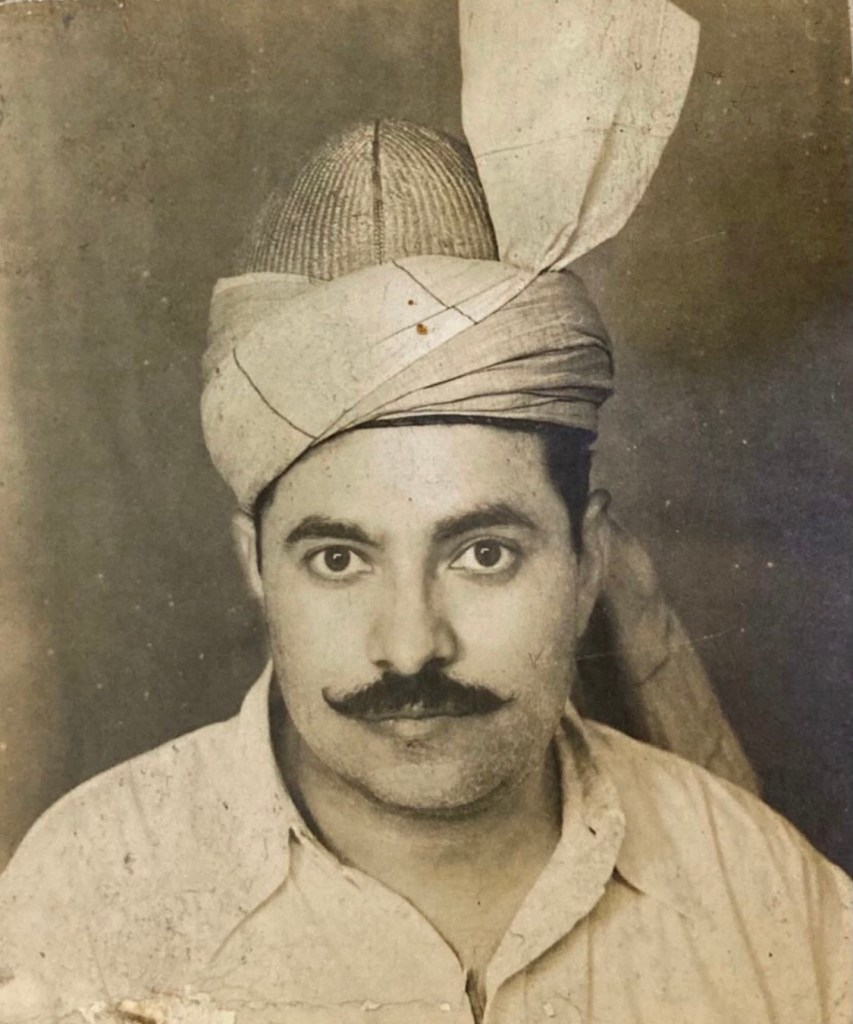
The Pashtun leaders of Bannu deeply admired and revered my father, recognizing not only his expertise but his unwavering commitment to their well-being. He became not just a doctor but a trusted friend and confidant to the people.
Dr. Pooran Chand Kumar: A Life Forged in the Crucible of Partition
The year 1947 cast a long shadow over the Indian subcontinent, and for the Kumar family of Bannu, it marked a heart-wrenching turning point. The Partition of India, which birthed the nations of India and Pakistan, tore through communities, redrew borders, and shattered lives with a brutality that left scars for generations. For young Pooran Chand Kumar, then a bright-eyed teenager with dreams of healing, the Partition was not just a historical event—it was a personal cataclysm that uprooted his family from their beloved hometown and thrust them into the uncertainty of displacement.
Bannu, nestled in what became Pakistan’s Khyber Pakhtunkhwa province, had been the Kumar family’s home for generations. Their modest home, filled with the laughter of children and the wisdom of elders, was a haven where Pooran’s father, a schoolteacher, and his mother, a pillar of quiet strength, nurtured values of compassion, education, and community. The family’s roots ran deep, tied to the land and the people of Bannu. But as the Partition’s lines were drawn, the rising tide of communal tensions made it impossible for the Hindu Kumar family to remain. “We’ve lived here as neighbors, not as Hindus or Muslims,” Pooran’s father said one evening, his voice heavy with disbelief as news of violence spread. “How can a line on a map change that?”
The decision to leave was agonizing. As riots and fear gripped the region, the Kumars, like millions of others, faced an impossible choice: stay and risk their lives or abandon everything for an uncertain future. Pooran, barely in his teens, watched his parents pack what little they could carry—a few clothes, cherished family heirlooms, and a small bundle of books that symbolized his father’s belief in knowledge as a lifeline. “These books will go with us, Pooran,” his father told him, clutching a worn copy of a medical text Pooran had often leafed through. “They’re our hope for a new start.” The boy nodded, but his heart ached as they left behind the only home he’d ever known, the streets where he’d played, and the neighbors who felt like kin.
The journey from Bannu to India was a harrowing odyssey. The Kumar family joined the mass exodus of refugees, moving through a landscape marred by fear and violence. Trains and caravans overflowed with displaced families, their faces etched with grief and uncertainty. Pooran, clutching his younger sister’s hand, saw things no child should witness—families separated, villages burning, and the constant threat of attack. Yet, even in those dark moments, his resolve to help others began to take shape. When an elderly woman in their group fell ill during the journey, Pooran stayed by her side, offering water and words of comfort. “You’ve got a healer’s heart, lad,” she whispered, her frail hand squeezing his. Those words, spoken amidst chaos, planted a seed that would define his future.
After weeks of grueling travel, the Kumar family arrived at the Premnagar Refugee Camp in Dehradun, a sprawling settlement in the newly formed Indian state of Uttar Pradesh (now Uttarakhand). The camp, one of many established to house the millions displaced by Partition, was a stark contrast to the warmth of Bannu. Tents and makeshift shelters stretched across the landscape, filled with families grappling with loss and the challenge of rebuilding. The Kumars were assigned a small tent, their worldly possessions reduced to what they could carry. Food was scarce, sanitation was poor, and disease spread quickly, yet the camp buzzed with a resilient spirit as refugees clung to hope.
For Pooran’s family, the transition was a test of endurance. His father, once a respected teacher, took on odd jobs to provide for the family, his pride tempered by necessity. His mother, ever the anchor, kept the family’s spirits alive, sharing stories of Bannu’s festivals to remind them of home. “We’ve lost our house, but not our heart,” she’d say, her voice steady as she mended clothes by lantern light. Pooran, now tasked with helping his family survive, took on responsibilities beyond his years. He fetched water, stood in long queues for rations, and cared for his younger siblings, all while nurturing his dream of becoming a doctor—a dream that seemed impossibly distant in the camp’s harsh reality.
The Premnagar camp, though a place of hardship, also became a crucible for Pooran’s character. He witnessed the resilience of the human spirit in the faces of fellow refugees—Sikhs, Hindus, and others who, despite their losses, shared what little they had. He saw doctors and volunteers working tirelessly to treat the sick, their compassion a beacon in the chaos. One day, while helping at a makeshift medical clinic, Pooran assisted a doctor stitching a wound. “You’re steady under pressure, young man,” the doctor remarked, handing him a bandage. “Ever thought of medicine?” Pooran’s eyes lit up. “It’s all I think about, sir,” he replied, his voice firm despite the hunger in his belly. That moment solidified his calling.
The Partition’s toll was immense—estimates suggest 10 to 20 million people were displaced, with up to 2 million lives lost in the communal violence that accompanied the division. The Kumar family’s story mirrored countless others: the loss of home, the pain of separation, and the struggle to start anew. Yet, their experience also reflected the unique strength of those who survived. Pooran’s education, interrupted by the upheaval, resumed in a camp school, where he studied with a ferocity born of necessity. His father, despite their circumstances, encouraged him daily: “This camp is not your destiny, Pooran. Your hands will heal, your mind will learn, and you’ll carry our family’s name forward.”
The years in Premnagar were formative, etching lessons of resilience, empathy, and duty into Pooran’s soul. The Kumar family’s values—integrity, service, and compassion—became his guiding light, even as they faced prejudice and hardship as refugees. Slowly, they rebuilt. Pooran’s determination led him to secure a scholarship to a medical college, a milestone that filled his mother’s eyes with tears. “We left Bannu, but Bannu never left us,” she said, hugging him tightly as he prepared to leave for his studies. “Make us proud, beta.”
Dr. Pooran Chand Kumar’s eventual return to medicine, as detailed earlier, was not just a personal triumph but a reclamation of the hope that Partition had threatened to extinguish. When he later established his clinic in Bannu—having returned to a now-Pakistani town in a testament to his love for his roots—he carried the weight of his family’s journey. The refugee boy who once comforted strangers in a camp became the doctor who healed a community, his life a bridge between the pain of Partition and the promise of renewal. His story, like that of millions, is a reminder that even in the face of history’s greatest upheavals, the human spirit, guided by love and purpose, can endure and thrive.
Starting life from scratch was a humbling experience. Yet, it was during these challenging times that my father’s true calling became evident. He dedicated his life to the cause of serving people, and his commitment to the welfare of mankind as a medical practitioner became an inseparable part of his identity.
His legacy was not just one of medical expertise but also one of compassion, care, and unwavering dedication to the well-being of those he served. It was this legacy that he handed down to me and future generations, a legacy that stands as a testament to the resilience and unwavering commitment of individuals who, in the face of adversity, sought to make a positive difference in the lives of others.
My father, Dr. Puran Chand Kumar, was more than just a doctor; he was a beacon of hope and an embodiment of service, an inspiration that continues to shine brightly in the hearts of those he touched.
There are lives that illuminate the world quietly — not through noise or spectacle, but through compassion, humility, and unwavering devotion to others. Such were the lives of my beloved parents, whom we remember with deepest love and reverence on this sacred day, the 3rd of June — the date on which both of them, eight years apart, left their earthly journey. My father passed away in 1993, and my mother followed in 2001. Astonishingly, both departed not only on the same date but at the very same hour — a rare, almost divine occurrence that speaks to the spiritual bond they shared. Even in their final farewell, they were together.
Dr. Pooran Chand Kumar: The Healer of Hearts
Dr. Pooran Chand Kumar was more than a physician; he was a lifeline, a man whose compassion stitched together the wounds of a fractured world. Born in the sun-dappled town of Bannu, in what is now Pakistan’s Khyber Pakhtunkhwa province, Pooran grew up in a home where the Kumar family’s values—integrity, service, and kindness—were as vital as the air they breathed. His father, a schoolteacher, would say, “Pooran, a life well-lived is one that lifts others.” These words became the cornerstone of a legacy that would transform countless lives.
The Partition of India in 1947 upended the Kumar family’s world, forcing them to flee Bannu as communal tensions tore through the subcontinent. Pooran, then a teenager with a budding dream of medicine, carried the weight of loss alongside his family’s meager belongings. The journey to India was a crucible of hardship—crowded trains, the specter of violence, and the ache of leaving behind their ancestral home. “We’re not just leaving a house, Ammi,” Pooran whispered to his mother as they boarded a packed caravan, “we’re leaving our whole story.” She squeezed his hand, her voice steady: “Then we’ll write a new one, beta, together.”
The family found refuge in the Premnagar Refugee Camp in Dehradun, a sprawling tent city where millions of displaced souls sought to rebuild. Life in the camp was grueling—scarce food, rampant illness, and the constant struggle to maintain dignity. Yet, it was here that Pooran’s calling crystallized. Helping at a makeshift clinic, he bandaged wounds and soothed fears, his young hands steady despite the chaos. A weary doctor noticed his calm resolve and said, “You’ve got the makings of a healer, lad.” Pooran’s reply was simple but fierce: “It’s what I was born to do.”
Driven by this purpose, Pooran pursued medical education with relentless determination, earning a scholarship to a prestigious institution, possibly King George’s Medical University, as his namesake was associated with such a place. The values of his upbringing—rooted in the Kumar family’s ethos of service—guided him through years of rigorous study. When he graduated with his MBBS, he faced a choice: the allure of city hospitals or the call of his roots. He chose the latter, returning to Bannu, now in Pakistan, to serve the community that had shaped him. “Why chase wealth when I can chase hope?” he told a skeptical classmate, his eyes alight with conviction.
In Bannu, Dr. Kumar’s clinic became a sanctuary, a place where the rich and poor were equal in the eyes of a healer who saw only their humanity. His doors swung open to all—merchants, farmers, laborers, and widows clutching their last rupees. No one left without care, without dignity, or without hope. His medical expertise was formidable; he diagnosed ailments with a precision honed by years of practice and a commitment to learning, specializing in non-surgical treatments for conditions like respiratory illnesses and chronic fevers prevalent in the region. But his true gift lay in his ability to heal hearts. “You’re going to be fine,” he’d say, his warm smile disarming a nervous patient, “because we’re in this together.”
His reputation rippled beyond Bannu’s borders, drawing villagers from distant hamlets who traveled miles on foot or by cart, their faith in “Doctor Sahib” unwavering. To them, he was not just a physician but a nemesis of despair, a man whose presence banished fear. A farmer from a nearby village, whose son Dr. Kumar saved from a raging fever, clasped his hands and said, “You’re not a doctor—you’re a miracle.” Pooran, ever humble, replied, “No, bhai, the miracle is your boy’s strength, and I’m just here to help it shine.”
Dr. Kumar’s clinic was a microcosm of his values. He charged only what patients could afford, often treating the destitute for free. When a wealthy merchant offered a lavish donation in exchange for preferential treatment, Pooran’s response was firm: “My door is open to all, not just those with full pockets.” His ethics, rooted in the Kumar family’s teachings, were unshakable. He organized health camps in remote villages, teaching hygiene and nutrition, and mentored young dreamers with aspirations of medicine. “You don’t need a big city to make a big difference,” he’d tell them, his words igniting their ambitions.
His healing hands seemed to carry a divine grace, a reflection of his belief that medicine was a sacred trust. Late-night house calls through Bannu’s dusty lanes, braving monsoon rains or winter chills, became the stuff of local legend. Once, during a cholera outbreak, he worked tirelessly for days, sleeping only in snatches, to save a village on the outskirts. A grateful elder pressed a worn amulet into his hand, saying, “This is for the man who carries God’s mercy.” Pooran, eyes tired but bright, replied softly, “I’m just a man, but I’ll carry your trust always.”
The Partition had taken much from Dr. Kumar—his home, his innocence, the simplicity of his childhood—but it could not take his spirit. The boy who comforted strangers in a refugee camp grew into a man who rebuilt a community’s faith in humanity. His commitment was total, his compassion tireless, and his legacy enduring. In Bannu, Dr. Pooran Chand Kumar was not just a doctor; he was a beacon of trust, a servant of humanity, and a healer whose touch mended not only bodies but the very soul of a people. His life stood as a testament to the idea that true healing begins where kindness meets courage, and his story remains a light for all who seek to serve.
f
Beside him stood my mother — a pillar of grace, devotion, and boundless love. A deeply religious soul, her days began and ended in prayer. The Gurudwara at our home was not just a place of worship, but a sanctum of peace and service under her quiet leadership. She was the soul of our joint family — keeping it united with her gentle strength, wisdom, and tireless efforts. She was like a living embodiment of a goddess — nurturing, giving, and deeply involved in the lives of each family member. Whether it was preparing meals, offering care, or managing the many moving parts of a large household, she did it all with a smile and a quiet resolve that never asked for recognition.
Both of them radiated a rare kind of love — unconditional, calm, and always present. I have no memories of them raising their voices or expressing anger. Discipline in our home came not from fear, but from the sheer desire to live up to the example they set. Their kindness was not performative; it was who they were, and that essence has become our inheritance.
The values they instilled in me and my three elder sisters — humility, compassion, respect, faith, and gratitude — are now blossoming in their grandchildren. It fills my heart with pride and emotion to see those same virtues continuing to shape the lives of the next generation. They didn’t just raise a family — they built a legacy.
Even today, decades after their passing, the community continues to remember them with profound respect and affection. Their names are spoken not with sorrow, but with reverence — as if their memory still brings light and comfort to those who knew them. That, perhaps, is the greatest testament to a life well lived.
He served dehradun From Partition to 1993 . He served the refugees at the Premnagar camp and the adjoining villages extended upto Budhi Goan , Poanda. Even army personnel from IMA and CI Camp . Has a connect with each family of Premnagar and revered even today. His selfless service to humanity is well appreciated and remembered. People call me chota dr sahib and the old shopkeepers would not charge me even today. They welcome me with warmth if I happen to visit Premnagar.
As I remember them today, I feel their presence more than ever — in the stillness of my prayers, in the values I hold close, and in the quiet strength I try to embody. They may have departed this world, but their love, their teachings, and their spirit remain etched in every breath we take.
May their noble souls continue to rest in eternal peace. And may we honour them each day by living lives filled with the same compassion, humility, and grace that they so effortlessly lived.
Forever remembered. Forever cherished. Forever our guiding light. ….L M Kumar son of Dr p c kumar


 deemagclinic
 deemag and chest clinic