
In the quaint town of Kosikalan, near the historic city of Mathura in Uttar Pradesh, India, a young girl named Abha grew up surrounded by the simple rhythms of rural life. Born into a modest family, she was always the curious one, peering over her father’s shoulder as he read the newspaper or helping her mother tend to neighbors who fell ill. “Beta, why do you always ask so many questions about the body and sickness?” her mother would chuckle. Little Abha, with wide eyes and a determined smile, would reply, “Because, Ma, one day I’m going to fix people. I don’t want anyone to suffer like Uncle Ji did last winter.”
That spark of empathy ignited her path to medicine. In 1983, at the age of 18, Abha joined the prestigious Sarojini Naidu Medical College (SN Medical College) in Agra, a bustling hub of learning just a stone’s throw from the Taj Mahal. 37 It was no easy feat—medical school was grueling, with endless nights poring over anatomy books and dissecting cadavers under dim lights. But Abha thrived. “This is tougher than climbing the Himalayas,” she’d joke with her classmates during late-night study sessions. Her hard work paid off; she graduated with her MBBS degree as a gold medalist in all professional exams, a shining testament to her brilliance and perseverance.
Early Days at SN Medical College: A Confident Trailblazer
Dr. PK Gupta reflects on his time at SN Medical College in Agra, where he began his MBBS journey in 1979. It was a bustling campus filled with eager minds, late-night study sessions, and the occasional whiff of chai from the canteen. Four years later, in 1983, a new face caught his eye—Dr. Abha Agarwal, who joined the program with an air of unshakeable confidence that set her apart from the crowd.
“If there’s one word to describe Abha back then, it was ‘bold,'” Dr. Gupta recalls with a chuckle. “She wasn’t one to blend into the background. I’d see her striding across the campus, always at the front of any group, her fair skin glowing under the sun and that signature bob cut framing her face like she owned the place. Plenty of hair, mind you—thick and stylish. And if you dared to glance her way? She’d stare right back, as if to say, ‘What are you looking at?’ It was intimidating, but in the best way.”
In the classroom, Abha’s presence was equally commanding. She claimed the front row without hesitation, her notebook always open and ready. Dr. Gupta remembers one particularly memorable lecture during her postgraduate interactions. “We were fumbling through a discussion on antidepressants as postgrads—hesitating, second-guessing ourselves. The professor turned to the class and asked, ‘Can anyone explain the mechanism?’ Most of us shifted uncomfortably, but Abha shot her hand up without missing a beat.”
“Serotonin reuptake inhibition, primarily,” she said crisply, her voice cutting through the room like a scalpel. “It blocks the transporter proteins, increasing synaptic levels and alleviating depressive symptoms over time.”
The professor nodded approvingly, and the rest of us exchanged glances—impressed, maybe a little envious. She was a regular in the library too, buried in textbooks while others chatted. It was clear she thrived on knowledge, not just for grades, but to challenge the status quo.
But Abha’s confidence extended beyond academics; she shattered stereotypes at every turn. During her internship in the psychiatry department, when the mundane task of making tea was casually assigned to her—because, well, that’s what “girls do,” right?—she wasn’t having it. “Why me?” she demanded, crossing her arms with a defiant glare. “I’m here to learn medicine, not brew chai. Assign it to someone else.” And just like that, she vanished from the room, leaving the interns buzzing. No apologies, no backing down.
Her rebellious spirit shone brightest on the college roads. While most girls stuck to bicycles or walked in groups, Abha roared around on a Honda motorcycle, helmet tucked under her arm, drawing raised eyebrows and whispers from passersby. “Is that really a girl riding that?” someone once muttered as she zoomed past. Dr. Gupta overheard her retort to a nosy senior: “Yes, it is. And it’s faster than your judgments.” It was the talk of the campus—admiration mixed with scandal. But being that independent wasn’t without its clashes. “Conflicts arose,” Dr. Gupta notes thoughtfully. “People aren’t always ready for someone who breaks the mold. She’d argue fiercely if she felt boxed in, and it ruffled feathers.”
Eventually, Abha’s path led her across oceans. She emigrated to America, chasing new horizons where her confidence could flourish without the weight of old expectations. “She left a mark on all of us,” Dr. Gupta says. “A reminder that medicine isn’t just about healing bodies—it’s about having the guts to live authentically.” Her story from those Agra days remains a testament to breaking barriers, one defiant step (or ride) at a time.
Fresh out of college in the late 1980s, Abha could have settled into a comfortable practice in India. But her ambition pulled her across oceans. “America? Are you sure, Abha? It’s so far,” her father worried as she packed her bags. “Papa, think of all the new ways I can learn to save lives,” she reassured him with a hug. She headed to the United States, where she completed her residency in Internal Medicine at the State University of New York in Brooklyn. 41 The bustling New York hospitals were a whirlwind—diverse patients, cutting-edge technology, and the relentless pace of urban medicine. There, she honed her skills, treating everything from chronic illnesses to emergencies, always with a personal touch. “Tell me your story,” she’d say to patients, sitting by their bedsides, turning cold clinical encounters into moments of genuine connection.
Her thirst for knowledge didn’t stop there. Abha pursued a fellowship in Medical Informatics at Yale School of Medicine, blending her love for medicine with emerging technology. 41 “Computers can help us prevent mistakes and save lives—why not use them?” she’d argue in seminars, foreshadowing her future as a tech innovator. This expertise landed her faculty positions at elite institutions like Harvard Medical School, SUNY Downstate Medical Center, and Northwestern Feinberg School of Medicine. 41 As a professor, she inspired students with her passion. “Medicine isn’t just science; it’s about humanity,” she’d tell her classes, sharing stories from her own journey.
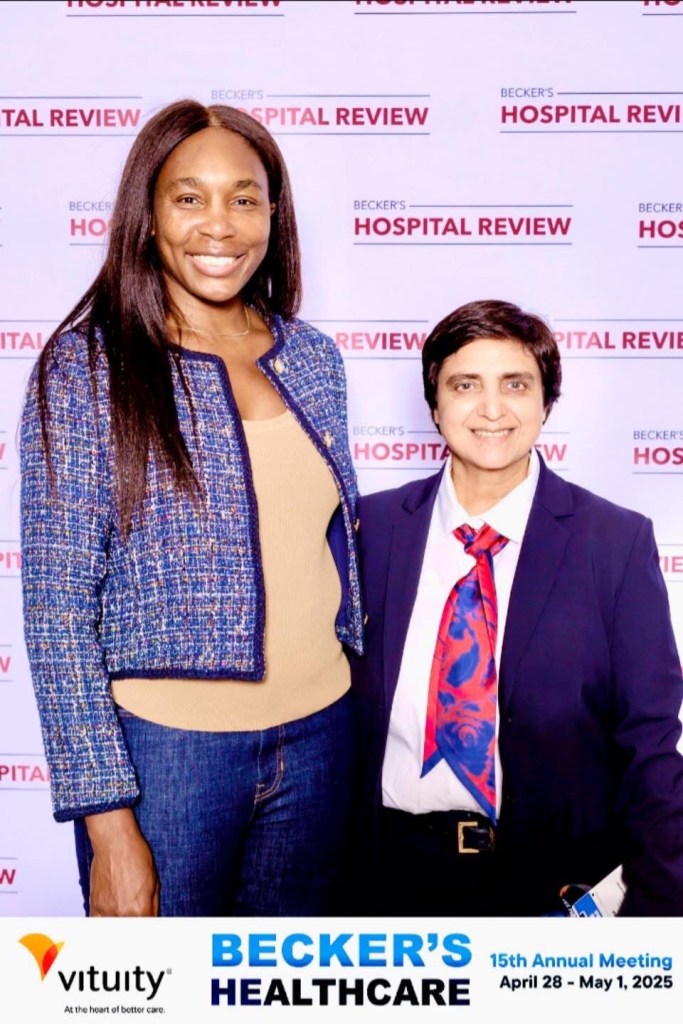
Abha’s career skyrocketed in the US healthcare system. She became a powerhouse in hospital leadership, serving as Chief Medical Informatics Officer, Chief Medical Officer, and eventually CEO at institutions like Norwegian American Hospital in Chicago and Lawrence General Hospital in Massachusetts. 41 At Norwegian, she led a dramatic turnaround for a failing 200-bed community hospital, improving finances and quality of care. 12 “Team, we’re not just saving a hospital—we’re saving our community,” she’d rally her staff during tense meetings, turning skepticism into action. Her efforts earned her accolades like the US Congressional Golden Eagle Award for Healthcare Transformation and being named one of Becker’s 130 Women Health and Health System Leaders to Know. 41
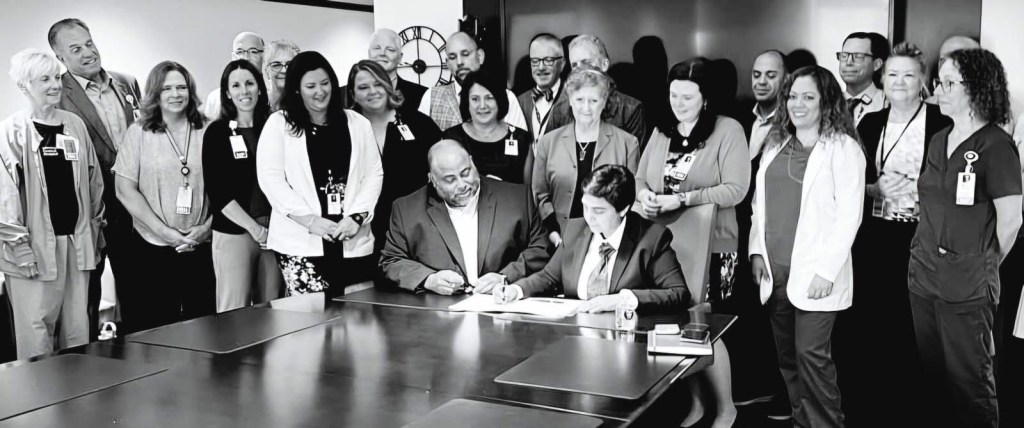
But Abha’s heart never fully left India. After nearly 30 years in the US, including a stint as a Fulbright Scholar, she returned to her roots in 2017 to bridge the gap in advanced care for Tier-II cities. 16 “Why should high-tech treatments be only for big cities? Everyone deserves a chance,” she declared. She founded A4 Clinics in Indore, specializing in robotic neurorehabilitation and brain stimulation for patients with strokes, Parkinson’s, and spinal injuries. 41 One memorable case: an elderly couple from rural India, the husband battling Parkinson’s. After months of therapy, he regained his mobility. “Doctor, you’ve given me my life back,” he tearfully told her. Abha smiled, replying, “No, you’ve fought for it—we just walked beside you.”

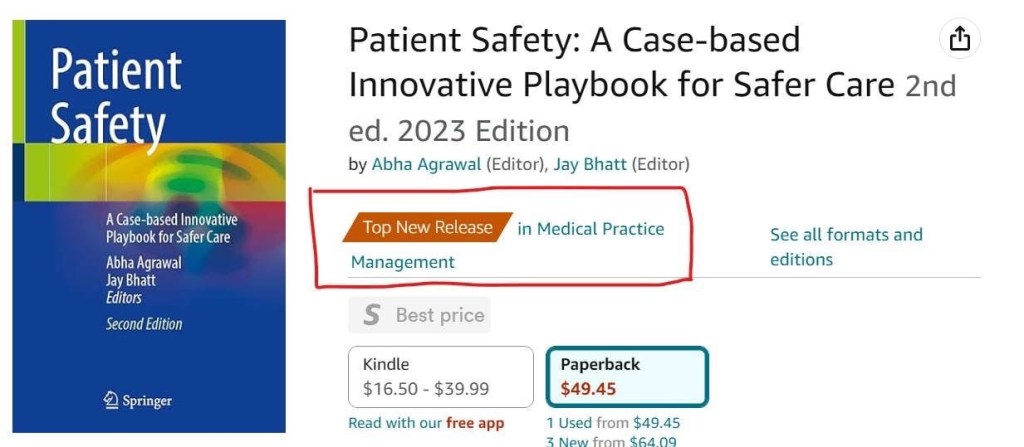
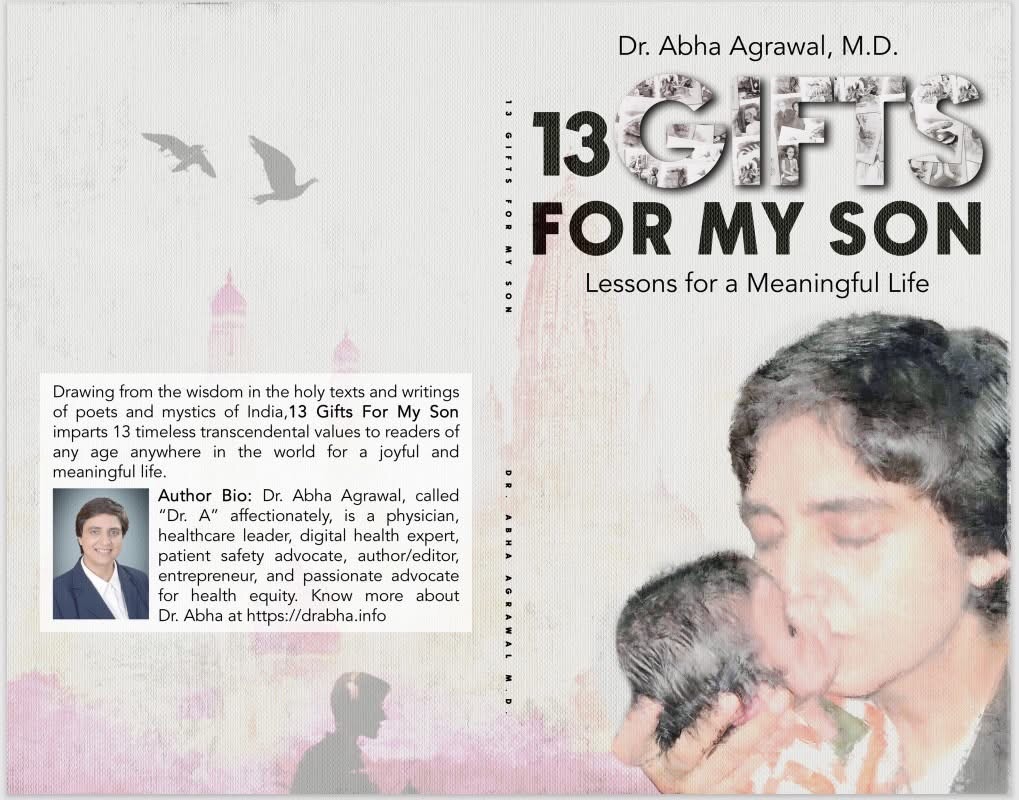
Abha is also an author, penning books like Patient Safety: A Case-based Innovative Playbook for Safer Care (co-edited in 2023) and 13 Gifts for My Son, blending her professional insights with personal wisdom. 41 Her upcoming book on AI and patient safety promises to shape the future of healthcare.
Today, Dr. Abha Agrawal—board-certified internist, Fulbright Scholar, and tireless advocate—continues to transform lives across continents. From her small-town beginnings to leading global innovations, her story is a reminder that one person’s empathy can spark a revolution. “Healthcare isn’t about titles,” she often says. “It’s about touching hearts and healing souls.”
She writes
During the winter holidays 2025, we made a trip to the famous Andaman and Nicobar islands.
This was planned as a last minute R&R trip to go someplace warm with good beaches. And no doubt, we loved the beaches – both Radhanagar beach and Elephant beach were incredible for swimming, snorkeling, scuba diving etc. We even took an underwater ‘sea scooter’ excursion to explore the famous coral reefs off elephant beach.
But what transformed this trip was a visit to the Cellular Jail.
Cellular Jail turned this trip from a routine vacation into a sacred pilgrimage – a holy expedition to this far off place in the Bay of Bengal where our freedom fighters were sent for ‘kala pani’ punishment.
I learned that kala pani doesn’t mean “black water’. Rather it is derived from ‘kaal’ meaning death. It was expected that a freedom fighter sent there for punishment is being sent to his death – never to return.
The cellular jail is surrounded by ocean for thousand kilometers so none could escape. This jail was not for criminals (for that visit Alcatraz) rather mainly for maddeningly courageous men (स्वंत्रता के दीवाने ) who were fighting against the tyranny of the British colonial rule.
Whose only defense against the brutal torture was Vande Mataram वन्दे मातरम and Inqlaab Zindabad इंक़लाब ज़िंदाबाद .
Who were able to bear the unbearable because their cause – freedom of Bharat Maata भारत माता from the tyranny of the colonial rule – was greater than the physical and mental tyranny in the heart of their British Oppressor.
As I went into the ocean for swimming, my mind was continuously thinking of the screams and wailings of those freedom fighters that were tortured beyond imagination. Screams of agony that are buried (along with many bodies too) in the bosom of this beautiful ocean.
I also visited Jalianwala bagh years ago and that was soul stirring visit as well. What was so unsettling about cellular jail was a long sustained system of robbing fellow humans of dignity through mental and physical torture through a methodical and systematic process. It speaks of human depravity and cruelty at an unimaginable scale over a long period of time.
Just like there are “Char Dhams” for religious expedition, I think we should have Swantrata Dhams स्वंत्रता धाम – for us to visit.
Cellular jail – Jailawalan Bagh – Chittor Kila where Rani Padmini and her compatriots committed jauhar – and friends, please add the 4th (or as many as you like).
Finally, I completely support the name changes. Why would we continue to inflict more trauma and trigger PTSD on the collective conscience of a nation by continuing to call a place Port Blair after the man who created cellular jai.
So I proudly say that I landed at
वीर सावरकर एयरपोर्ट, visited श्री विजय पुरम (formerly known as Port Blair) and स्वराज दीप (formerly known as Havelock Island).
Dr. Abha Agrawal is a distinguished healthcare leader and the co-founder of Bharat Oncology, a chain of affordable day-care chemotherapy centers in Northern India. She co-founded the initiative with Dr. Priyanshu Choudhary (MD, DM in Medical Oncology) to address critical gaps in cancer care access and affordability, particularly in rural and semi-urban areas.
Background and Inspiration
Dr. Agrawal personally interviewed hundreds of cancer patients and their families in smaller cities and towns across Northern India. She identified major challenges, such as long-distance travel for repeated treatments and prohibitive costs at urban corporate hospitals. This grassroots insight drove the establishment of Bharat Oncology, with a mission to deliver high-quality, evidence-based chemotherapy, targeted therapy, immunotherapy, and palliative care closer to patients’ homes.
Professional Qualifications and Role
- Qualifications: MD (Internal Medicine), Fellow of the American College of Physicians (FACP), Fellow of the American College of Healthcare Executives (FACHE).
- Role: As co-founder, she focuses on strategic vision, patient-centered innovation, and expanding accessible oncology services. The organization plans to launch 50 centers, starting with the first in Kurukshetra, Haryana.
Additional Ventures
Dr. Agrawal is also the founder of A4 Clinics, a pioneering robotic neurosciences and rehabilitation center in Central India, and has held senior leadership roles in the US healthcare system.
Note: The details in the query about completing MBBS from S.N. Medical College, Agra (1983–1988) do not align with publicly available information on Dr. Abha Agrawal’s education. She appears to be a US-trained physician with extensive experience in internal medicine and healthcare administration rather than a clinical oncologist. If this refers to a different individual, no matching records were found for an oncologist with that exact background linked to Bharat Oncology.


 deemagclinic
 deemag and chest clinic