
In the misty valleys of Dehradun, where the foothills of the Himalayas whisper secrets of bygone eras, stands a man who defies the march of time. Dr. Uttam Chand Chandna, affectionately known as Dr. U.C. Chandna, turned 101 this year—though many, including his admirers, round it up to 102 in awe of his vitality. Born on April 20, 1924, in a region that would later become part of Pakistan, his family uprooted during the tumultuous partition and settled in the serene town of Dehradun. There, amid the blooming rhododendrons and the crisp mountain air, young Uttam pursued medicine, graduating and opening his modest clinic on Chakrata Road in 1945. For nearly eight decades, this unassuming building has been a beacon of hope for generations, especially for the children he specialized in treating with gentle expertise.
https://youtu.be/Vr5Ozw2nX1A?si=BCvtoIUcFFvmUPvL
Picture him: a fair-skinned gentleman with a balding pate that gleams under the clinic’s soft light, his handlebar moustaches twirled to perfection like the wings of a vintage airplane. He carries himself with a military bearing—straight-backed, disciplined, a remnant perhaps of the era’s stoic resolve. Even at his age, he pedals into work (though bicycles have long given way to easier transport), his eyes sharp behind spectacles, ready to serve for four hours each day. “Age is just a number,” he’d say with a chuckle, twisting his moustache. “The body may slow, but the heart for healing never tires.”
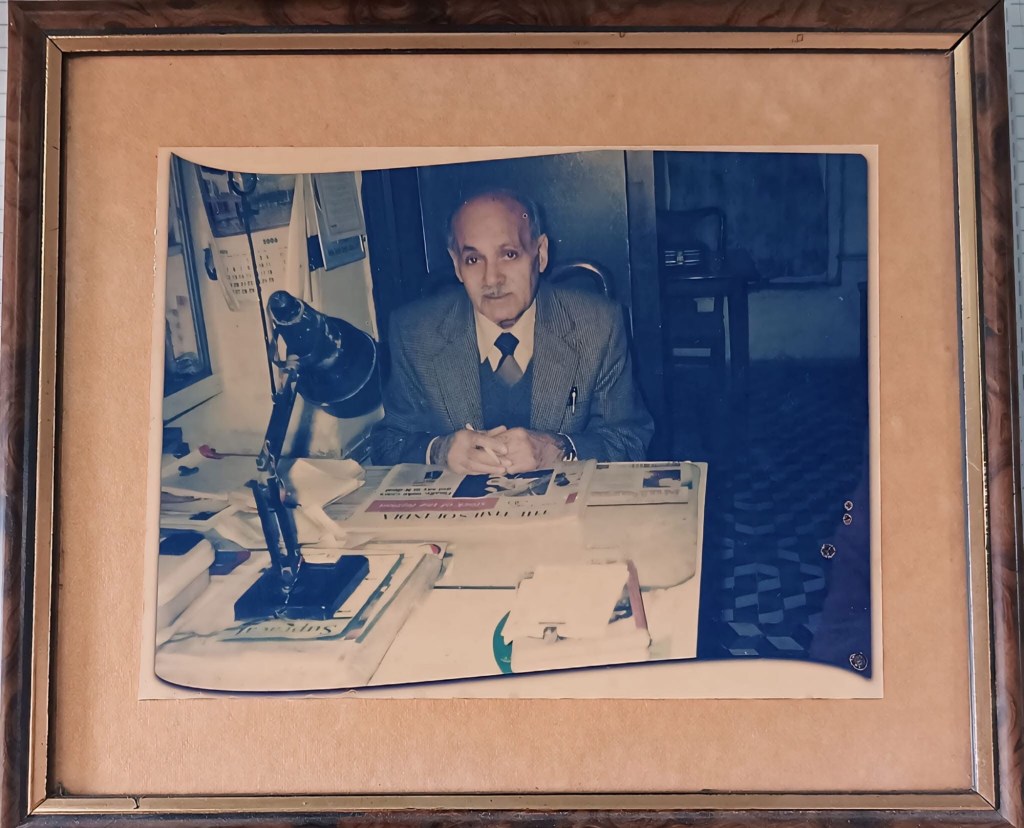
Dr. Chandna’s life is woven into the fabric of Dehradun’s history. Back when the town was a quieter retreat for British officers and Indian elites, he was already a fixture. In the 1940s and ’50s, when young Dr. P.K. Gupta was just an infant toddling through the family’s home, Dr. Chandna was crisscrossing the streets on his bicycle or in a horse-drawn tonga, clip-clopping through dusty lanes to tend to the sick. Fees were simple then—2 rupees for a consultation at the clinic, where he’d listen patiently to worried mothers, or 5 rupees for a house visit, bundling his black leather bag with remedies and rushing out, rain or shine.
One crisp winter morning in the early days, as snowflakes danced unusually low on Rajpur Road—a rare spectacle that turned the bustling street into a white wonderland—Dr. Chandna paused his rounds. “Look at that,” he recalled telling a young assistant, his breath fogging the air. “Snow on Rajpur! Mother Nature’s way of reminding us to slow down. But not me—there’s a feverish child waiting two blocks away.” With a firm nod, he’d urge the tonga onward, his moustaches frosted but his spirit unyielding.
Life wasn’t always easy. The partition brought loss and relocation, but Dehradun became his anchor. “We left everything behind,” he’d share in quiet moments with patients, his voice steady. “But here, I built more than a practice—I built trust.” Over the years, he’s witnessed the town’s transformation: from horse carts to cars, from telegrams to telephones. Yet, his approach remains timeless. “Medicine isn’t just pills,” he’d advise a new doctor once, leaning back in his worn chair. “It’s listening. ‘Beta, kya dikkat hai?’—that’s where healing begins.”
https://youtu.be/4bEqP5Lpga8?si=bbRQkjzDVfJyAGN2
Today, at his Chakrata Road clinic, established when India was still shaking off colonial chains, Dr. Chandna continues his ritual. Families who’ve known him for generations bring their grandchildren, sharing stories of how he cured their ailments with a kind word and a precise prescription. “Why stop now?” he quips to visitors, his military posture unbroken. “As long as there’s breath in me, there’s service to give.”
In a world racing forward, Dr. U.C. Chandna stands as a living legend—a balding, moustachioed guardian of health, whose life echoes the enduring spirit of dedication. If walls could talk, his clinic would spin tales of miracles, moustaches, and the man who healed Dehradun, one heartbeat at a time.
Echoes of a Divided Land: Dr. U.C. Chandna’s Partition Odyssey
In the shadow of history’s greatest upheaval, Dr. Uttam Chand Chandna’s early life unfolded like a quiet prelude to a storm. Born in 1924 in the dusty frontier town of Bannu—then part of undivided India, now in Pakistan’s Khyber Pakhtunkhwa province—he grew up amid the simple rhythms of a tailor’s son. His father, stitching dreams into fabric, ran a modest shop, while young Uttam navigated school benches at the local high school and intermediate college, absorbing lessons that would one day extend far beyond textbooks.
But as the winds of independence stirred in the 1940s, whispers of division grew into roars. By 1947, when the British Raj cleaved the subcontinent into India and Pakistan, the Chandna family found themselves on the precipice of change. Bannu, destined for the new nation of Pakistan, was no longer home for this Hindu family. “We could feel the tension building,” Dr. Chandna later reflected in conversations with colleagues, his voice steady but laced with the weight of memory. “Neighbors who were like brothers suddenly eyed each other with suspicion. My father said, ‘Beta, it’s time to go—before the threads of our lives unravel completely.'”
The relocation during the Partition was a calculated leap into the unknown, timed just as the violence erupted across borders. Millions fled in terror, trains turned into charnel houses, and rivers ran red with the blood of the innocent. Yet, the Chandnas moved with a measure of foresight, packing their belongings—sewing machines, schoolbooks, and a few cherished heirlooms—onto whatever transport they could muster. “We traveled by train and bus, dodging the chaos,” he’d recount, twisting his signature handlebar moustache thoughtfully. “It wasn’t easy; we heard stories of riots and loss all around us. But we made it to Dehradun, that green haven in the hills, where the air felt like a fresh start.”
Settling in the serene Doon Valley, his father reopened his tailoring business in the bustling Paltan Bazaar, mending clothes for a new community while mending the family’s uprooted spirit. Dehradun, with its colonial bungalows and misty mornings, became their sanctuary. But the scars of Partition lingered in subtle ways—the ache of abandoned lands, the echo of lost friends. “Partition taught me resilience,” Dr. Chandna once shared with a young patient, his military bearing unbroken. “We left behind a home, but we carried our values forward. Medicine became my way to heal not just bodies, but the wounds of a divided world.”
Encouraged by a local doctor who saw potential in the bright-eyed refugee, Uttam pursued a Diploma in Indian Medicine and Surgery (DIMS). By the early 1950s, he had hung his shingle on Chakrata Road, charging modest fees in a town still recovering from the era’s turmoil. His clinic, a humble space filled with the scent of antiseptics and hope, became a refuge for Partition survivors—many bearing not just physical ailments but the invisible burdens of displacement. “A fever here, a heartache there,” he’d say with a warm smile. “But listening to their stories? That’s the real medicine.”
Through it all, Dr. Chandna’s life bridged eras: from the horse-drawn tongas of his early house calls to the centenarian wisdom he dispenses today at 101. The Partition didn’t break him; it forged him into the empathetic healer who, with diagnostic precision and a dash of humor, reminds us that even in division, humanity endures. “We’ve come far,” he’d quip, eyeing the snow-capped peaks visible from Rajpur Road. “But remember, the past is our teacher—let’s not repeat its lessons the hard way.”
देहरादून में चकराता रोड पर घंटाघर से लगभग सौ मीटर दूरी पर, डॉ. यूसी चांदना का क्लीनिक है। आपका पूरा नाम डॉ. उत्तम चंद चांदना है। देहरादून के सबसे पुराने डॉक्टर हैं, जिनको प्रैक्टिस करते हुए 78 साल से अधिक हो गए हैं। आप वर्ष 1945 यानी आजादी से पहले से मरीजों को चेकअप कर रहे हैं।
सबसे खास बात तो यह है कि आपको मरीज एक रुपया भी फीस दे जाएं या फीस न भी दें, तब भी आप उनसे कुछ नहीं कहते। बताते हैं, “शुरुआत में जब प्रैक्टिस शुरू हुई तब डॉक्टर की फीस दो रुपया थी। उस समय लोगों के पास पैसा नहीं होता था, अगर कोई फीस न भी दे, तब भी हमने कुछ नहीं कहा।”
अंग्रेजी न्यूज पोर्टल द नार्दर्न गजेट के संपादक एसएमए काजमी ने डुग डुगी के लिए डॉ. चांदना से वार्ता की। एसएमए काजमी ने लगभग 35 वर्ष से अधिक समय तक देश के नामी अंग्रेजी अखबारों में वरिष्ठ पदों पर सेवाएं प्रदान कीं।
https://youtu.be/Vr5Ozw2nX1A?si=TTe9LACyEDFFK3mB
डॉ. चांदना अब थोड़ा कम सुन पाते हैं, लेकिन पुराने जमाने की जानकारियां, पुराने लोग उनको अब भी याद हैं। उन्होंने हाईस्कूल (उस समय मैट्रिक) की पढ़ाई बन्नू जिला( अब पाकिस्तान में है) में की थी। जन्म बन्नू में अप्रैल 1924 को हुआ था। बताते हैं, “मैट्रिक करने के बाद, हम देहरादून आ गए।”
“हरिद्वार स्थित ऋषिकुल आर्युवेदिक कॉलेज से मेडिकल की पढ़ाई की, यह कॉलेज उस समय मेडिकल की पढ़ाई का सबसे बड़ा केंद्र होता था।”
बताते हैं, “उस समय यानी 1945 के आसपास डॉक्टर की फीस दो रुपये थी, जो उस जमाने के हिसाब से ज्यादा था। गरीबी बहुत थी, लोगों के पास पैसा नहीं था। कई बार ऐसा भी होता था, चेकअप कराने वाले रोगी हाथ जोड़ लेते थे। हमने उनसे फीस नहीं ली। कोई एक रुपया देकर ही चला जाता था। क्या करते, उस समय के हालात को हम जानते थे। तांगा चलाने वाले व्यक्ति की एक दिन की आमदनी ही चवन्नी, अठन्नी, रुपया होती थी, उसमें भी उनको घोड़े को चारा, गुड़ आदि खिलाना होता था।”
“उस समय देहरादून में चार दवाखाने थे। बीमारियों में टीबी के केस ज्यादा थे। गरीब लोगों को टीबी की शिकायत अधिक थी, इसकी वजह भोजन में पोषण नहीं होना भी था। लेप्रोसी के पेशेंट भी थे। बाकी तो सीजनल बीमारियां थीं, जैसे बुखार, खांसी-जुकाम बगैरह।”
“पहले, क्लीनिक चकराता रोड पर दूसर तरफ था। क्लीनिक जिस भवन में खोला था, उसका किराया 35 रुपये प्रतिमाह होता था। यह किराया भी भारी लगता था। प्रतिदिन चार-पांच रुपये तक फीस मिल जाती थी। इस हिसाब से हमारे सभी खर्चे पूरे हो जाते थे। किराया भी चुका देते थे”, डॉ. चांदना हंसते हुए कहते हैं।
उन्होंने बताया, “ऐसा भी होता था, मरीज के पास दवा के पैसे नहीं होते थे, तो महिलाएं अपने कुंडल, कड़े रखने को कहती थीं। पर, हमने कभी कोई सामान नहीं रखा। कह देते थे, जब आपके पास पैसे हों, दे जाना। इनमें से अधिकतर लोग पैसे देकर गए।”
आज भी डॉ. चांदना प्रतिदिन चार घंटे यानी दोपहर में 12 से दो और फिर शाम को छह से आठ बजे तक क्लीनिक में मरीजों का चेकअप करते हैं। बताते हैं, “सुबह 11 बजे तक तैयार होकर क्लीनिक पहुंच जाता हूं।”
डॉ. चांदना के अनुसार, “देहरादून में आठ तांगे चलते थे। रेलवे स्टेशन और पोस्ट आफिस के पास जहां शौचालय है, वहां तांगा स्टैंड होते थे। ये तांगे रेलवे स्टेशन और राजपुर रोड के लिए चलते थे। वैसे, लोग पैदल चलना या फिर साइकिल की सवारी पसंद करते थे। उनको जब भी किसी रोगी को आपात स्थिति में देखने के लिए जाना होता था, वो साइकिल से ही जाते थे।”
“पहले, सड़कों पर लोग कम होते थे। पलटन बाजार खाली-खाली दिखता था। यह इसलिए भी, क्योंकि राजपुर, प्रेमनगर सहित पूरे शहर की आबादी ही 30 हजार के आसपास थी। रही बात गाड़ियों की, तो यहां चार टैक्सियां थीं, जिनमें से दो मसूरी आने-जाने में रहती थीं। एक चकराता का चक्कर लगाती थी और एक अन्य रूट्स पर चलती थी।”
“1947 में पार्टिशन के दौर में उनका परिवार राजपुर रोड पर गंगा राम अपार्टमेंट्स में रहते थे, जहां वर्तमान में चर्च भी है।”
“अमूमन हर घर में लीची के पेड़ होते थे। लीची बाजार में सस्ती मिलती थी। उस समय फलों और सब्जियों की बिक्री करने वाले लोगों की संख्या अधिक थी। फल टोकरियों में बिकते थे। दो साइज की टोकरियां पांच और दस सेर( एक सेर का मतलब 933 ग्राम) वजन की होती थीं। आठ आने में पांच सेर की एक टोकरी आम मिल जाते थे।”
बदलते मौसम पर बात करते हुए डॉ. चांदना कहते हैं, “अब तो बहुत गर्मी हो गई। यह बात सही है कि एक जमाने में देहरादून में पंखे भी नहीं चलते थे। एक साल तो घंटाघर पर बर्फ पड़ी थी। राजपुर में तो बर्फ हर साल पड़ती थी।”
बताते हैं, “जहां इन दिनों घंटाघर है, वहां बाग था, उसमें चाय का ढाबा था, जिसमें मामा का चाय का ढाबा कहा जाता था।”
डॉ. यूसी चांदना के ज्येष्ठ पुत्र 75 वर्षीय उमेश चांदना, जिन्होंने डीएवी पीजी देहरादून से पढ़ाई पूरी की। आप पिता के क्लीनिक के साथ ही अपना दवाखाना चलाते थे। कहते हैं, “मैं 1974-75 से ही पिता के कार्यों में सहयोग करने लगा। मैं सौभाग्यशाली हूं कि पिता के साथ कार्य करने का अवसर मिला। मेरे दादा जी की डिस्पेंसरी रोड पर टेलर की शॉप थी। पिता डॉ. यूसी चांदना ने बहुत मेहनत की और हमेशा रोगियों की सेवा के लिए बढ़ चढ़कर कार्य किया। कई परिवार ऐसे हैं, जिनकी तीसरी – चौथी पीढ़ी का उपचार डॉ.चांदना करते हैं।”
चकराता रोड के निवासी सुनील श्रीवास्तव बताते हैं, “उनके पिता जी डॉ.चांदना के पास ही उपचार कराते थे। मैं खुद और बेटा भी डॉ. चांदना के क्लीनिक में आते हैं। हमें इन पर विश्वास है, हमें आपकी दवाइयों से राहत मिलती है।”


 deemagclinic
 deemag and chest clinic