
In the annals of Indian medicine, few figures embody the blend of pioneering expertise, unpretentious humility, and steadfast mentorship quite like Dr. Hari Pratap Gautam. A towering presence—literally, as he stood tall with the distinctive aquiline nose and fair complexion reminiscent of his Kashmiri roots—Dr. Gautam was a cardiothoracic surgeon whose hands mended hearts, but whose spirit touched lives far beyond the operating theater. Born in an era when India was forging its post-independence identity, he rose to become a trailblazer in his field, earning accolades like the Dr. B.C. Roy National Award for advancing cardiothoracic surgery in the country 1 and a Lifetime Achievement Award from the Indian Association of Cardiovascular-Thoracic Surgeons (IACTS), where he once served as president. Yet, to those who knew him personally, like his former wardenship mentee Dr. P.K. Gupta, a psychiatrist, he was simply “the ideal teacher”—a man who bathed under hand pumps in the scorching Agra heat and challenged rowdy students to “come at me” instead of punishing them harshly.
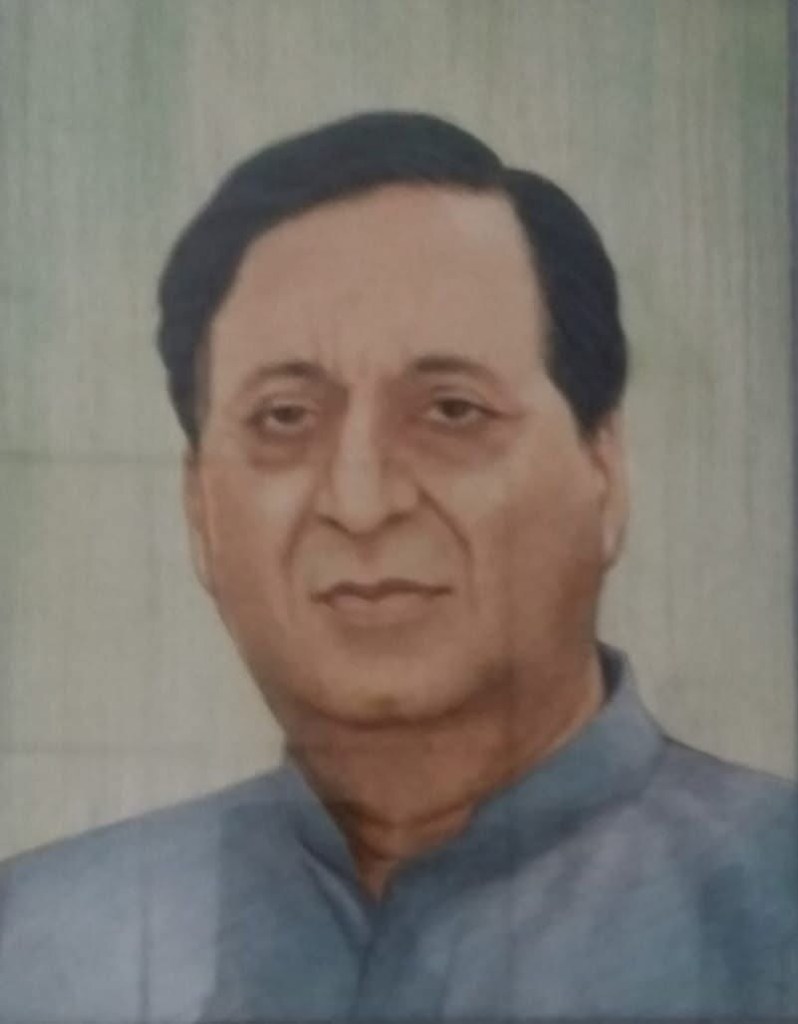
Born on 7th April 1937, in pre independent India, Dr. Gautam’s journey began in the mid-20th century, though exact details of his early years remain shrouded in the modesty he wore like a second skin. What we do know is that by the 1960s, he was already making waves abroad. In 1966-67, while in London honing his skills, he crossed paths with Dr. A.P. Sahu and Dr. Kunzru. As Dr. Sahu recalled in a heartfelt obituary note: “Very sad to hear the demise of Hari Gautam. I had contact with him along with Dr. Kunzru when I was in London in 1966-67. He was on his way to India after doing his FRCS. He was a great and wonderful person, very jovial and full of life.” Imagine the scene: three Indian doctors in a foggy London pub, clinking glasses over shared dreams. “Boys,” Dr. Gautam might have boomed with his signature laugh, “I’ve got this FRCS under my belt—now it’s time to bring some real heart back to India!” Fresh from earning his Fellow of the Royal College of Surgeons (FRCS,London and Edinburg) alongside his Master of Surgery (MS), he returned home, ready to revolutionize cardiothoracic care.

Back in India, Dr. Gautam dove into the trenches of surgery at a time when techniques were as raw as they were innovative. In the operating rooms of institutions like those in Agra, he performed mitral valvotomies for stenosis—a procedure that involved forcibly poking a finger through the narrowed valve to restore blood flow. It was gritty, hands-on work that demanded precision and nerve. But not everyone appreciated his methods or his demeanor. He had notable disputes with Dr. B.D. Sharma, who would burst into the theater shouting orders. “Hari, what in God’s name are you doing?” Dr. Sharma might have bellowed one day, storming in mid-procedure. Unfazed, Dr. Gautam, glove-deep in a patient’s chest, would reply coolly, “Saving a life, my friend. Care to join or just yell?” Their clashes were legendary, but they underscored Dr. Gautam’s unyielding commitment to his craft.

His professional ascent was meteoric. He served as Vice Chancellor of Banaras Hindu University, Chairman of the University Grants Commission (UGC) in New Delhi, and later as Chancellor of Shri Lal Bahadur Shastri National Sanskrit University 0 19 . He was honored with an honorary D.Sc. from several institutions and became Principal Advisor at Mahatma Gandhi University of Medical Sciences & Technology in Jaipur 18 .

Yet, amid these lofty titles, Dr. Gautam never lost his grounded, rustic charm. As warden of the G.B. Pant Hostel—likely during his time associated with medical education in Agra—he lived simply, often bathing in the open under a hand pump. Picture this: the sweltering Agra summer sun beating down, staff pumping cold water as Dr. Gautam splashed away, chuckling to the onlooking students. “Ah, this is living!” he’d say, his fair skin glistening. “No fancy showers for me—keeps the ego in check.” It gave everything a folksy, approachable feel, turning a surgeon into a relatable figure.
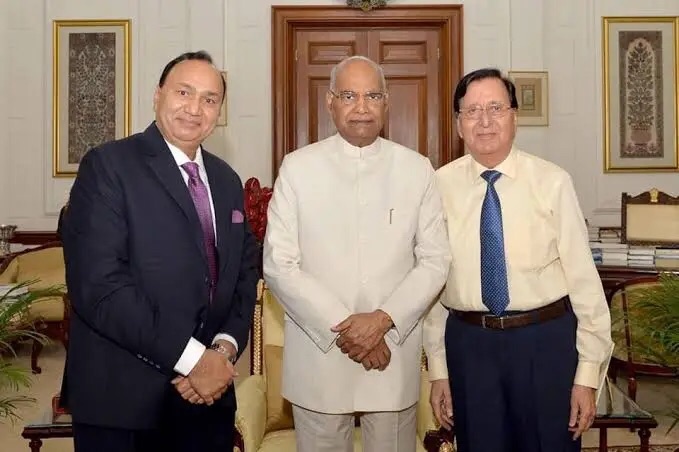
Dr. Gautam’s wisdom often came laced with wit and candor. He had a self-deprecating streak, frequently quipping, “If I was any good, I’d be in New Delhi by now!” On the contentious topic of reservations in education and jobs, he’d muse thoughtfully: “Reservation gives laddu to the undeserving, but it’s not their fault—it’s the system’s way of balancing the scales.” These weren’t lectures; they were conversations that sparked reflection among his students.
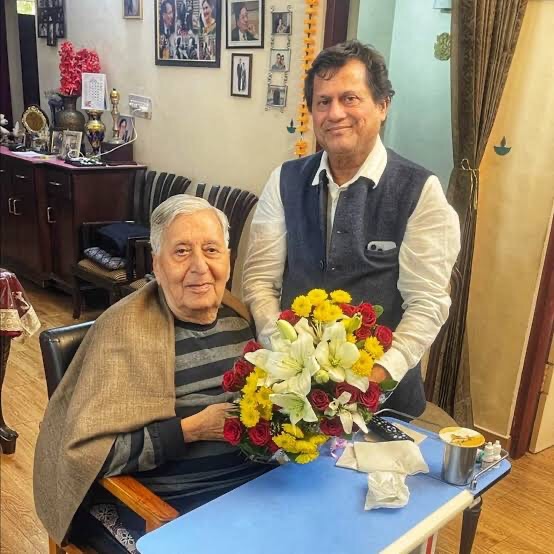
One incident from his wardenship days captures his essence perfectly. Dr. P.K. Gupta recalls a chaotic night when senior students roughed up the gardener (possibly named Hari Ram) and the chowkidar, injuring his nose, over some petty dispute of theft. Chaos ensued until Dr. Gautam emerged from his residence, his tall frame casting a long shadow under the hostel lights. “Enough!” he thundered, stepping between the bruised staff and the defiant boys. “If beating these poor souls isn’t satisfying, come on—beat me instead! Let’s see if that fixes your anger.” The students froze, shame washing over them. But true to his protective nature, Dr. Gautam refused to let an FIR be filed against the involved lads. “They’re young and foolish,” he’d later tell the staff privately. “Punish them too hard, and you break their spirit. Guide them, and you build men.” It was this blend of firmness and forgiveness that made him an “ideal teacher,” as Dr. Gupta puts it—a mentor who saw potential even in mischief.

Tragically, on November 4, 2025, Dr. Hari Gautam passed away at a hospital in Jaipur, leaving a void in the hearts he once healed. At an age when many reflect on legacies, his was already etched in stone: a jovial giant who advanced medicine, led institutions, and humanized authority. From London pubs to Agra hand pumps, from operating tables to university halls, Dr. Gautam’s life was a testament to living fully—with humor, heart, and a touch of rustic grit. As Dr. Sahu aptly said, he was “full of life.” And in the stories of those he touched, he remains so.
Biography of Dr. Hari Gautam
Dr. Hari Pratap Gautam, often referred to simply as Dr. Hari Gautam, was a pioneering cardiothoracic surgeon, esteemed academic administrator, and visionary leader in India’s medical and higher education sectors. Born in a modest family with roots in rural India, he embodied the spirit of perseverance and humility, rising from humble beginnings to become a transformative figure whose contributions spanned clinical practice, university governance, and policy-making.
Early in his career, Dr. Gautam established himself as a skilled cardiothoracic surgeon, performing groundbreaking procedures that saved countless lives. His medical expertise was complemented by a deep commitment to education and administration. He served as Principal of Ganesh Shankar Vidyarthi Memorial (GSVM) Medical College in Kanpur from August 1990 to July 1991, where he focused on improving infrastructure and faculty development. Adding to his illustrious journey, he was Director of Government Medical College, Srinagar (often referred to as Shree Nagar Medical College of Kashmir), navigating the challenges of healthcare in a sensitive region with remarkable dedication. Later, he took on the role of Vice Chancellor at the University of Rajasthan in Jaipur (commonly known as Jaipur University), where he championed reforms in curriculum and research initiatives.
Dr. Gautam’s leadership extended to some of India’s most prestigious institutions. He served as Vice Chancellor of Banaras Hindu University (BHU), one of the country’s oldest and largest universities, where he modernized administrative processes and fostered interdisciplinary collaboration. From 1999 to 2002, he held the position of Chairman of the University Grants Commission (UGC), the apex body regulating higher education in India. During his tenure, he spearheaded initiatives to enhance quality assurance, promote equity in access to education, and encourage innovation in academia. In 2014, he chaired the Hari Gautam Committee, appointed by the Ministry of Education to review and recommend improvements in the governance of medical education and the functioning of the Medical Council of India (now National Medical Commission).
In his later years, Dr. Gautam became the Founder Vice-Chancellor (and later Founder President and Principal Advisor) of Mahatma Gandhi University of Medical Sciences and Technology (MGUMST) in Jaipur, where he played a pivotal role in establishing it as a center of excellence in medical education and research. He also served as Chancellor of Shri Lal Bahadur Shastri National Sanskrit University in New Delhi from 2017 onward, blending his expertise in modern medicine with a respect for traditional knowledge systems. Additionally, he was Chancellor of KIIT University and received numerous honors, including honorary D.Sc. degrees from ten universities and delivering over 40 convocation addresses.
Throughout his life, Dr. Gautam was known not just for his professional achievements but for his rustic soul and approachable demeanor. Colleagues often recalled him as a mentor who preferred simple conversations over formal meetings, drawing from his village upbringing to connect with people from all walks of life. He was awarded the Padma Shri for his contributions to medicine and education, though he always downplayed personal accolades, saying, “The real reward is seeing a student’s eyes light up with understanding or a patient’s heart beat steadily again.”
Dr. Gautam passed away on November 4, 2025, in Jaipur, leaving behind a legacy that continues to inspire generations in medicine, education, and public service. His work touched millions, from rural clinics to national policy halls, making him a true stalwart of India’s progress.
Condolence Message
Imagine a quiet evening at the Mahatma Gandhi University of Medical Sciences and Technology in Jaipur. The sun is dipping low, casting a golden hue over the campus gardens where Dr. Hari Gautam once loved to stroll, sharing stories from his early days as a surgeon. Today, the air feels heavier. The university family—doctors, students, and staff—has gathered informally, not in a grand hall, but under the shade of an old banyan tree he himself had planted years ago. Dr. M.L. Swarankar, the Founder and Emeritus Chairperson, stands with a heavy heart, his voice cracking as he addresses the group.

“Oh, friends,” he begins, wiping a tear, “I’ve just lost a brother, not just a colleague. Dr. Hari Gautam—the man who could fix hearts with his scalpel and heal souls with his words—has left us. Remember that time he stayed up all night during the university’s founding, sketching plans on napkins? ‘M.L.,’ he’d say with that mischievous grin, ‘we’re not building walls; we’re building futures.’ He was our legendary cardiothoracic surgeon, an administrator who turned chaos into harmony, our Founder Vice-Chancellor here at MGUMST, and the former Chairman of the UGC. A guiding light who lit the path for so many of us.”
Beside him, Dr. Vikas C. Swarankar, the Chairperson and Chancellor, nods solemnly, placing a hand on his father’s shoulder. “Dad’s right,” he adds, his tone warm yet tinged with sorrow. “Uncle Hari wasn’t just a boss; he was family. I’d call him late at night with some crisis, and he’d laugh it off: ‘Vikas, my boy, hearts don’t stop beating over paperwork—neither should we.’ He taught me that true leadership is about compassion, not control. And now… this irreparable loss. It’s like the heartbeat of our university has skipped a few.”
Dr. Achal Gulati, the Vice Chancellor, steps forward, his eyes reflecting the shared grief. “As we all stand here, the entire MGUMST family mourns with you,” he says, addressing an imaginary bereaved relative in the crowd. “Dr. Gautam was more than a stalwart of medicine; he was our visionary, our pillar. I can still hear him in meetings: ‘Achal, let’s make education accessible, like fresh air—free for those who need it most.’ We’ll miss his wisdom, his humor, that rustic charm that made even the toughest decisions feel human.”
The group falls silent for a moment, the rustle of leaves the only sound. Then, Dr. Swarankar speaks again, his voice steadying. “The family is waiting for loved ones to arrive before the rituals begin—we’ll share the details soon. But for now, let’s pray together. May the Almighty grant his soul eternal peace, like the calm after a successful surgery. And to his family, we send strength and courage to bear this. Hold on to the memories: the inspiration he sparked in young doctors, the visions he turned into reality, the strength he showed us all.”
An entire book could be written about the remarkable personality of Professor Dr. Hari Gautam—few doctors have ever balanced the worlds of medicine and administration with such grace and impact. He wasn’t just a healer in the clinic; he rose through the ranks to become Principal of Sarojini Naidu Medical College in Agra, Vice Chancellor of Banaras Hindu University (BHU), and eventually Chairman of the University Grants Commission (UGC). His life was a testament to quiet strength, leadership, and unwavering principles.
Writen by Dr Muneshwar
Let me take you back to his days as Principal of S N Medical college Agra, in Agra. It was a tense time when junior doctors went on strike. Things escalated horribly when the police launched a lathi charge on a group of female PG doctors marching from Raja Mandi toward Lady Lyall Hospital. One of them was even pregnant—it was heartbreaking and infuriating. The incident sparked a massive outcry, uniting doctors from the city and the medical college in a powerful movement like nothing I’d seen before.
I remember it vividly: Even Madam Lahri, who had already retired, showed up at the college to support us. We were gearing up for a massive procession when Dr. Gautam arrived. He pulled me aside and said, “Munishwar, give me just one day to sort this out.” We trusted him—he was one of us, after all—so we held off.
But the next day, no resolution came. We gathered again in Lecture Theater 3 of the medical college: Madam Lahri, senior city doctors, everyone fired up. As we spilled out to march, Dr. Gautam appeared once more. I shouted, “Sir, we’re not listening to you today—we’re going ahead!” His response still echoes in my mind. With equal intensity, he boomed back, “Munishwar, I’m not here to stop you. I’m here to march with you!”
That moment ignited the protest like wildfire. The District Magistrate was Yogesh Kumar, and the SSP was Rizwan Ahmad. What followed was intense, but the movement’s real triumph came when SSP Ahmad personally visited the girls’ hostel. Folding his hands in apology, he said to Warden Madam Negi, “I’m truly sorry for what happened—we never meant for it to go this far.” It was a stunning victory, a direct result of our united stand.
Then there was his tenure as Vice Chancellor at BHU. The university was in chaos—plagued by about 100 rogue students who’d been terrorizing the campus with goondaism for over a decade. No one expected a soft-spoken doctor like Dr. Gautam to tackle it head-on, but he did. Putting his life on the line, he expelled them all, restoring order amid death threats. He lived under heavy security those days, like a man in a fortress.
I visited him during that stormy period for a meeting. The warmth he showed was overwhelming—he greeted me like an old friend, laughing and sharing stories. As we left, I overheard his security team whispering to each other, “We’ve never seen the VC like this— so open and affectionate.” It was a side of him that shone through even in danger.

Written by Lt Col Dr Deepak Saxena
🕊️ डॉ. हरि प्रताप गौतम की गौरव गाथा
सन् सैंतीस में जन्मा तेजस्वी दीप,
लंदन से लौटा ज्ञान लिए असीम।
हृदय शल्य में हुनर, नेतृत्व में शौर्य,
भारत भू पर रचा उसने गौरव-गीत महान।
डॉ. बी.सी. राय का सम्मान सिर पर,
IACTS का उत्कर्ष, आदर अपार।
कुर्सियाँ ऊँची पर मन धरती जैसा,
माटी की गंध, सहजता का श्रृंगार।
हाथों में स्कैल्पेल, दिल में करुणा,
मरीजों में ईश्वर, विद्यार्थियों में उजियारा।
झरना-सा सरल, हिमालय-सा अडिग,
नेतृत्व का दीप, विनम्रता का सितारा।
न रहे विलास, न छल-छद्म का रंग,
सादा जीवन, स्वाभिमान का संग।
कुछ लोग इतिहास में दर्ज होते हैं,
कुछ दिलों में बसते हैं—ये उन्हीं में से एक।
नवम्बर पच्चीस में देह विश्राम पा गई,
पर किंतु—
कार्य, संस्कृति, आचरण, आदर्श,
आज भी सदा की तरह धड़कते हैं—
भारत के हृदय में।
Written by Dr Mukesh Agarwal MD… He was a Great teacher except we didn’t know medicine at that time ( even now we don’t 😁). I met him in two unusual circumstances, one time coming from Lucknow to Unnao bus and one time in Jacksonville in the Indian grocery store. He was a very knowledgeable person one time he almost killed me for not checking a Supra clavicular node in a lung carcinoma patient in 1988 MD medicine PK Wahal had suggested we get him consulted. Those days there was no PET Scan so prognosticators were clinically done.
Later, during Atal Bihari Vajpayee’s government, he became UGC Chairman. His contributions were immense, and there was even talk of appointing him as ambassador to a key country—a fitting role for such a statesman. Sadly, it didn’t materialize. Life is fleeting; everyone who comes must go. But Dr. Gautam’s legacy? It’s monumental—a life of profound success, a true gem of Agra. May the Lord grant him eternal peace.
As the gathering disperses, a young student whispers to her friend, “He wasn’t just a name in books; he was the story we all wanted to live.” And in that moment, Dr. Hari Gautam’s legacy feels alive—cherished with deep respect, gratitude, and a touch of that enduring warmth he brought to everything.
Dr. Hari Pratap Gautam (commonly known as Dr. Hari Gautam) was a renowned Indian cardiac surgeon, academic administrator, and policy advisor who held prominent roles in higher education governance, including former Chairman of the University Grants Commission (UGC) and former Vice Chancellor of Banaras Hindu University (BHU). 1 4 19 He passed away recently in 2025, as noted in tributes highlighting his contributions to academia and medicine. 2 17 Throughout his career, Dr. Gautam chaired or participated in several high-powered government committees focused on reforming higher education, medical education standards, and related policies in India. Below is a summary of his key committee involvements, drawn from official profiles and reports.
Hari Gautam Committee (Review and Restructuring of UGC and Higher Education)
- Formation and Role: Established in 2014 by the Ministry of Education (then Ministry of Human Resource Development) under the leadership of then-Minister Smriti Irani. Dr. Gautam served as Chairman of this four-member high-powered committee tasked with reviewing the UGC’s structure, operations, and overall functioning. 0 9 10 19
- Members: Dr. Hari Gautam (Chairman, former UGC Chairman and BHU Vice Chancellor); C.M. Jariwala (former Head and Dean of Law, BHU); Kapil Kapoor (former Pro-Vice-Chancellor, Jawaharlal Nehru University); and the Joint Secretary of the Higher Education Division in the Ministry. 9
- Objectives: To examine previous reports on UGC reforms, assess its organizational setup and performance, and recommend structural, procedural, and corrective changes for greater efficiency. The focus was on addressing issues like excessive centralization, bureaucratic hurdles, quality gaps, low gross enrollment ratios (around 15% at the time), infrastructure deficits, political interference, and faculty shortages in India’s higher education system. 0 9 18
- Key Recommendations: In its 2015 report, the committee suggested abolishing the UGC and other regulatory bodies, deeming mere restructuring insufficient. It proposed establishing a National Higher Education Authority via an Act of Parliament to replace the UGC and streamline oversight. The report was forwarded to NITI Aayog for further action, though the Ministry held differing views on fully scrapping the UGC. 5 9
- Impact: While specific implementations aren’t detailed in sources, the committee’s work influenced discussions on higher education reforms, contributing to ongoing debates about regulatory overhauls to improve equity, quality, and access in the sector. 9
Committee on Structuring Medical Education in India (Review of Pending Parliamentary Bill)
- Role: Dr. Gautam chaired this Government of India high-powered committee focused on reviewing and providing recommendations on a pending bill in Parliament related to the overall structuring of medical education. 6 12 19
- Objectives and Work: To evaluate the bill’s provisions and suggest improvements for better governance, standards, and accessibility in medical education.
- Details: Specific formation date, members, and full recommendations are not extensively detailed in available sources, but it aligned with broader efforts to modernize medical training frameworks.
Committee to Revise Minimum Standard Requirements for Medical Colleges in India
- Role: Served as Chairman of this Government of India high-powered committee. 19
- Objectives: To update and revise the minimum standards required for establishing and operating medical colleges, addressing gaps in infrastructure, faculty, and quality assurance.
- Impact: Aimed at enhancing the quality and uniformity of medical education across institutions.
Other Notable Committee Involvements
- Search Committees for Vice-Chancellors: Chaired or served as a member in search committees for appointing Vice-Chancellors at 25 universities, influencing leadership selections in higher education. 19
- Review of UPSC Civil Services Examination: Member of a Government of India high-powered committee to review and reform the Union Public Service Commission’s civil services exam process. 19
- Padma Awards Committee: Member of a high-powered committee recommending recipients for India’s Padma Awards (civilian honors). 19
- Board of Governors, National Institute of Technology (NIT) Jalandhar: Former Chairman, overseeing governance and development; also chaired its Building and Works Committee in related meetings.
The Hari Gautam Committee, established in 2014 by the Ministry of Human Resource Development (now Ministry of Education) and chaired by Dr. Hari Pratap Gautam, was tasked with reviewing the structure, operations, and effectiveness of the University Grants Commission (UGC) in regulating higher education in India. 20 21 Its work highlighted longstanding issues such as excessive centralization, bureaucratic inefficiencies, mismanagement, corruption, regulatory fragmentation, and overregulation that stifled institutional autonomy and quality. 20 19 The committee’s recommendations and subsequent influence have shaped ongoing debates and policy shifts in India’s higher education landscape, though full implementation has been gradual and incomplete. Below is an overview of its key impacts.
Key Recommendations and Immediate Outcomes
- Core Proposals: Submitted in March 2015 (though never publicly released), the report recommended abolishing the UGC and replacing it with a single National Higher Education Authority (NHEA) established via an Act of Parliament. 20 This new body would streamline oversight, reduce multiplicity of regulators (e.g., UGC, AICTE, NCTE), eliminate duplication of roles with the ministry, and focus on enhancing efficiency, equity, access, and quality in higher education. 19 21 It also called for addressing issues like political interference, faculty shortages, low enrollment ratios (around 15% at the time), and infrastructure deficits. 20
- Government Response: The report was forwarded to NITI Aayog for review, but the ministry expressed reservations about fully scrapping the UGC, leading to no immediate dissolution. 20 Instead, it prompted interim measures, such as the UGC’s Graded Autonomy Scheme in 2017, which categorized institutions into autonomy levels (e.g., Grade I allowing independent degree conferral and off-campus centers) to promote flexibility. 20 The committee’s critiques also aligned with earlier reports (e.g., Yash Pal Committee, 2009; National Knowledge Commission) that exposed UGC’s focus on funding over academic coaching, research selection, or standards improvement. 19 21
Long-Term Policy Influence
- Catalyst for Regulatory Overhaul: The committee’s emphasis on a unified regulator directly influenced the proposal for the Higher Education Commission of India (HECI) in 2018, announced by the Modi government to repeal the UGC Act, 1951, and establish HECI as a new apex body. 19 20 21 HECI was designed to separate academic regulation from funding (with the latter handled by the ministry), enforce standards through penal powers (e.g., fines, closures, up to three years’ imprisonment for violations), and promote autonomy, transparency, and innovation via a “light but tight” framework. 19 21 This echoed the committee’s vision but stopped short of fully merging all regulators (e.g., AICTE and NCTE acts were to be amended separately due to merger challenges). 19
- Integration into National Education Policy (NEP) 2020: The committee’s ideas contributed to NEP 2020’s blueprint for HECI as an umbrella organization with verticals for regulation, accreditation, funding, and standard-setting. 21 This aimed to foster multidisciplinary institutions, reduce interference in administration, and boost enrollment (from 25.8% in 2017-18 toward a 50% target by 2035), addressing the committee’s concerns about quality gaps and overregulation. 20 21 Initiatives like the Institutes of Eminence scheme (2018), providing funding and regulatory freedom to select institutions, also built on these reforms. 20
- Broader Systemic Changes: By exposing UGC’s micromanagement and dual oversight issues (national vs. state), the committee spurred efforts to enhance resource efficiency, public disclosure, teacher training, technology use, and leadership standards. 19 20 It influenced schemes like Rashtriya Uchchatar Shiksha Abhiyan (RUSA, 2013 onward) for strategic funding of state universities, though funding remained limited. 20
Challenges and Limited Implementation
- Criticisms and Shortcomings: While impactful in discourse, the committee’s vision was diluted in execution. The 2018 HECI Bill retained government-heavy composition (e.g., central representatives dominating the body) and ambiguities on funding/state roles, perpetuating centralization rather than true devolution. 20 Critics argued it failed to radically transform the system, mirroring UGC’s top-down flaws and not fully promoting multidisciplinary innovation or global competitiveness. 20
- Current Status (as of November 2025): The UGC remains operational, and HECI has not been fully established. As of July 2025, the Ministry of Education is still drafting the HECI Bill in alignment with NEP 2020, with no enactment yet. 21 This delay reflects ongoing parliamentary and structural hurdles, but the committee’s legacy persists in pushing for reduced red tape and better governance.
Overall, the Hari Gautam Committee’s impact lies in accelerating calls for systemic reform, influencing key policies like HECI and NEP 2020, and highlighting the need for a more autonomous, efficient higher education ecosystem. However, persistent fragmentation and slow legislative progress mean many recommendations remain aspirational, with India’s higher education still grappling with underfunding, quality inconsistencies, and enrollment challenges. For the latest developments, monitoring official Ministry of Education updates is recommended.
Dr. Gautam’s committee work primarily centered on policy reforms in education and medicine, reflecting his expertise as a surgeon and administrator. For more in-depth reports, official government archives or UGC documents may provide additional context.


 deemagclinic
 deemag and chest clinic