
Picture this: It’s the late 1970s at S.N. Medical College in Agra, a bustling hub of aspiring doctors under the shadow of the majestic Taj Mahal. The 1979 batch is a lively mix of dreamers and doers. Among them is Sharad Gupta, a sharp-minded day scholar who zips in on his bicycle every morning, always punctual, his books neatly stacked. His classmate, Dr. P.K. Gupta—a hosteller known for his late-night study sessions in the dorm—remembers those days fondly. “Sharad was the guy who’d show up to lectures with that quiet confidence,” Dr. P.K. Gupta recalls with a chuckle. “I’d be stumbling in after a night of cramming in the hostel, half-asleep from the noisy fans and endless chai breaks, and there he’d be, fresh as a daisy, ready to debate the finer points of pediatrics. ‘P.K., you hostellers live like kings in your chaos,’ he’d tease me. ‘But us day scholars? We get home-cooked meals and no warden breathing down our necks!'”

Sharad’s passion for medicine was evident early on. Hailing from Agra, he pursued his MBBS at S.N. Medical College, graduating with the 1979 batch. But he didn’t stop there—he went on to earn his MD in Pediatrics from the same institution, honing his skills in child health with a dedication that would define his career. “Why pediatrics?” I imagine him saying in one of those post-class chats by the college canteen. “Kids are the future, P.K. If we fix things early, we build a healthier world. Plus, who doesn’t love making a crying baby smile?”
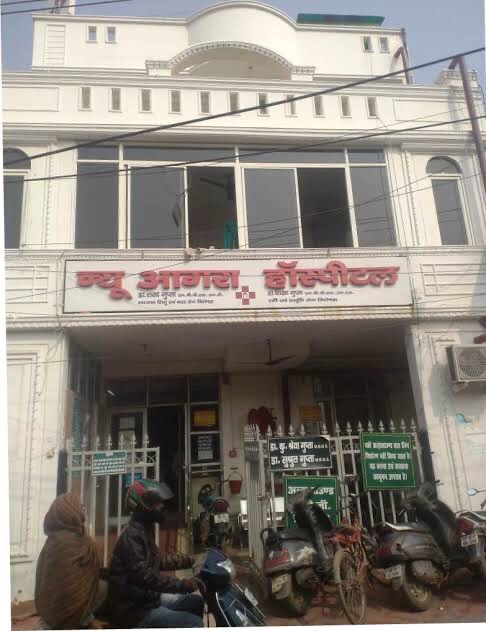
After completing his studies, Dr. Sharad Gupta dove headfirst into practice. He became a consultant pediatrician at New Agra Hospital, where he’s spent over two decades—though his total experience spans more than 40 years now. Patients and colleagues alike praise his gentle approach. “He’s not just a doctor; he’s a storyteller,” one parent might say. “My son was terrified of shots, but Dr. Gupta turned it into a game: ‘Pretend you’re a superhero getting powered up!’ And just like that, no more tears.” His clinic in Dayal Bagh, Agra, became a go-to spot for families, addressing everything from routine check-ups to complex pediatric issues. Living in Heera Bagh Colony, Dayalbagh, he’s remained deeply rooted in his community, balancing a demanding medical career with family life.
But Dr. Gupta’s story isn’t confined to hospital walls. As Agra grappled with pollution choking the Yamuna River and threatening the Taj Mahal’s pristine marble, Sharad emerged as a fierce environmentalist. It started subtly—perhaps inspired by the very air he breathed in his hometown. By the 2010s, he was actively campaigning against unchecked development. In 2019, when the Agra Metro project began without proper environmental clearances, Dr. Gupta raised the alarm. “We can’t sacrifice our heritage for haste,” he argued in public forums, as reported in local news. “The Taj is turning yellow from pollution—do we want our kids to inherit a monument in ruins?”
His activism escalated through legal channels. In 2022, he filed a case with the National Green Tribunal (NGT) against the state of Uttar Pradesh over environmental violations, highlighting illegal tree felling and sewage dumping. 21 More recently, in 2024, he took on the Taj Trapezium Zone authorities in another NGT petition, pushing for stricter pollution controls. 24 “Sharad’s not one to back down,” Dr. P.K. Gupta reflects. “Back in college, he’d stand up in debates if something felt wrong. Now, he’s doing it for the planet. ‘P.K., medicine heals people,’ he’d say, ‘but environmentalism heals the world they live in.'”
In 2023, when insects from the polluted Yamuna turned the Taj Mahal green, Dr. Gupta proposed innovative solutions like increasing the river’s water flow to flush out contaminants. 27 He’s vocal about the interplay between health and environment, often linking pediatric respiratory issues to Agra’s air quality. “Untreated sewage and industrial waste aren’t just eyesores—they’re health hazards,” he’s quoted saying in environmental reports.

Today, at over 60, Dr. Sharad Gupta continues his dual role as healer and guardian. Whether examining a feverish child or filing affidavits against polluters, his life is a testament to quiet persistence. As his old classmate Dr. P.K. Gupta puts it, “Sharad’s journey reminds us that one person can wear many hats—doctor, friend, activist. If we bumped into each other now, I’d say, ‘Still saving the world, one tree at a time?’ And he’d laugh, ‘Absolutely, P.K. Join me?'” In a city where history and modernity clash, Dr. Gupta stands as a bridge, ensuring the future is as bright as those college days under the Agra sun.
Dr. Sharad Gupta’s Battles with the NGT: Championing Agra’s Environment One Petition at a Time
Ah, the National Green Tribunal (NGT)—India’s eco-watchdog that’s become Dr. Sharad Gupta’s arena for fighting pollution and preservation. As his old classmate from the 1979 batch at S.N. Medical College, Dr. P.K. Gupta, you might remember Sharad as the guy who’d passionately argue about public health in our canteen debates. “P.K., if we don’t fix the environment, what’s the point of all this medicine?” he’d say, eyes lighting up. Well, fast-forward to today, and he’s channeling that fire into legal showdowns to save Agra’s lungs, the Yamuna, and even the Taj Mahal itself. Let’s dive into the details of his key NGT cases, pieced together from reports and updates—it’s a story of persistence, penalties, and a doctor’s unyielding quest for cleaner air and water.
The 2022 Landmark Case: Ravines, Mining, and the Yamuna’s Cry for Help
It all kicked off in March 2022 when Sharad, ever the vigilant environmentalist, spotted a newspaper article about rampant destruction in Agra’s eco-sensitive zones. 2 “This can’t stand,” he must have thought, firing off a letter petition to the NGT. Titled Dr. Sharad Gupta vs. State of Uttar Pradesh & Ors. (Original Application No. 316/2022), it targeted the illegal leveling of forest ravines—those rugged, biodiversity-rich gullies along the Yamuna that house over 1,000 species of plants and animals, from Egyptian vultures to monitor lizards. 0 He highlighted how earthmovers were flattening them for dubious development, allowing large-scale illegal mining near the Taj Mahal and shrinking the river’s floodplain. 21 “These ravines aren’t just dirt—they’re the Taj’s natural shield against floods and erosion,” Sharad argued in his filing, warning that their loss would devastate the ecological chain and turn the Yamuna into a toxic ditch.
The NGT didn’t waste time. By May 2022, they slapped notices on the Uttar Pradesh government, the Taj Trapezium Zone (TTZ) Authority, and others, demanding answers. 22 They formed a high-powered Joint Committee—including reps from the Ministry of Jal Shakti, MoEF&CC, TTZ, UP Pollution Control Board, and Agra’s District Magistrate—to investigate and enforce fixes. “Remedial action in accordance with the law,” the tribunal ordered, seeking a report within two months. 22 Sharad’s push exposed connivance, like alleged ties between officials and miners in the Taj Reserve Forest. 7
The ripples? Huge. By late 2024, the UP government notified 17 districts as flood plain zones, finally demarcating the Yamuna’s boundaries—up to 5.09 km on one bank in Agra alone. 21 This put over 5,000 buildings at risk of demolition, curbing urban sprawl. 7 The NGT even fined the Ministry of Jal Shakti and Central Water Commission Rs. 50,000 each for dragging their feet on the floodplain study. 2 As of February 2025, UP filed affidavits confirming the notifications, but Sharad’s not done— he’s still monitoring to ensure real enforcement. 0 “P.K., remember our college talks about preventive medicine? This is it for the planet,” he’d probably quip if we chatted today.
The 2024 Push: Stricter Controls in the Taj Trapezium Zone
Not one to rest, Sharad filed another petition in 2024: Dr. Sharad Gupta vs. Union of India & Ors. (Original Application No. 664/2024). 26 This one zeroed in on the TTZ Authority—the body overseeing the 10,400 sq km buffer around the Taj to combat pollution. 28 He called out lax enforcement on air quality, unchecked emissions, and failures to implement anti-pollution plans. 28 Drawing from past NGT orders (like in OA 519/2019), Sharad demanded accountability: “Why aren’t we using the Environment Protection Act’s full powers?” 26
The NGT responded swiftly, rapping the TTZ and UP government in May 2025 for “not taking requisite steps” to curb pollution. 28 They ordered the TTZ chairman to file a detailed affidavit on actions taken, with a four-week deadline. 28 This case ties into broader TTZ issues, like illegal tree felling—Sharad’s advocacy has spotlighted 420 unauthorized cuts in the zone over eight years, pushing for stiffer fines and censuses. 27 While some overlaps with Supreme Court battles (like the 2024 Vrindavan tree-felling fine of Rs. 50,000 per offender), this NGT filing keeps the pressure on pollution specifics. 23
Beyond Petitions: The Insect Plague and Yamuna’s Ongoing Woes
Sharad’s influence extends to related environmental crises, even if not always through his own filings. In 2023, when Goeldichironomus insects from the polluted Yamuna turned the Taj’s marble green with their droppings, he stepped up with practical solutions. 10 “Increase the water flow and slash pollution levels—that’s how we starve these bugs of their breeding grounds,” he told reporters. 10 This echoed earlier NGT concerns from 2016 about similar insect attacks, where stagnation in the Yamuna was blamed. 18 Studies later confirmed polluted Yamuna emissions (like hydrogen sulfide) are corroding the Taj’s marble, validating Sharad’s calls for de-silting and better flow. 17
Reflecting on it all, Dr. P.K. Gupta, you’d appreciate how Sharad’s pediatric roots—caring for the vulnerable—extend to Mother Nature. “Sharad, you’re not just healing kids anymore; you’re doctoring the earth,” I can hear you teasing. His NGT victories aren’t flashy, but they’ve forced real change: floodplain protections, pollution crackdowns, and a greener future for Agra. If there’s more brewing in these cases, Sharad’s likely already drafting the next petition. Stay tuned, old friend—his story’s far from over.


 deemagclinic
 deemag and chest clinic