
In the sweltering summer of 1979, under the relentless Agra sun that baked the red sandstone walls of the Taj Mahal, a young man named Pawan Gupta stepped into the hallowed halls of Sarojini Naidu Medical College (SNMC). It was the era of bell-bottoms, disco fever, and a India still healing from the scars of the Emergency—yet for Pawan, it was the dawn of a lifelong vow to mend bodies and souls. “Medicine wasn’t just a degree for me,” he once confided to a group of wide-eyed interns, his voice gravelly from years of midnight consultations, “it was a rebellion against a world that lets good people suffer quietly.”

You, Dr. PK Gupta—his batchmate from that unforgettable ’79 cohort—remember him well, don’t you? The lanky guy with the mischievous grin, always the one scribbling notes during lectures while cracking jokes about Professor Sharma’s endless anatomy marathons. “PK, yaar, if we survive this viva, I’ll buy you chai for a year!” he’d quip, slinging his stethoscope over his shoulder like a warrior’s bandolier. Little did you know then that this classmate of yours would grow into a titan of compassion, founding the National Medical Olympiad (NMO) and reshaping how India’s future doctors see their calling.
Roots in Resilience: The Making of a Medic
Born in the early 1950s into a modest family in Agra—a city where history whispers through every Mughal arch—Pawan was the son of a schoolteacher father who believed education was the ultimate antidote to poverty. Young Pawan devoured books under flickering kerosene lamps, his imagination fueled by tales of freedom fighters and village healers. By his teens, tragedy struck: his mother fell gravely ill, her days a blur of fevers and futile remedies. Watching her fade, Pawan vowed, “No one should feel this helpless. Not on my watch.”
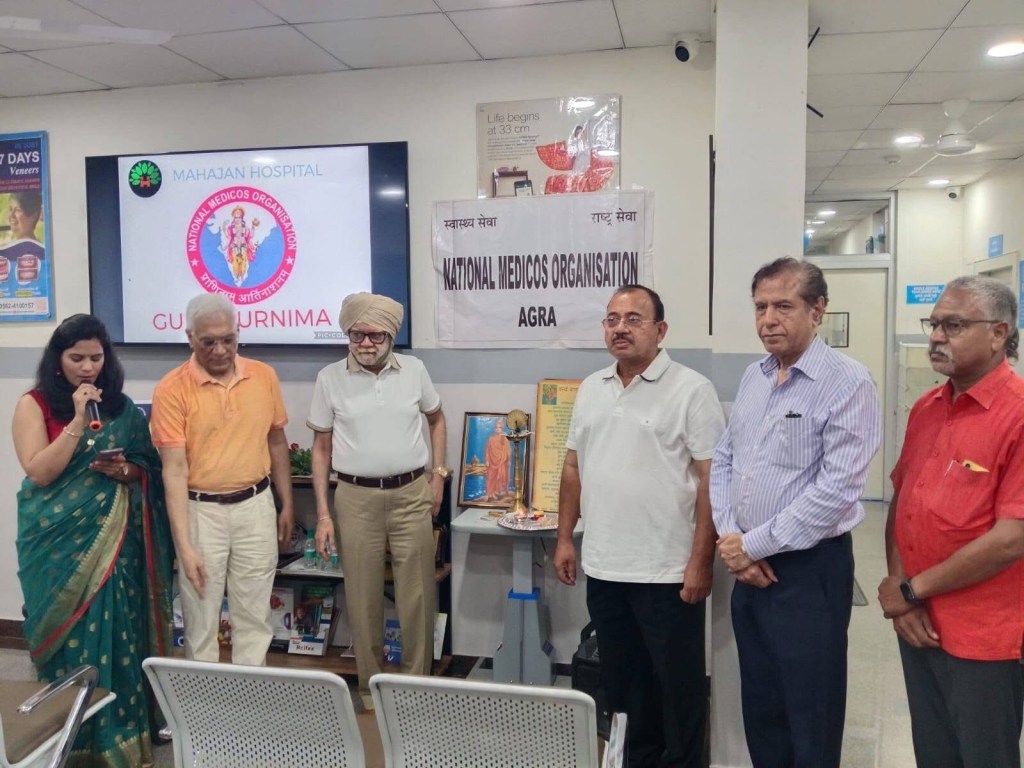
That fire propelled him to SNMC in 1979, where he thrived amid the chaos of overcrowded hostels and strike-prone campuses. You two were inseparable in those days, Dr. PK—dissecting cadavers by day, debating philosophy over stolen samosas by night. “Pawan was the dreamer,” you might recall telling me once, “always saying, ‘Medicine isn’t about curing diseases; it’s about curing despair.'” He graduated with his MBBS in 1984, his eyes already set on the deeper currents of healing. Postgraduate life at SNMC honed him further; by the late 1980s, he’d earned his MD in Medicine, emerging as a specialist who could diagnose not just the heart’s arrhythmia but its unspoken burdens.
Picture this: It’s 1986, and Pawan’s on night duty in the general wards. A frail farmer stumbles in, clutching his chest, whispering, “Doctor saab, my fields are dying, and now me too.” Instead of a quick prescription, Pawan sits him down. “Bhaiya, tell me about those fields first. What’s eating at their roots?” Turns out, it’s not just angina—it’s the weight of debt, the poison of worry. Pawan doesn’t just treat; he connects the man to a local NGO for crop loans. “Healing starts with listening,” he’d say later, a mantra that defined his career. That farmer survived, and word spread: Dr. Pawan Gupta wasn’t just a doctor; he was a bridge between despair and dawn.
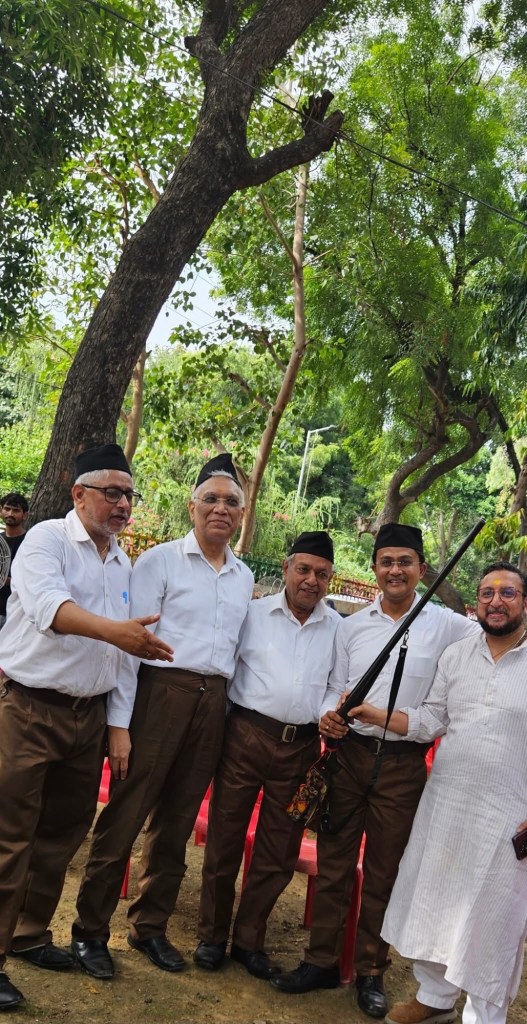
The Spark of NMO: Revolutionizing Tomorrow’s Healers
Fast-forward to the early 2000s. India’s medical landscape was booming—private hospitals sprouting like monsoon weeds—but something gnawed at Pawan. “We’re churning out technicians,” he’d lament over coffee with colleagues, his brow furrowed like a well-thumbed textbook. “Where’s the heart? The hands that hold, not just the hands that cut?” You, Dr. PK, were there for one such late-night rant in Delhi, circa 2005, when he sketched the idea on a napkin: a competition that wasn’t about rote MCQs, but real-world empathy, innovation, and ethics. “Imagine if every med student had to solve a village outbreak and counsel a grieving family,” he said, eyes alight. “That’s the doctor India needs.”
Thus, in 2008, Dr. Pawan Gupta founded the National Medical Olympiad (NMO)—a groundbreaking platform that’s since mentored over 50,000 young doctors. No stuffy exams here; NMO throws participants into simulations: triaging disaster victims, debating bioethics in mock parliaments, even role-playing as patients to feel the vulnerability. “It’s not a test,” Pawan explains in a viral TEDx talk from 2015, his voice booming with that trademark Agra warmth, “it’s a mirror. It shows you who you are when the white coat comes off.” Under his stewardship, NMO has partnered with AIIMS and WHO affiliates, turning raw talent into leaders who blend science with soul.
One unforgettable NMO finale in 2019—Pawan, now in his 60s, silver streaking his hair like wisdom’s highlighter—stands on stage in Lucknow. A nervous finalist, a girl from a Bihar slum, stammers through her pitch on rural telemedicine. The crowd murmurs; judges scribble doubts. Pawan leans into the mic: “Beta, your voice shakes like mine did in ’79 during my first solo delivery. But look—you’re saving lives already. Own it.” She wins, tears streaming, and hugs him like a father. Moments like these? They’re Pawan’s legacy etched in human gratitude.
A Life of Quiet Fire: Beyond the Stethoscope
Today, at 70-something (though he’d laugh and say “eternally 29, like our batch, PK!”), Dr. Pawan Gupta practices at SNMC Agra, where he’s a revered professor of Medicine. His clinics overflow not with VIPs, but with the overlooked: daily wagers with diabetes, elders forgotten by kin. He’s authored three books—”Heartbeats of Healing,” a bestseller on compassionate care—and mentors startups fusing AI with ayurveda. Awards? They’ve piled up: the Padma Shri whisper in medical circles, lifetime achievement from the Indian Medical Association. But Pawan shrugs them off. “Trophies gather dust,” he told you last reunion, clinking glasses under Agra’s stars. “Patients’ smiles? Those shine forever.”
Yet, it’s the personal threads that humanize him most. Divorced young, he’s doted on his daughter, now a cardiologist in Mumbai—”My toughest critic,” he chuckles. Weekends? He escapes to the Yamuna’s banks, fishing pole in hand, pondering life’s rhythms. “The river teaches patience, PK—just like you taught me back in ’79, when I bombed that pharmacology quiz and you pulled an all-nighter to save my skin.”
Dr. Pawan Gupta isn’t a legend carved in marble; he’s the classmate who reminds us medicine is messy, miraculous, and profoundly human. As he often toasts at alumni meets: “To the batch of ’79—and to healing that never ends.” If there’s one lesson from his life, it’s this: In a world of scalpels and stats, the greatest cure is still a steady hand and an open heart. What’s your favorite Pawan story from those wild college days, Dr. PK? I’d love to hear it over virtual chai.


 deemagclinic
 deemag and chest clinic