
Dr. Anand Singh Bohra is a distinguished Indian surgeon whose career exemplifies dedication to public health in challenging terrains. Born in the late 1950s (exact date not publicly documented), he pursued his medical education at Sarojini Naidu Medical College (SNMC) in Agra, Uttar Pradesh, one of India’s oldest and most revered medical institutions, established in 1939 as a premier center for medical training in the region. SNMC, affiliated with Dr. B.R. Ambedkar University, has long been known for producing skilled physicians and surgeons who serve across northern India.

Early Education and Training
Dr. Bohra joined SNMC in 1981 for his postgraduate studies, embarking on a Master of Surgery (MS) in General Surgery. This three-year rigorous program honed his expertise in surgical procedures, including abdominal, trauma, and emergency interventions. During his time at SNMC, he was part of a vibrant cohort of aspiring surgeons, navigating the demands of clinical rotations, academic rigor, and hands-on operating room experience at the attached Sarojini Naidu Medical College Hospital. His classmate and future spouse, Dr. Nilima Bohra (née unknown, but a fellow medical student), shared this formative phase, fostering a professional and personal partnership rooted in shared academic pursuits.
Notably, Dr. P.K. Gupta from Dehradun, who completed his MD two years prior to Dr. Bohra’s MS , has recalled him as a junior colleague, highlighting the close-knit alumni network of SNMC that spans decades.

Personal Life
Dr. Bohra’s marriage to Dr. Nilima, his classmate at SNMC, was a union of intellect and commitment to medicine. Likely wed in the mid-1980s following their postgraduate years, their relationship underscored the era’s evolving dynamics in medical families, where dual-career households were becoming more common. Dr. Nilima, while specifics of her specialization remain private, complemented his surgical path, possibly contributing to community health initiatives alongside him. Together, they built a life centered on service, raising a family while prioritizing healthcare in underserved areas.
Professional Career
Upon completing his MS around 1984, Dr. Bohra made a bold career choice that set him apart from many contemporaries. While fellow graduates vied for postings in urban plains—such as Delhi, Lucknow, or Agra’s bustling hospitals, drawn by better infrastructure, family proximity, and professional opportunities—Dr. Bohra opted for Rudraprayag, a remote hilly district in Uttarakhand (then part of Uttar Pradesh). This decision in the mid-1980s reflected his altruistic spirit amid India’s public health challenges, where rural and mountainous regions suffered from acute shortages of specialized care.
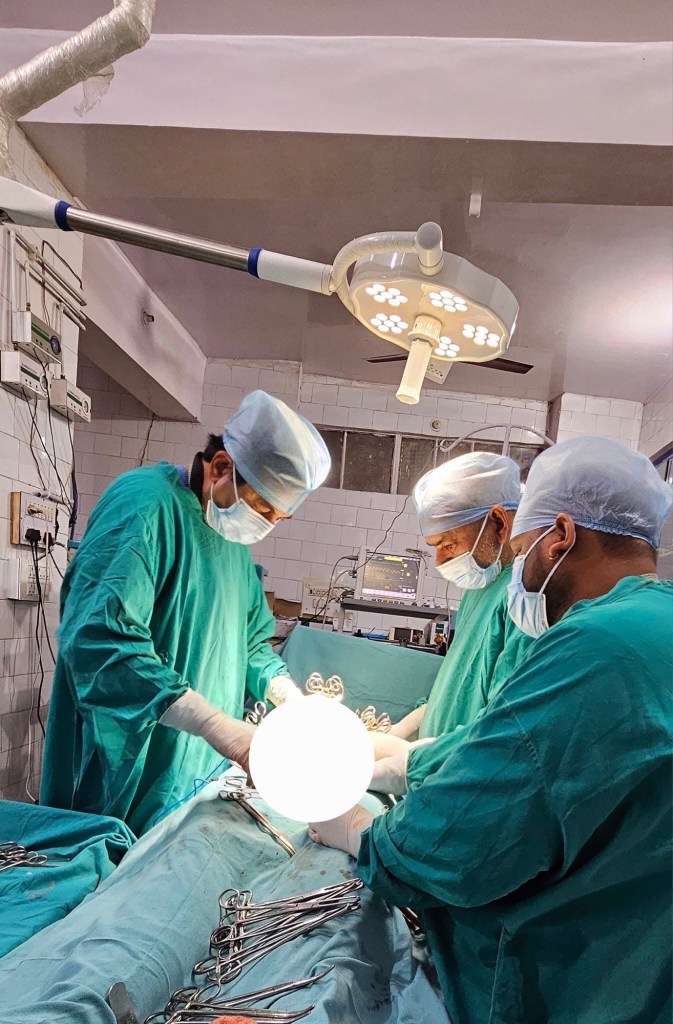
Rudraprayag, nestled in the Garhwal Himalayas at an elevation of about 600 meters, is prone to landslides, flash floods, and harsh winters, complicating medical logistics. As a young general surgeon, Dr. Bohra joined the district hospital or a community health center, addressing a wide spectrum of cases: trauma from road accidents on treacherous mountain paths, gastrointestinal emergencies, obstetric surgeries, and chronic conditions exacerbated by limited access to care. His work likely involved improvising in resource-scarce settings—performing appendectomies under basic conditions, managing infections without advanced antibiotics, and training local staff.
Over the decades, Dr. Bohra’s tenure in Rudraprayag (spanning at least the 1980s and 1990s, with possible extensions) contributed to bolstering healthcare in one of India’s most pilgrimage-heavy yet medically underserved districts, home to sacred sites like Kedarnath and Badrinath routes. His choice to serve “where all were trying for plain postings” earned quiet admiration among peers, embodying the ethos of rural service that later inspired programs like the National Rural Health Mission (launched in 2005).
Later in his career, Dr. Bohra may have transitioned to supervisory or advisory roles, potentially influencing health policy in Uttarakhand’s Garhwal region. While public records of his exact retirement or current status are sparse—common for grassroots public servants—his legacy endures through improved surgical access in the hills and the SNMC alumni legacy.
Legacy and Recognition
Dr. Anand Singh Bohra’s story is one of quiet heroism: a surgeon who chose the Himalayas over the plains, prioritizing patients over prestige. In an era when medical postings were fiercely competitive, his path inspired juniors like Dr. P.K. Gupta and countless others to value equitable healthcare. Though not a media figure, his contributions align with India’s broader narrative of medical trailblazers from SNMC, an institution that has graduated over 10,000 doctors since 1944.
Today, at over 65 years old, Dr. Bohra likely resides in Uttarakhand or Uttar Pradesh, perhaps mentoring the next generation or enjoying family life with Dr. Nilima. His biography, pieced from alumni recollections and institutional histories, serves as a testament to the unsung pillars of Indian medicine—those who heal not for acclaim, but for the greater good.


 deemagclinic
 deemag and chest clinic