
Nestled in the misty embrace of Dehradun’s Doon Valley, where the Himalayan foothills whisper secrets of ancient oaks and rushing streams, Dr. Krishna Prasad Joshi was born in 1965 to a family of proud Paharis—those resilient hill folk from Uttarakhand whose blood runs as clear and cold as the Ganges’ headwaters. “Beta, the mountains aren’t just our home; they’re our soul,” his father would say, clapping a weathered hand on young Krishna’s shoulder as they trekked up steep paths lined with rhododendron blooms. “They teach us to stand tall against the storms, to bend but never break.” Those words, spoken under a sky vast as eternity, planted seeds that would grow into a life of quiet defiance and deep-rooted pride.
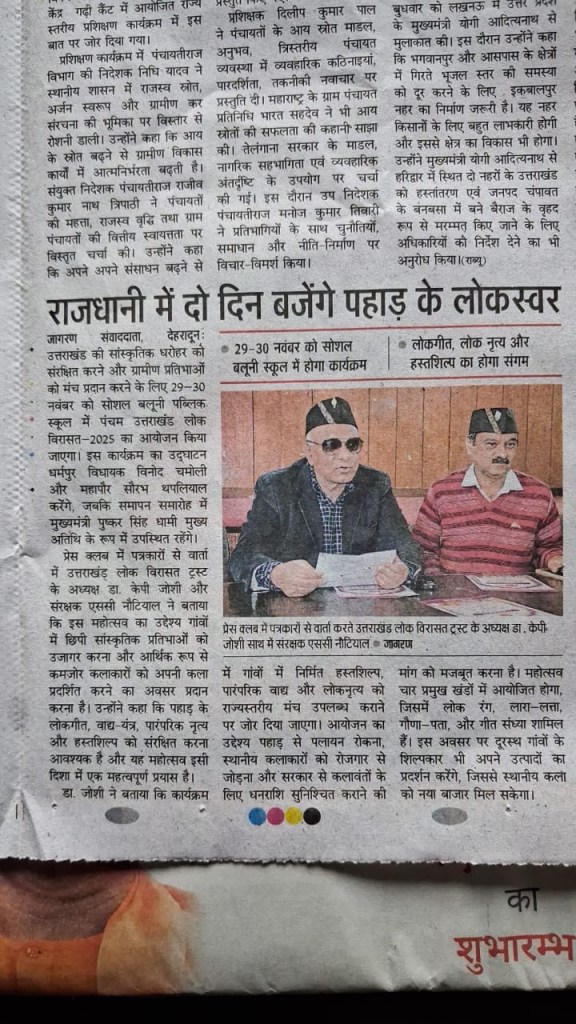
From his earliest days in a modest stone house in Dehradun, Krishna—K. P. to friends and patients alike—knew the rhythm of the hills. Summers meant foraging for wild morels in the oak forests, winters huddled around a chulha fire sharing tales of Garhwali folklore. School in Dehradun was a battleground of chalk and dreams, but it was the stories of his grandfather, a village vaidya who brewed herbal tonics from pahadi roots, that ignited his passion for medicine. “Why chase city lights when the real healing grows right here?” he’d muse to his classmates, earning him the nickname “Pahari Doc” long before he earned his stethoscope.
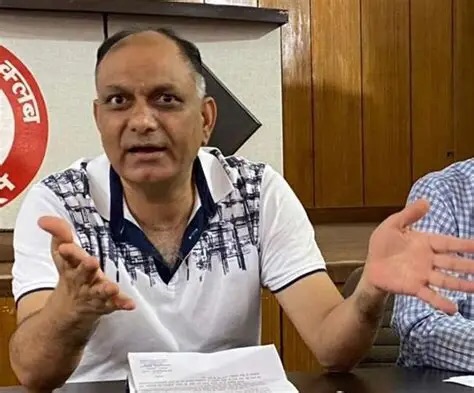
By 1983, Krishna had aced his way into the hallowed halls of the All India Institute of Medical Sciences (AIIMS) in New Delhi. The transition from Dehradun’s crisp air to the capital’s smog-choked bustle was jarring. “I felt like a pine sapling transplanted to concrete,” he later confessed in a rare interview with a local Pahari magazine. But the hills’ grit fueled him. Nights blurred into dawns as he pored over anatomy texts by lantern light, dreaming of a day when he could blend modern medicine with the timeless wisdom of Uttarakhand’s herbal lore. He graduated in 1989 with an MBBS, his thesis on integrating Ayurvedic pahadi remedies into allopathic care earning whispers of “revolutionary” from skeptical professors.
Residency followed at a bustling Delhi hospital, where the chaos of urban ailments tested his resolve. It was here, amid the beeps of ventilators and the cries of the overcrowded wards, that he met Dr. Meera Rawat—his future wife, a sharp-eyed pathology resident with a laugh like temple bells. Meera, also from the hills but raised in Haldwani, shared his unspoken ache for home. “Krishna, these city labs are sterile tombs,” she’d tease over stolen chai breaks, her fingers stained with reagent dyes. “Give me the scent of pine resin over formaldehyde any day.” Their courtship was a quiet rebellion: weekend escapes to the Rajaji National Park, where they’d debate differential diagnoses while spotting leopards in the underbrush. They married in 1993 in a simple Pahari ceremony under a canopy of deodar trees, vowing to build a life that honored their roots. Today, Meera heads the pathology department at a Dehradun hospital, her keen eye for cellular secrets saving countless lives. “She’s my anchor,” Krishna says fondly. “In a world of symptoms, she’s the one who sees the story beneath.”
Post-residency, Krishna pursued his MD in General Medicine at AIIMS, completing it in 1994 with honors. But the pull of the mountains was irresistible. “Delhi sharpened my scalpel, but Dehradun holds my heart,” he told his mentors as he packed his bags. Returning home, he opened the Joshi Clinic on Race Course Road in 1995—a modest setup with a brass nameplate etched in Devanagari: “Dr. K. P. Joshi, MD Medicine.” What started as a single-room practice ballooned into a haven for the ailing, drawing patients from Almora’s remote hamlets to Haridwar’s bustling ghats. Over three decades, he’s treated everything from high-altitude pulmonary edema in trekkers to diabetes ravaging apple orchard farmers. His mantra? Holistic care. “Pills alone don’t heal; pahadi air and a warm kafuli stew do,” he’d quip, prescribing alongside consultations on stress-busting yoga amid the Shivaliks.
Yet, Dr. Joshi’s true fire burns beyond the clinic walls. A self-proclaimed “Virasat Warrior,” he’s poured his soul into preserving Uttarakhand’s cultural tapestry, especially its vanishing crafts and products. In 2005, inspired by the annual Virasat Festival in Dehradun—a riot of folk dances, woolen shawls, and buransh juice stalls—he co-founded the Pahari Utsav Collective. “Our hills are bleeding talent,” he declared at the launch, his voice booming over the crowd like a temple conch. “Globalization swallows our pichora weaves and bhatt ki churkani without a burp. We must showcase them, not shelve them!” Under his wing, the collective has organized over 50 pop-up markets, turning obscure pahadi goods—hand-spun angora wool from goats grazing Mussoorie slopes, wild honey from Kumaon apiaries, and intricately carved walnut wood artifacts—into celebrated staples. He’s a fixture at the Dehradun Virasat Fest, manning a stall piled high with organic mandua flour and rhododendron cordial, regaling buyers with tales: “This honey? Straight from bees that dance with Himalayan clouds. One spoonful, and you’ll taste eternity.”
His passion isn’t without hurdles. A 2018 funding drought nearly shuttered the collective, but Krishna rallied locals with a fireside speech in a Tehri village: “Friends, our virasat isn’t a museum piece—it’s our lifeline! Would you let the Ganga run dry?” Donations poured in, from expat Paharis in Mumbai to tourists touched by his fervor. Today, the initiative employs 200 artisans, exporting to Delhi boutiques and even London fairs. “It’s not business; it’s breathing life into our ancestors’ hands,” he reflects, eyes twinkling.
Family remains his north star. Their daughter, Dr. Anjali Joshi, 28, followed her parents’ path into medicine, earning her MD in Internal Medicine from PGIMER Chandigarh in 2022. Now an internist at a Nainital clinic, she specializes in geriatric care for the hills’ aging shepherds. “Papa taught me medicine is 10% science, 90% stories,” Anjali shares over family dinners of aloo ke gutke. “He’d drag me to Virasat stalls as a kid, saying, ‘Beta, heal the body, but celebrate the spirit.'” The Joshi home, a cozy cottage overlooking the Mussoorie ridge, buzzes with their shared zeal—Sundays mean foraging for pahadi herbs or debating the merits of organic til ki chutney versus city imports.
At 60, Dr. K. P. Joshi shows no signs of slowing. With a clinic that’s mentored a generation of young doctors and a cultural legacy that’s put Uttarakhand on the global map, he’s living proof that one man’s pride can move mountains. “I’m just a Pahari boy with a stethoscope and a stubborn heart,” he chuckles when pressed on his impact. “But if I can stitch a wound and save a weave in the same breath, well—that’s the real medicine.” In the shadow of the Himalayas, where echoes of folk songs linger, Dr. Joshi’s story reminds us: true healing starts at home, in the hills that shaped us.


 deemagclinic
 deemag and chest clinic