
Picture this: It’s 1979, and the sun-baked streets of Agra hum with the chaos of monsoon puddles and the distant call of a muezzin. The Taj Mahal stands eternal in the haze, but for a lanky kid from a modest family in the heart of Uttar Pradesh, the real marvel is the sprawling campus of Sarojini Naidu Medical College—SNMC, as we called it back then. That’s where I first met Sanjay Nijhara. I was PK Gupta, the wide-eyed dreamer with a stethoscope that felt heavier than my ambitions. Sanjay? He was the quiet storm—the one who’d crack a dry joke about dissecting cadavers while acing anatomy exams, leaving the rest of us scrambling to keep up.
Dr. Sanjay Nijhara: The Prince Charming of Orthopaedic Pain Relief
If you’ve ever wandered into the sleek confines of Toshi Orthomedic in Greater Kailash, Delhi, and caught sight of a distinguished gentleman with salt-and-pepper hair, a warm smile that disarms even the grumpiest patients, and trousers so impeccably slim they scream timeless elegance, you’ve met Dr. Sanjay Nijhara—the orthopaedic wizard affectionately dubbed “Prince Charming” by his inner circle (and yes, he rolls his eyes at it, but you can tell he doesn’t mind one bit).
Born in the bustling heart of Uttar Pradesh in the late 1950s, Sanjay grew up in a family where fixing things was second nature. As a boy in Agra, he’d tinker with everything from broken toys to neighborhood scrapes, earning early praise from his parents. His mother recalls a young Sanjay bandaging a stray dog’s paw with scraps from her sewing kit:
“Beta, why are you wasting my bandages on that mutt?”
“Maa, if I can fix him, imagine what I can do for people!” he shot back, eyes sparkling with determination. (The dog recovered and became the family watchdog, forever loyal.)
The 1970s were all about flair—bell-bottoms swaying to disco beats—but not for Sanjay. He stuck to his drain-pipe trousers, those slim, straight-legged wonders that made him stand out like a rebel in a sea of flares.
“Fashion comes and goes,” he’d tell his teasing friends, “but looking sharp? That’s forever.” They called him the “Elvis of Agra,” and he wore it like a badge.
Then came the big leap: the Combined Pre-Medical Test (CPMT) in 1979. Sanjay didn’t just pass—he aced it, securing rank 1 in Agra, a feat that still gets brought up at reunions. That golden ticket landed him at Sarojini Naidu Medical College (SNMC) in Agra, where he dove into MBBS from 1979, graduating around 1985, and then pursued his MS in Orthopaedics, wrapping up in 1989. Those ten years were a whirlwind of late-night cramming with classmates like you, sharing notes and dreams under the hostel’s flickering lights.
But exams? Oh, they were his kryptonite. The unflappable future surgeon would morph into a bundle of nerves. One classmate remembers a pre-final panic:
“Sanjay, you’ve got this—you’re the topper!”
“What if I blank out? What if I mix up the femoral nerve with the sciatic?” he’d fret, pacing the corridor at 2 a.m.
(He never blanked. He sailed through, as always.)
Post-MS in 1989, Sanjay served as a senior registrar at Lok Nayak Jai Prakash (LNJP) Hospital in Delhi, honing his skills in orthopaedic surgery. But his true passion emerged in pain management—a field he pioneered in India. Founding Toshi Orthomedic over three decades ago, he shifted focus to non-surgical wonders: posture analysis, correction therapies like Spineliner and High Tone Power Therapy, treating everything from chronic back pain to osteoarthritis without a scalpel in sight. Patients rave about his approach; one review gushes: “Dr. Nijhara didn’t just fix my sciatica—he fixed my life!” He writes ..One bit of correction though—we don’t do physiotherapy—we do a treatment method called PRT for non invasive/non surgical orthopaedic pain management.
His anxiety? It never fully left, but now it’s channeled into perfectionism. Before a big conference or patient consult, he’ll double-check everything.
“What if I miss a postural imbalance?” he’ll mutter to his team.
“Sir, you never do,” they reassure, and he’s off, charming the room.
Wanderlust runs deep in Sanjay’s veins. Over 35 years, he’s traveled the globe—lecturing in Europe, collaborating in the Middle East, attending workshops in Australia and the US—always hunting new techniques to bring home. Once, in a Singapore seminar, he quipped to a colleague:
“Travel isn’t vacation; it’s education. And who knows? Maybe I’ll find the perfect slim trousers in Tokyo.”
Today, in his sixties, Dr. Nijhara balances his Delhi clinic with online consultations, mentoring young orthopaedists, and sneaking in mountain treks. Patients adore him—elderly aunties call him “beta,” tough executives credit him for getting them back on their feet. As one put it: “He’s got the hands of a healer and the heart of a prince.”
Still rocking those drain-pipe-inspired slims (bell-bottoms? Never again), eternally anxious yet endlessly kind, Dr. Sanjay Nijhara proves that true charm lies in making the broken feel whole. The world is his canvas, and he’s painting pain-free futures, one posture at a time. 9 10 11 12 17 23
“PK, if medicine doesn’t work out, we could always sell marble replicas of the Taj,” he’d quip during those endless late-night study sessions in the dim-lit hostel, our textbooks splayed like battle plans across the rickety wooden table. We’d laugh, but deep down, we knew the grind was real. Agra’s sweltering summers turned lecture halls into ovens, and the attached hospital wards were a whirlwind of typhoid outbreaks and frantic night shifts. From MBBS in ’79 through the brutal residency years, our batch of ’79-’89 was forged in that fire. Sanjay, with his laser focus and that infectious grin, dove headfirst into orthopaedics. “Bones don’t lie, PK,” he’d say, flexing his skinny arms like he was already wielding a scalpel. “They just need the right fix.”
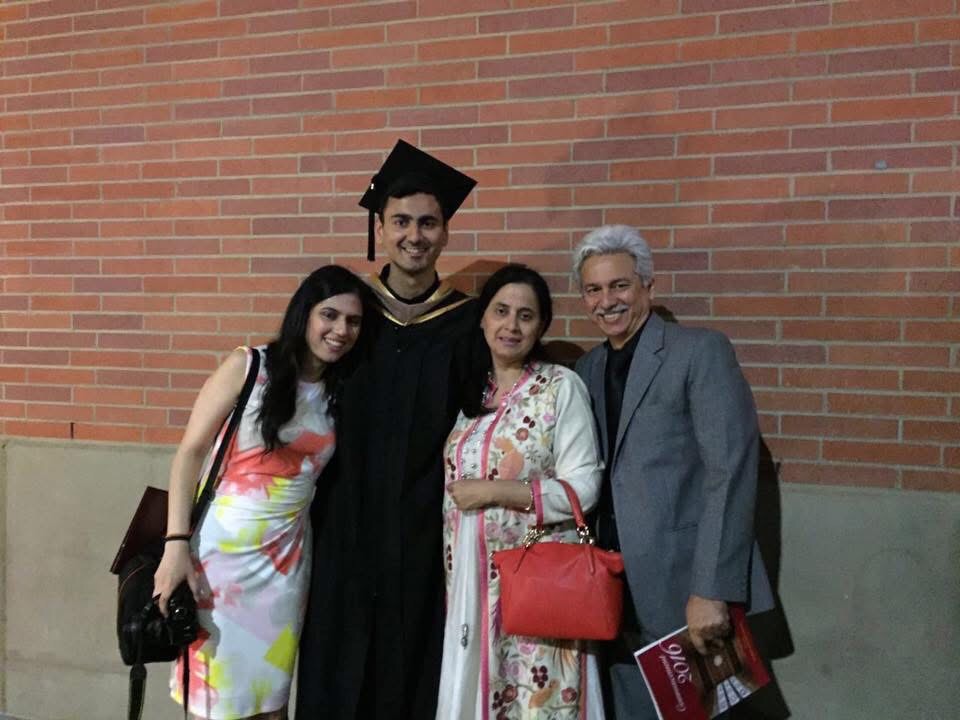
Those ten years? They were a blur of shared secrets and survival. Remember that time we snuck out for pind daal at a roadside dhaba after a 36-hour shift, only to get caught by the chief warden? Sanjay took the fall, charming his way out with a story about “researching malnutrition.” Classic Sanjay—always the fixer, even off the clock. We bonded over cricket matches on the college grounds, debating whether Kapil Dev’s swing was more art or science, and dreaming of the day we’d trade Agra’s dust for bigger stages. By ’89, as he wrapped his MS in Orthopaedics, Sanjay wasn’t just a doctor; he was a healer with a heart as sturdy as the spines he mended.
Post-graduation hit like a Delhi summer storm. Sanjay packed his bags for the capital, landing a senior registrar gig at LNJP Hospital. “Time to trade cadavers for chaos, eh?” he texted me—yes, even back then, we were early adopters of those clunky pagers. Delhi suited him: the non-stop pulse, the mosaic of patients from every corner of India. But Sanjay never lost his roots. While others chased flashy private gigs, he doubled down on what he loved—orthopaedic pain management, the unsung hero of the field. “Surgery’s the last resort, PK,” he’d tell me over chai during my rare visits. “Why cut when you can coax the body back to life?” His mantra? Non-surgical restoration: a mix of physio, counseling, and sheer willpower. Over the years, he built Toshi Orthopaedic Comprehensive Pain Management in Greater Kailash—a sanctuary where backs don’t just heal, they roar back to life.
Fast-forward to today, and Sanjay’s still at it in Delhi, a silver fox with the same spark. At 65-ish (we don’t count the wrinkles), he’s touched thousands: the rickshaw puller who walked his daughter down the aisle pain-free, the athlete who reclaimed the field after a shattered knee. “It’s not about the degree, PK,” he said to me just last month over a video call, his clinic buzzing in the background. “It’s about that moment when a patient hugs you and says, ‘Doc, I forgot what hurt feels like.’ That’s the real gold medal.”
We’ve lost touch with some from the old batch—life’s cruel like that—but Sanjay and I? We’re the holdouts, trading stories of grandkids and “what ifs.” He teases me about my armchair philosophy: “You ponder the mind, I mend the frame—together, we’re unbreakable.” And he’s right. From the dusty benches of SNMC to the humming halls of Delhi, Dr. Sanjay Nijhara’s journey isn’t just a bio; it’s a testament to grit, grace, and the friends who make the long haul worthwhile. If you’re ever in GK, knock on his door. Tell him PK sent you. He’ll fix you up with a story, a smile, and maybe even a bone to pick. After all, as he always says, “Life’s too short for bad backs—or bad company.”


 deemagclinic
 deemag and chest clinic