
Imagine a young girl growing up in the shadow of India’s freedom struggle, where prison visits to her father felt like adventures, complete with chocolate cake smuggled in by sympathetic British jailers. That girl was Nayantara Pandit, born on May 10, 1927, in Allahabad (now Prayagraj), the second daughter of Vijaya Lakshmi Pandit—India’s first woman ambassador and a fiery nationalist—and Ranjit Sitaram Pandit, a scholarly barrister who translated ancient Sanskrit texts while fighting for independence.
In 1921,Vijay Laxmi, her mother, married Ranjit Sitaram Pandit (1921–1944), a successful barrister from Kathiawar, Gujarat and classical scholar who translated Kalhana’s epic history Rajatarangini into English from Sanskrit. Her husband was a Maharashtrian Saraswat Brahmin, whose family hailed from village of Bambuli, on the Ratnagiri coast, in Maharashtra. He was arrested for his support of Indian independence and died in Lucknow prison in 1944, leaving behind his wife and their three daughters Chandralekha Mehta, Nayantara Sehgal and Rita Dar.
Her mother, vijay Laxmi died in 1990. She was survived by her daughters, Chandralekha and Nayantara Sahgal.
Her maternal uncle? None other than Jawaharlal Nehru, India’s first Prime Minister. Her cousin? Indira Gandhi.
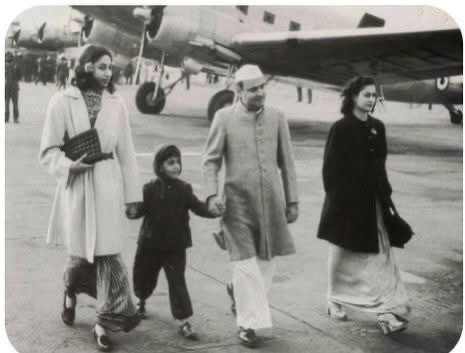
Nayantara’s childhood was anything but ordinary. “We lived in a whirlwind,” she once reflected in her memoir Prison and Chocolate Cake (1954). “One day we’d be picnicking with Uncle Jawahar in Anand Bhawan, the next visiting Papa in jail, where the guards would sneak us treats.” Those early years instilled in her a deep love for freedom—not just political, but personal. Educated at Woodstock School in the Himalayas and later at Wellesley College in the United States, she returned to India with a sharp intellect and an independent spirit.
In 1949, she married Gautam Sahgal, a successful industrialist, and they had three children. But domestic life in Bombay felt confining. “I wanted more than drawing rooms and dinners,” she might have confided to a close friend. By the 1960s, her marriage was unraveling, and she found intellectual and emotional fulfillment in a passionate correspondence with E.N. Mangat Rai, a distinguished Indian Civil Service officer. Their letters—over 6,000 in just a few years—were raw, poetic exchanges of ideas, love, and longing. Excerpts later published in Relationship (1994) reveal a woman unafraid to choose happiness over convention. “Why should I dim my light for anyone’s comfort?” she seemed to ask through her words. They married in 1979, sharing decades of companionship until his passing.
Nayantara’s true voice emerged in her writing. Her novels, like Rich Like Us (1985)—which won the Sahitya Akademi Award—and Plans for Departure (1985), weave personal stories of love, loss, and identity against India’s turbulent politics: the idealism of independence giving way to corruption, the Emergency of 1975, and rising intolerance. She was never silent. When her cousin Indira imposed the Emergency, suspending civil liberties, Nayantara spoke out boldly. “Family ties mean nothing if principles are at stake,” she declared in interviews. Indira, stung by the criticism, reportedly canceled Nayantara’s diplomatic postings and distanced the family. Yet Nayantara stood firm, later returning her Sahitya Akademi Award in 2015 to protest growing communal violence and threats to free speech.
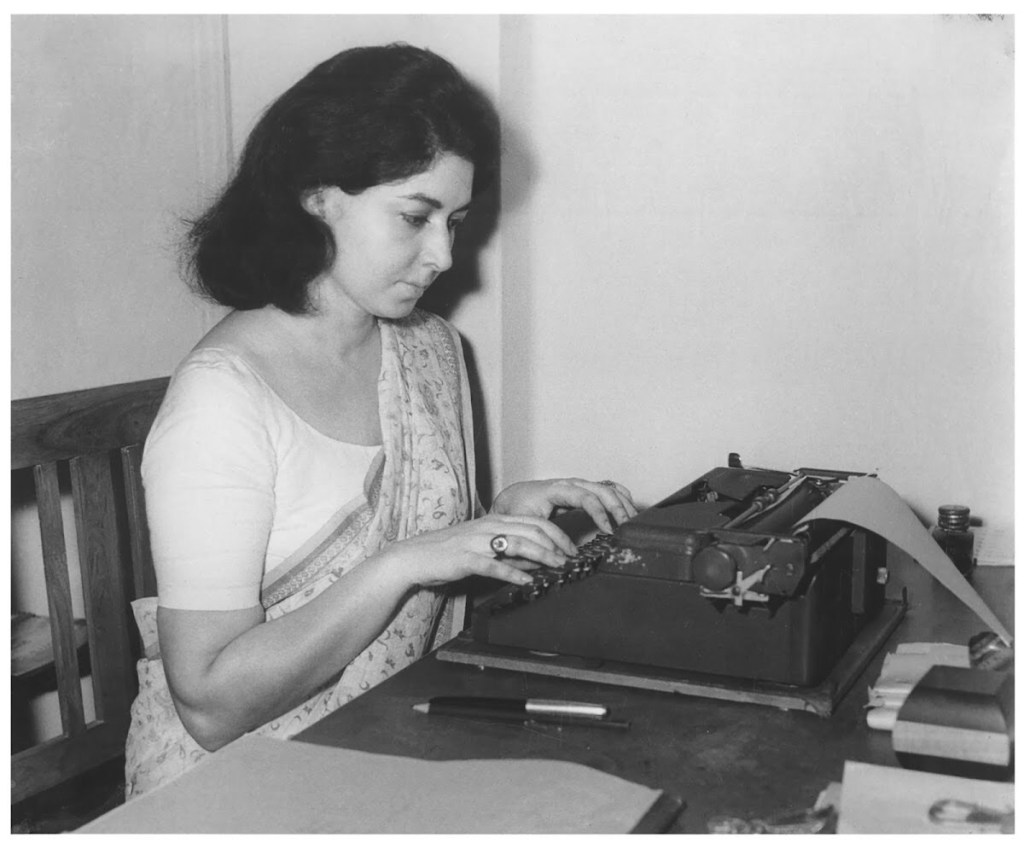
She settled in Dehradun in the 1980s, in the serene home her mother built overlooking the hills—a place of quiet reflection amid blooming gardens. Even in her later years, her elegance shone through in small details: her impeccable manners, her thoughtful letters.
Dr. P.K. Gupta, a psychiatrist practicing in Dehradun, recalls one such moment vividly. “It was about 35 years ago, around 1990,” he shares with a smile. “A bearer arrived at my clinic with a patient needing an EEG test, referred through Dr Diwan Singh. He handed me a letter—simple, routine request. But oh, the handwriting! Perfect Vere Foster script, every loop and curve flawless, like calligraphy from another era. And the stationery—thick, luxurious paper, almost like fine white cloth. I thought to myself, ‘This isn’t ordinary. Whoever wrote this comes from extraordinary refinement.’ Signed Nayantara Sahgal herself. It spoke volumes about her—graceful, precise, understated elegance in even the smallest things.”
In that fleeting encounter, through ink and paper, one glimpsed the woman behind the words: a fierce defender of democracy, a novelist of profound insight, and a human being of quiet dignity. Nayantara Sahgal didn’t just witness history; she lived it, questioned it, and wrote it with unflinching honesty. “Freedom isn’t given,” she often said. “It’s fought for—every day, in big ways and small.” Her life reminds us that true strength lies in independence, and true legacy in speaking truth, elegantly, to power.


 deemagclinic
 deemag and chest clinic