
In the dim glow of the operating room at Johns Hopkins Hospital, on a crisp September day in 1987, Dr. Ben Carson stood at the helm of a 70-person surgical team, his hands steady despite the marathon ahead. “Team, this is history in the making,” he said calmly to his colleagues, as they prepared to separate the Binder twins—seven-month-old conjoined boys fused at the back of their heads. “We’ve planned every step, but remember, these are lives we’re holding. Let’s pray for guidance.” The 22-hour procedure would catapult Carson into global fame as the first surgeon to successfully separate occipital craniopagus twins, a feat that blended cutting-edge medicine with sheer human determination. 0 But Ben Carson’s journey to that moment was anything but straightforward—it was a tale of grit, faith, and redemption, forged in the gritty streets of Detroit.
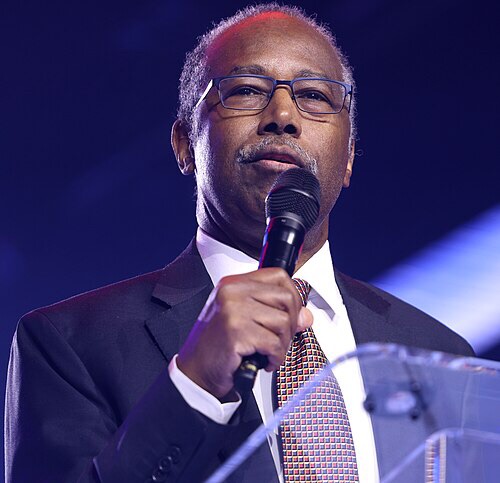
Benjamin Solomon Carson was born on September 18, 1951, in Detroit, Michigan, into a world of hardship. 0 His father left the family when Ben was just eight, plunging them into poverty. Living with his mother, Sonya, and older brother Curtis in a rundown neighborhood, young Ben struggled with anger and poor grades. “Why do I have to read these books, Mom? School’s boring,” he’d complain, slouched on their worn couch after another day of feeling like an outcast. Sonya, who had only a third-grade education herself but worked tirelessly as a domestic helper, wasn’t having it. “Ben, knowledge is power,” she’d reply firmly, turning off the TV and handing him library books. “You and Curtis will read two books a week and write reports for me. No excuses.” That simple mandate sparked a transformation—Ben’s grades soared, and he discovered a passion for learning that would define his life. 3
As a teenager, Ben faced darker demons. Plagued by a hot temper, he once nearly stabbed a friend during an argument, only for the knife to glance off a belt buckle. Shaken, he locked himself in the bathroom and prayed for hours. “God, take this anger from me,” he whispered through tears. That pivotal moment led him to embrace his Seventh-day Adventist faith, channeling his energy into academics instead of fights. 5 Earning a scholarship to Yale University, he graduated with a psychology degree in 1973. 0 It was there he met Lacena “Candy” Rustin, his future wife. “You’re the smartest guy I’ve met,” she teased during a study session, sparking a romance that led to their 1975 marriage and three sons: Murray, Benjamin Jr., and Rhoeyce. 5
Initially eyeing psychiatry, Ben shifted gears during medical school at the University of Michigan, where he earned his MD in 1977. 0 “The brain is the most complex thing in the universe—why not tackle it?” he later reflected in his memoir, Gifted Hands. His neurosurgery residency at Johns Hopkins in Baltimore honed his skills, and a brief stint in Australia as a senior registrar in 1983-1984 exposed him to innovative techniques. 0 By 1984, at just 33, he became the youngest director of pediatric neurosurgery in Johns Hopkins’ history—a role he held for nearly three decades. 1 8
Carson’s operating room became a stage for miracles. He refined hemispherectomy, removing half the brain to halt severe seizures in children with epilepsy, giving them a shot at normal lives. 0 “Parents would come to me desperate,” he recalled. “I’d say, ‘I can’t promise perfection, but I can promise we’ll fight with everything we’ve got.'” His empathy shone through in cases like that of a young girl with uncontrollable seizures. “Dr. Carson, will I ever play like other kids?” she asked pre-surgery. “With God’s help and your courage, yes,” he assured her, and post-operation, she did. 4 But the 1987 twin separation defined his legacy. Facing skepticism, Carson assembled a dream team and rehearsed for months. Midway through the grueling surgery, as fatigue set in, he rallied them: “Stay sharp—we’re not just cutting tissue; we’re giving these boys independence.” Both twins survived, though one faced challenges, marking a watershed in pediatric neurosurgery. 0 5
Beyond the scalpel, Carson held professorships in plastic surgery, oncology, and pediatrics, authoring books like Think Big to inspire youth from similar backgrounds. 4 He co-founded the Carson Scholars Fund to reward academic excellence, proving his belief that “success is determined not by what happens to you, but by what you do with what happens to you.” Retiring from surgery in 2013, he ventured into politics, but his neurosurgical innovations continue to save lives, a testament to a man who turned personal adversity into profound healing. 3 Ben Carson wasn’t just a doctor—he was a beacon of possibility, reminding us that with faith, hard work, and a steady hand, even the impossible becomes real.


 deemagclinic
 deemag and chest clinic