
In the misty hills of Mussoorie, where the air carries whispers of pine and adventure, Dr. Sunil Sanon was born into a world that would shape his unyielding spirit. Growing up in this quaint hill station, young Sunil roamed the winding paths, dreaming big amid the colonial-era bungalows and vibrant bazaars. “Look at these mountains, beta,” his father once told him during a family trek, pointing to the snow-capped Himalayas. “They stand tall through storms. That’s how you must be—resilient and kind.” Those words stuck, fueling his drive to heal and uplift.
Sunil’s path to medicine began in earnest when he enrolled at the prestigious King George’s Medical College in Lucknow. It was 1977 when he graduated with an MD in Internal Medicine, a milestone that felt like conquering his own Everest. “I remember the day I got my degree,” he’d later recount to friends over chai in Mussoorie’s cafes. “My hands were shaking as I held it. ‘This isn’t just paper,’ I thought. ‘It’s a promise to serve.'” Rejecting lucrative offers from big-city hospitals, he returned to his beloved Mussoorie, where the need for compassionate care was as vast as the valleys below.
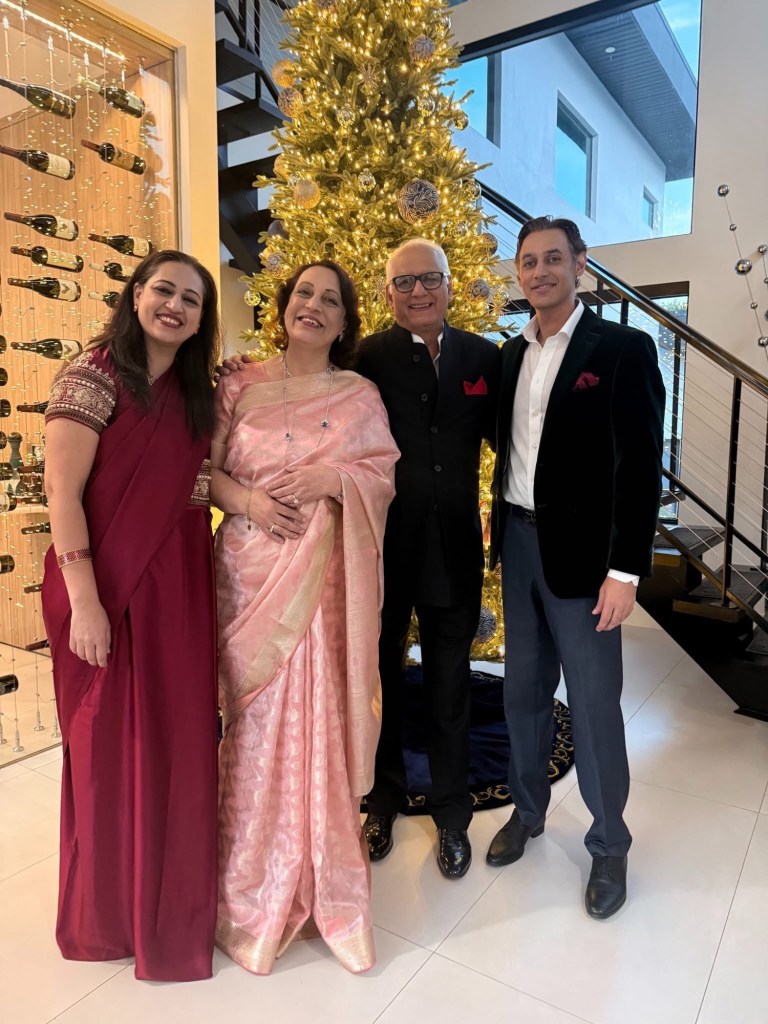
Back home, Dr. Sanon set up his practice, becoming a beacon for the community. But he wasn’t content with just treating ailments; he saw the bigger picture—the poverty, the lack of education, the environmental strains on his hometown. Teaming up with his wife, Dr. Venu Sanon, another dedicated physician, they transformed their lives into a partnership of purpose. “Venu, we can’t just patch up bodies,” he’d say during their evening walks along Camel’s Back Road. “We need to heal souls too.” She’d smile and reply, “You’re right, Sunil. Let’s start with the villages.” Together, they organized free medical camps in remote areas around Mussoorie, trekking hours to reach forgotten hamlets. In one such camp, a villager approached him with a chronic cough. “Doctor saab, I’ve traveled miles,” the man wheezed. Dr. Sanon examined him gently and prescribed treatment, adding, “Come back anytime. And bring your children—we’ll check them too. Health is for everyone.” 5
Their philanthropy deepened with the founding of the Divine Light Trust (DLT), a charitable organization aimed at educating underprivileged youth. Dr. Sanon, an innovative thinker and gifted speaker, poured his energy into it, mentoring bright minds like Shubham, a talented boy from a humble background who dreamed of engineering. “Why stop at dreams?” Dr. Sanon challenged him during a tutoring session. “Study hard, and we’ll make it real.” Thanks to DLT’s support, Shubham and many others pursued higher education, turning potential into reality. “These kids are Mussoorie’s future,” he’d passionately declare in his talks, his linguistic flair weaving Hindi, English, and local dialects into inspiring narratives. 4 3
Dr. Sanon’s activism extended beyond medicine. As an environmentalist, he gave eloquent lectures on Mussoorie’s geographical history and its changing ecosystem, warning of deforestation’s toll. “Our hills are crying out,” he’d say in packed halls, his voice rising like the wind through the deodars. “If we don’t act, what legacy do we leave?” He also championed human rights, serving as a close aide to activist Harsh in campaigns against exploitative practices like hand-pulled rickshaws in Kolkata. Even after successes, he’d continue advocating, telling supporters, “One victory isn’t enough. Justice is a lifelong pursuit.” 6 9
The Sanons’ sense of history added another layer to their story. They proudly preserved a Tricolour flag gifted by Mahatma Gandhi himself, a relic from India’s freedom struggle. “This flag reminds us of sacrifice,” Dr. Sanon would explain to visitors, holding it reverently. “It’s not just cloth—it’s our nation’s heartbeat.” Their generosity shone through in donations, like the life-saving Respirator-Bi-PAP unit to Landour Hospital, a nod to the institution that had once cared for their community. 5 8
Even luminaries sought their care; industrialist KK Birla and his daughter Shobhana Bhartia were among those who trusted the couple’s expertise. But Dr. Sanon remained grounded, often joking with patients, “I’m just a hill boy with a stethoscope.” Today, in his 70s, he continues his mission, a living testament to how one person’s passion can ripple through generations. As he puts it, “Mussoorie isn’t just my home—it’s my heartbeat. And I’ll keep it beating strong.” 2


![ERYRI [ Explore ! 08.03.26 ]](https://live.staticflickr.com/65535/55136149619_b136b59fb3_s.jpg "ERYRI [ Explore ! 08.03.26 ]")


 deemagclinic
 deemag and chest clinic