
In the bustling streets of Allahabad, where the Ganges whispers ancient tales, Dr. Venu Sanon entered the world with a spirit as vibrant as the city’s festivals. Born into a family that valued education and resilience, young Venu grew up amidst the echoes of St. Mary’s Convent, where she honed her sharp mind and compassionate heart. “Books aren’t just pages, they’re portals,” her teacher once told her during a rainy afternoon lesson, sparking a lifelong love for learning that would blend science with poetry. 0
Venu’s journey to medicine was a calling she couldn’t ignore. She pursued her medical degree with honors, graduating as an MD, ready to heal not just bodies but the overlooked stories within them. “Why medicine?” a college friend asked her over late-night study sessions. “Because every patient has a poem unwritten,” she’d reply with a smile, her eyes gleaming with determination. It was this poetic soul that drew her to Mussoorie, the hill station that would become her canvas. There, she met Dr. Sunil Sanon, a fellow physician whose passion for the mountains matched her own. They married, forging a partnership that was as much about love as it was about legacy. “Mussoorie isn’t just a place, Venu—it’s where we build our dreams,” Sunil said on their first walk through the misty pines, and she nodded, knowing their paths were intertwined.
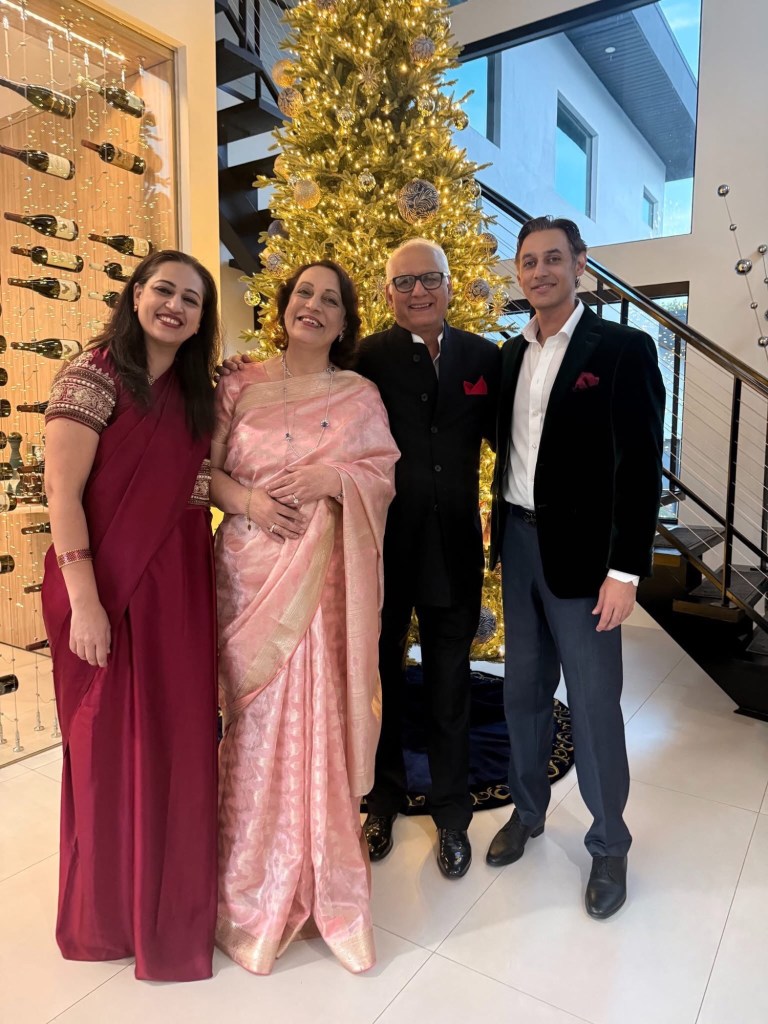
Settling in Mussoorie in the late 1970s, the couple established their practice, becoming pillars of the community. But Venu’s vision extended beyond the clinic walls. With Sunil, she organized free medical camps in remote villages, trekking through rugged terrain to bring care to those forgotten by the world. In one memorable camp, an elderly woman clutched Venu’s hand, whispering, “Doctor memsaab, no one comes here.” Venu knelt and replied gently, “We do now. Tell me your story—let’s heal it together.” Their efforts evolved into the Divine Light Trust in 2008, a beacon for education, skills training, and advanced medical aid like cardiac surgeries and transplants. “We’re not just doctors; we’re dream-weavers,” she’d often say to volunteers, her voice infused with the rhythm of her poetry. 1 6
Venu’s humanitarian side shone brightly in her work with the Tibetan community in Happy Valley. From the mid-1980s, she and Sunil dedicated Wednesdays to the Tibetan Homes Foundation, treating children and families with unwavering kindness. “These hills hold so many exiles,” she reflected during a quiet moment with a young Tibetan patient. “But healing bridges every border.” Her empathy also fueled her activism, preserving historical treasures like the Khadi Tricolour gifted by Mahatma Gandhi, which she and Sunil safeguard as a symbol of India’s enduring spirit. “This flag isn’t fabric—it’s freedom’s echo,” she’d explain to visitors, her words painting vivid pictures of the past. 2 7
Yet, Venu is more than a healer—she’s a wordsmith. Her scientific precision dances with an idiosyncratic imagination in her three poetry collections, including “I Will Survive,” which captures the indomitable spirit of Garhwal’s women. In verses that blend English and Hindi (translated by Sunil), she unveils their hidden struggles and joys. “Poetry is my stethoscope for the soul,” she confided in an interview, her latest work a journey into the sublime that mirrors her life’s duality. Even luminaries like the Birla family sought her care, but Venu remains grounded, often sharing laughs with patients: “Age is just a number—I’m 68 and still climbing these hills!” 4 5 6 1
Today, in the heart of Mussoorie, Dr. Venu Sanon continues her symphony of service, poetry, and philanthropy. As she puts it, “Life’s not about the peaks we reach—it’s about the hearts we touch along the way.” Her story is a testament to how one woman’s blend of intellect, empathy, and artistry can illuminate the world.
In the serene folds of Mussoorie’s hills, where mist dances with inspiration, Dr. Venu Sanon’s poetry emerges like a quiet revolution—a blend of a healer’s precision and a dreamer’s whimsy. Over the years, her verses have captured the essence of life’s deeper rhythms, drawing from her experiences as a physician trekking to remote villages, her love for nature’s whispers, and her empathy for the human spirit. “Poetry isn’t separate from medicine,” she once shared in an intimate gathering at a local literary meet, her voice soft yet resolute. “Both seek to mend what’s broken, to uncover the hidden pulse.” With three collections to her name, Venu’s work invites readers on a journey from personal awakening to collective resilience. Let’s delve into each, as if flipping through pages by a crackling fire, with the Himalayas as our backdrop. 2
Her debut, Realization, published in 2011, marks the bold step of a doctor turning inward. This collection of English poems is a tapestry of introspection, weaving themes of nature’s grandeur, positive thinking, and the eternal quest for truth. Inspired by Mussoorie’s breathtaking vistas—think cascading waterfalls and oak groves—it probes haunting questions about existence. “What if we all paused to listen to the mountains’ secrets?” Venu might muse to a young reader during a book signing, her eyes twinkling. The book pairs uplifting verses with stunning photography, creating a visual symphony that elevates the philosophical depth. Reviewers call it “deep and philosophical,” a volume that doesn’t just speak but provokes: Why do we chase illusions? How does nature mirror our souls? At 57 pages in its essence (echoing later editions), it’s a compact portal to enlightenment, available through outlets like Art Laureate in Delhi. “This is my vision of life,” Venu writes in her preface, “and I hope it resonates with yours.” 0 3 4 15
Building on that foundation, Call of the Spirit arrived in 2015 as a Kindle edition, a soulful sequel that deepens the dive into inspiration and inner calling. Clocking in at 57 pages, this English poetry book pulses with verses that reviewers hail as “beautiful” and “a source of daily inspiration.” Themes swirl around spiritual awakening, the pull of the unseen, and life’s quiet urgings—much like the wind rustling through deodar trees on a Mussoorie evening. Imagine Venu recounting its genesis over tea with her husband, Dr. Sunil Sanon: “Sunil, these words came like a whisper from the hills—demanding to be heard.” There’s no overt sample content readily shared, but the essence evokes a meditative flow, encouraging readers to heed their own inner voices. It’s accessible for young adults (graded 7-12), making it a gentle guide for those navigating adolescence or midlife reflections. Priced affordably, it’s a digital gem that captures Venu’s evolving voice, blending her medical insight with poetic grace. 8 17
Then comes the crowning jewel, I Will Survive, her third collection released in 2016—a heartfelt tribute to the indomitable women of Garhwal. This bilingual hardcover spans 19 poems in English, masterfully translated into Hindi by Sunil, turning personal observations into a universal anthem. Born from over three decades of medical camps in rugged villages, it illuminates the lesser-known struggles: solitude in mist-shrouded homes, the toll of alcoholism on families, and the quiet heroism of tending cattle, crops, and kin. Poems like “The Homecoming” evoke a woman’s return to empty echoes, while “Kaaphal Paakyo” celebrates bonds with nature, and “Harvest of Peas” confronts societal shadows. “These women are the backbone of our hills,” Venu declared at the book’s launch, her tone fierce with admiration. “Who sings of their grandmothers, the unsung? I do—in their honor.” Themes of hope, aspiration, and resilience shine through, nodding to icons like Gaura Devi (the tree-hugger) and Bachendri Pal (Everest conqueror), yet centering the everyday warrior. It’s a poetic call to empathy, raw and rhythmic, urging us to see the strength in vulnerability. 1 7 19 18
Venu’s collections aren’t mere words on paper; they’re extensions of her life’s work—bridging clinics and creativity, hills and hearts. As she reflects in conversations, “Poetry heals what medicine sometimes can’t touch.” For those enchanted, her website offers glimpses, and the books await on platforms like Amazon and Flipkart. In a world rushing by, Venu’s verses remind us to pause, feel, and survive—with grace.
In the quiet embrace of Mussoorie’s fog-kissed mornings, where Dr. Venu Sanon’s words first took flight, Realization stands as her inaugural poetic whisper to the world. Published in 2011, this slender volume of English poems—often paired with evocative photographs of nature’s splendor—invites readers into a realm of introspection, where the grandeur of the Himalayas sparks questions about existence, truth, and the human spirit. “My hometown ignited a love for the beauty of nature,” Venu reflects in her preface, her voice echoing like a gentle echo through the pines. “It is indeed difficult to pinpoint when this love progressed towards deep introspection, with a predilection towards positive thinking and a search for unanswered queries germinating in the mind.” 15
Yet, like the elusive mist that shrouds those very hills, specific sample poems from Realization prove hard to pin down in the public domain. Extensive searches across her personal website, online bookstores, and literary archives yield no direct excerpts or full verses readily shared—perhaps a deliberate choice to preserve the intimacy of her revelations, urging readers to seek the book itself. Reviewers describe it as “deep and philosophical,” a collection that probes the illusions we chase and how nature mirrors our inner worlds. Imagine Venu, during a cozy evening chat with a fellow poet, saying, “This book leads you into the most personal recesses of my mind. It reveals the questions that haunt me and provokes you to join in my search for truth.” She adds with a warm smile, “‘Realization’ is my vision of life, and I hope to find many who share my perspective and relate to my thoughts.” 15
Themes weave through upliftment and wonder: Why do we cling to fleeting illusions? How does the cascade of a waterfall echo our quest for meaning? Without direct quotes, one can only envision lines that blend the tangible beauty of oak groves and snow-capped peaks with abstract yearnings for enlightenment. Available through outlets like Art Laureate in Delhi or online platforms (ISBN 978-81-8465-784-5), it’s a compact 57-page journey—much like her later works—that pairs verse with visuals, making it as much a feast for the eyes as the soul. If you’re drawn to this, tracking down a copy might just spark your own realization, as Venu intended. “Poetry,” she might quip over tea, “isn’t meant to be skimmed—it’s to be lived.”


 deemagclinic
 deemag and chest clinic