
Prof. Rajeshwar Dayal (often referred to as Prof. R. S. Dayal) stands as one of the most respected figures in pediatrics in northern India, particularly associated with S.N. Medical College (SNMC) in Agra, Uttar Pradesh.
Born on October 13, 1957, he embarked on a journey dedicated to children’s health that has spanned over four decades. After completing his medical education, including advanced qualifications like MD in Pediatrics, DCH (London), DNB, FAMS, and FIAP, he joined the Department of Pediatrics at SNMC Agra.
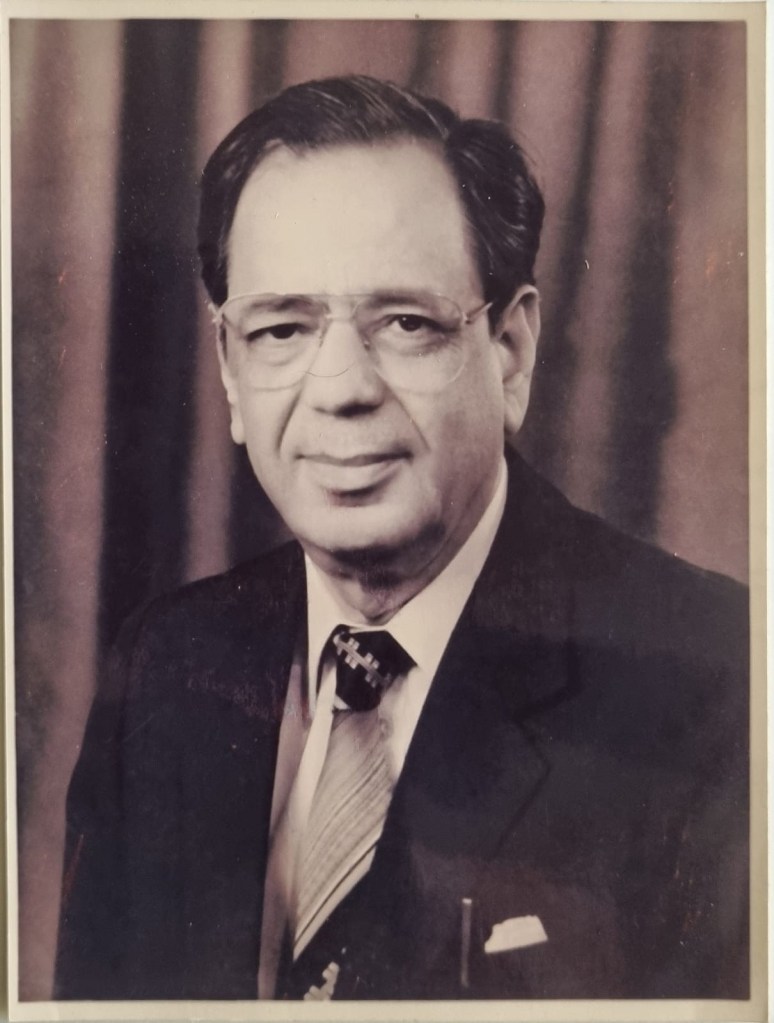
He steadily rose through the ranks—from Lecturer to Assistant Professor, Associate Professor, and eventually Professor and Head of the Department since 2003. Under his leadership, the department has focused heavily on infectious diseases in children, neonatal care, tuberculosis diagnosis in pediatrics, nutritional assessments, and neonatal sepsis—areas where he has published extensively (over 60 research works with hundreds of citations in journals like Indian Pediatrics and others).
Imagine a bustling ward at SNMC Agra in the early 2000s. A young resident nervously presents a complicated case of childhood TB to the HOD.
Resident: “Sir, the child has persistent fever, weight loss, and the X-ray is suspicious, but the sputum is negative.”
Prof. Dayal (leaning forward, eyes sharp yet kind): “Beta, don’t rush to conclusions. In children, TB hides cleverly. Let’s think beyond ZN stain—have we considered culture, PCR, or even newer tools like antigen detection? Remember, a child’s immune system doesn’t always shout the diagnosis; sometimes it whispers. We must listen carefully.”
He pauses, smiles gently at the worried mother sitting nearby.
Prof. Dayal (softly, to the mother): “Don’t worry, aunty ji. Your little one is in good hands. We’ll find the root and treat it properly. Many children like him have gone home smiling after our care.”
Such moments define him—not just as an academic leader but as a compassionate clinician who connects deeply with families.
His contributions earned him the prestigious Dr. B.C. Roy National Award (one of India’s highest medical honors, recognizing excellence in teaching, research, and service), a moment celebrated widely in Agra’s medical circles. Colleagues still recall the pride: “Another feather in the cap for Agra and SNMC!”
He has represented India internationally, serving on committees like the Asian Society for Pediatric Infectious Diseases (ASPID) and contributing to global pediatric forums.
Even during challenging times like the early COVID period, he navigated complex administrative roles with his characteristic focus on health priorities (though not without occasional controversies that come with high-stakes leadership).
Today, Prof. Rajeshwar Dayal remains a guiding light—mentoring generations of pediatricians, advancing child health research, and reminding everyone that behind every protocol is a child who needs care, courage, and hope.
Prof. Rajeshwar Dayal has dedicated much of his illustrious career at S.N. Medical College, Agra to tackling one of the toughest challenges in pediatric medicine: diagnosing and managing tuberculosis (TB) in children. In resource-limited settings like northern India, where TB remains rampant, childhood TB is often “silent”—hard to confirm because kids don’t produce much sputum, symptoms overlap with other illnesses, and traditional tests like smear microscopy frequently miss the mark.
Prof. Dayal’s research zeroes in on improving diagnostic accuracy using modern molecular tools, serological markers, and innovative sample types—making diagnosis faster, less invasive, and more reliable for young patients.
Here are some highlights of his key contributions:
- Stool-based CBNAAT (GeneXpert): One of his recent standout works (published 2023–2024 in Indian Journal of Pediatrics) evaluated Cartridge-Based Nucleic Acid Amplification Test (CBNAAT) on stool samples as a non-invasive alternative to the usual gastric aspirate (GA) method. The study found good concordance between stool and GA CBNAAT results, offering a child-friendly option—especially valuable for outpatients or when GA collection is difficult. This work has sparked discussions (including author replies clarifying methodology), showing its real-world impact.
- TB-LAMP vs. CBNAAT comparison (2021, Journal of the Pediatric Infectious Diseases Society): In children with pulmonary TB, he compared Loop-Mediated Isothermal Amplification (TB-LAMP) with CBNAAT. TB-LAMP showed promising diagnostic yield, adding another rapid, point-of-care tool to the arsenal in high-burden areas.
- GeneXpert in tubercular meningitis (2016): Assessing GeneXpert for CNS TB in kids—a life-threatening form where quick diagnosis can be lifesaving.
- Real-time PCR for childhood TB (2015): Demonstrated its value in detecting Mycobacterium tuberculosis from various body fluids, quantifying bacterial load to aid in confirmation.
- QuantiFERON-TB Gold In-Tube (part of a multicentric Indian study, 2013): Contributed to evaluating interferon-gamma release assays (IGRAs) for latent and active TB in children, helping differentiate infection from disease.
- Household contact studies (2018): Quantified TB burden among child contacts of adult TB patients—highlighting the need for active screening and preventive therapy in families.
- Earlier serological explorations (2006–2008): Investigated ELISA-based tests using antigens like Ag85C, IP-10, and others for childhood TB diagnosis, though molecular methods have since taken precedence.
Beyond publications (many in high-impact journals like Indian Pediatrics, PLOS One, and international pediatric infectious disease outlets), Prof. Dayal shaped policy and practice regionally and globally:
As Chairperson of the Task Force on Tuberculosis for the Asia Pacific Pediatric Association (APPA, 2018–2020), he coordinated with national pediatric societies across the region to push for country-specific guidelines on pediatric TB diagnosis and management—tailored to local epidemiology and resources.
He also served as Co-Chair of the Scientific Advisory Group on Tuberculosis and HIV for the International Pediatric Association (2019–2021), influencing global pediatric TB strategies.
Picture a grand rounds at SNMC Agra:
A postgraduate presents a tough case—a 4-year-old with prolonged fever, no cough, negative smears.
Resident: “Sir, Mantoux is positive, but we can’t get good samples. Should we start empiric ATT?”
Prof. Dayal (nodding thoughtfully, turning to the team): “In children, we can’t always wait for classical proof. But blind treatment risks resistance and side effects. Let’s send stool for CBNAAT—it’s simple, no trauma. If positive, we confirm; if negative, we layer in history, contact tracing, and perhaps PCR or LAMP. Remember, every missed or delayed diagnosis steals months of healthy growth from that child.”
He then turns to the anxious parents with his trademark calm reassurance: “We’ll use the best tools we have researched here—no guesswork. Your child will get the right treatment, and we’ll follow up closely.”
That blend of rigorous science, practical innovation, and deep empathy has made Prof. Dayal’s TB research not just academic output, but a lifeline for thousands of children in India and beyond. His work continues to guide clinicians toward earlier, kinder, and more accurate ways to fight pediatric TB.
In his own words (paraphrased from award reflections): “Pediatrics isn’t just medicine—it’s about giving every child a fighting chance to grow, laugh, and dream.”


 deemagclinic
 deemag and chest clinic